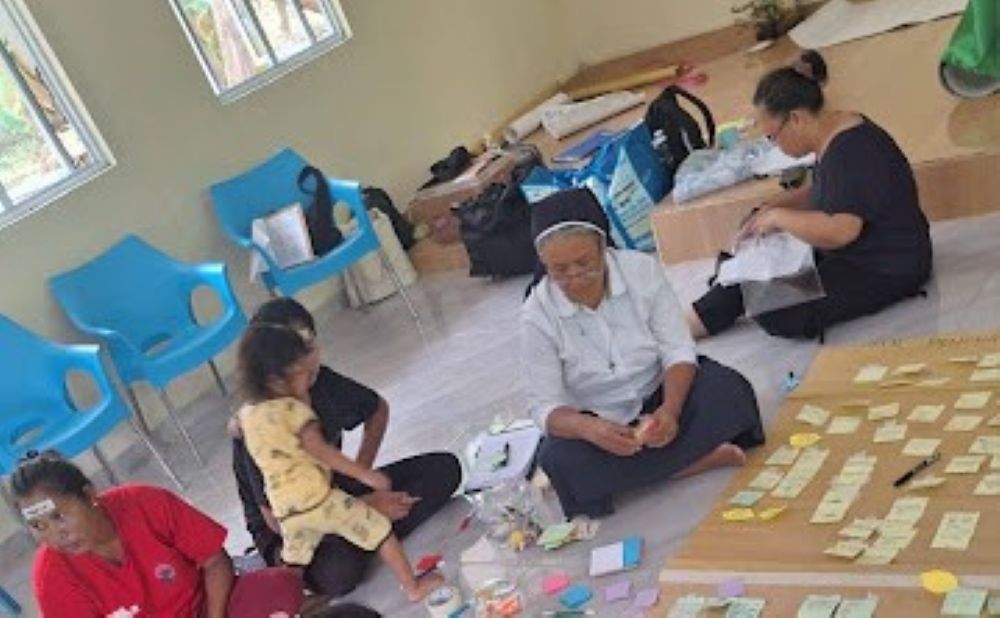
Sr. Tasiana Eni Susilawati facilitates social mapping on the livelihoods of women and children in the coastal community of Teluk Nipah, Indonesia, in July 2025. The session, conducted with the Good Shepherd program team in Batam and the MDO Indonesia team, gathered data on the community's economic realities and challenges. (Maria Anggelina)
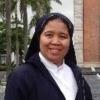
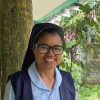
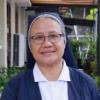
We Good Shepherd Sisters have been in Indonesia since 1927 and have been involved in a variety of education ministries. One of the most unique ministries is in Batam City, an archipelago of 329 large and small islands in the Riau Islands Province. The largest island, Batam, where we live, is nearest to Singapore. Several of the islands are linked by bridges, giving the impression of a single land mass.
Parts of Batam have been developed into industrial zones along the borders with Singapore and Malaysia, making it accessible to international trade and a meeting point of diverse cultures among local citizens and migrants.
Smaller islands are home to local fishermen and migrant groups. Children in these communities are isolated from access to basic services including education, healthcare and even protection. Isolation and cultural norms also make them more vulnerable to violence.
One of our initiatives in Batam City is in the community of Kampung Air, where our work began in 2004. We began with early childhood education and later, education to prevent teenage pregnancy and gender-based violence. Families in Kampung Air have low incomes and live in informal settlements or temporary housing. Even the playground the children use is vulnerable to government eviction because it has no legal status.
We hold regular parenting activities for parents and guardians to teach them that children have basic rights that need safeguarding and to help them understand the impact of gender-based violence on children. We emphasize that children's rights include access to balanced nutrition and positive parenting practices.
Nico's story shows how violence against children has been normalized. Nico, a student at TBGB, lives with an aunt because his mother had remarried and his father was in prison for sexual assault. He had removed his shirt to put on the costume for a school play and the teacher noticed red welts on his back and a scrape on his temple. Nico was silent when she asked about the markings, but eventually, he timidly related that his aunt had beaten him with a clothes hanger because he showed anger at a cousin for taking his food. The following day, the teacher spoke to the aunt, who said Nico was disrespectful toward an older cousin and that was not acceptable.
The teacher showed her a photo of Nico's back, and the aunt, with tears, said she had not meant to cause pain, only to "teach him a lesson." She apologized to him for her actions, but she did apologize for hurting him. Her behavior was considered normal.
Young girls are often neglected and become victims of gender-based violence. Parents either ignore them or give them too much freedom, a common family practice when they become adolescents. This makes them particularly vulnerable to early, unwanted pregnancy. Once pregnant outside marriage, girls are stigmatized, punished and sometimes beaten, and then abandoned or pressured into early marriage. As a result, they lose any rights to protection.
Advertisement
Gender-based violence is addressed through awareness sessions on gender equality and respect. All our sessions are interactive, leaving little room for distraction. It has been interesting to us that the teenagers who participate in our programs show no signs of addictions to mobile phones or gadgets, nor to cigarettes or alcohol. Some have even formed a group called BEKALI , in which they practice discipline in their use of mobile phones. BEKALI demonstrates how structured guidance can nurture discipline and resilience among teens, at least at Kampung Air, and the knowledge the teens are gaining is becoming a resource for the entire community.
The Sea nomad families on smaller islands in the archipelago, known as the "People of the Sea," are interesting, but in many ways their behaviors are not so different from other groups. The community holds beliefs, superstitions and myths centered on the ocean, which they view as a living entity and a gift from their ancestors. They traditionally lived a life of mobility, and so those over age 30 were probably born on boats rather than in healthcare centers. They have rituals around birth, death and marriage passed down through many generations.
The families generally live on houseboats, and most are fishermen who spend their days at sea. Their fishing boats are small, holding only two or three people. Some of the women also take part in fishing, collecting shellfish or cleaning fish before selling them to local traders.
On the island of Teluk Nipah, where they live on the coast, most residents have no basic education, and many children drop out of primary school. Transportation is limited, which means that access to schools is restricted and so there is little motivation for education. Even if they reach Batam city, there is no public transportation. City residents face the same issue and often rent private vehicles at a very high cost.
Children might attend school but drop out after completing junior high school in order to help earn money to support their families. Boys are allowed to leave the island, but not girls, who are kept at home in the belief that this protects them from premarital pregnancies. They are commonly married off early to relatives or extended family members.
Marriages are often not legally registered, and children are left without identity documents. Because the island is very far from the city, public services are limited.
Most adult women remain subordinate to their husbands but may become domestic servants to local traders or run small businesses from home or sell products in relatives' shops. Families used to be large, but they are smaller now, marking a shift in family structures.
Some people are also transitioning to life on land, living in stilt houses built by the government along the coast. Unfortunately, families rarely hold legal rights to these houses or land and thus have little awareness of the importance of ownership.
Our community decided to map social and gender issues in Teluk Nipah in early 2025 to use as a foundation for designing programs in 2026. Our focus was on civil rights for both children and adults. We spent a lot of time in meetings to raise awareness about everyone having basic rights, and we also work with the community to identify the problems they face.
With their agreement, our plan is to assist the community in accessing civil registration, including ID cards, marriage registration, family cards, birth certificates and national health insurance. All these are necessary for accessing education, healthcare and social assistance for low income families.
It has been a long journey for us, but we are convinced that the more open and inclusive our approach, the more parents will entrust their children to our education services. At the same time, as more families want these services, we face increasing challenges in providing these services with the financial and professional resources required.