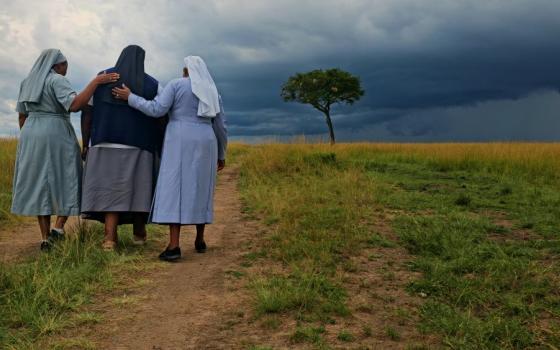
(Unsplash/Nadine E)

by Gitonga Njeru
John Gatu, 47, is a father of three and has been married for over 20 years. He lost a well-paying job, which drove him deeper into alcoholism, but is now on the road to recovery thanks to the Association of Sisterhoods of Kenya.
Gatu told Global Sisters Report that he would often unleash terror on his wife and children, while increasing his daily intake of cheap alcohol.
One year after quitting alcohol, he is now happy. He has returned to a healthy weight, lives in Nairobi's Mathare slum and is working again.
"I often thought that alcohol would save my problems," Gatu said. "I would sell household items or do illegal deals with my drinking friends to get money to drink."
He shared that he plans to buy land in Nairobi to build a house for his family.
The Association of Sisterhoods of Kenya, or AOSK, has been especially active in reuniting many troubled families like his.
"Arresting the perpetrator and prosecuting them is not the solution," said Sr. Jacinta Adhiambo, a senior board member of the association.
Richard Onyango, a police officer at Kasarani Police Station in Nairobi, said they only make arrests as a last resort. "We mediate, and Catholic sisters have trained us on how to handle the situation using effective communication skills."
Gatu's wife, Penina, told GSR that she is happy with the outcome of her marriage.
"My marriage has survived many storms, and I am happy that the sisters have contributed positively. My marriage would have ended if not for those counseling sessions," she said.
Instead of incarceration, the sisters counsel families in their homes and on parish premises. In some cases, they offer short-term financial solutions, as many live in informal settlements. Adhiambo added that poverty is a major cause of gender-based violence.
"Our mission is to bring the family together and not to dismantle it. We do our best to make sure it's a success," Adhiambo said. "We cannot guarantee every effort goes our way. But we try our best. We often risk our safety and even our lives going into these homes."
Currently, the sisters partner with the Ministry of Gender, Culture, Arts and Heritage and the Catholic Justice and Peace Commission, which mediate disputes within families and offer free counseling.
Advertisement
They also work with the African Sisters Education Collaborative to train and empower local nuns on handling gender-based violence. They are working with 18 parishes, mostly around Nairobi and its environs.
"We work closely with youths aged 15-25 years in toxic relationships. Most cases are not just related to poverty, but also to drug and alcohol abuse," Adhiambo said. She added that infidelity within marriages is common.
The counseling sessions are held weekly, and the sisters offer prepared food, vocational training and new skills to help families become self-sustaining.
"We do follow-up visits if the families don't show up. In these cases, we go to their homes and track them through village elders," Adhiambo said.
However, the sisters' efforts to reunite families don't always work. "You just have to accept the situation even if it doesn't go our way," she added.
She added that since COVID-19, especially between 2020 and 2022, gender-based violence was at its peak after many people lost their jobs. "And things got bad from there. That's what is being witnessed today," she said.
Sr. Margaret Wanjiku Wahungu, the superior general of the Assumption Sisters of Nairobi, told GSR the work is difficult. However, counseling sessions with the sisters often help troubled families open up and overcome stigma.
"They end up feeling loved and appreciated, further helping bind the family together," Wahungu said.