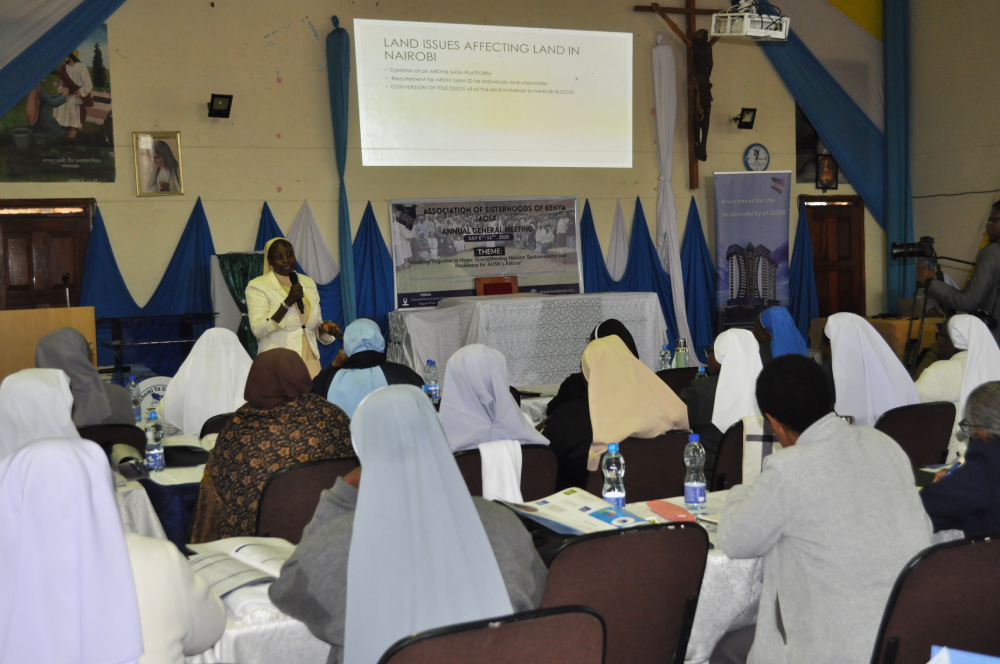
Sr. Teresiah Muthoni, LSOSF, chief legal advisor of the Archdiocese of Nairobi and member of the Catholic Sisters in the Legal Profession (CASILEP), guides superiors of women religious congregations through new requirements for land registration in Nairobi. She advised congregations that own land in Nairobi to seek legal expertise to ensure compliance. (Lourine Oluoch)

by Lourine Oluoch
For five days, major superiors of women religious congregations from across Kenya gathered for the Association of Sisterhoods of Kenya (AOSK) 2026 annual general meeting. Outside the conference hall, an artist’s rendition of the proposed AOSK Plaza showcased the sisters' determination to build a sustainable future for the association and its 190 member congregations.
Set to be constructed in Nairobi, Kenya, with contributions from women religious congregations, the plaza represents an economic opportunity and a reliable source of income for Catholic sisters in Kenya.
"The AOSK Plaza is an investment plan that guarantees us long-term returns for the sustainability of our congregations amidst shrinking donor support and reduced support to our congregations," said AOSK Executive Secretary Sr. Pasilisia Namikoye, LSOSF, in her message to the assembly.
In recent years, sustainability has become a priority for the association. This year's theme for the annual general meeting, "Walking Together in Hope: Strengthening Mission Sustainability and Resilience for AOSK's Future," builds on the association's 2023–2027 strategic plan, which prioritizes long-term sustainability.
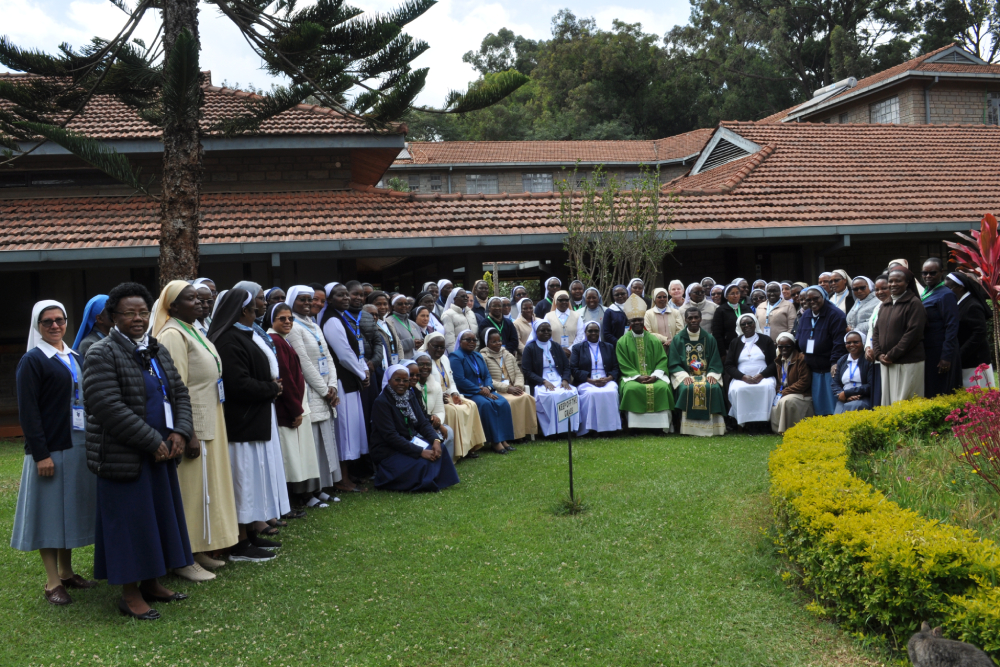
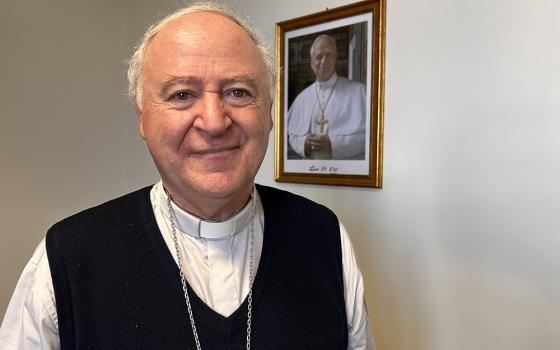
Superiors of women religious congregations in Kenya pose for a photo with Bishop Henry Odonya, vice chairperson of the Kenya Conference of Catholic Bishops' Commission for Clergy and Religious (Liaison), following the opening Mass. (Lourine Oluoch)
This year, Sr. Prof. Jacinta Adhiambo, ESM, was elected as the new chairperson of the AOSK, replacing Sr. Josephine Kangogo, DSH, who has been serving since 2018. Other members elected to the AOSK Board are Sr. Mary Christine, Provincial of the Sisters of Notre Dame, and Sr. Mary Rubika, Regional Superior of the Apostolic Carmel.
At the opening of the assembly at Chemichemi ya Uzima College in Nairobi, held from July 6-11, Kangogo, the outgoing chairperson, said, "This assembly is a sacred moment of encounter, listening, accountability and renewal. It is an opportunity to celebrate the gift of consecrated life, to review our shared mission, and to ask how we can remain relevant, resilient and prophetic in responding to the needs of our time, which are really complex."
Kangogo added that the theme of the assembly is an invitation to "renew our confidence in God's providence, to strengthen our shared mission, and to recommit ourselves to journey together as consecrated women rooted in faith, courage and hope. We can no longer work as individuals. We can only make a greater impact in our society when we walk together."
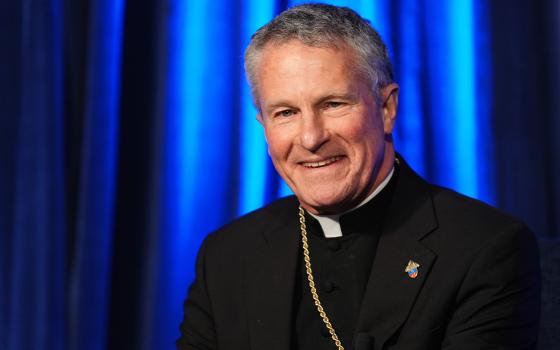
During the opening Mass, Bishop Henry Juma Odonya, vice chairperson of the Kenya Conference of Catholic Bishops' Commission for Clergy and Religious (Liaison), urged the sisters to collaborate with local partners, parishes, dioceses and other institutions to build initiatives that lay the foundation for long-term growth.
Odonya said a key aspect of sustaining congregations into the future lies in the ability of women religious to build initiatives that will foster sustainability — even faith and spiritual sustainability — that not only serve the immediate needs of the congregations, but also lay a strong foundation for a long-term growth, spiritual, pastoral, social and moral transformation. "These initiatives will help build the capacity of all sisters and the lay communities they serve, ensuring that the work of the mission, of the congregations, continues even as demographic and social realities shift," he said.
Throughout the week, the sisters reflected on three main areas: strengthening the prophetic voice of Catholic sisters as agents of social transformation, formation for mission in the 21st century, and synodal leadership and collaborative governance.
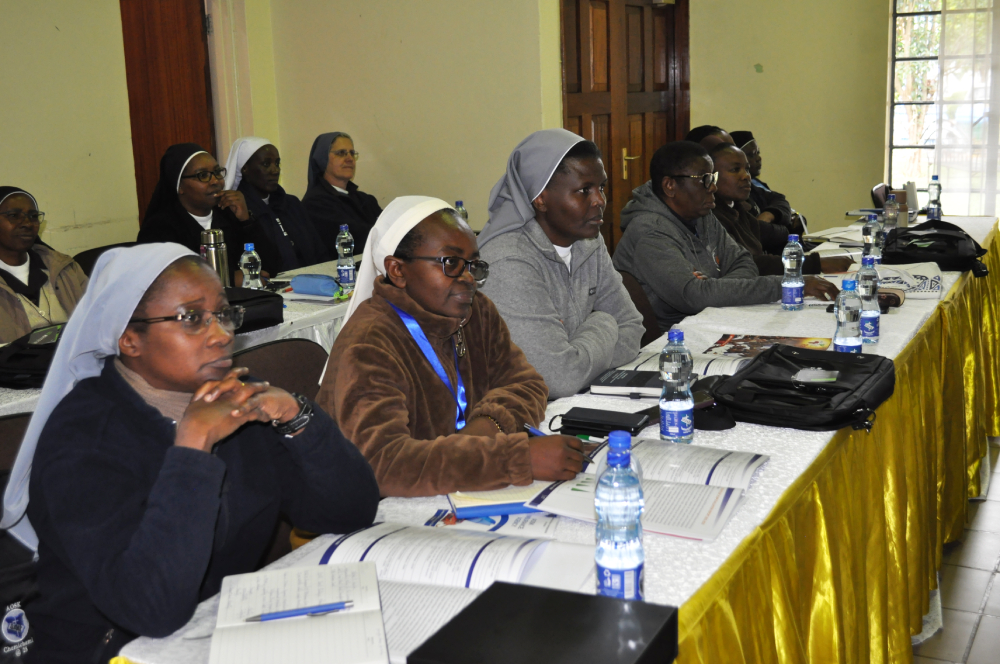
Major superiors of women religious congregations in Kenya attending the 2026 Association of Sisterhoods of Kenya (AOSK) annual general meeting. The association represents 190 member congregations in Kenya. (Lourine Oluoch)
The assembly also addressed the pressing question of how to sustain vocations and congregational leadership.
Kangogo noted that the changing social, cultural, technological and ecological landscape calls for proper, ongoing formation for those joining religious life.
"Formation must remain at the heart of our priorities," she said. "You know the complexity of the challenges that we go through in our congregations, in our society. How can we address these early enough in formation as we recruit young girls that appeal not only to the brain but to the heart, so they can go out there and represent us? They can go out there and defend the gospel of Christ."
According to Sr. Joyce Nyagucha, Superior General of the congregation of Assumption Sisters of Eldoret, new entrants to religious life are coming with fewer practical life skills than previous generations, requiring congregations to rethink formation.
"We have to adjust and see how best we can continue forming them in a way that speaks to them without filtering out our charism and our spirituality. It’s a big challenge, but we have to find a way," she told GSR.
Namikoye reiterated that the future depends significantly on intergenerational and inter-congregational collaboration.
Advertisement
"The wisdom, experience and sacrifices of senior sisters provide a foundation upon which younger generations can build. At the same time, younger sisters bring new perspectives, skills and energy necessary for engaging emerging realities," she said.
Joining the assembly virtually from the U.S., Sr. Draru Mary Cecilia, LSMIG, Executive Director of the African Sisters Education Collaborative (ASEC), stressed the need to preserve congregational identity and charisms even as ministries are increasingly run by lay professionals.
"There is a situation where you can only have one or two sisters in a ministry. They need to be formed in such a way that they can promote that mission and they can promote that charism," she cautioned, adding that otherwise, the Catholic sisters’ ministries risk being like any other social service providers.
Ultimately, AOSK member congregations were asked to renew their commitment to communion, collaboration and mission.
"We are called to walk together with courage, trusting in God's providence and guided by the Gospel. Our collective witness demonstrates that authentic sustainability is rooted in faith, resilience is strengthened by community, and hope flourishes when we journey together toward a common purpose," Namikoye said.