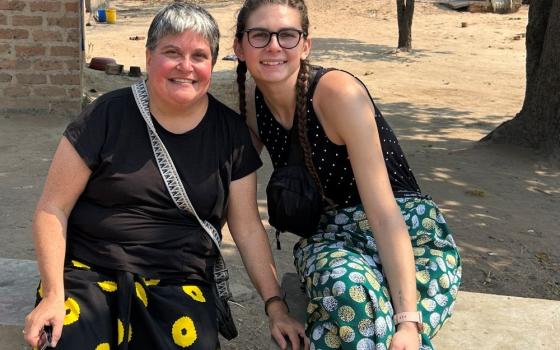
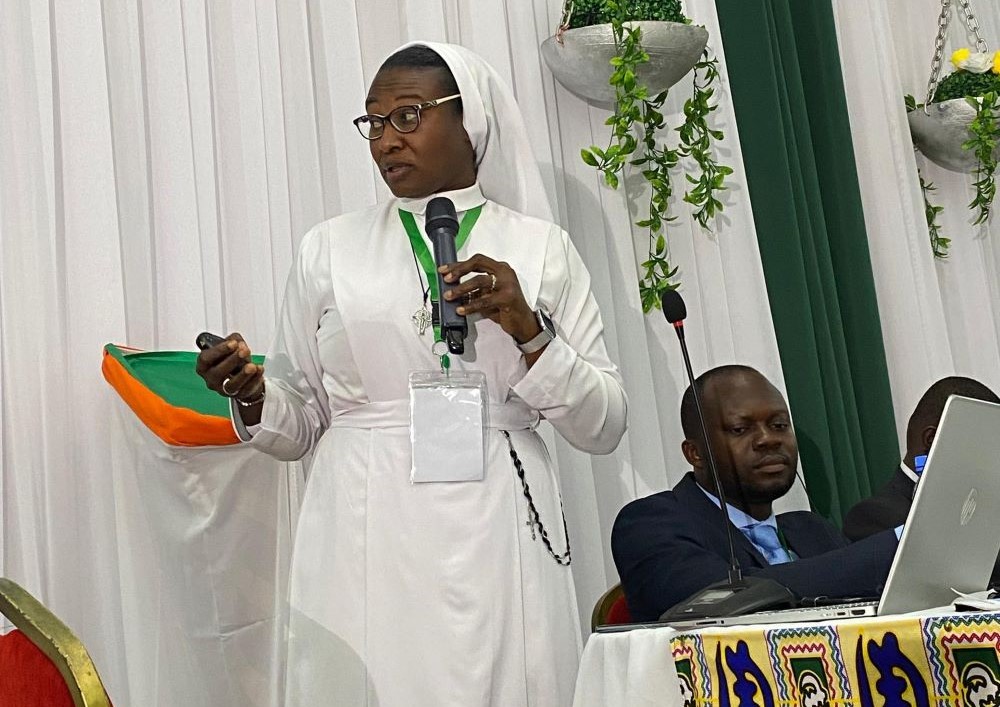
Sr. Grace Akunna John-Emezi of the Congregation of the Handmaids of the Holy Child Jesus presents Aug. 9, 2025, in Abidjan, Ivory Coast, during the third Pan-African Catholic Jubilee Congress on Theology, Society and Pastoral Life organized by the Pan-African Catholic Theology and Pastoral Network, or PACTPAN. (Courtesy of Grace Akunna John-Emezi)
It was with deep joy, excitement and profound gratitude to God that the third Pan-African Catholic Jubilee brought theologians, consecrated men and women, laypeople, youth, African church leaders and participants from all over the world together as pilgrims of hope. The Congress was held in Abidjan, Ivory Coast, Aug. 5-10 at the Catholic University of West African with the theme "Journeying together in hope as church family of God in Africa."
The congress began with an open palaver, followed by reflections on African conciliar tradition from the Council of Nicaea to the synod on synodality. Discussions focused on conciliar traditions in Africa, historical lessons in response to ecumenical challenges, the consequences of synodality in church leadership, and building Ujamaa and palaver in a synodal church family of God. The event was presented by the Pan-African Catholic Theology and Pastoral Network, or PACTPAN.
Eucharistic Heart of Jesus Sr. Florence Oso helped us understand "Ujamaa," a Swahili word meaning familyhood or togetherness. She emphasized that the roots of Ujamaa in African cultural practice make it more authentic and transformational, grounded in love, justice and unity within African communal tradition. Building Ujamaa and palaver in a synodal church of God in Africa, she noted, is about creating a Christ-centered, communally driven and culturally rooted church.
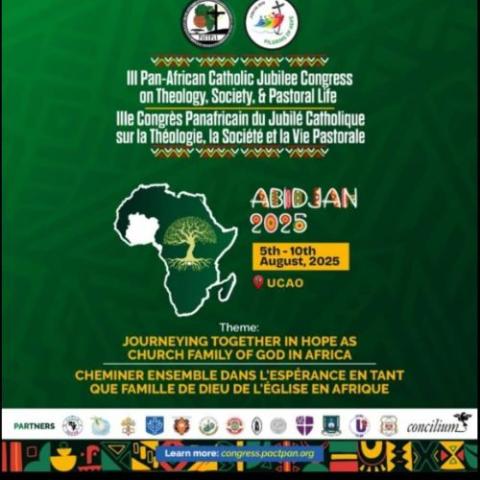
Poster for the III Pan-African Catholic Jubilee Congress organized by the Pan-African Catholic Theology and Pastoral Network, or PACTPAN, held in Abidjan, Ivory Coast, in August 2025 (Courtesy of Grace Akunna John-Emezi)
Another engaging presentation was given by Missionary Oblates of Mary Immaculate Fr. Nnaemeka Ali titled " 'A three-legged stool does not wobble': African palaver, councils and synodality in the church."
Palaver is a traditional African practice of communal dialogue and decision-making. It often takes place in a circle or under a tree, where community members gather to listen, speak and discern together. No one is left out; everyone has a voice, and decisions are reached by consensus rather than by imposition.
This cultural practice mirrors the church's call to councils and synodality. It has to do with listening, dialogue, walking together and having shared responsibility. Ali explained the symbolism of the three-legged stool:
- First leg: Communion: Our unity in Christ.
- Second leg: Participation: Everyone's voice and charism matter.
- Third leg: Mission: The shared work of evangelization.
Without one of these legs, the church wobbles, but with all three, it stands firm, like the African palaver under the tree — strong, balanced and inclusive. This proverb teaches that stability comes from inclusivity and balance. Just as African palaver builds unity through dialogue, the church, through councils and synodality, seeks harmony by listening to all her members under the guidance of the Spirit.
This beautiful discussion continued with displays of projects by African youth from Nigeria, Malawi, Kenya, Benin Republic and Burkina Faso. A session on building the future through servant and transformational leadership followed, where research and proposals for best practices in transformational servant leadership in the church of Africa were presented by sisters who had undergone the training.
In celebrating the gifts of African women faith leaders, four teams from Nigeria, Kenya, Uganda and Cameroon presented on unsung African women heroes of faith. The PACTPAN assembly was presided over by the coordinating servant, Fr. Stan Chu Ilo, who presented the state of affairs of PACTPAN alongside other unit leaders.
Advertisement
African Youth Day, with its focus on African children and youth, was particularly impactful. Presentations addressed human trafficking, including a testimony from a rescued trafficked youth who shared his lived experience of being trafficked from Nigeria to Libya.
A palaver on Vision 2050 — the future of the church family of God in Africa — was also deliberated. Sessions focused on abundant life, family, children, war and peace. I presented a paper on ethical dilemmas in rural clinical settings in Nigeria. I explained the many dilemmas commonly faced in rural clinical contexts in Africa, with particular emphasis on Nigeria. The final session reflected on Pilgrims of Hope in history.
I am deeply grateful to God for the great success of the congress. I extend my appreciation to the host president of the local organizing committee and all committee members, the co-organizers, all donors and the coordinating servant, Ilo, who thanked all participants for their active participation and deep listening. He also prayed that the fruits of this jubilee congress may become a wellspring of renewal for Africa, the church and the whole world. I add my prayer to his.
With God's grace, the fourth PACTPAN Congress will be hosted in Cameroon in 2027. I look forward to it.