
(Unsplash/Prashant)

by Sr. Robancy A. Helen
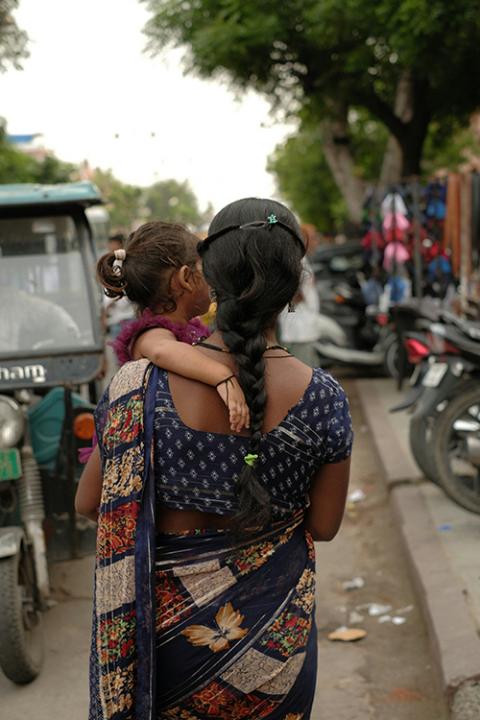
Men and women are complementary to one another, and the effective functioning of society depends on the contributions of both, yet in many parts of India, daughters continue to be treated as unwanted. This contradiction remains one of the most painful and least examined aspects of Indian society. While girls are sometimes welcomed when they compensate for the absence of sons, they are rarely celebrated as "princesses," particularly when born as first daughters.
(Unsplash/Ravi Sharma)
India takes pride in venerating women as goddesses yet the birth of a girl often remains a taboo within families. As a citizen of India and as a woman who deeply values gender equality, I find this paradox troubling and unsettling, and I believe it demands honest confrontation. I believe in the inherent dignity and power of women in the universe, but advocating for women's rights, especially within families, remains a daily struggle.
Growing up in a small town, I was surrounded by a culture where boys were openly regarded as superior to girls and granted greater privileges and opportunities, both at home and in society. Although I practice the Christian faith, which affirms the equality of men and women, I continue to witness and experience how far that ideal remains from everyday reality.
While overt practices of treating women as subordinates have declined, the underlying attitudes persist. Women themselves often reinforce these attitudes, internalizing the belief that they are lesser than men, underprivileged, and destined to live as secondary citizens in a country where this should not be the case.
What I seek is simple: to be treated equally — by birth, by education and in social status — in every aspect of human existence. Yet the reality is otherwise. I often feel like the "unwanted half." Families continue to echo the desire for sons, while daughters are silently endured. A boy child is celebrated as a "prince," while a girl child receives a muted welcome.
What I seek is simple: to be treated equally — by birth, by education and in social status — in every aspect of human existence. Yet the reality is otherwise.
Recently, I witnessed this contradiction firsthand. A family awaited the birth of a child. While I cannot know whether the parents specifically desired a son, other relatives made their wishes clear. In prayers and conversations, the family repeatedly expressed their hopes for a boy. When the child was born and the news confirmed it was a boy, the celebrations erupted.
One family member — herself a mother of daughters — cried out in joy, saying she believed God had answered her prayers and now would now bless the family with more boys. In that moment, her 11-year-old daughter turned to her and asked, "Mom, don't you like girl children?" Her question unsettled me.
This incident prompted me to reflect on why Indian girls continue to face such painful realities even today. It reveals that gender bias is not only societal but deeply embedded within family life, passed from one generation to the next. Unless this contradiction is addressed with intention and courage, daughters will continue to grow up feeling unwanted in a society that, paradoxically, cannot exist without them.
This raises a difficult question: Is there a genuine connection between formal education and gender equality? While education is often assumed to promote equality, in practice, it cannot achieve this goal unless people also change their mindset and attitude with clarity, firmness and openness. Without such transformation, gender equality remains an aspiration rather than a lived reality.
Advertisement
Gender inequality is as pervasive and destructive as caste discrimination, with both sustained by long-standing cultural practices in India. Women are still viewed primarily as dependents rather than as individuals equal in dignity and worth. This sense of subordination is imposed externally and internalized by women themselves — and by men. As a result, many women unknowingly uphold a system that privileges male children while diminishing their own value.
The struggle for equality, therefore, cannot rely on education alone. It must also confront the deeply embedded social mindset and everyday practice that undermine women's dignity and rights. A more just society will only be possible when women themselves begin to embrace and promote the value of womanhood with confidence and hope.
The abolition of sex-selective practices has been a critical safeguard in India. Without legal restrictions, female feticide might have become a normalized practice across the country. When I speak against sex selection, I do so to affirm that society needs both men and women. In a balanced society, every child — regardless of their gender — deserves equal welcome.
In my view, one of the root causes of gender inequality in India is the dowry system, coupled with the denial of women's rightful inheritance. Although Indian law grants daughters equal rights to property, cultural practice continues to privilege men as natural heirs. The belief persists that only sons can protect the family lineage. Daughters, once married, are viewed as belonging elsewhere. Yet this logic ignores women who choose not to marry and remain childless. Are they not part of that lineage as well?
From birth, a girl's worth is often measured not by her existence but by her appearance. Families express concern about skin color, and darker-skinned girls are often described as more "difficult," requiring higher dowries. This form of everyday colorism fosters an inferiority complex and insecurity among girls from a very young age. Fair-skinned girls, in contrast, are praised as "beautiful," with marriage assumed to be easier.
Advocates of gender equality do not oppose men. A gender-equal society benefits everyone. Men and women working together create a stronger, fairer society. Society's obsession with male children is more than biology — it is cultural. Stories of women grieving the birth of daughters reveal the weight of these societal expectations.
Women have demonstrated leadership throughout history. Hinduism in particular honors powerful goddesses, and Christianity venerates Mother Mary, yet, in many Indian villages, many women seem blind to their own power.
Gender inequality in India persists not because of a lack of education, but because of unchanged social attitudes. Until daughters are welcomed and valued equally from birth, equality will remain an ideal rather than a reality. True change begins within families, where respect for women's dignity must be consciously nurtured.
My experience as a daughter in India led me to believe that I was inferior, and many times I felt that it was better to be a son than a daughter. I often thought that if I were a boy, I would be treated with greater trust and given more freedom. These feelings did not arise in isolation; they were shaped by social attitudes and family expectations that consistently valued sons over daughters.
My deepest desire for every girl born in India today is simple: that they know they are wanted. Wanted, not only at birth, but also in classrooms, in public spaces, in leadership, in faith communities, and in the future of this nation. Seen, not as burdens to be disposed of through marriage, but as a citizen whose life matters in itself — equal in dignity, rights and potential.