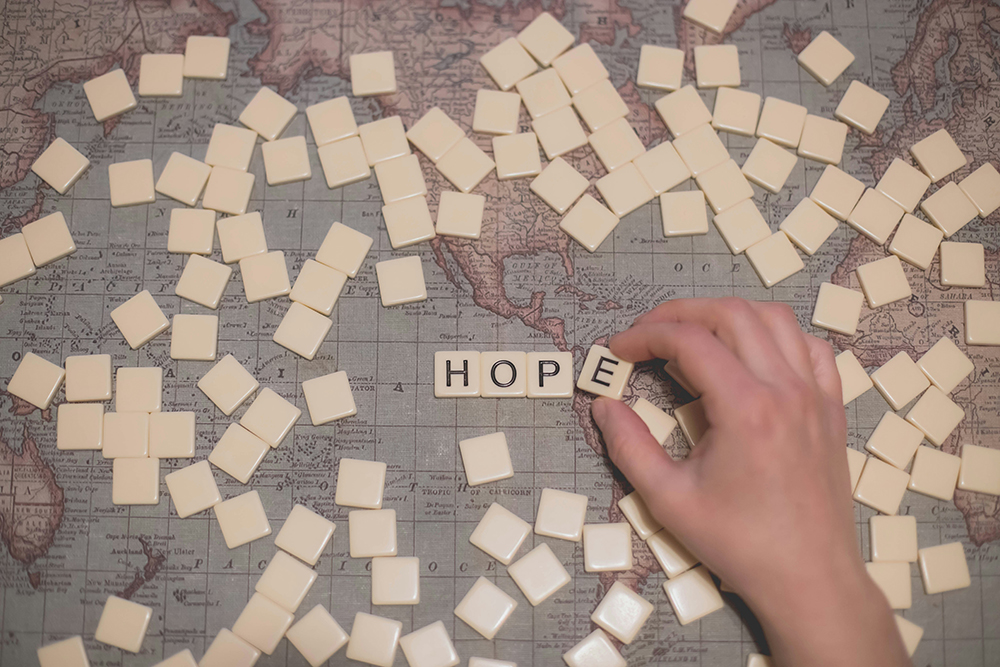
(Unsplash/Dayne Topkin)

by Sr. Karolina Luczak
Many people today describe our times as hopeless. The wars in Ukraine and Gaza have brought suffering, displacement and fear to millions of people. Across societies, political polarization is deepening, families face economic uncertainty, migrants and refugees search for safety and belonging, and growing numbers of people struggle with loneliness and anxiety about what the future may bring. Even the news meant to inform us often leaves us feeling overwhelmed rather than strengthened.
In conversations with people we serve, and sometimes among ourselves, we hear the same words repeated: "I no longer see hope."
However, in our ministry with older people who experience loneliness, we have seen how hope can also return through very ordinary gestures. A shared meal, a visit, a phone call, or simply knowing that someone will come again next week can make a real difference. We cannot always change a person's circumstances, but we can help ensure that no one has to carry them entirely alone.
Others remain silent, unsure how to speak about hope without sounding naive.
As women religious, we recognize this tension well. We live and work in the midst of these realities, not apart from them. For us, hope is not an abstract idea or a comforting slogan. It is tested daily — in the faces we encounter, in the limits of what we can change, and in the persistence required to remain present when answers do not come easily.
Hope born in ordinary places
Christianity itself was born in a world that offered little reason for hope. The Gospels do not place its beginnings in centers of power or stability, but in the fragile circumstances of a young family. Mary and Joseph awaited the birth of their child not in security, but in uncertainty, far from home, with no assurance that things would "work out."
This is not a romantic detail of the Christmas story; it is its theological heart. Christian hope is not optimism. It does not depend on favorable circumstances, reliable forecasts or social stability. Its source lies elsewhere — in God's presence and fidelity, even when the world offers no visible guarantees.
That is why hope can endure when, from a human point of view, meaning itself seems to unravel.
Advertisement
Nazareth and the daily work of hope
An understanding of hope leads us to Nazareth. If hope can take root where little seems to be changing, then Nazareth becomes more than the name of a place — it becomes an image of how God works. Nazareth was an unremarkable place. Nothing happened there that would have drawn the attention of historians or chroniclers of the time. And yet it was there, in the hidden rhythms of ordinary life, that God quietly began the work of salvation.
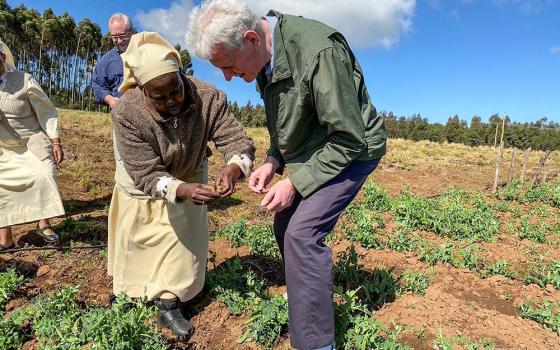
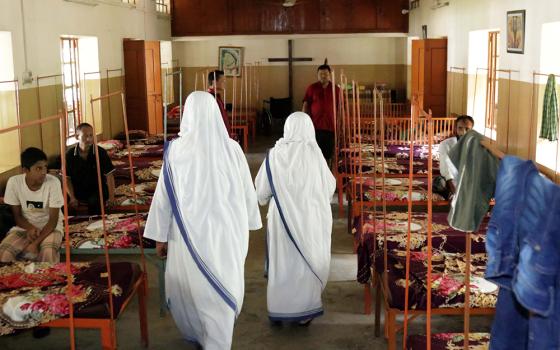
For many sisters today, Nazareth is not a metaphor but a lived reality. It takes shape in convent kitchens and community rooms, in classrooms, shelters, hospitals and places of quiet accompaniment. It is found in routines that rarely make headlines: prayer prayed despite fatigue, conversations held without clear solutions, fidelity to people and places that seem forgotten by the wider world.
Hope, in this sense, does not begin with dramatic change. It is born in faithfulness to small, repeated acts that affirm life and dignity even when outcomes remain uncertain.
Hope lived, not proclaimed
In a world marked by fear and polarization, Christians are often tempted to respond with loud declarations or quick answers. Yet much of the hope carried by women religious is expressed differently. It is not proclaimed from a distance, but lived up close.
It is remaining with a person who has lost trust in institutions and promises. It is continuing to serve in neighborhoods where progress is slow and setbacks are frequent. It is choosing presence over efficiency, and listening over explanation. This kind of hope does not deny suffering; it stands within it.
The apostle Paul wrote that "hope does not disappoint" (Romans 5:5). Not because history inevitably improves, but because God remains faithful. Hope flows not from our ability to resolve crises, but from the assurance that God's love has already been poured into our hearts through the Spirit.
A quiet witness in uncertain times
Many women religious today live and serve in contexts where results are fragile and visibility is limited. Their witness rarely fits contemporary measures of success. And yet, precisely in this quiet perseverance, hope continues to be made visible.
Small acts of fidelity often speak more powerfully than grand statements: forgiveness that takes time, prayer offered in exhaustion, staying close to someone who no longer believes change is possible. These gestures may not alter the course of history, but they sustain the human capacity to endure, to trust and to love.
Christian hope does not promise a world without pain. It promises the presence of God in a world that hurts — and the assurance that suffering and fear do not have the final word.
For many of us, that hope is not dramatic. It is enough.
Editor's note: This column was written in the authors' original language (Polish) and translated using artificial intelligence software.