(Unsplash/Josh Applegate)
by Sr. Jane Marie Bradish
For the first time in years, I was invited to address a local parish group. As I understand it, the group gathers on a regular basis and invites people to speak with them about a variety of topics. The afternoon of my presentation there was a widespread power outage that lasted well into the evening, so the scramble was on to find somewhere either with power or with enough natural light to meet. My PowerPoint would need to be ignored and was later shared with participants via email. The organizers managed and the presentation became very much a dialogue, something I was hoping would happen anyway.
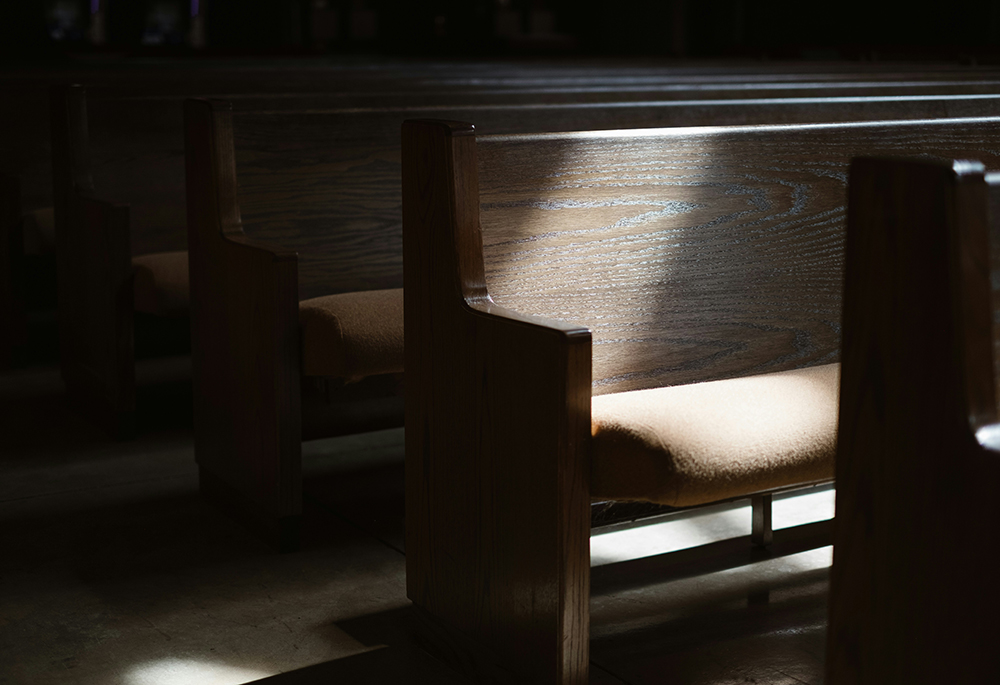
The topic? Inclusion and exclusion as experienced in liturgy. Don't jump to conclusions. This was not liturgical bashing. What I wanted all of us to do together was to reflect on our experiences of liturgy, simply noting when word and ritual felt inclusive and welcoming, and when those same factors felt exclusive and far from welcoming. Both experiences happen more often than we realize and for any number of reasons.
One's experience is simply that, experience. Neither positive nor negative. The experience largely depends on so many factors. For me personally, the ritual and word can feel very welcoming and inclusive one time and anything but another time, or can even shift dramatically during a single liturgy.
I started the group with two examples I have come to notice lately. Eucharistic Prayer II is the one used most regularly during the masses I attend. One random weekend, this phrase from that prayer — "Remember, Lord, your Church, spread throughout the world, and bring her to the fullness of charity" — just about knocked me off my feet. Church, spread throughout the world: Talk about feeling welcome and included.
Maybe I was feeling connected to my congregation, which is very literally spread throughout the world. Maybe I was connecting with those in war-torn parts of the world, or maybe I was more aware than usual of the spirit of superiority and separation the U.S. seems to be projecting right now. I didn't try to figure it out. Rather, I leaned into the feeling of being included.
Advertisement
The other example I used is more complicated for me personally. Part of many funeral rituals is some version of the prayer, "May 'X' now enter into eternal life — a promise made to all who are faithful." Most times I find comfort in the thought of a promise made and fulfilled. Where I stumble is the "all who are faithful" piece. I do not know how to define faithful or who gets to decide what is or is not faithful. That hint of what appears to me as judgment is tough for me.
On any given day, at any given time, I can be seen as very faithful or very unfaithful. I suspect others have a similar experience. In all honesty, there are times I am not even sure myself if I'm being faithful or stubbornly trying to make my point, or some combination of both. Again, I'm sure I'm not the only one.
I will admit I was nervous. I was not sure how well people would react to a deep dive into liturgy, connecting it with their lived experience. I was stunned and thrilled by the diversity of sharing. We quickly passed around missalettes so people could look up exactly what they wanted to reference.
The discussion flowed freely from that point forward. Some attendees spoke of feeling included when greeted and welcomed at the door, when invited into a pew already partially occupied by others, or when hearing inclusive language. Some spoke of general intercessions, noting how those prayers can be both inclusive and exclusive. Some spoke of homilies or parish announcements where it is painfully clear that only "real Catholics" are welcome. Most often, this involves who is invited to come forward to receive Eucharist. Some spoke of not having any experience of inclusion or exclusion in liturgy; it simply never occurred to them.
After numerous examples of both inclusion and exclusion were shared by group members, we needed to move forward. It's one thing to notice; it is another to figure out "what to do" so we don't get stuck in our personal reactions. The honesty of this sharing surprised me; it was during this sharing that I learned a bit more about who the presentation attendees were. They were past and present clergy and vowed religious, members of the LBGTQIA+ community and their supporters, healthcare professionals, as well as people who just wanted to hear about inclusion and exclusion in liturgy and the "regular attendees" who come whenever the group gathers.
People spoke of walking out of liturgy, messaging the parish or diocesan leadership with affirmations and suggestions, volunteering for committees, and so many more actions and possibilities. Every single example came from a place of prayer, not "heat of the moment" reactions. Clearly, I was not the only one who had encountered experiences of inclusion and exclusion in our most sacred shared prayer. Who knew?
As I left the gathering that evening, heading home to see if the power had been restored, I felt a connection with this group of people I had never met before. At our most human level, everyone wants to belong. Sometimes that is hard; sometimes it's as easy as a simple word change or a smile toward a stranger. In no way do I expect, or even want, liturgy to be warm and fuzzy. I do, however, want to feel included on the journey.