(Dreamstime/Yuri Arcurs)
by Sr. Karen Jean Zielinski
Contributor
I never want to go back to rehab again.
In 2023, I spent about nine months in the monotony and loneliness of intensive physical rehab. I felt vulnerable, powerless and overwhelmed. I didn't know what lay ahead for me. I lost my independence and had no control over nearly every phase of my life.
Flashback: I was diagnosed with multiple sclerosis, or MS, on Oct. 18, 1975.
At first I thought the numbness and weakness in my legs were caused by my new "industrial strength" support hose. It was my first year teaching seventh grade, and I knew something was wrong with me. I thought I had a pinched nerve and the doctor would give me a shot or pill to make me feel better.
I went to the hospital. Three weeks later, I left with the diagnosis of multiple sclerosis. I was shocked and could barely pronounce those words. I was 22.
For the next 50 years, I managed my symptoms well. For three decades, I took three or four disease-delaying medications that I tolerated well. But after a while, I experienced more losses: weakness in my legs and arms, loss of stamina. I began using a cane and an electric cart for mobility.
Following the COVID-19 pandemic and a bout of shingles in 2022, I grew increasingly weak and exhausted. One night that year, at an informal pizza dinner with my sisters, for the first time in 49 years, I knew I needed to go to the hospital for my MS.
Like many of us who are diagnosed in our early adult lives with a chronic disease, I lived with my diagnosis, not forgetting I had it, but carrying a little kernel of anxiety in my heart that it might worsen. And it did.
Advertisement
I continuously prayed for a cure. Blessed Solanus Casey, a Capuchin friar who ministered in Detroit, was the holy man I prayed to each day. Some say his prayers cured people.
Sometimes, when I was quite discouraged with my MS and rehab, I asked for a complete cure through his intercession. I became quite emotional, caught in a spiritual roller coaster, believing it could happen, and then doubting because of my lack of faith. Still, I kept praying for a cure.
After three days in the hospital, I went to a rehabilitation hospital for intense physical and occupational therapy for two weeks. Then I transitioned to Rosary Care Center, sponsored by the Sylvania Franciscan Sisters of Ohio.
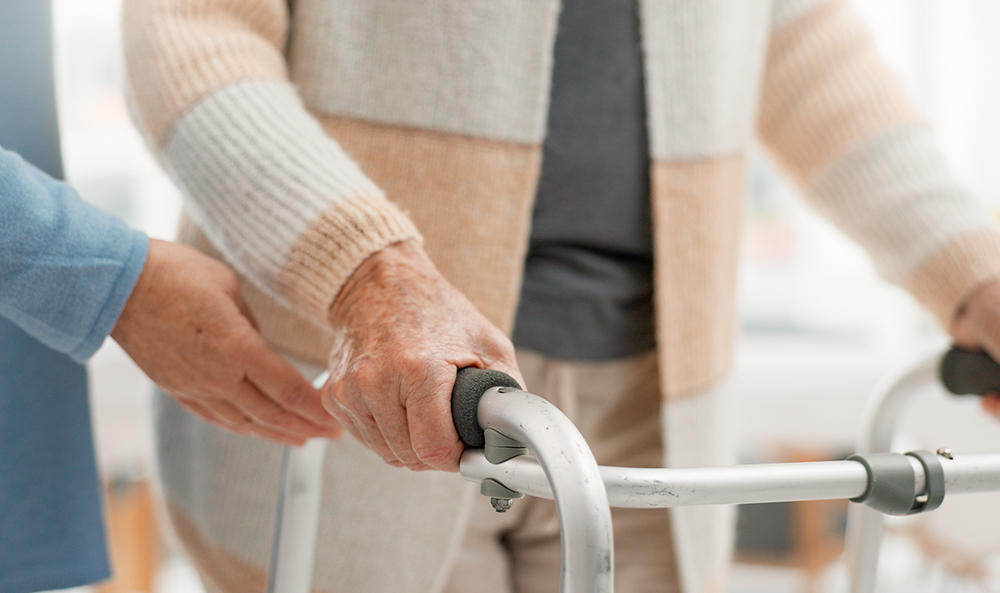
I was overwhelmed when I first arrived. Rehab was not my home. Anyone who has been through it knows it's a hard place. Besides not having the typical things you have at home — a good cup of coffee, the freedom to eat hot food you like, when you want, to manage your own schedule, and just be home. You learn you are not in control. You lose the very thing most Americans value most — independence.
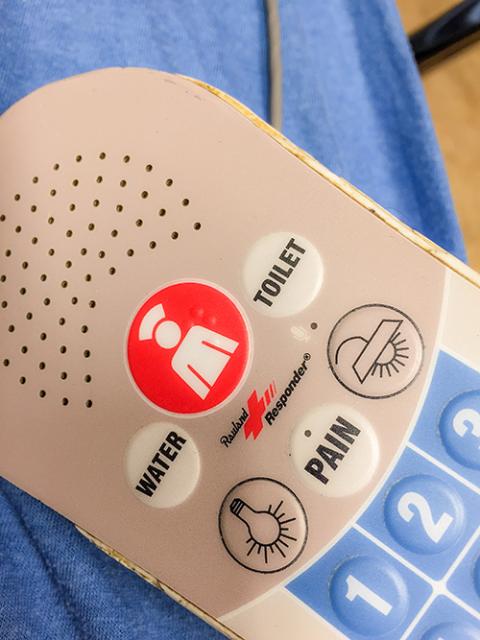
Being dependent bothered me. I waited to fill out menus, to receive my meals. I had to pull a call light to ask for my medicine or go to the bathroom. Sometimes I had to call a nurse for a pill and a glass of water. I waited for the elevators to get to therapy or a care conference. I didn't like to wait.
(Wikimedia Commons/Tony Webster)
I was determined to improve. The limitations of a stay in a therapy center would not thwart my healing. My goal was to go home.
No matter how hard I worked in physical therapy and occupational therapy, sometimes it felt like I made no physical improvement. After some sessions, I panicked. Was all this hard work for nothing? One week, my exercises and weighted arm work all went so well, and then the next week, I was back to square one!
I knew MS is unpredictable. No matter how hard I worked, my brain and nerves did what they wanted. I was downhearted and hated my weary legs. I was powerless and not in control of my body, despite my hard work. I felt alone, and a bit angry that my requests for healing to my loving God were ignored. I was doing my part — all the work!
But during this phase I realized that I did have control — I could choose to work hard to improve my stamina, even if I couldn't control how the disease would play out in my body. Choosing to do the work was my power.
I learned much about MS over the years, but now the reality hit hard. We never know how our health will play out despite our best efforts. I remember the physical therapist coming to my room and asking me if I wanted to do therapy that day. Often I told her, "No, but I'll come anyway." Saying yes and choosing to be disciplined was my power.
I don't know when it happened, but sometime in the mid weeks of rehab, I decided to live like my discharge date was a few weeks down the road. It gave me a sense of power and hope.
As I started to make significant improvements, I started to pray with hope, realizing that for me, true hope was a request to God for something that might happen but realistically might not. I describe my prayer as filled with skeptical hope.
(Dreamstime/Robert Kneschke)
We all like our independence. When you leave home and enter a nursing home or a hospital, you certainly become dependent on many things you once took for granted. Dependence becomes the new normal. At these times, I felt lonely and resonated with the words of Franciscan Fr. Richard Rohr: "Good powerlessness (because there is also a bad powerlessness) allows you to 'fall into the hands of the living God' (Hebrews 10:31). You stop holding yourself up, so you can be held."
As a musician, I prayed with bits of hymns: the refrain of "Be Not Afraid," and my favorite, Verse 3 of "You Are Mine":
I am strength for all the despairing, healing for the ones who dwell in shame.
All the blind will see, the lame will all run free, and all will know my name.
Finally, there was talk of my discharge. We did home visits to my apartment right across from the rehab center. I live alone but am surrounded by many of my sisters and kind neighbors. I felt relieved, thrilled, grateful, proud and overwhelmed to go home on Friday, Oct 13, 2023. I still like to ask my Alexa how long I have been home. I love to hear her tell me it's been well over a year.
My stamina has improved, and I am so aware of all the tips I learned in rehab. I have to be honest, I am very careful and mindful of anything I do. I do not want to fall and go back to rehab again.
A friend sent an article by Cynthia-Marie Marmo O'Brien, a writer and educator in New York who writes about "the holiness of asking for help." Weakness and vulnerability is part of the human condition. I certainly recognize the holiness that my weakness teaches me!
My months in rehab were challenging on so many levels. So much healing happened. My physical awareness improved — I know when to try a daily task on my own and when to ask for help. I try to remember that my disease continues to progress while I age, and I motivate myself by avoiding anything that might send me back to rehab. (Note to self: Do not fall!)
Because of rehab, I feel I was cured. It was not a 100% cure of my disease, but the experience of this "time of trial" touched my heart and soul, gave me a better understanding of my body and my journey of growing older.
I like to say I was mended in more ways than I expected.