
(GSR graphic/Olivia Bardo)

by Gitonga Njeru
At dawn, the parish compound of St. Michael's School near Lang'ata Women's Prison begins to stir moments before Nairobi's traffic thickens.
In a modest dormitory painted pale blue, 9-year-old Fiona Achieng smooths down her school uniform while a Catholic sister kneels to tighten her shoelaces.
"Homework?" the sister asks gently.
"Finished," Achieng replies, hoisting a worn backpack onto her shoulders.
Achieng's mother is serving a three-year sentence inside Lang'ata. But she is not alone.
Across Kenya, when women are imprisoned, their children often vanish into fragile, informal care arrangements. Most distant relatives are already stretched thin, and older siblings have been pulled from school to work, or, in the worst cases, the streets.
There is no comprehensive state program dedicated to safeguarding these children. Yet quietly, and with little public attention, Catholic sisters are stepping into the breach through parish-based homes or support to existing guardianships, keeping siblings together and preserving the fragile thread between incarcerated mothers and their children.
Women make up a minority of Kenya's prison population, but most are primary caregivers. When a father is jailed, children often remain with their mothers. When a mother is imprisoned, family life fractures almost instantly, as many incarcerated women were sole providers before arrest.
Once inside, their children frequently disperse. Grandmothers assume unexpected burdens. School fees go unpaid. Some teenagers drop out to seek casual employment. However, social stigma compounds the hardship; neighbors whisper, and children internalize the shame.
Public debate in Kenya has focused largely on overcrowding and prison conditions. Far less attention has been paid to the sons and daughters left outside the prison gates.
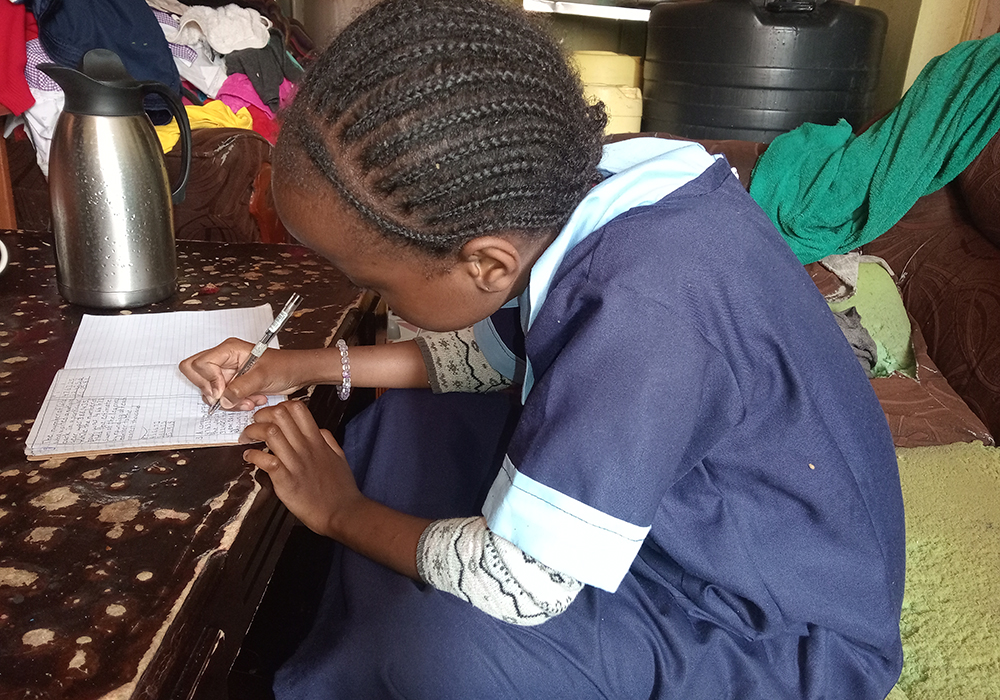
One of the children served by the sisters' prison ministry is pictured. Catholic sisters help through parish-based homes or support to existing guardianships, keeping siblings together and preserving the ties between incarcerated mothers and their children. (Gitonga Njeru)
It was during regular prison ministry visits that the Sisters of St. Joseph of Peace at Madre Teresa Catholic Parish near Nairobi began noticing a troubling pattern: many mothers weren't as worried about their sentences as they were about where their children would sleep.
"We could not just pray and leave," said Sr. Rosemary Wanja, treasurer at Madre Teresa Catholic Parish, who has spent over a decade visiting inmates at Lang'ata.
"Every week, another mother would ask, 'Sister, have you heard from my children?' Some had no one checking on them, unfortunately," she said.
Working with local chiefs and prison social workers, the sisters began identifying children whose care situations were unstable.
There was no formal launch. Instead, they converted spare rooms in their parish compound into shared bedrooms.
Their model is deliberately simple, and the sisters told Global Sisters Report they don't run an orphanage. They describe it as an "extended family home."
Siblings stay together whenever possible. Parishioners contribute small monthly donations toward food and utilities. A microfund was primarily built from Sunday collections and individual sponsors to cover school fees, uniforms and books.
Volunteers tutor in the evenings, and a retired teacher helps with mathematics. A parish youth group also organizes weekend activities so the children do not feel institutionalized.
"Every week, another mother would ask, 'Sister, have you heard from my children?' Some had no one checking on them, unfortunately."
—Sr. Rosemary Wanja
Currently, the sisters support almost a dozen children linked to incarcerated mothers. The numbers fluctuate as sentences end and reunifications occur.
Achieng arrived two years ago after relatives in rural Kenya said they could no longer afford her schooling. Within weeks, she was back in class. Today, her grades rank near the top of her cohort.
"I want to be a nurse or a doctor," she said softly.
Just as crucial as academics is connection. On designated visit days, the sisters coordinate transport so children can see their mothers. When in-person visits are impossible, they facilitate phone calls.
For Achieng's mother, those calls are lifelines.
"My fear was they would forget me," she said during a monitored conversation. "Sister tells me how she is doing in school. I feel I am still her mother."
The initiative is not isolated. In western Kenya, near Kisumu, the Visitation Daughters of the Immaculate Heart of Mary have developed a complementary model.
Rather than housing children full-time, the sisters there focus on stabilizing guardianship arrangements. If children remain with relatives, the congregation pays school fees directly to schools, reducing the risk that scarce funds are diverted to other urgent household needs.
Advertisement
They also organize monthly support circles for caregivers, grandmothers, aunts and older siblings, offering counseling and modest stipends for essentials.
"We realized not every child needs relocation," said Agnes Murma, a sister who coordinates the Kisumu program. She added that sometimes all they need is consistent school fees and someone checking in on them.
Funding is similarly grassroots. Local Catholic business owners contribute. Parish harvest festivals double as fundraising drives. Foreign grants sustain the effort, and its modest scale is both its strength and its vulnerability.
Unlike the Nairobi sisters, the Kisumu sisters rarely house children overnight. Instead, they intervene early — paying rent arrears, providing uniforms, and connecting families with pro bono legal aid when possible.
Both models share a core philosophy: preserve family bonds wherever feasible. For the sisters, this work is less about institutional charity and more about mission. Catholic social teachings emphasize the dignity of every human person and the centrality of family life. In practice, this means ensuring that punishment imposed by the justice system does not spill indiscriminately onto children.
Murma insists that they are not replacing mothers. "We are safeguarding motherhood and the right to parenting," she told GSR.
The sisters keep siblings together, maintain school attendance and facilitate contact with incarcerated parents. They aim to interrupt intergenerational incarceration and the increased risk that children of prisoners may face future conflict with the law.
"We are safeguarding motherhood and the right to parenting."
—Sr. Agnes Murma, who coordinates the Kisumu program and insists they are not replacing mothers
Their work is relational, largely invisible, and operates outside formal, nongovernmental organization frameworks. There are no glossy annual reports, and success is measured in exam results, improved behavior and tearful reunions at prison gates.
Yet their systems are fragile.
Annual costs per child — covering food, uniforms, books and transport — run into tens of thousands of Kenyan shillings. When parish donations dip, the sisters quietly absorb gaps from their own stipends. Burnout looms, and prison ministry is emotionally taxing.
Stigma also lingers. Some schools initially hesitated to enroll children once they learned of a parent's incarceration. The sisters have had to advocate firmly, reminding administrators that children bear no guilt for their parents' convictions.
If these informal networks collapsed, the consequences would ripple quickly: school dropouts, early marriages for girls, boys drifting into precarious labor, and families dissolving further under strain would increase.
On a recent visit, Achieng clutched a small plastic bag of biscuits, a gift for her mother.
The sisters had arranged transport for her and waited in the visitors' area as conversations unfolded under watchful eyes. Afterward, back at the Madre Teresa Parish compound, one of the sisters handed Achieng the phone for a brief follow-up call.
Her mother's relief was audible, although sentence completion is months away. When that day comes, the sisters will help coordinate reintegration, including counseling, mediation with relatives and practical support for housing if needed.
Later, as nightfall nears over Nairobi, homework resumes again in the blue-painted dormitory. Laughter drifts across the courtyard. The sisters move quietly between rooms, checking assignments, reminding children to wash up before supper.
The sisters cannot change the justice system. They cannot erase the circumstances that led mothers to prison. But in parish compounds, they are holding families together, unintentionally fractured by the system. In doing so, they ensure that even behind bars, motherhood endures.