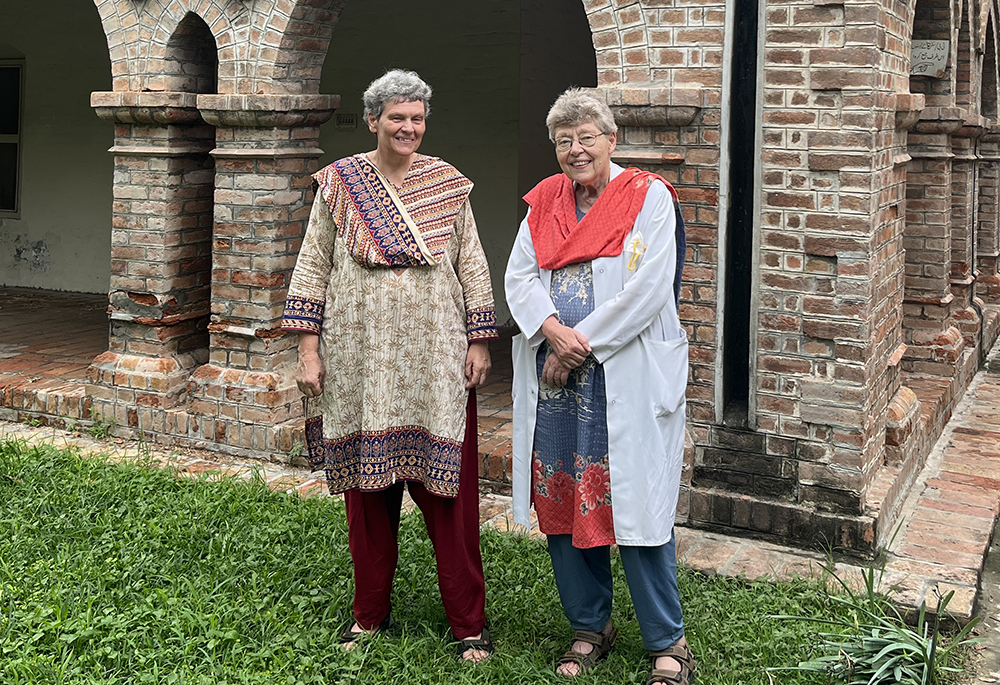
Protestant German sisters of the Sisterhood of Christ Bearers Sr. Annette Dimigen and Sr. Chris Schmotzer manage the Rawalpindi Leprosy Hospital in Rawalpindi, Pakistan. Both have spent decades working with leprosy patients in the South Asian country. (Anee Muskan)

by Anee Muskan
In the summer of 2024, 26-year-old Muhammad Zeeshan Bashir noticed a sore developing on his left knee. He had never seen anything like it, but as it spread, his concern turned into fear.
While searching online for an explanation, he found images and information, which led him to wonder whether he had leprosy.
Bashir eventually came to the Rawalpindi Leprosy Hospital, where a diagnosis ruled out leprosy and confirmed Cutaneous leishmaniasis, a parasitic infection. He soon recovered with treatment.
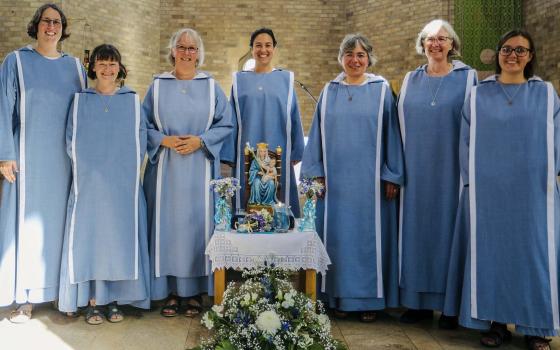
Founded in 1904 by the British Leprosy Mission, the leprosy hospital is currently managed by Sr. Annette Dimigen and Sr. Chris Schmotzer, Protestant German sisters of the Sisterhood of Christ Bearers.
The Sisterhood of Christ Bearers emerged in postwar Germany as part of a wider spiritual renewal after World War II, when several new communities took shape and drew people to a lifelong commitment to serve Christ. The Sisterhood of Christ Bearers distinguished itself by offering service beyond Germany's borders.
Dimigen has been part of the mission for nearly three decades and was honored by the German government in June 2026 with the Federal Cross of Merit. She first arrived in Pakistan in 1997 and has spent much of her time helping to run the hospital’s administration and its humanitarian work.
The Protestant sister, who holds a degree in agriculture and previously worked at Germany’s ministry of agriculture, told Global Sisters Report that she believed her life had a greater purpose and that she originally wanted to work in Argentina. However, her superiors directed her to the hospital in Pakistan.
"I used to think, 'What would I do in a leprosy hospital with a degree in agriculture?' And I have been doing exactly everything here except the medical work," she said.
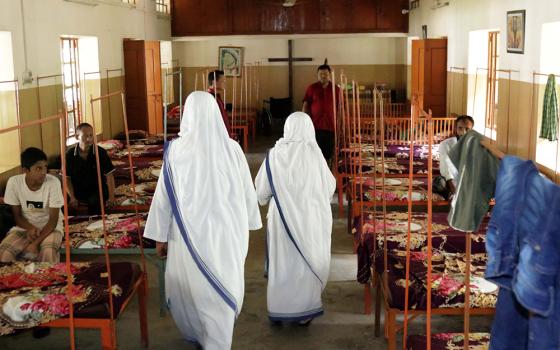
British Protestant missionaries established the hospital on the outskirts of Rawalpindi as an asylum for people affected by leprosy, at a time when those with the disease were treated with fear and contempt as outcasts.
Now, the referral center for leprosy in northern Pakistan also treats tuberculosis and skin diseases. It offers physiotherapy, surgery, eye and skin care, orthopedic support, and physical, psychological and social rehabilitation.
Advertisement
In 2023 alone, according to hospital records, about 400 people affected by leprosy were treated, as well as approximately 25,000 skin patients, 1,000 people with tuberculosis, and 1,000 patients needing physiotherapy.
Dimigen works with Schmotzer, a doctor who has spent 38 years serving in Pakistan.
Schmotzer joined the sisterhood as a medical student and aspired to serve somewhere she could make a difference. She wanted to serve in Africa, but a sister who formally served in Pakistan suggested that she work there to improve the leprosy program for women.
The sisterhood "is very similar to the idea of Catholic nuns" except that it was founded within the Protestant church, she told GSR, adding that women make a lifelong commitment to serving the Lord and go through a "come and see" program followed by a two-year novitiate.
"We are confirmed in a formal service with a ring. There are no formal vows, and otherwise we have the same essence," she added.
Capuchin Fr. Lazar Aslam, convener of the Justice, Peace and Ecology Commission in Pakistan, said that Catholic and Protestant religious life differ, yet despite these differences, "what unites us is a much greater purpose, a common call to follow Christ and serve those who are poor, sick, marginalized and forgotten."
Esa Jan, a 58-year-old Muslim and former patient, never understood much about the German Protestant sisters involved in his care, only that they were religious women.
Born in a village in Khyber Pakhtunkhwa, he experienced discolored skin on his feet, weight loss and numbness, but doctors repeatedly misdiagnosed him as having a skin condition.
When he became too weak to stand, he was referred to hospital and was diagnosed with leprosy, where treatment helped him regain the ability to stand and walk on his own.
He said the sister who helped him "wore no religious habit, nothing to visibly mark her as a nun. Her compassion is what stayed with me."
Schmotzer said that service is integral to the sisters' spiritual life. Despite their work, they also maintain daily devotions together each morning and evening.
The well-known, German-born Sr. Ruth Pfau established a similar facility — Marie Adelaide Leprosy Center, or MALC — in Karachi to provide care for people with leprosy.
"We were working for the same cause," Schmotzer said, "and we had close ties with Sr. Ruth Pfau. These medical programs follow the same national guidelines."
Although the Marie Adelaide Leprosy Center works closely with the Catholic Church and its bishops, "we are not connected with any church or denomination," the Protestant nun said.
"We work with the government because health is the government’s responsibility, and we are here to assist the government in facilitating the provision of healthcare," Schmotzer said.
She added that their work at the leprosy hospital has changed over the years, with fewer leprosy cases and greater community awareness to address the stigma associated with the disease.
"It was leprosy years ago, but those numbers have declined, and now we continue the same work for tuberculosis."
For Dimigen and Schmotzer, the disease may have changed, but their vocation to serve endures.