(GSR graphic/Olivia Bardo)
by Gitonga Njeru
On a humid November morning at Nazareth Hospital in Limuru, Kiambu County, Kenya, the quiet corridors of the maternity ward tell a story of endurance, faith and transformation.
For the Franciscan Sisters of the Immaculate Heart of Mary who run the hospital, humanity is at the heart of every life saved or lost.
At 58, Sr. Consolata Muthoni has spent more than three decades in mission health care.
"I came here to serve," she said, gently smoothing her well-worn habit as she walked toward the neonatal unit. "Every baby, every mother — they are children of God, and it is our privilege to care for them."
Nazareth Hospital was founded in 1964 by the Consolata Sisters as a tiny dispensary, rooted in the coffee and tea estates of Limuru. Today, the hospital has evolved and now offers a range of services, including surgery, oncology, dialysis and critical care.
But its mission remains deeply spiritual. Muthoni is part of a community of four sisters who have shaped the hospital's journey — and whose voices reflect not just administrative zeal but a deeply personal commitment.
Muthoni is quietly practical. She joined this mission in her 20s and has seen generations of mothers walk through Nazareth's doors.
'Good nursing is not just about giving injections. It's about sitting with someone who's scared, holding their hand, praying with them if they ask. Dignity matters.'
—Sr. Anne Njeri
She remembers her first delivery — a young woman from a nearby tea estate, who arrived frail and terrified.
"She had nowhere else to turn," Muthoni recalled. "When that child cried for the first time, I knew this was more than medicine. This was hope."
Next to her is Sr. Anne Njeri, head of nursing. At 45, she balances leadership with compassion, supervising nurses while making rounds.
"Good nursing is not just about giving injections," she said with a warm laugh. "It's about sitting with someone who's scared, holding their hand, praying with them if they ask. Dignity matters."
Njeri's older sister, Sr. Agnes Karanja, serves in administration. Their sibling bond, they say, strengthens their ministry.
"When we pray together, we remind each other why we are here," Karanja said. "Our faith gives structure to service."
Sr. Mary Wanjiku, the hospital's director of community outreach, oversees Nazareth's mobile clinics, pastoral counseling and the charity fund.
"In this community, many cannot afford care," she said. "But we say: Come anyway. We find a way. No one should be turned away because of lack of money," Wanjiku said.
Over the years, their leadership has anchored Nazareth through growth and challenge.
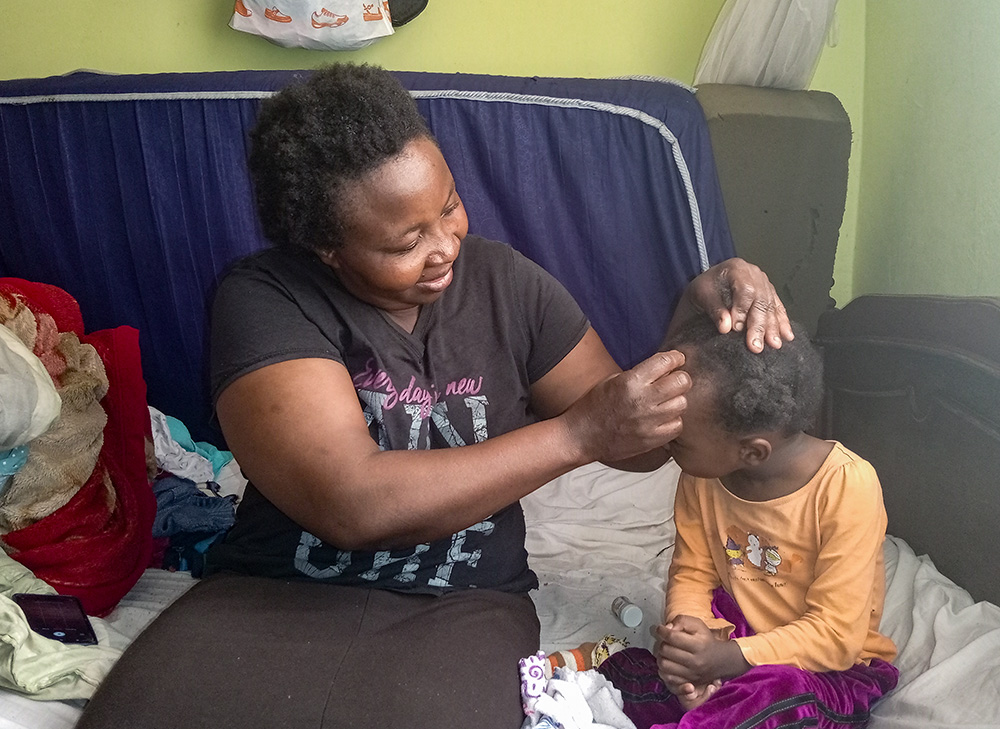
Jackline Nzau, 40, at her home after giving birth to her daughter at Nazareth Hospital in 2022. Nazareth Hospital was founded in 1964 by the Consolata Sisters as a tiny dispensary, rooted in the coffee and tea estates of Limuru, Kiambu County, Kenya. Today, the hospital is now run by the Franciscan Sisters of the Immaculate Heart of Mary and offers a range of services, including surgery, oncology, dialysis and critical care. (Gitonga Njeru)
"The sisters' presence is not symbolic," a longtime midwife told Global Sisters Report under the shade of an old jacaranda tree. "They are builders of lives."
In the maternity ward, a 27-year-old mother who requested anonymity said she came to Nazareth after two previous miscarriages at another hospital. Her voice trembled when she spoke.
"I didn't believe I could carry to term again. But here, they treated me more like family than a patient," she explained.
She remembers Muthoni's steady hand guiding her through labour, the gentle encouragement of Sr. Irene Mwangi, and the quiet prayer that Sr. Mary Mwangi offered just before delivery.
"When my baby was born, I burst into tears," she said. "They cried with me. They didn't leave my side."
John Wainaina, whose wife underwent surgery after a complicated pregnancy, told GSR in the recovery lounge, "The sisters don't just operate — they minister. They ask about your soul as much as your physical pain. That's rare."
But not all stories will end in joy. In the palliative care wards, Naomi Kilemi, a 50-year-old ovarian cancer patient, lies on a pastel green bed.
Advertisement
She has been coming for chemotherapy for six months. Her voice is soft but firm. "When I was first told I had cancer, I thought it was my end. But the sisters at Nazareth Hospital visited me, we prayed and held hands. They aren't just here to treat disease. They're here to walk through death with me."
However, the sisters are not insulated from Kenya's broader health care challenges. As mission facilities, they depend heavily on church-based funding, charitable donations, and a partnership with Tree of Lives, a nonprofit that supports many Catholic hospitals, pastoral counseling and charity funds.
Wanjiku explained the tightrope they must walk. "We must balance quality care with affordability. Every month, we juggle our charity fund. But demand is growing — for dialysis, for palliative services — and donations don't always match."
There are also staffing pressures. Nurses come and go. Equipment needs updating. And as Njeri said, regulatory demands and social health authority accreditation can strain mission budgets.
"We want to keep fees low," she added. "But we also need to pay our staff, maintain the machines and invest in training."
Yet, amid constraints, innovation blooms. Under Wanjiku's leadership, Nazareth's outreach wing has grown. Mobile clinics now reach remote villages, and pastoral counselors make home visits.
"Healing is more than medicine," she said, standing beneath the morning sun in the hospital garden. "Sometimes it's simply being present."
'If someone needs life-saving treatment, we must find a way.'
—Sr. Agnes Karanja
Karanja, known for her resourcefulness, recently launched a fundraising drive among local parishes and international partners. Her goal is to build a low-cost renal ward for patients who need dialysis but can't afford private hospitals.
"If someone needs life-saving treatment," she said with conviction, "we must find a way."
Meanwhile, Muthoni and Irene Mwangi work on a mentorship program for young Kenyan nurses rooted in clinical excellence and empathy. Muthoni said, "We teach them not to rush, to listen. To care not only for the body but for the heart."
In 2024 alone, Nazareth Hospital reported more than 10,000 outpatient visits, more than 2,000 births, and hundreds of surgical procedures. Its pastoral counseling team, supported by Tree of Lives, provided emotional and spiritual support to hundreds of patients.
But numbers tell only part of the story. Women who once feared they could never conceive now cradle their newborns, and patients with chronic illness feel seen and loved.
Irene Mwangi summed it up. "If you asked me when I started if I'd still be here after 30 years, I wouldn't have dared dream. But I believe God brought me for this. And I stay because lives are being transformed."
Nazareth Hospital remains, in many ways, a microcosm of Kenya's Christian health care tradition — rooted in compassion, driven by faith, and constantly navigating the tension between mission and sustainability.
For the sisters, it's more than a calling. It's a ministry of healing, a home for the vulnerable and a testament to the power of love.