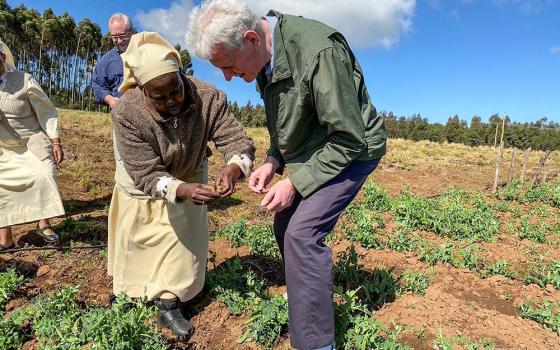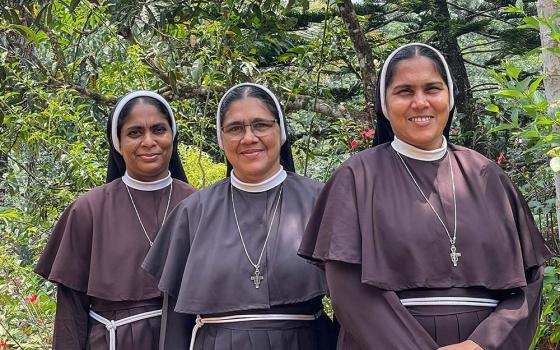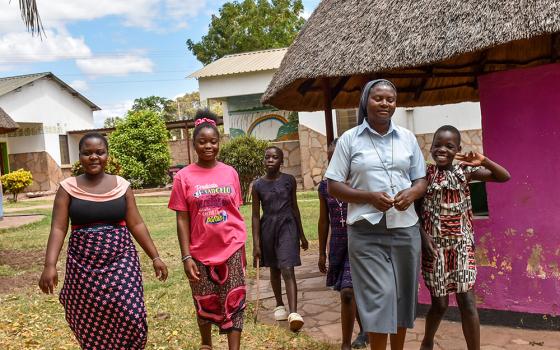
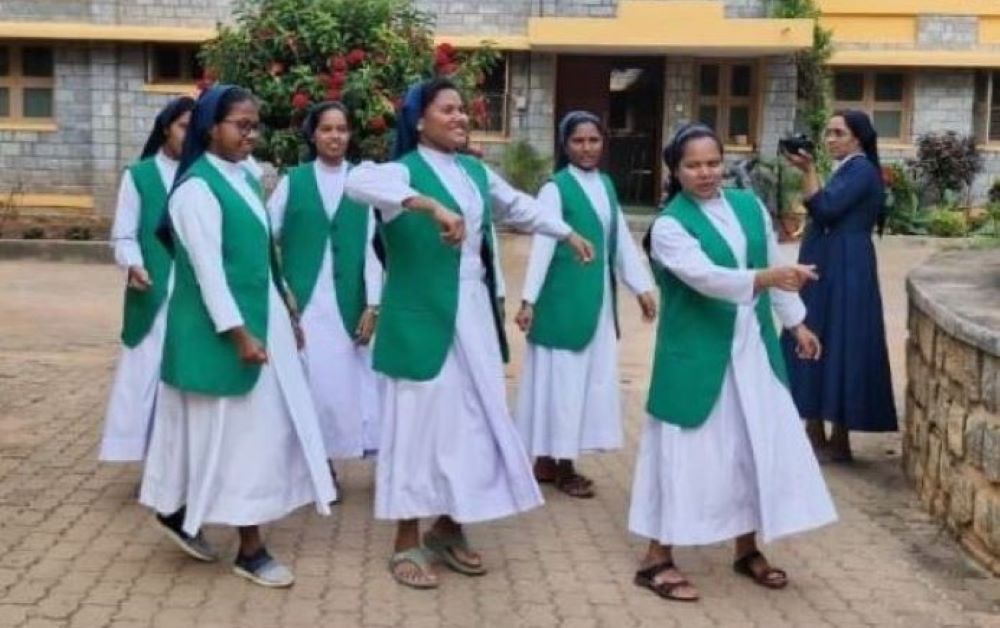
Sr. Soniya K. Chacko, a member of the Daughters of Charity of St. Vincent De Paul, appears with community members during a photo shoot in Vellanchira, Chalakudy, Kerala, southwestern India. The Rotary Club of Thiruvananthapuram selected her for its Digital Missionary Award of 2025, citing her courage, clarity and conviction in using social media to witness her faith. (George Kommattam)

by George Kommattam
For Sr. Soniya K. Chacko, digital platforms have become an unexpected and powerful mission field.
Born in a farming family in the southwestern Indian state of Kerala and drawn to writing and creative expression as a teen, Chacko joined the Daughters of Charity of St. Vincent de Paul in 2008 and made her profession on April 15, 2015.
In her 17 years as a religious, she has worked in five Indian states, serving among people with leprosy, people with HIV and others on the peripheries.
Today, in addition to her pastoral responsibilities, Chacko teaches at St. Catherine's ICSE School, Vellanchira, Chalakudy, in Thrissur district. But after her daily duties, she turns to digital evangelization, her second mission.
What began in 2011 as Facebook posts and homemade PowerPoint videos has grown into an online ministry with more than 600 YouTube videos and thousands of written reflections. She has thousands of followers across social media platforms.
The Rotary Club of Thiruvananthapuram, the Kerala capital, selected her for its Digital Missionary Award of 2025, citing her courage, clarity and conviction in using social media to witness her faith.
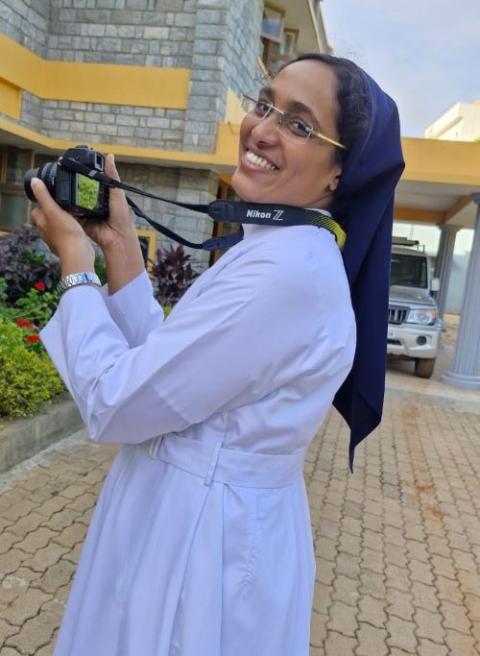
Sr. Soniya K. Chacko, a member of the Daughters of Charity of St. Vincent De Paul, poses with her camera in Vellanchira, Chalakudy, Kerala, southwestern India. (George Kommattam)
Chacko shared with Global Sisters Report the origins of her digital work, her commitment to defending consecrated women, and how she sees social media as a modern extension of her Vincentian vocation.
GSR: How do you feel about being selected for the Digital Missionary Award?
Chacko: I feel extremely happy. It is a recognition from the people who have been reading my [social media] posts and watching my online videos. The award ceremony date is not yet announced, but being selected itself is an affirmation.
The recognition came after my Facebook post in support of a nun principal who was caught in a school uniform controversy. I also supported nuns arrested in Chhattisgarh [a central Indian state] for alleged conversion and human trafficking. My posts defending consecrated women and telling their stories were widely shared.
During my work in various parts of India, I have seen how nuns serve with remarkable dedication and sacrifice. So, I can answer boldly and truthfully when nuns are accused of human trafficking or conversions, because I know the reality.
What inspired you to begin your digital ministry?
From my teenage years, I wanted to become a missionary, even dreaming of going to China as St. Thérèse of Lisieux had wished. My congregation serves in 96 countries, including China, so the dream was possible. But during my formation, I realized my "China" was the mission and community I was assigned to, or even the digital space.
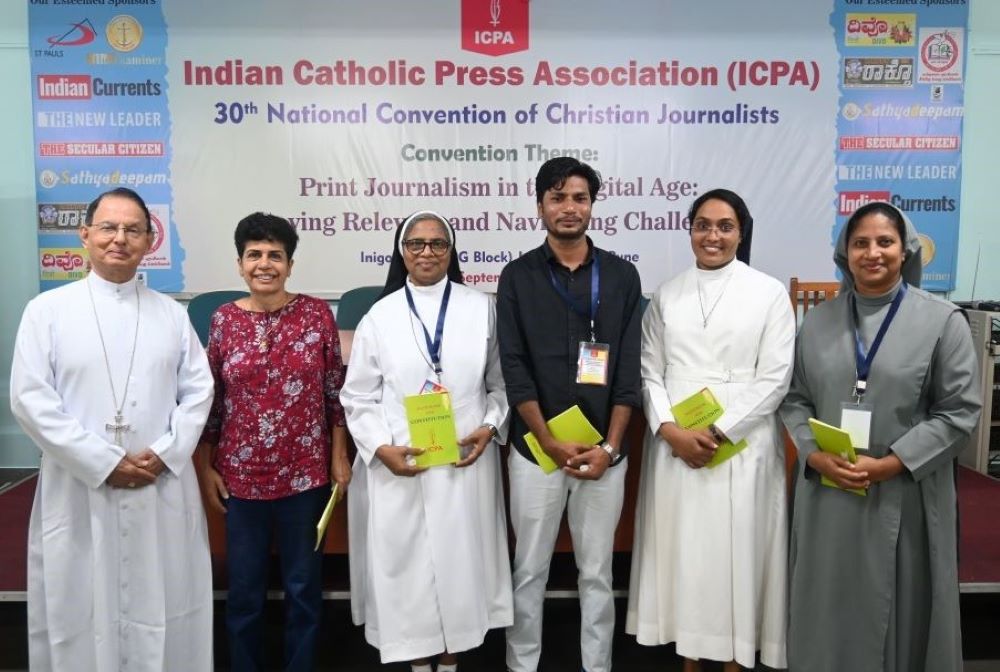
Sr. Soniya K. Chacko (second from right), a member of the Daughters of Charity of St. Vincent De Paul, is welcomed into the Indian Catholic Press Association by Bishop Henry D'Souza of Bellary, the ecclesiastical adviser to ICPA, during the association's 30th national convention at Pune, western India, on Sept. 20, 2025. (George Kommattam)
Writing was always a natural passion. I wrote about saints, poems and essays, and received awards during my college years. Later, I began sending articles to magazines, but the long approval process, especially [for] seasonal themes, made me realize the message lost relevance by the time they were published. That pushed me to write directly on Facebook and start my blog, which has no waiting or filters.
Around the same time, I felt an urge to explore video-making. I taught myself to create simple videos using PowerPoint and images. My desire was always the same: to reach people with a message of God, faith and hope. The feedback from across India and abroad encouraged me to grow in this ministry.
How do you make social media a part of your vocation as a Daughter of Charity?
As a Daughter of Charity, I believe we are called to serve wherever there is need, including untraditional places. One of those places today is the digital world. Social media allows me to reach ordinary people in a simple language, using available tools.
Our founders, St. Vincent de Paul and St. Louise de Marillac, used every means available in their time to reach the poor. St. Louise taught poor girls in the early 17th century, when educating women was uncommon. If they lived today, I am convinced they would use digital media boldly, perhaps more than I do, to spread the network of charity.
My primary responsibilities remain teaching at St. Catherine's School and serving in the parish, especially [in] catechism. Only after finishing these responsibilities do I turn to digital work. When I post something meaningful, I feel I've done another small act of service for God, extending my vocation beyond physical spaces.
My online presence has never affected my community life. I follow the timetable faithfully and spend time with my community members. Balance is essential.
What does digital evangelization mean to you?
For centuries, evangelization meant preaching, teaching and apostolic presence. But today we have a new field. Digital evangelization means using modern technology to proclaim the Gospel, [be a] witness to Christ and remain connected to the global church.
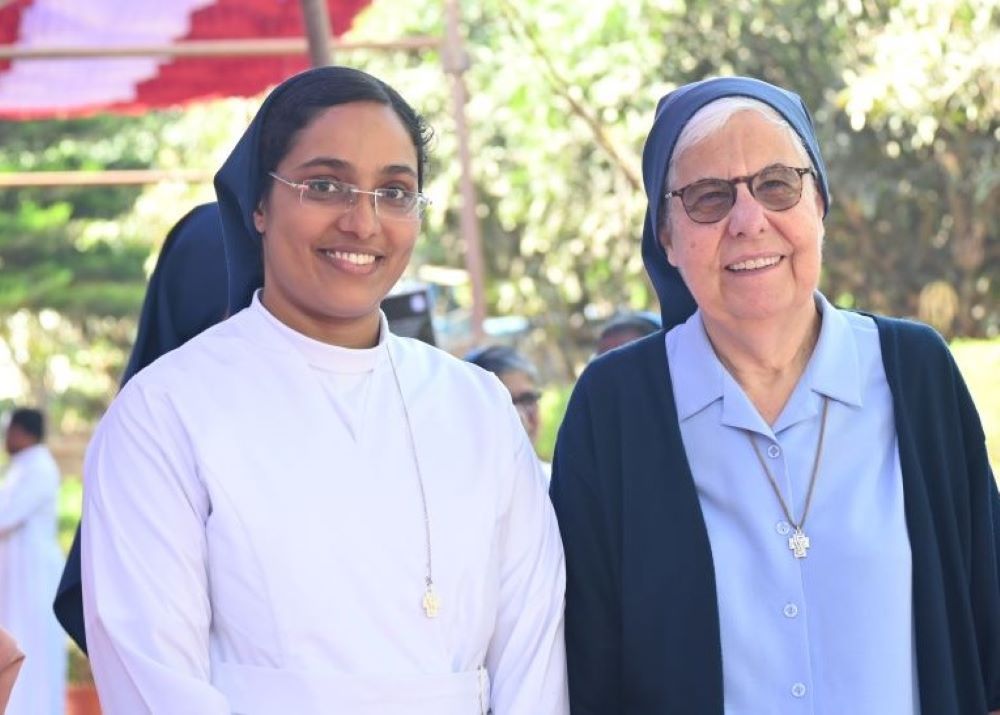
Sr. Soniya K. Chacko, left, poses with Sr. Françoise Petit, superior general of the Daughters of Charity, on Feb. 20, 2025. (George Kommattam)
A single post can reach thousands instantly. I feel closely connected not only to my own congregation across the world, but also to the Vatican, church events and global conversations. Before, we waited weeks for printed newsletters. Now we receive updates immediately, which strengthens our unity and mission.
Earlier this year, I participated virtually in a world digital missionary meet in Rome, and realized that digital missionaries form a new, important category of mission today.
How do you keep your online space positive and faith-filled?
I believe positivity brings good energy, so I try to keep my posts constructive and uplifting. But digital spaces are not always peaceful. Sometimes people post strong or contradictory comments. When misunderstandings or tensions arise in the church, I speak clearly from my faith and loyalty to the church.
I support the Holy See and work and pray for the unity of the church. When criticism comes, I accept it as part of my work for Christ. It doesn't discourage me.
How do you choose themes for your posts and videos?
Most themes come spontaneously. I don't plan much in advance. Feasts, anniversaries, birthdays and events in the church or our congregation often spark reflections. Sometimes a single quote or a sentence inspires me to write.
I like to stay attentive to what is happening around me: church news, messages from the pope, social issues and everyday events. Adding photographs or clear headlines helps posts reach more people. I notice that simple, heartfelt reflections often touch readers the most.
What kind of responses do you receive from your followers?
I receive both positive and negative responses. When posts are meaningful, they receive strong appreciation. When negative comments appear, I read them carefully. If I am unsure how to answer, I ask others for guidance. I always try to reply responsibly, with clarity and respect.
The main challenges are cyberbullying and defamation on social media. A few people have even contacted my superiors, urging them to stop me from writing, with false accusations. But my superiors have always been confident about my online work, and continue to support me wholeheartedly.
Advertisement
How can nuns use social media effectively today?
Nuns can use social media well if they understand its strengths and risks. Passion is important, whether for writing, photography or videos. We must know how social media works, what attracts people and how to communicate responsibly.
We must know [how] to handle negativity. Social media is a powerful tool, but it requires maturity, creativity and a sense of mission.
Criticism is part of this ministry, but it has never stopped me because I know my intentions are honest and rooted in faith.
What are your hopes for the future of your digital ministry?
I don't have any grand dreams. I only want to do what God inspires me to do. Whatever God permits, I will do. My hope is simply that whatever I write or create should praise God's name.