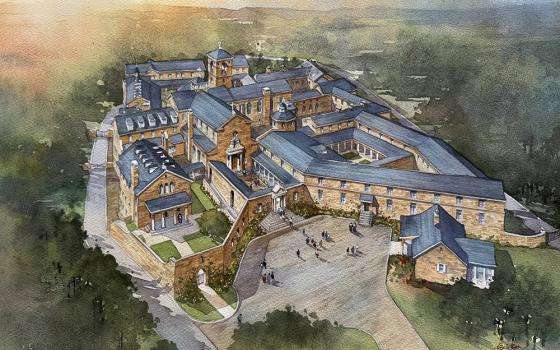
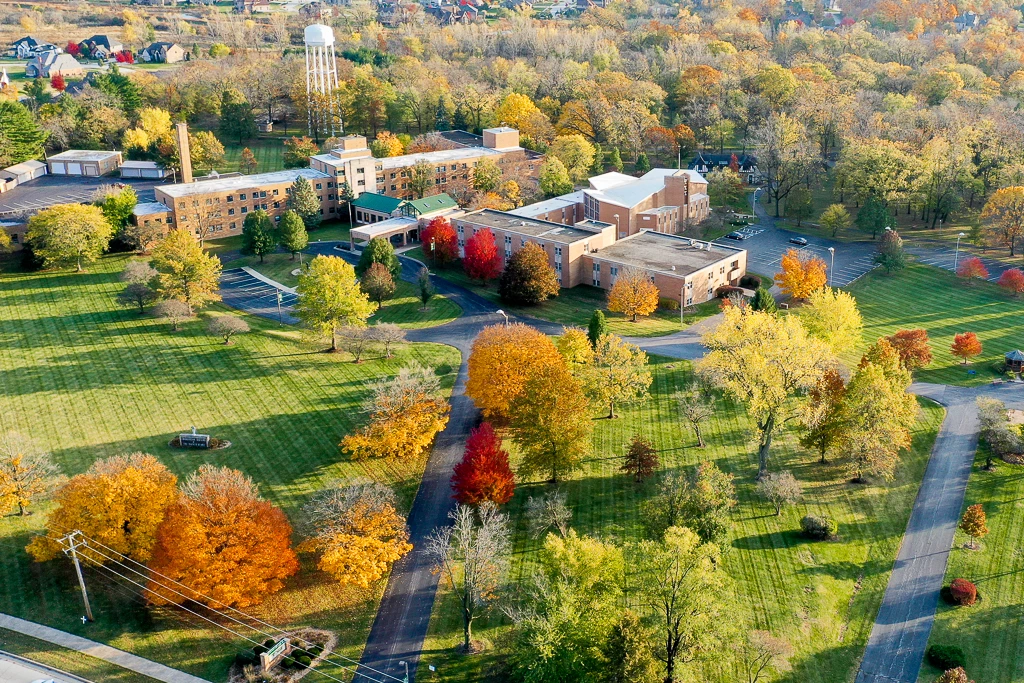
The campus of the Franciscan Sisters of the Sacred Heart is pictured in Frankfort, Illinois. The Franciscan Central Archive is planned to be built on the campus, southwest of Chicago. (Courtesy of the Franciscan Sisters of the Sacred Heart)

Another joint archive to shepherd and care for the recorded legacies of Catholic religious is being planned for the Midwest.
But what sets the Franciscan Central Archive apart from other projects is that it is charism-based, open to any Franciscan community regardless of location or whether they are men or women.
Officials recently announced they will purchase land from the Franciscan Sisters of the Sacred Heart and build the archive on the congregation's campus in Frankfort, Illinois. The next year will be spent fundraising and planning, and construction could start as early as spring 2027. Initial funding came from an Academy of American Franciscan History grant.
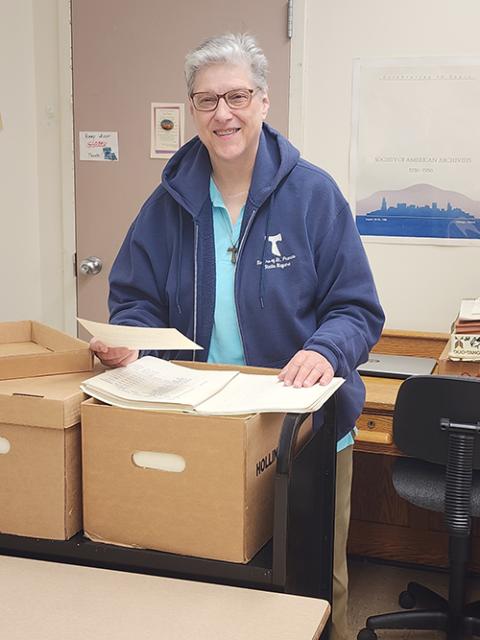
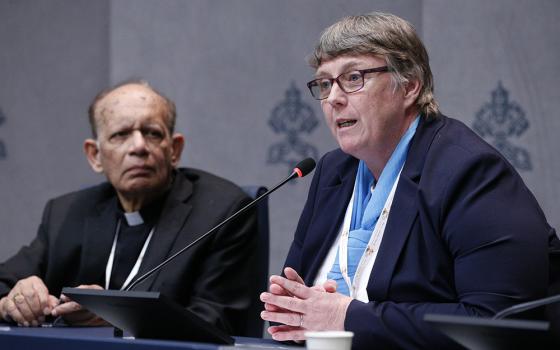
Sr. Mary Serbacki, a core partner in the effort to build the Franciscan Central Archive (Courtesy of the Franciscan Central Archive)
Sr. Mary Serbacki, a core partner and board member for the organization, said the archival materials from religious congregations are not just old documents, they are a witness to the work of the Gospel that has been done. Serbacki is the archivist for her congregation, the Sisters of St. Francis of Penance and Christian Charity in Stella Niagara, New York.
"It's a life story of both individuals and of communities," Serbacki told Global Sisters Report. "But it's also the story of the people who were served, and that makes it even more important. It's not just our legacy, it's the legacy of the people who went to our schools, who were cared for in their last moments, or were made whole and sent home."
Those legacies are in danger of being lost. According to a study conducted in 2022 by the Center for Applied Research in the Apostolate, nearly half of congregations in the study do not have a long-term plan for their archival collections, and nearly 40% need to relocate their archives in the next decade.
Those congregations that are planning for the future of their archives are also discovering how much preserving those materials costs; the study also found that 29% of congregations surveyed are worried about how to pay for it.
Those concerns have led to collaborative archive projects in Cleveland, Ohio; at St. Mary's College in Notre Dame, Indiana; and at Boston College and Santa Clara University.
Advertisement
Serbacki said many sisters don't even realize the historical value of the records of their ministry.
"You try to get them to tell their stories and they say, 'Oh, I didn't do anything.' But you did," she said. "It's not just the history of the church in the United States, it's the history of the United States. When it comes to education and medical care, I don't know where we'd be without religious. … I think that those of us who have followed in the footsteps of those earlier people, we don't recognize we're still doing [that work], and how people view it."
The need for long-term plans for congregations' archives is also getting more urgent every day. According to statistics Leadership Conference of Women Religious officials shared at their 2022 assembly, one-third of all congregations in the United States have fewer than 50 members, and the number of communities with enough members to hold a chapter and elect leaders is expected to drop dramatically after 2025.
Serbacki, who has been an archivist for 40 years, said the reality is sobering.
"Who'd have thought when I started that I'd be in charge of finding a place to put the collections when we are no more?" she said. "I don't think anyone thought about the fact that there wouldn't be someone there to take care of it."
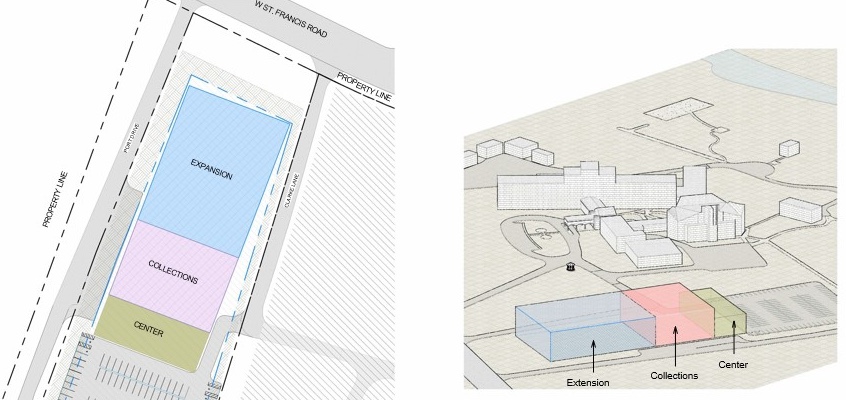
Veronica Buchanan, board secretary for the Franciscan Central Archives project, does a two- or three-day site visit with each community joining and produces a 29-page document that examines not just the amount of material that needs to be preserved, but what the needs of the organization are in terms of preserving them, such as whether they need to hire a professional archivist, what digital records they need, and what their archival policies are.
Buchanan is archivist for the Sisters of Charity of Cincinnati, and began working with the Franciscan Central Archive as a consultant in 2022, then joined the board in 2023.
Many communities don't realize, she said, how much material needs to be archived that is at mission sites — sometimes overseas — and how much is at their fingertips in the administrative offices that they don't think of as historically important.
"And what about associates? Those records are usually in a separate office, but they need to be considered, too," Buchanan said. "What is the expected amount of material coming from Brazil, or Peru, or wherever? And the laws differ from country to country on what must stay there."
There are currently 11 communities in the United States that will be part of the central archive, which expects to stop accepting new partners by June. There could be an expansion later on, but they can only build so much in the current phase.
"We can't afford to build for people who aren't there," Serbacki said. "In the future there could be a second phase, but for the first phase, you've got to make a determination on are you in or not?"
Sr. Mary Elizabeth Imler, general community minister of the Franciscan Sisters of the Sacred Heart, said in a statement written for GSR that the central archive honors the dream and legacy of all the sisters who have served there.
"This initiative strengthens our commitment to carry on the Franciscan charism for years to come," Imler wrote. "What has been planted in faith on this campus will now be nurtured with renewed vision and hope for future generations."