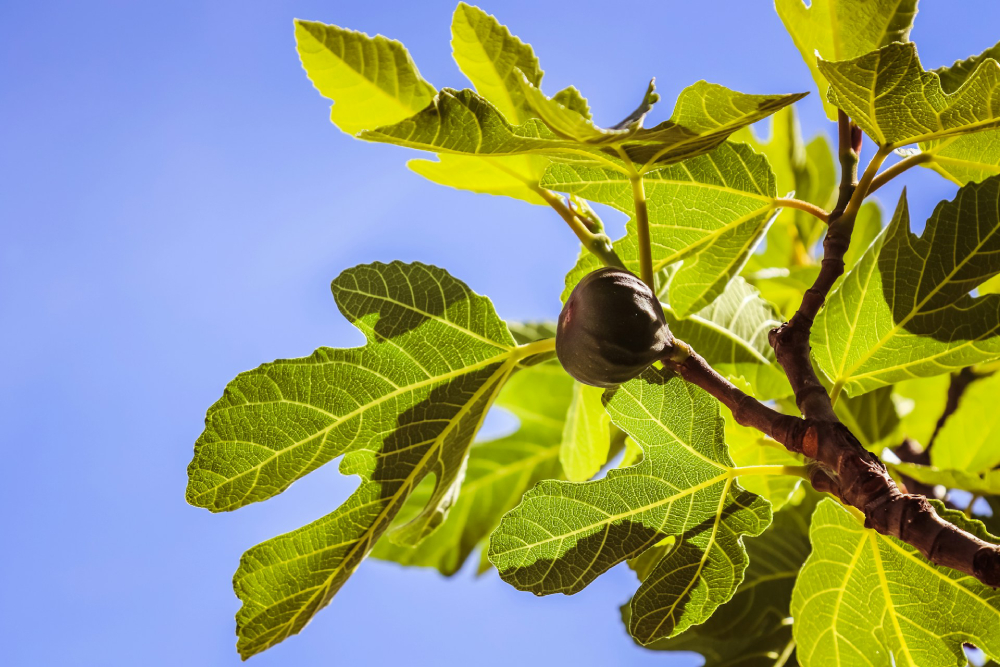
(Unsplash/Jametlene Reskp)
by Sr. Claris G. Gowo
There is a parable in Luke's Gospel that I did not fully understand until I began collecting dropouts. A landowner comes to his vineyard looking for fruit on a fig tree and finds none. "Cut it down," he says. "Why should it use up the soil?" But the gardener intervenes. "Leave it alone for one more year," he pleads, "until I dig around it and fertilize it. If it bears fruit next year, fine! If not, then cut it down" (Luke 13:6-9).
I have read this parable many times over the years, usually as a tidy lesson about patience. Since opening the Chiremera Center in March, however, I have come to see it differently. I am the gardener now, and my fig trees have names.
Chiremera means "dignity" in Shona, and I chose the word deliberately when I founded this small literacy and skills program on a farm in Chegutu District. We began with four learners meeting in a converted storeroom. We now have 27, ranging in age from 6 to 32: small children who have never been enrolled in a formal school, school dropouts, young mothers and adults finding themselves in a classroom for the very first time. Nearly half of Zimbabwe's youth are out of school, particularly in the pre-primary and adolescent age groups, according to UNICEF Zimbabwe. Behind that statistic are individual people, each one a fig tree someone, at some point, was ready to give up on.
I think often of a young mother who joined us not long after we opened. She had left school in her early teens and, since then, had come to believe that literacy belonged to other people — to the young, to the fortunate, to those whose lives had not been interrupted. When she sounded out her first full sentence, she did not smile right away. She looked, instead, almost suspicious of her own success, as though she expected someone to tell her it did not count. I recognized that look. It is the look of someone who has spent years being told, implicitly or otherwise, that the season for her growth has passed.
I think, too, of the young adults who arrive on Thursdays for our technical and vocational education training sessions, some of them already parents themselves, some the older siblings of our younger learners. They come after years of being defined by what they cannot do — cannot read a prescription label, cannot fill out a form, cannot write their own name on a document that requires it. For them, this is not a second chance. It is the first one, arriving years later than it should have.
I am careful not to collapse this distinction when I speak about my work, because doing so would erase something true about their lives: the chance that was owed to them and never given. Nevertheless, whether it is a first chance or a second, the posture required of those of us doing the giving is the same as the gardener's in the parable — patient, unhurried, willing to keep working the soil even when the tree shows no obvious signs of life.
Advertisement
That patience is not passive. The gardener in Luke's parable does not simply ask for time and then do nothing with it; he proposes to dig, to fertilize, to labor over the very roots that have so far produced nothing. I have come to understand our curriculum, our attendance registers, our small sustainability projects of mushrooms and poultry and vegetables, as a form of that same digging. None of it looks dramatic from the outside. It is slow, repetitive, unglamorous work: phonics drills, attendance sheets, budget reports for donors who have trusted us with their generosity. But I have learned that dignity is rarely restored in a single dramatic gesture. It is restored the way soil is restored: handful by handful, season by season, until something that seemed finished proves otherwise.
I am also mindful that not every tree bears fruit in the timeframe we might wish. The parable itself withholds a guaranteed happy ending; the gardener asks only for one more year, not for a certainty. Some of our learners will move at a pace that tests our patience. Some may leave and return, or leave and not return at all. I do not think this diminishes the work. The gardener's plea was not contingent on a promised outcome. It was, instead, an act of faith in the possibility of fruit — a willingness to keep tending something that had already been condemned by every reasonable measure. I consider that a fitting description of what it means to work with dropouts, and with the very young and the not-so-young who never had the chance to become anything other than dropouts in the first place.
What I take from this parable, in the end, is not a lesson about waiting quietly. It is a lesson about advocacy — about the gardener's willingness to speak up on behalf of the tree, to interrupt the landowner's verdict with an alternative one. I consider that to be my role at Chiremera, and I suspect it is the role of many women religious doing similar work across the continent: to stand between a person and the verdict the world has already passed on them, and to ask, simply, for a little more time and a little more soil.
I do not know yet what will become of all 27 of my learners. But I have already seen enough fruit, in the small triumphant sentences and shakily written names, to keep asking for more seasons on their behalf.