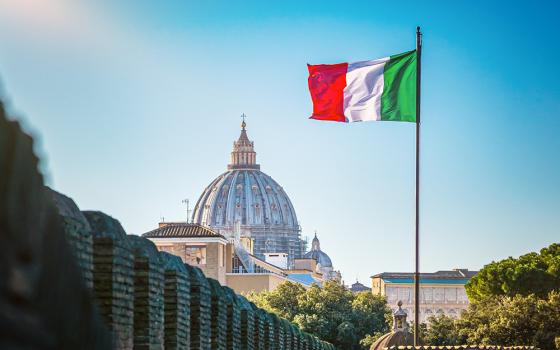
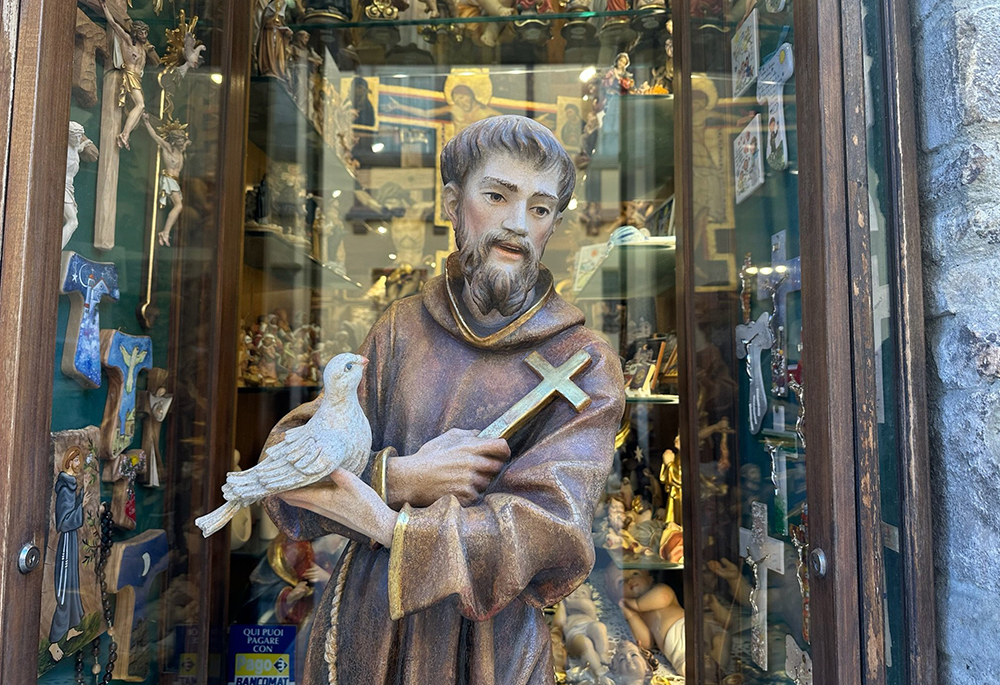
A statue of St. Francis is seen in a storefront along a street in Assisi, Italy, Feb. 22, 2026. (OSV News/Courtney Mares)

by Sr. Sarah Kohles
Editor's note: Welcome to Theologians' Corner, where each week a different woman theologian from around the world offers a fresh reflection on the Sunday readings.

27th Sunday in Ordinary Time
October 4, 2026
When do we fail to see what is right in front of us?
It is overwhelming to keep up with what is going on in the world. Sometimes we take a break from the news. Sometimes we choose not to see:
- The genocide of Palestinians;
- A woman suing Cornell University over rape allegations;
- The dismantling of democracy, including by blocking the freedom of the press;
- People unjustly detained in detention centers across the country;
- Unnecessary war with Iran;
- LGBTQ children tossed out of their families.
At this time of year the Gospel readings become more challenging as we approach the end of the liturgical cycle of readings. We are invited to turn our hearts and minds to last things.
Jesus' words get tougher toward the end of his teaching ministry. The readings invite us to reflect on how we are doing in our personal lives and as society. We can pray with these readings as an examination of our consciences.
The prophet Isaiah calls us to consider how we are like an unruly vineyard. Despite being well cared for and with the proper tending of the gardener, we refuse to grow as we should. Instead we are wild grapes. We are not yielding the fruit the gardener expects. Isaiah invites us to consider:
- When have we been given every opportunity and neglected to use our opportunities well?
- When have we been selfish?
- Are we growing in our relationship with God as we should?
- Do we choose comfort over growth?
- Do we allow prayer to transform our hearts and call us to act on behalf of others?
The Gospel reading from Matthew is one of Jesus' more difficult parables.
It is another story about vineyards. The tenants who care for the vineyard refuse to allow the owner of the vineyard to collect the harvest through proxies. Those sent to collect the harvest are persecuted and killed. Even the heir to the vineyard is killed. The story is addressed to the religious leaders of Jesus' day. Jesus is calling out leaders for abusing their power and causing harm to God's people. Those who have been rejected by the leaders will become a cornerstone, a foundation, essential to the building project of God's kingdom. Jesus, too, was rejected by the religious and political power structures of his day.
Thus the Palestinians, rape victims, truth tellers, those unjustly held and mistreated in detention centers, people bombed in Iran, and our LGBTQ siblings are the cornerstone for God's building project in our world.
Today is also the feast of St. Francis of Assisi. This year Franciscans worldwide mark the 800th year since his death. I cannot help but remember the words Francis heard when he was discerning God's call and he prayed before the crucifix in the dilapidated church of San Damiano: "Go rebuild my church, which you see is falling into ruin."
Go rebuild my world, which you see is falling into ruin.
Go rebuild my church. Go rebuild my people.
Advertisement
St. Francis responded wholeheartedly by collecting stones and setting out on God's building project. He did rebuild the little church of San Damiano just outside of Assisi. However, that initial building project was the beginning of a life of seeing and aligning himself with people who were poor, humble and forgotten.
St. Francis was hard on himself. He even admits to being too hard on his "Brother Body" toward the end of his life. However, St. Francis was not afraid to look unflinchingly at his faults and the areas he needed to grow. He is an example of trying to know Christ fully — even through suffering. He allowed his relationship with God to completely transform his life. Francis is known for:
- Seeking peace in the midst of the ongoing fighting of the Crusades;
- Caring for all of God's creation as he saw every creature, no matter how majestic or insignificant, as his sister and brother;
- Embracing those who were poor, suffering and outcasts in the society of his day – namely, the lepers;
- Cultivating a heart filled with joy as he served all God's creatures.
St. Francis was diligent in seeking to see what was right in front of him. He reminds us that seeing the suffering of God's little ones clearly and aligning ourselves with the most vulnerable is how we change the world around us.
May St. Francis' intention to follow Christ inspire us to do the same.