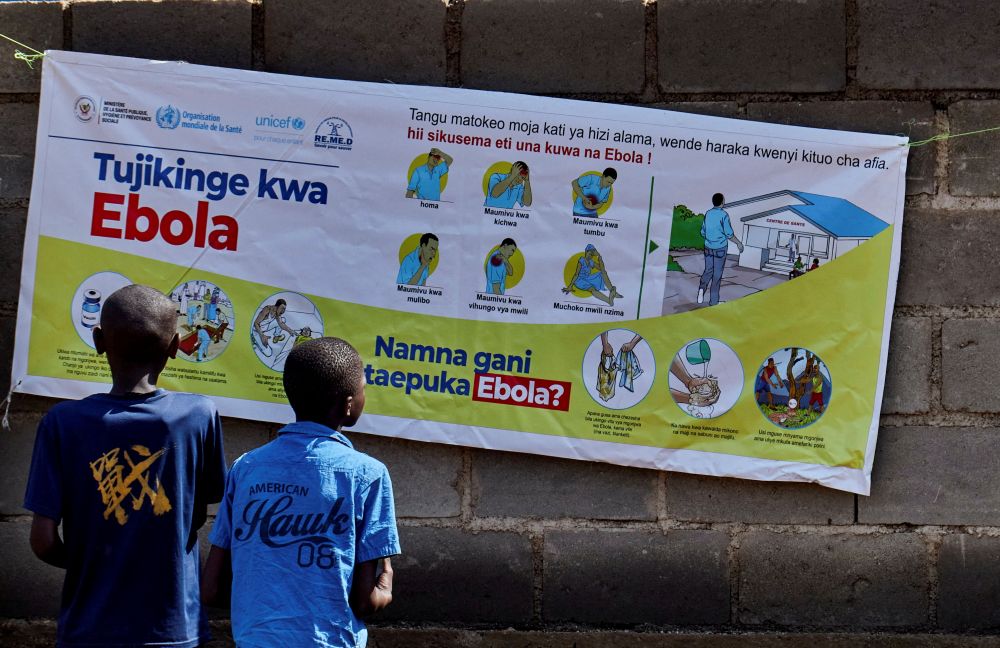
Congolese children read an advocacy poster in Bunia, Congo, May 20, 2026, as aid agencies intensify efforts to contain a new Ebola outbreak caused by the Bundibugyo strain outbreak. (OSV News/Reuters/Gradel Muyisa Mumbere)

by Doreen Ajiambo
At a health facility in this rebel-held city in eastern Congo, a Catholic sister and her colleagues are screening patients and visitors for signs of Ebola, hoping to prevent the deadly virus from reaching people already struggling with the consequences of years of war.
But the sister says the facility lacks some of the infection prevention and control supplies needed to protect health workers and patients, forcing staff to balance their own safety against the needs of those seeking treatment.
"The problem is protecting yourself and serving others," she told Global Sisters Report in an Oct. 15 interview. "A very big challenge for anyone."
The sister, whose name and congregation are being withheld because she fears retaliation in rebel-controlled territory, said her facility has introduced a triage system to identify possible infections. So far, she said, no suspected Ebola cases have been recorded there.
"We're fighting for hygiene, but without infection prevention and control kits," she said. "May God protect us."
Basic infection prevention measures include protective equipment such as gloves, gowns, medical masks and face shields, along with disinfectants and handwashing supplies. The sister did not specify which supplies were unavailable at her facility.
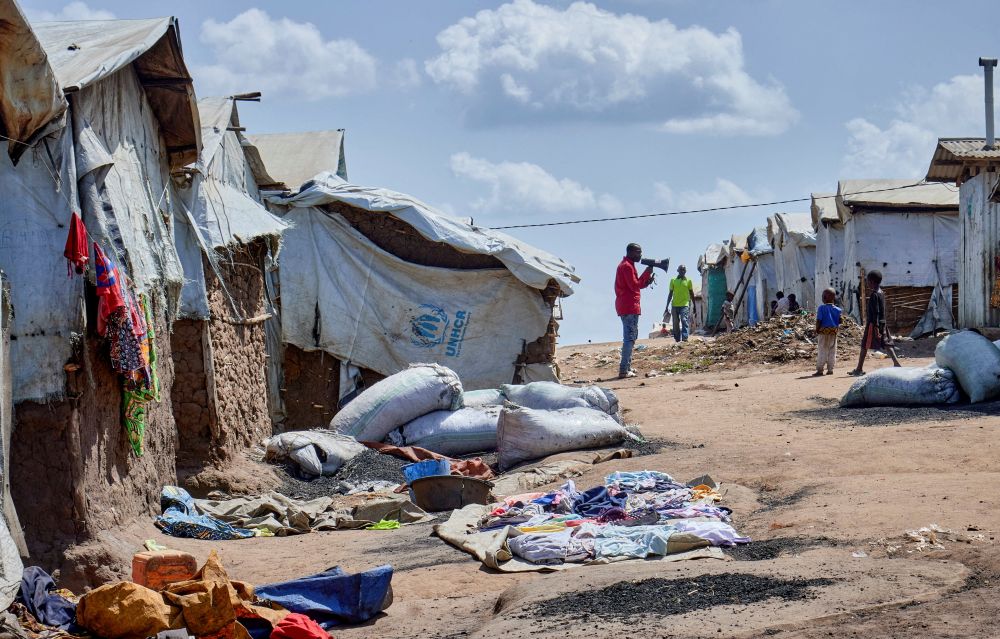
Richard Mbagaro, a supervisor at the Kigonze camp for internally displaced persons, speaks to residents in Bunia, Congo, May 25, 2026, urging them to wash their hands with soap or ash as authorities intensify efforts to contain an Ebola outbreak caused by the Bundibugyo virus. (OSV News/Reuters/Gradel Muyisa Mumbere)
Another Catholic sister living in Goma described the emotional strain of remaining in a region where armed conflict has disrupted daily life and left religious communities struggling to maintain their ministries.
"We're keeping the faith, but it's very, very difficult," she told GSR on Oct. 15.
The second sister, who belongs to a different congregation, also requested anonymity because of fears for her safety.
Their accounts come as the Democratic Republic of Congo battles a major Ebola outbreak, with continued transmission in North Kivu province, where Goma is the capital and largest city.
According to the World Health Organization, the country had recorded 9,066 confirmed Ebola cases and 4,381 deaths as of Oct. 11. The agency reported 463 additional infections and 233 deaths over the preceding reporting period, with substantial transmission continuing in North Kivu and Haut-Uele provinces. Neighboring Ituri remained the outbreak's main center, accounting for nearly three-quarters of confirmed infections.
The outbreak, caused by the Bundibugyo Ebola virus, is the country's 17th recorded Ebola outbreak. The U.S. Centers for Disease Control and Prevention says it is spreading considerably faster than previous outbreaks, becoming the second-largest Ebola outbreak on record.
The CDC has also warned that limited healthcare infrastructure, shortages of infection prevention supplies, insecurity and population displacement are complicating efforts to control the disease.
For the sister working at the Goma facility, those challenges are part of everyday life.
"What is most difficult is witnessing the suffering of the population, working in an atmosphere of uncertainty, and having to meet the needs of the sick with sometimes limited resources," she said.
War complicates the health response
Goma, a major commercial and humanitarian center near the Rwandan border, has been under the control of the Rwanda-backed M23 rebel movement since January 2025. Fighting across eastern Congo has displaced families, disrupted livelihoods and weakened access to essential services.
The Ebola outbreak has added another layer of uncertainty to a region where many residents depend on religious organizations for assistance.
Fr. Olivier Ndondo, provincial superior of the Congregation of the Blessed Sacrament in Congo and Uganda, said armed conflict has made it difficult for health authorities and humanitarian organizations to reach some affected communities.
"It is very difficult to get there because of the war," Ndondo said in an interview published Oct. 13 by Aid to the Church in Need, a Catholic charity.
He explained that displacement caused by fighting has complicated efforts to prevent infections as families fleeing violence move between communities and across borders, particularly toward neighboring Uganda.
"On one side, they have to deal with the conflict, but they also have the disease to contend with," he said.
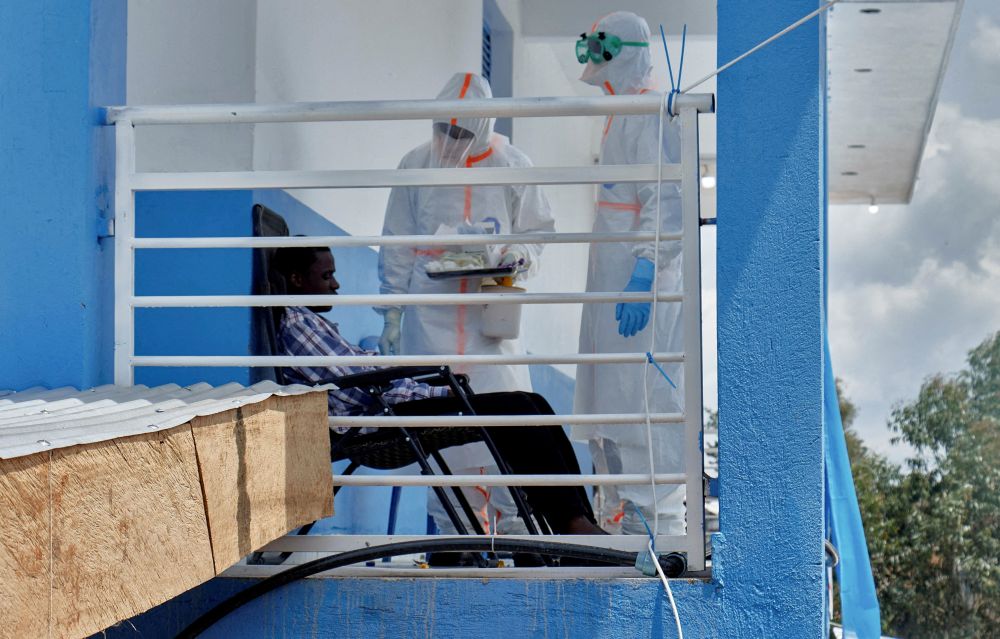
Congolese medical workers dressed in their personal protective equipment, or PPE, talk to a patient June 9, 2026, at the Centre Medical Evangelique, which is within the secured Ebola response zone. (OSV News/Reuters/Gradel Muyisa Mumbere)
Ndondo said the Catholic Church continues welcoming displaced people, providing emergency assistance and raising awareness about Ebola prevention despite the limited resources available to religious institutions.
"The church in the east is facing both emergencies, the war and the epidemic, with the resources it has and whatever support it can mobilize," Ndondo told Aid to the Church in Need.
Religious leaders struggle to reach displaced families
In the southern part of South Kivu province, another Catholic sister said the armed conflict has disrupted religious ministries, leaving displaced families increasingly isolated from the spiritual and emotional support they once received.
"Most of our parishes have been closed, and we are unable to visit those displaced and encourage them because we also fear for our lives," said the sister, who requested anonymity for security reasons. "People, especially religious leaders, are usually ambushed and sometimes killed."
She said fears of Ebola infection have further restricted movement, making it difficult for sisters to reach families who have fled violence.
"Those displaced have no one to counsel them and encourage them through the word of God," she said. "They're suffering, and this also affects our ministry, as it involves visiting such people."
The sister said health workers in her region have also complained of shortages of protective supplies, raising concerns about their ability to prevent infections while caring for patients. She believes the shortages are contributing to the spread of Ebola in eastern Congo, although the extent of that impact has not been independently established.
Although South Kivu has previously reported Ebola infections, the CDC said in its Oct. 21 update that the province had recorded no new confirmed cases since May 29. Nevertheless, fears of infection continue to influence how some religious communities carry out their work.
The sisters' responsibilities extend beyond healthcare. Even as insecurity and fears of Ebola limit their movements, displaced families continue to depend on religious communities for spiritual guidance and practical assistance.
Advertisement
Many families also turn to religious communities for food, medical assistance and other forms of support when they have few alternatives.
"We have very few resources to support ourselves, and since we are sisters, people come knocking on our door every time for help, and sometimes it's very hard to turn them away," the sister from the Goma facility said.
She said the combination of prolonged conflict and Ebola has left many families exhausted, particularly those who have already experienced displacement, violence and economic hardship.
"Our country is going through a lot. It's like problems never end, from one problem to another," she said.
Despite the difficulties, the sisters continue their work, drawing strength from prayer, their religious vocation and solidarity with the communities they serve.
"What gives us the strength to continue is our faith in God, prayer, solidarity among ourselves, and our commitment to serving the most vulnerable," the sister said.
"Even in these difficult times, we believe that our presence among those who are suffering remains a mission of profound meaning."
Editor's note: A local journalist in Goma, Democratic Republic of Congo, contributed to this story. The journalist's identity is being withheld for security reasons.