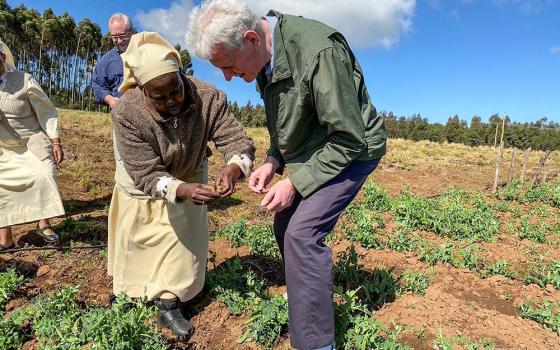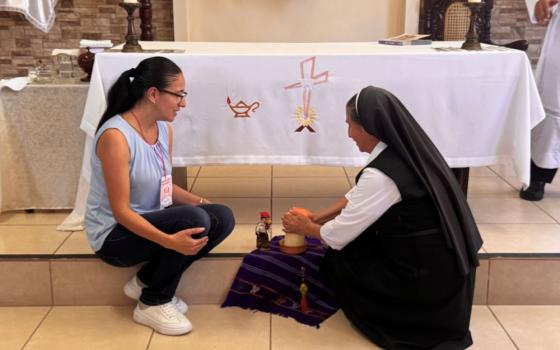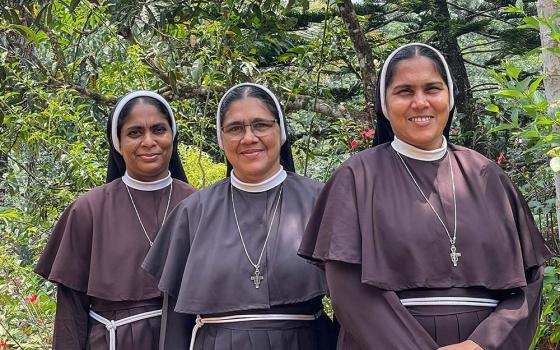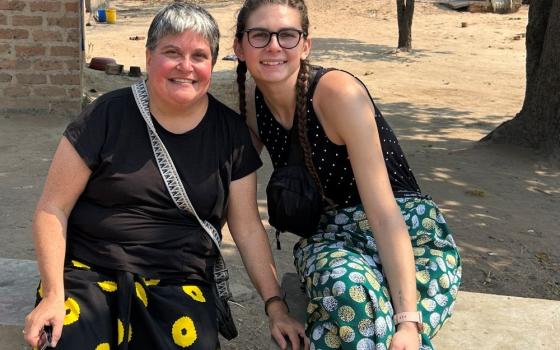
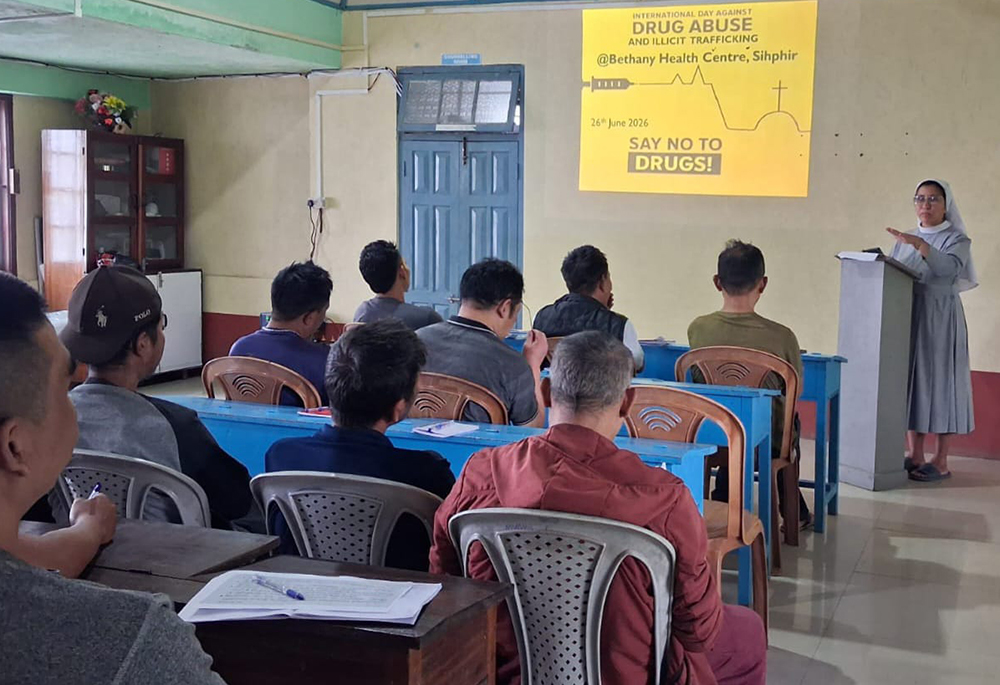
Bethany Sr. Irene Theresa teaches a session on the science of addiction at the Bethany Centre for Health and Rehabilitation on June 26, 2026, in Aizawl, northeastern India. (Courtesy of Irene Theresa)

by Thomas Scaria
After serving leprosy patients for two decades, Srs. Christiana Fernandes and Lucy Gomes of the Franciscan Sisters of the Immaculate joined the fight against substance abuse in the southwestern Indian state of Karnataka.
"We found substance addiction everywhere whether we work with leprosy patients, students or communities, but were unable to do anything until we got trained in this field," said Fernandes, who worked with Gomes to start an addiction recovery program in the coastal town of Karwar.
The two were among some 30 nuns from several congregations who underwent a six-month online training under the patronage of the Conference of Women Religious India to tackle substance abuse.
Apostolic Carmel Sr. Maria Nirmalini, the conference president, said she encouraged the nuns to take the training after observing a "manifold increase" in substance use, especially among teenagers and youth. "We can no longer ignore the social menace," she told Global Sisters Report in June.
In 2023, Nirmalini started sending sisters to the Ecolink Institute, which has trained addiction professionals for more than three decades. [Editor's note: The author is the founder and director of the institute.] The third batch of nuns completed the course in March and 12 more now undergo training that will end in October.
"One reason why sisters did not want to take up this mission was their lack of knowledge, skills and confidence in dealing with such a complex disease," said Nirmalini.
Nirmalini said the Conference of Women Religious India has adopted substance abuse ministry as part of its ongoing program of promoting mental health at various levels.
India, with the world's largest youth population, is among the highest consumers of illicit drugs, she added.
The latest United Nations global report on substance use, released in June, reported that global drug use has reached a "record high as increasingly potent synthetic drugs spread."
The previous year's report highlighted that India was at a critical juncture because of its proximity to major trafficking routes. Shift to synthetic substances and pharmaceutical misuse strain India's public health and law enforcement.
The Ecolink Institute trains addiction professionals with Universal Treatment Curriculum on substance use disorder, a globally recognized certificate course.
The training package, developed and promoted by the Colombo Plan and the United Nations Office of Drugs and Crimes, includes science of addiction, treatment and recovery, counseling skills, screening and assessment, case management, crisis intervention and ethical guidelines, said Ronnie Thomas, the training coordinator of Ecolink Institute.
The institute's instructors are globally recognized with significant clinical background, he added.
Thomas said their participants also include psychologists, doctors, therapists, and recovering substance users, "but the sisters are the most attentive and dedicated group."
Fernandes and Gomes were among the first nuns to put their training into action. They left their work in a leprosy hospital in Bengaluru, Karnataka's state capital, two years ago to work among substance users in Karwar, a port city some 325 miles northwest.
"The training helped us understand the complexity of substance use disorder, as well as also prepared us with the needed knowledge and skills to address substance addictions," Gomes told GSR.
She said they managed to treat and rehabilitate 114 young substance abusers in Karwar in the past two years.
The nuns also trained a local team to manage the Karwar center in order to start a similar program in Andhra Pradesh, Karnataka's eastern neighbor.
Advertisement
Another nun trainee of the early 2025 batch was Bethany Sr. Irene Theresa, who said that the program helped improve their already existing recovery program among tribal populations in Mizoram, a northeastern Indian state. The region borders China and Myanmar. The India-Myanmar border is considered by authorities as a "major" drug entry point.
She said her congregation opened the Bethany Centre for Health and Rehabilitation at Aizawl, Mizoram's capital, in 1995 in view of high drug addiction in northeastern India.
"Addiction is a complex disease as we cannot predict how a patient behaves at different times, especially when they are young," Theresa told GSR. Some turn violent, while others live with acute depression, anxiety disorders, paranoia, or can be suicidal, she added.
"Lack of trained professionals were our key problem," she said.
Hospitaller Sisters of Mercy Sr. Merrin Lukose, who directs Orsini Care Home at Bongaigaon in Assam, another northeastern Indian state, too said the training helped improve her service.
Sr. Flora Mary of the Union of the Presentation of the Blessed Virgin Mary, who manages New Life Rehabilitation Centre for people with alcoholism at Kodaikanal in Tamil Nadu, an eastern neighbor of Karnataka, said they felt "totally helpless" in how to handle substance abuse.
The situation changed after nuns from her congregation attended the training. "We are empowered to address youth and teenagers with substance addiction," Mary added.
Three more nuns from her congregation are currently undergoing training. They plan to open a center at Theni, a town in Tamil Nadu.
Holy Family Sr. Chincy Chacko, a medical doctor managing a clinic in New Delhi, said the training helped her connect better with many patients addicted to alcohol and substance use.
The trainees include members of the Catholic Mental Health Ministry attached to the Catholic Bishops' Conference of India.
One of them, Adorers of the Blood of Christ Sr. Jessy D'Souza told GSR that the training has convinced her the need for Catholic religious to address the problem seriously.
Sr. Leema Rose, a member of Sisters of St. Lucy, said she attended the training when she worked as a student counselor at St. Aloysius University in Mangaluru.
Now, as a school principal in Tamil Nadu, she works for drug-free campuses. "Why should we wait until they land in a treatment center?" she asked.
Presentation Sr. Fatima Rodrigues, a 70-year-old retired nurse who is currently attending the training, said she still has "a lot of energy to work for our suffering people with addiction."