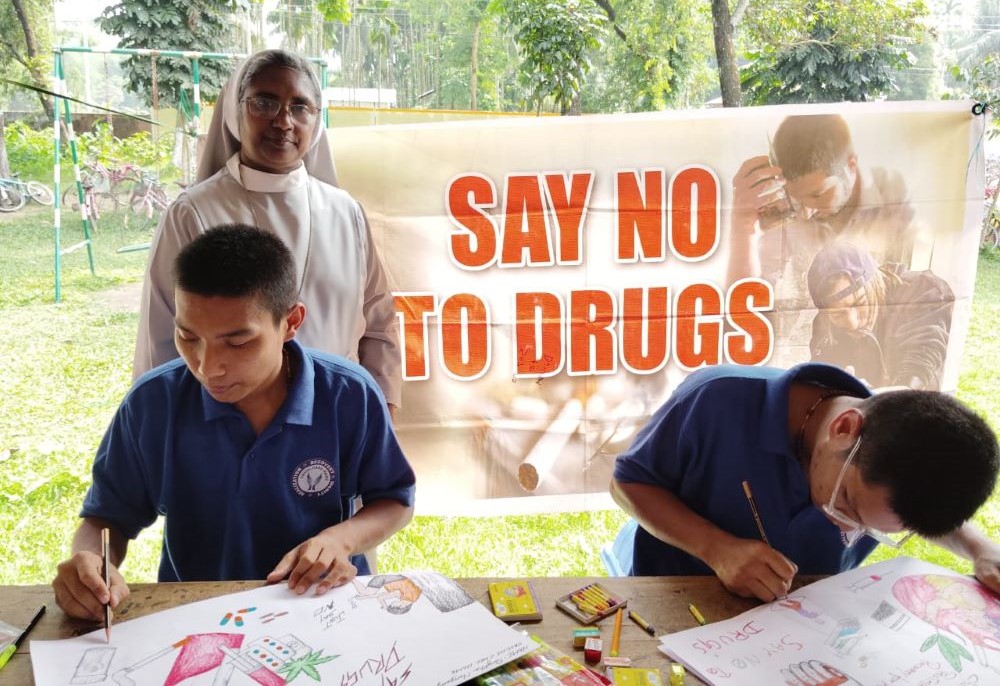
Hospitaller Sr. Merin Lukose, the director of Orsini Care Home at Bongaigaon town in Assam in northeastern India, conducts an art competition in connection with the International Day against Drug Abuse, held annually on June 26. (Courtesy of Merin Lukose)

by Thomas Scaria
Sudipta Das was 13 when a friend introduced her to cannabis. She struggled with addiction until she met a Catholic sister three years ago.
"I was in a very bad state, mentally and physically, when I came to Orsini home where Sr. Merin Lukose treated me with love and care," said the 23-year-old woman from the northeastern Indian state of Assam.
Das is among more than 1,000 substance abuse patients helped by Orsini Care Home, managed by Lukose's congregation — the Hospitaller Sisters of Mercy — at Bongaigaon, a town in Assam state.
Assam is considered the gateway to this region, which tops the country in substance abuse cases.
Lukose, 57, said they opened the center in 2010 to confront growing drug usage among youth. The region, which shares international borders with Bangladesh, Bhutan, China, Myanmar and Nepal, acts as a major transit route for heroin and synthetic drugs. The area is also a major drug consumer and production hub, Lukose told Global Sisters Report.
She quoted a 2019 government report that said opioids are the most commonly used drug in the northeastern region. Methamphetamines, cannabis and other synthetic drugs are also widely used there.
According to the report, 22.1% people in Arunachal Pradesh used opioids, 25.67% in Mizoram, 25.22% in Nagaland, 14.22% in Manipur and 2.9% in Assam.
Opioids, such as heroin and opium, are natural, synthetic or semisynthetic drugs that bind to receptors in the brain to reduce moderate-to-severe pain.
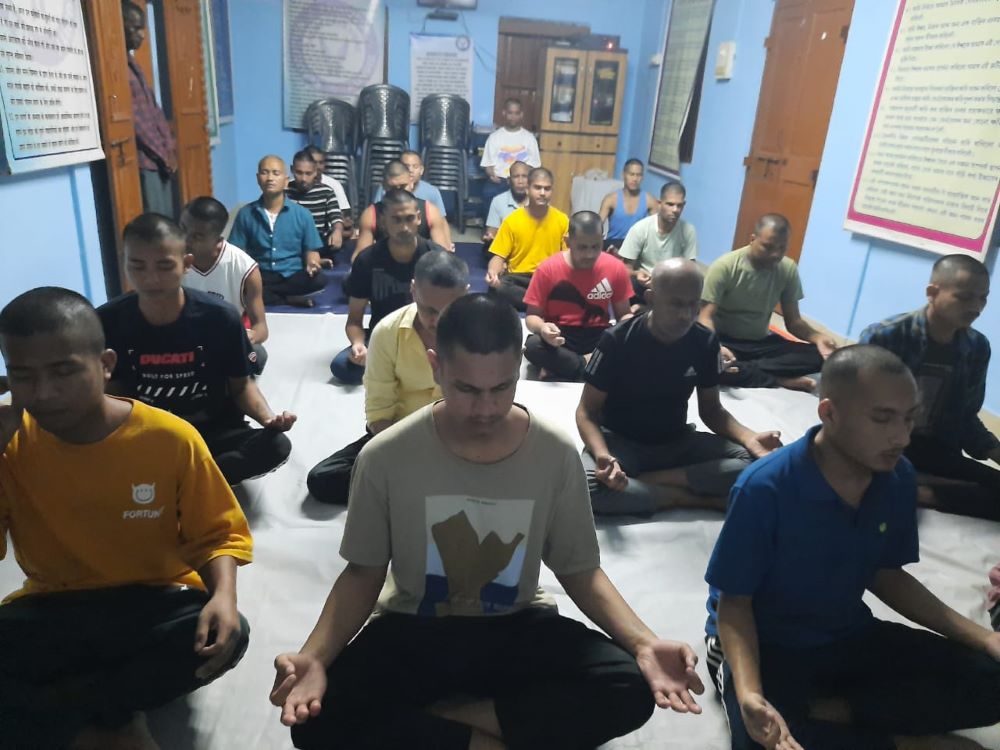
Patients of the Orsini Care Home participate in a yoga and meditation session as part of the treatment program at the facility in Bongaigaon, Assam state in northeastern India. (Courtesy of Merin Lukose)
Under such challenging circumstances, the Orsini Care Home has successfully treated people addicted to alcohol and various types of drugs, clinically known as substance use disorder, said Lukose, who has served the center for more than a decade. According to Lukose, several congregations work in northeastern India, but only a few are involved in drug prevention and treatment services.
The center is named after Princess Teresa Orsini, who founded the Hospitaller Sisters of Mercy congregation in Rome in 1821. The congregation's mission is to take care of the sick, elderly and needy.
Das said Orsini's friendly environment and staff's personal care helped her recover.
Lukose "was like a mother to me and I experienced real healing with her personal and professional care," Das told GSR.
She blamed easy availability and peer pressure for youth taking drugs. "Many start drugs in their teenage [years] and by the time they realize about the damage they are already addicted," said Das, who now works as a peer educator at a rehabilitation center in Siliguri, West Bengal state.
The Orsini home now has some 40 patients — men and women — from all states in the region.
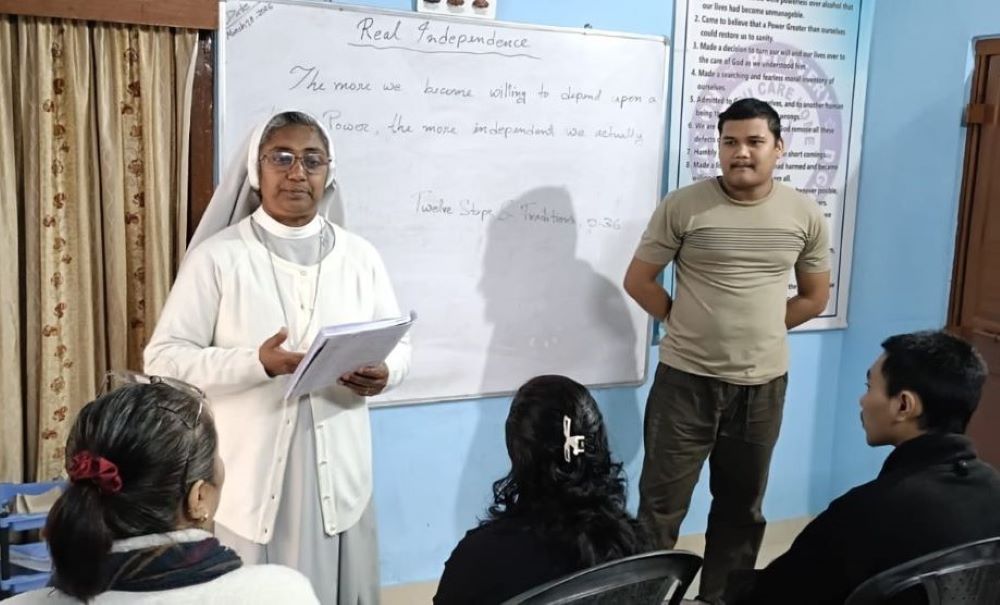
Hospitaller Sr. Merin Lukose conducts a therapeutic session for the residents of the Orsini Care Home with substance use disorder at Bongaigaon, a town in the northeastern Indian state of Assam. (Courtesy of Merin Lukose)
Lukose said the center follows a treatment plan that helps drug users self-reflect and change their lifestyle. "Our motto is 'Realization, Recovery and Dignity,' " she added.
The care model uses yoga and meditation, therapeutic sessions, medicine, input sessions, counseling, group therapy, gardening, outdoor games, evening prayers and follow-up sessions.
Lukose said the sisters feel frustrated when their patients relapse.
"But we accept them when they come again seeking help. Relapse is the nature of this disease, and we have to be patient, empathetic, caring and hopeful, if we have to survive in this field," she said.
Das, who has had three lapses, said she took different drugs with alcohol and tobacco during her addiction. "It is a common trend that people take whatever drug is available," she said, adding that she has vowed to remain sober after the latest treatment.
Bijoy Wary, who was on a follow-up visit to the Orsini home, said the treatment helped him kick addiction three years ago.
"The therapy team helped me deal with my grief and depressive thoughts that strengthened me to give up drugs completely," the 43-year-old government employee and father of two told GSR.
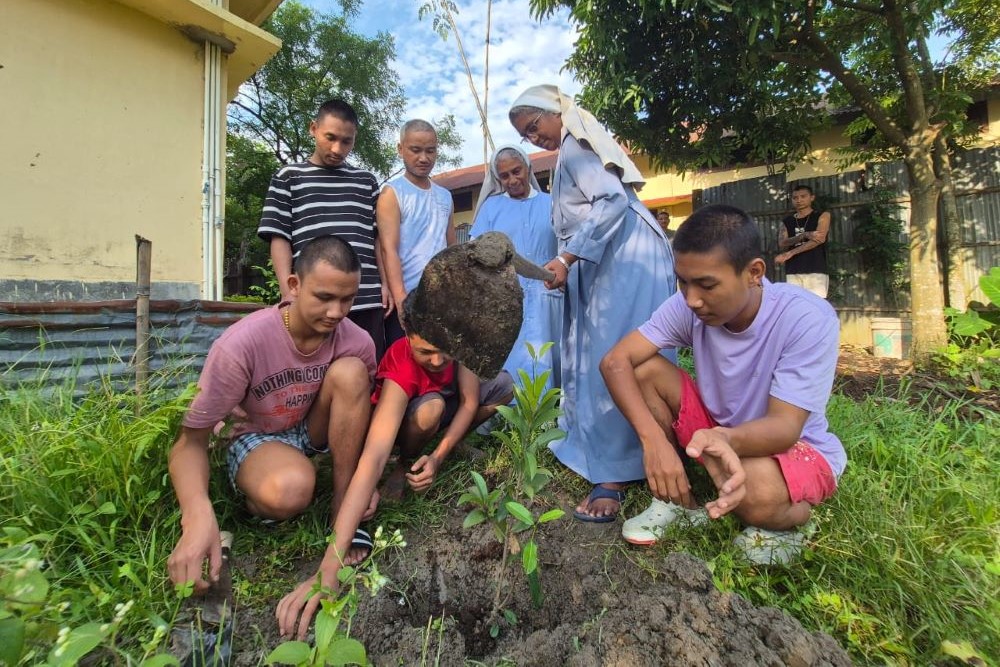
Hospitaller Sr. Merin Lukose and her superior, Sr. Juliana Mathew (left), plant a tree on the World Environment Day with young residents of Orsini Care Home at Bongaigaon, Assam state in northeastern India. (Courtesy of Merin Lukose)
Lukose said they sometimes face threats from drug peddlers and even her patients.
"I was beaten up, kicked and verbally abused by my patients as they struggled with withdrawal symptoms. But they cooperated with me eventually," she said.
Once a woman hit Lukose hard on the head when she tried to stop the woman from running away from the center. She had to be hospitalized after being knocked unconscious.
"Such incidents are common when we work with young people with substance use disorder," she said."It is a brain disease which affects their thoughts, feelings and behavior." Her attacker is now leading a happy life in her native state of Arunachal Pradesh.
"The threats have strengthened us further," Lukose said.
Despite such challenges the Orsini Care Home's success rate is more than 60%, said Sr. Nithya Victor, a member of the Franciscan Sisters of Vierzehnheiligen and one of Lukose's two companions. The other is Franciscan Clarist Sr. Jessy Maria.
Victor, who joined the center three years ago, said she enjoys working with the patients.
The 36-year-old nun has undergone coaching to handle the special needs of women in treatment and rehabilitation. Her observations are that women in the region are more prone to addiction than men.
"Moreover, early initiation to drugs is common that makes addiction faster," Victor said.
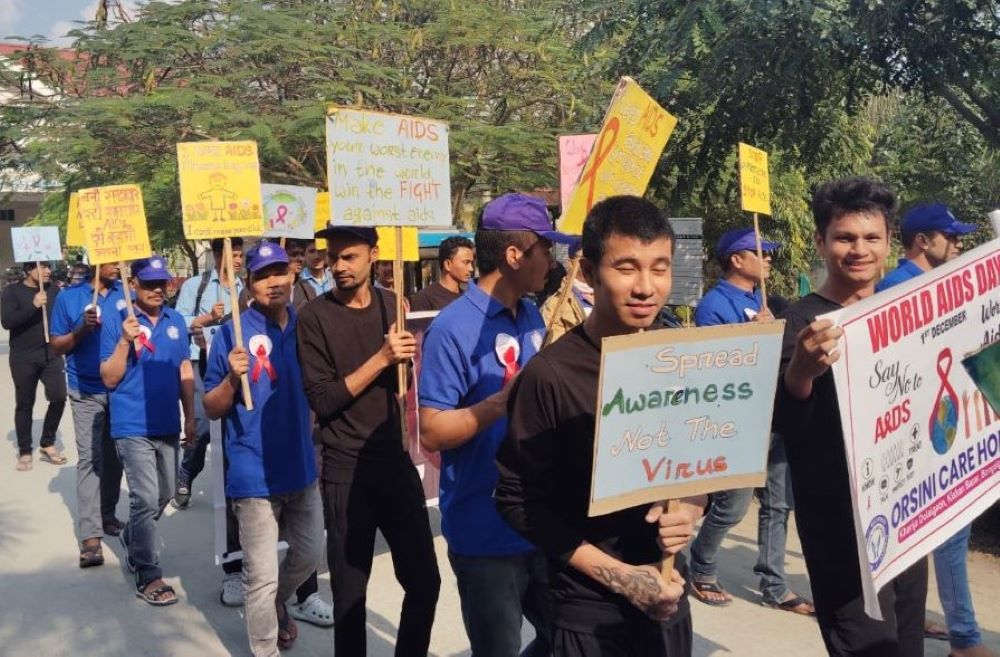
Residents of the Orsini Care Home at Bongaigaon, Assam state in northeastern India, participate in an HIV/AIDS awareness rally on Dec. 1, 2025, World HIV/AIDS Day. (Courtesy of Merin Lukose)
Northeastern India is home to more than 200 diverse and culturally rich tribes.
Since the region's tribal culture is female-dominated, women take more time than men for treatment and recovery, Victor told GSR.
Currently, the center has 11 full-time staff including the sisters, and a few part-time doctors. The Hospitaller Sisters of the local community also help Lukose as volunteers.
Dusu Loder, an employee of the Arunachal Pradesh government who was treated at the center for alcoholism, said the home's "loving and professional care" has helped him remain sober for the past 18 months.
"Alcohol is part of life for most people in my state. Added to that, the government supplies tax-free liquor," the 39-year-old man said.
The Orsini Care Home is also involved in prevention programs that conduct awareness classes in educational institutions and villages with the help of people in recovery and community leaders.
Advertisement
Wary, who helps organize such programs in Arunachal Pradesh, said he shares his testimony at the sessions.
"We hold special awareness rallies, sessions, sports events, and various competitions for students and youth as part of our drug prevention campaigns," he said.
Lukose said the center is also involved in the prevention of HIV/AIDS, which is linked with unprotected sex and needle sharing among drug users.
The Bongaigaon district administration honored Lukose on International Women's Day for her services in drug prevention and treatment. Lukose was also honored on June 25, 2025, International Drug Awareness Day, when she received the Best Performance Award from the Ecolink International Institute for her community awareness programs.
Lukose, who has applied for funds from the government, said the center faces a severe funds shortage, but continues their work trusting in the Lord.
"The mission to combat substance abuse is life-threatening and skills and professionalism are required to address the menace," she said.