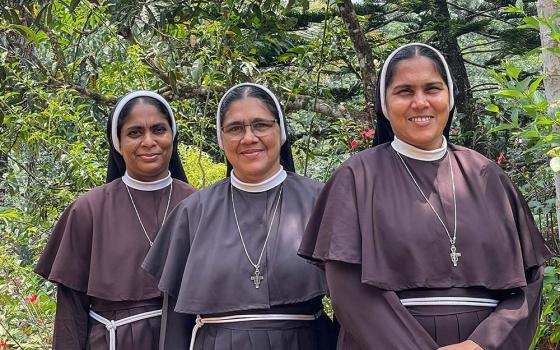
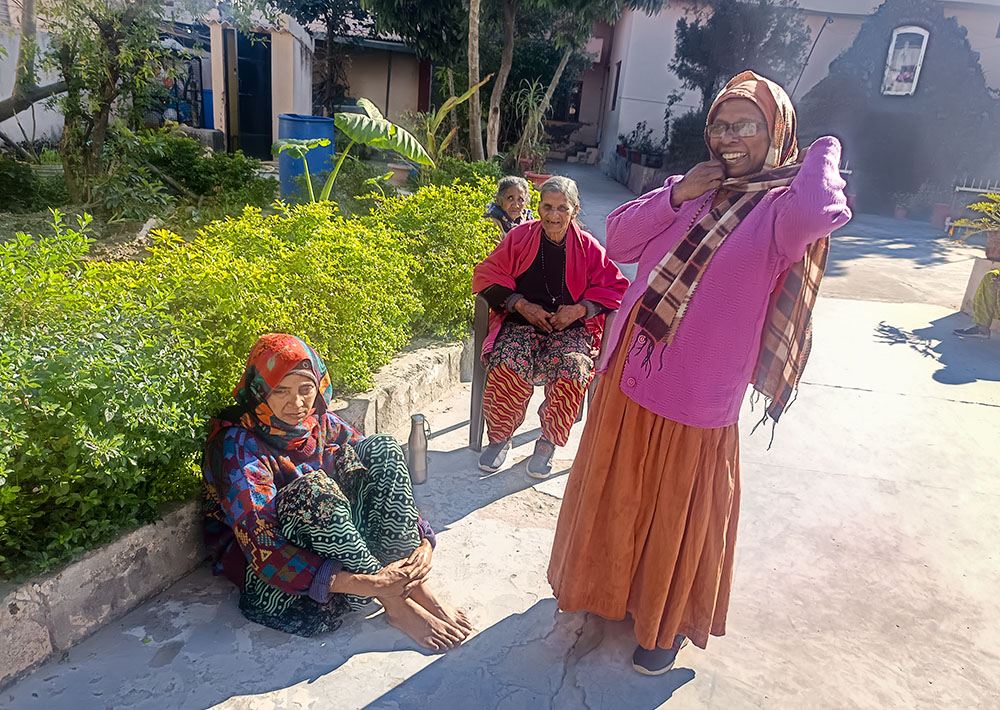
Daughter of the Eucharistic Covenant Sister Agnes (right) handles paperwork, hospital visits and conversations with local officials for Paramprasad Ashram, a shelter home for abandoned women in Akhnoor, India. (Umar Manzoor Shah)

by Umar Manzoor Shah
In a quiet corner of Akhnoor town in the Jammu district of Jammu and Kashmir, a modest gate opens to a unique world for women. Inside, 25 women start their day before sunrise. Some sweep the courtyard, others prepare tea. A few sit quietly, watching the first light touch the hills. All were abandoned by their families.
Their shelter — Paramprasad Ashram — is located in Akhnoor, along the banks of the Chenab River, away from the noise and political debates of Jammu city, in the disputed northern Indian state of Jammu and Kashmir.
"We are here to give them dignity," Sister Jonamma said as she checked the morning medications laid out in small steel bowls. She, one of the two volunteer nuns, joined the shelter 17 years ago.
The shelter home, more commonly known as the Ashram, is operated by Friends of Birds of Air, a charitable organization established by the late Fr. George Kuttickal, a member of the Missionary Congregation of the Blessed Sacrament.
Most of the women at the home are elderly, and many don't have any children. Some were abandoned at hospitals, and some were rescued from abusers and traffickers.
Sister Jonamma is assisted by Sister Agnes, both of whom belong to the Daughters of the Eucharistic Covenant and are associated with Friends of Birds of Air.
For Sister Jonamma, serving destitute people is nothing new. She also has experience working in old-age homes in Bihar and Uttar Pradesh, two of India's most impoverished states. There, she washed wounds, buried the dead, and listened to the ordeals of people from different religious and cultural backgrounds.
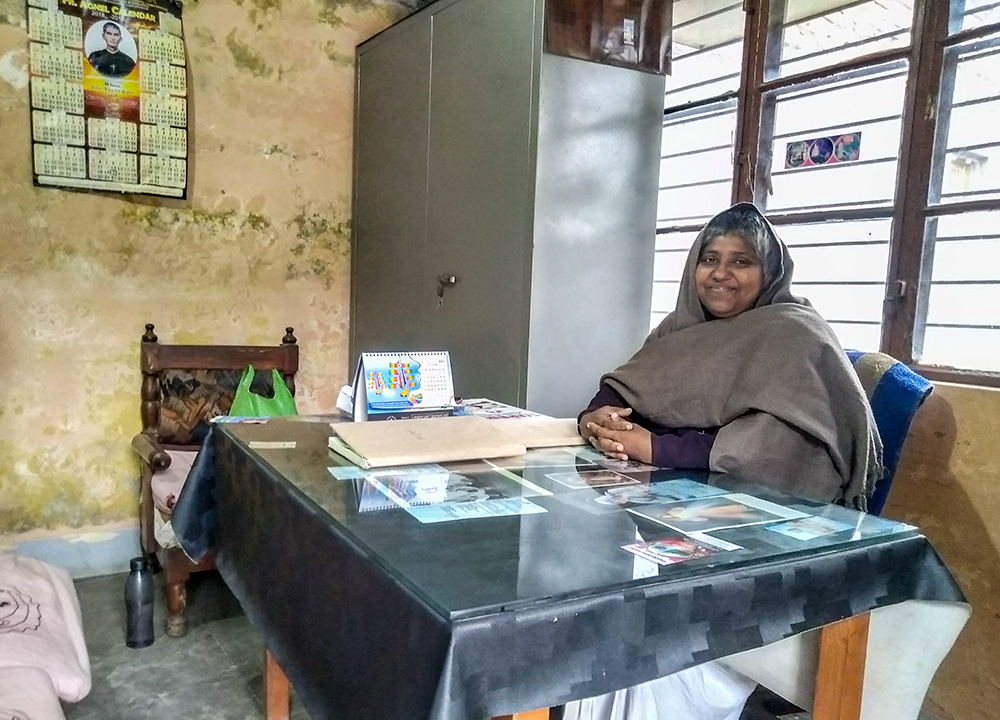
Daughter of the Eucharistic Covenant Sister Jonamma in her office at Paramprasad Ashram, a shelter home for abandoned women in Akhnoor, India. One of two volunteer nuns, she joined the shelter 17 years ago. (Umar Manzoor Shah)
Most of the women at the Ashram are Hindus who live alongside Muslims and Christians. One of the women is Vineeta Kumari, a Hindu in her 30s who sits near a window, her hands slowly moving as she knits a torn cloth. She only speaks reluctantly to strangers and sits silently for hours before she can share her story.
Her husband died years ago, and her in-laws pushed her out of her husband's family. Initially, she survived by doing odd jobs. One winter, she fell ill, and someone brought her to the Ashram. That is all she remembers.
"I thought my life had ended. Here, they call me by my name. They ask if I have eaten," she told Global Sisters Report.
Next to her is Nishu Rani, another Hindu woman in her 30s, who manages most of the cooking at the Ashram. She said she came here after being abandoned following a failed marriage.
She moves quickly in the kitchen, stirring lentils, and rolling chapatis. She said the Ashram gave her a structured life and a full-time engagement. "When you are alone, your mind becomes your enemy. Here, I feel useful," she said.
Advertisement
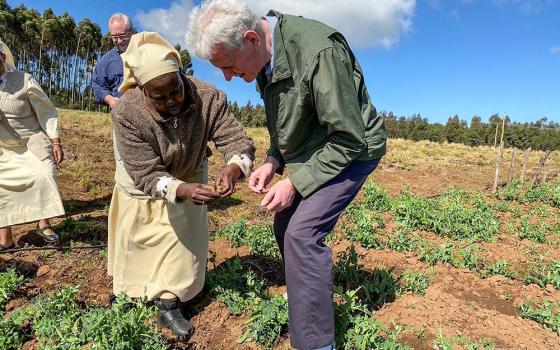
Another Hindu woman, Kanta Devi, prefers tending the small vegetable patch behind the building instead of speaking of her past. Growing spinach, cauliflower and tomatoes is part of her daily routine.
The soil has stained her hands, and she smiles when new leaves appear. "I wait for plants to grow. It gives me hope," she said.
Kumari added that the sisters never show anger. "They correct us, but they never insult us."
Respect forms the core of the Ashram's ethos. Each resident has chores suited to her circumstances. They fold laundry, help in the kitchen or assist others who walk with difficulty. This shared responsibility builds agency.
Devi told GSR that working in the garden restored her sense of purpose. "When I came here, I did not speak for weeks. They waited. They did not force me," she said.
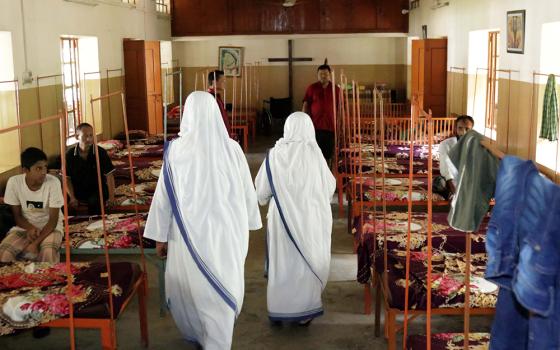
The women's rooms are basic, with two or three beds each. But the sisters and few volunteers ensure the sheets and the floor are kept clean. There is a shared bathroom at the end of the corridor, and a wooden cupboard doesn't have much to offer. There is no television or air conditioning and ceiling fans creak throughout the summer.
At noon, lunch is served in a common hall to women who sit in rows — rice, lentils, curd and seasonal vegetables, mostly sourced from the garden nurtured by the women themselves. Sister Jonamma moves from plate to plate, adding extra spoonfuls where needed.
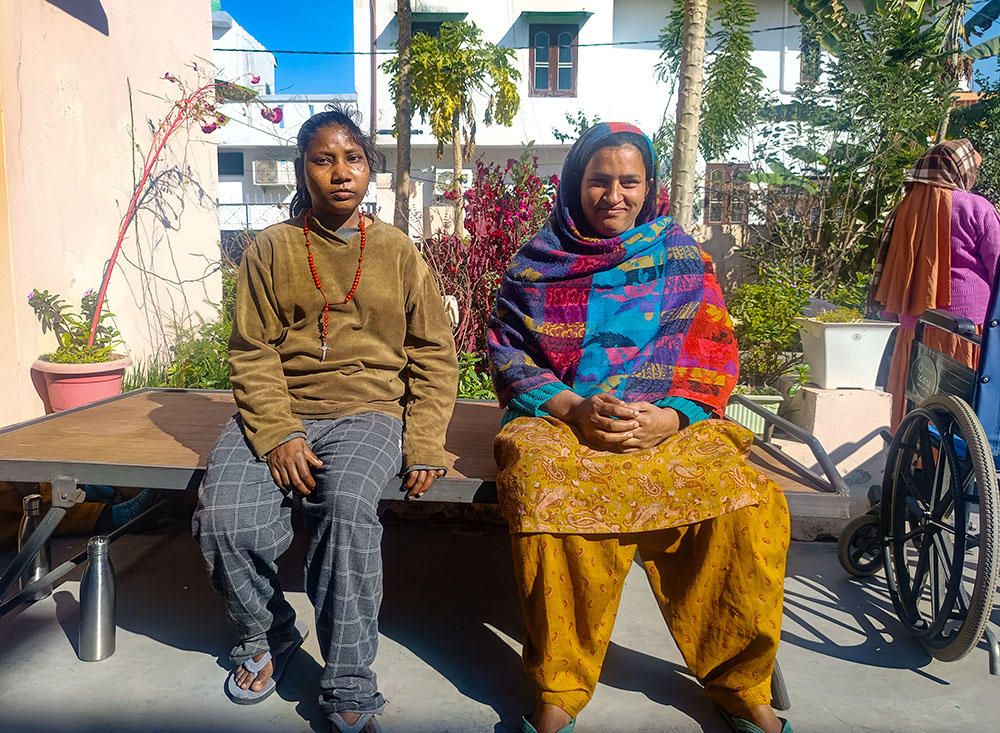
As dusk falls, the women in Paramprasad Ashram, a shelter home for abandoned women in Akhnoor, India, gather for evening tea. Stories flow, and laughter rises. (Umar Manzoor Shah)
Medical care is a major challenge. Most of the women suffer from diabetes, hypertension and arthritis. Regular hospital visits require money and time. Sister Agnes does what she can and keeps careful records of due dates, prescriptions and regular follow-ups.
Akhnoor's winters can be harsh. Fog settles early, and the electricity fails often. At these times, the sisters distribute extra blankets and check each room before sleeping. They already know who needs warm water for soothing aching joints.
The Ashram follows no particular religion. Mornings begin with silent prayers. Sometimes a hymn is sung, and verses from different faiths are read. Festivals are always shared. "When someone is hungry, you feed her. You do not ask about her faith," Sister Agnes explained.
They celebrate the feasts of different religions. On Diwali, oil lamps are lit and glow in the courtyard. On Christmas, a small crib is placed near the entrance, and carols echo softly in local Dogri and Hindi. During the nine-night festival honoring the Hindu goddess Durga, small lamps line the entrance. On the Islamic Eid festival, a few local families send sheer khurma, a local sweet delicacy. Faith becomes a bridge, not a boundary.
At night, when the compound grows silent, the two nuns sit together for a brief prayer simply for the strength to continue.
'No one should die feeling unwanted. When we took our vows, we chose this path. Service is our wealth.'
—Sister Jonamma
Sister Jonamma said she has not visited her home in southern Kerala state for years. Travel costs are high, and responsibilities cannot be put on hold.
"This is my family now," she said, looking at the corridor where a faint light glows. The women call her Amma, which means mother.
Seventeen years at the home have left their mark on her. She remembers residents who died and recalls carrying bodies for the last rites when no one else came forward. Death, she said, is the hardest part. "No one should die feeling unwanted. When we took our vows, we chose this path. Service is our wealth," she told GSR.
But this work needs dedication and discipline. Waking up at dawn. Cooking for dozens. Cleaning wounds. Mediating small conflicts. Filing reports. Smiling even on days of fatigue.
Sister Agnes joined the center three years ago, and now handles paperwork, hospital visits and liaisons with local officials. She also sits beside residents at night when fevers rise or old memories return to haunt them.
Government homes for older women exist, she said. But access can be slow. Documentation often becomes a hurdle, and the social stigma that single women face isolates them even more.
Sister Jonamma explained that most Indians live without financial security, and women are especially vulnerable due to the patriarchal social system. However, in this quiet corner of Jammu and Kashmir, the sisters' steady work transforms the lives of 25 women every day.
As dusk returns, the women gather for their evening tea, sharing stories and laughter. And in the distance, the Chenab River continues to flow steadily.