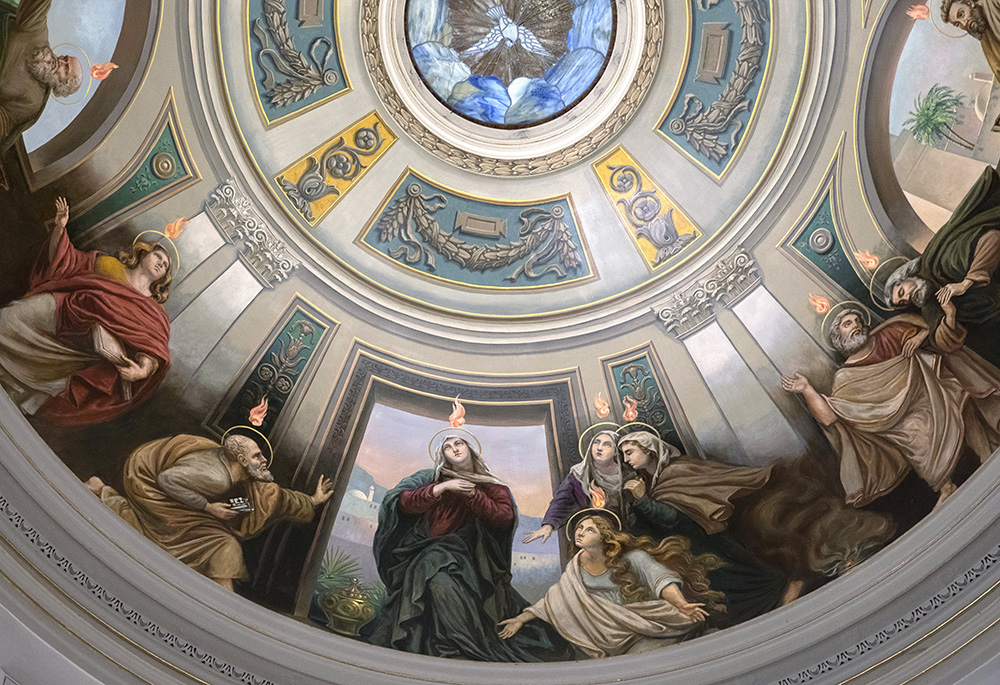
A painting on the ceiling of St. Catherine Church in Spring Lake, New Jersey, depicts the Holy Spirit descending upon the apostles. (CNS/Octavio Duran)

by Sr. Scholastica Oleksandra Hulivata
When we think of a monastery, our imagination usually turns to silence, high walls and a lonely figure focused on prayer. However, when we remember Pentecost, we imagine noise, tongues of fire, emotions and thousands of people on the streets of Jerusalem.
At first glance, these two images are opposites. But if you look closer, monasticism is nothing more than an attempt to preserve the enthusiasm of the first Pentecost and live it every day. It all began when, after the descent of the Holy Spirit, the apostles suddenly realized they neither could not nor wanted to live as before.
Today we celebrate Pentecost as a great event that changed the course of history. But if we put aside external effects, Pentecost is the story of how confused loners suddenly became a strong community. At that moment, the church and the ideal of the common life of Christ's disciples were born. Every monastic community tries to imitate the first Christian community and make its experience their daily practice.
It still remains unclear to many that it was this Pentecost that laid the genetic code of monastic life. After all, monasticism is not an escape from reality, but an attempt to embody in the most radical way the ideal that was manifested in the first Jerusalem community immediately after the descent of the Holy Spirit.
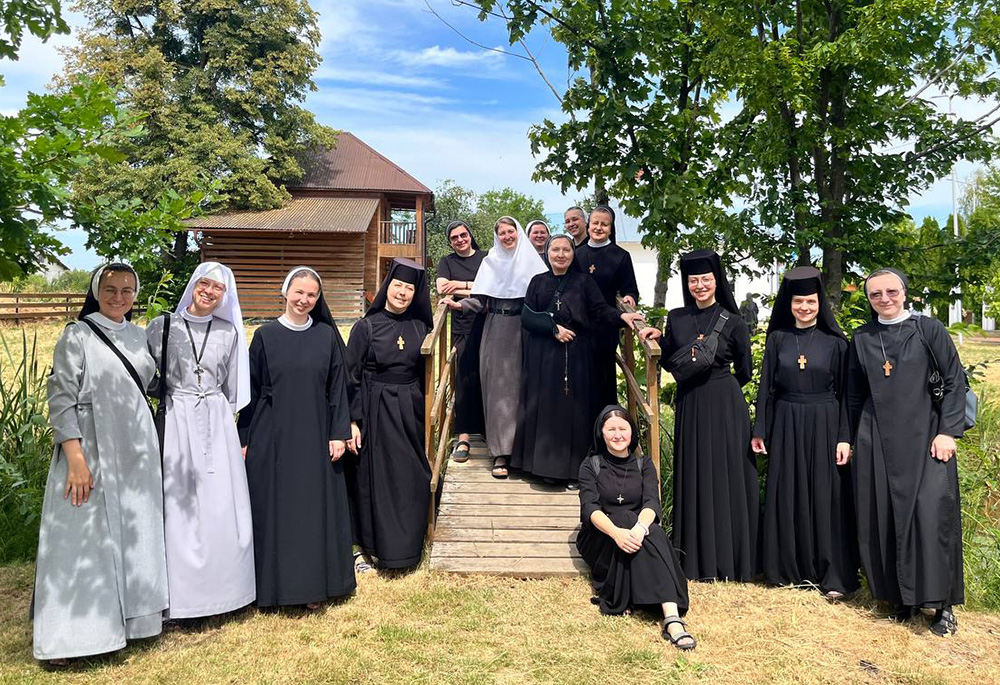
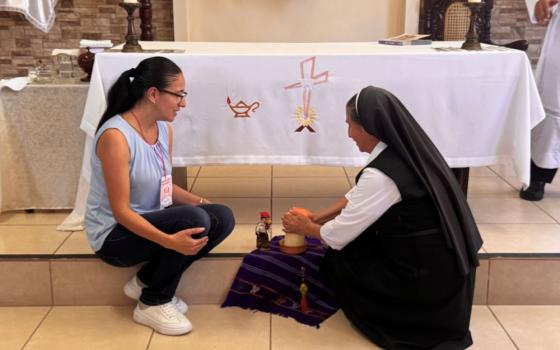
Young sisters from various monastic congregations of the Ukrainian Greek Catholic Church are pictured during a formation meeting dedicated to deepening monastic vows — chastity, poverty and obedience — in the Lviv region of Ukraine in July 2025. (Courtesy of Scholastica Hulivata)
The connection between Pentecost and monasticism is the connection between the fire of Divine inspiration and the life of the community that seeks to preserve this fire. To understand this connection, it is worth recalling the Book of Acts of the Apostles. In the description of the life of the first community, we read: "The community of believers was of one heart and mind ... they had everything in common" (Acts 4:32).
This "one-heartedness" of the first Christians is a direct consequence of the action of the Holy Spirit. Pentecost transforms a group of confused disciples into a single body of Christ. Today, every monastic community also sets itself the goal of recreating this state of "one heart." St. Basil the Great taught in his "Great Rules" that the monastic community is a model of the early church in Jerusalem.
Basil also considered life in a fraternal community to be more perfect than solitary hermitship, because community, according to Basil, provides space for growth in love: If you live alone, he asks, "Whose feet then wilt thou wash? Whom wilt thou care for? In comparison with whom wilt thou be last if thou livest by thyself?"
This is the main mystery of Pentecost — it is not just about tongues or miracles, but about how completely different people (fishermen, tax collectors, artisans) suddenly become a family. These words are not just a beautiful metaphor, but a description of the reality that the Holy Spirit created. Pentecost erased selfishness. Christians ceased to divide the world into mine and yours. It is on the foundation of love for Christ, mutual love between brothers and sisters, and the renunciation of earthly goods for the sake of the kingdom of heaven that consecrated communities have grown and continue to grow.
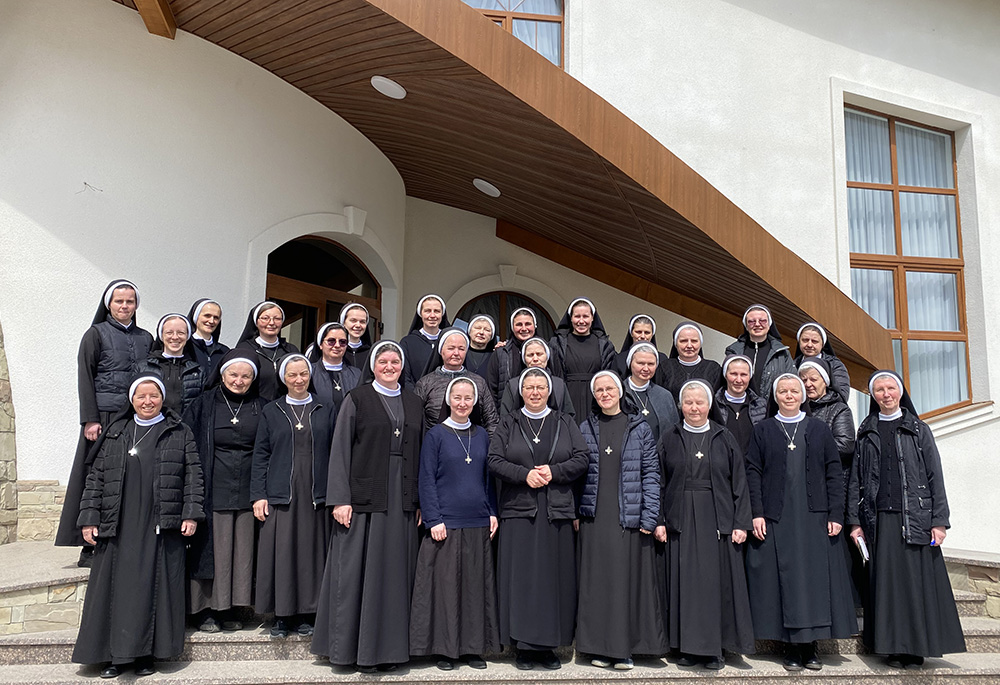
Easter meeting of the Basilian sisters of the Ukrainian province of the Holy Trinity, which took place on April 28–30, 2026, on Yasna Hora in Hoshev, Lviv region in Ukraine (Courtesy of Scholastica Hulivata)
The church sees monasticism as a lasting Pentecost. In the apostolic exhortation Vita Consecrata, Pope John Paul II wrote about men and women living "through monastic profession, the demands flowing from baptismal participation in the Paschal Mystery of his Death and Resurrection. In this way, by becoming bearers of the Cross (staurophoroi), they have striven to become bearers of the Spirit (pneumatophoroi), authentically spiritual men and women."
Monastic community exists to show the world koinonia (from the Greek koinōnia, communion or association) — the same deep communion that was born on the day of the descent of the Holy Spirit. The Dogmatic Constitution on the Church Lumen Gentium states that consecrated life is a visible sign that indicates the presence of heavenly goods already here on earth. This is only possible through the special gift of the Holy Spirit received on the day of Pentecost.
Advertisement
Pachomius the Great is considered the father of community monasticism. He was once a soldier, but when he saw the love of Christians, he understood: Strength is not in weapons, but in the unity of the Spirit. The first monasteries founded by Pachomius were an attempt to literally imitate the Jerusalem community. He believed that in community we polish each other like pebbles in a river until we become smooth and capable of love.
Modern monasteries are the "laboratory of the Holy Spirit", where the experience of Pentecost is tested by daily life, obedience and common prayer. If Pentecost is the historical moment of the manifestation of God's power, then monasticism is a way to make its presence permanent. The connection between them lies in the victory over loneliness and division: just as the Spirit in Jerusalem united different peoples into one Church, so today he unites different people into a monastic family, making them of one heart and mind on the path to the Kingdom of Heaven.
Ultimately, our life in community is not just about inner comfort or personal salvation. We are called to be living witnesses that Christ is risen and that his Spirit truly dwells among us. It is our unity, our ability to accept and forgive one another, and our sincere sisterly love that become the "tongues of fire" that speak louder than any words to the modern world. When people see that we, so different, can be of one heart, they recognize in this the action of God, for only his presence can create such communion. Jesus himself said to the apostles: "By this all will know that you are my disciples, if you have love for one another" (John 13:35).