
(Dreamstime/Nataliia Mysik)

by Sr. Karen Jean Zielinski
Contributor
"So when are you coming home?"
I answered this question many times by simply saying, "When my body is ready."
I am convinced there is another time zone. The 25th time zone: Medical Time. When I needed to go to rehab, trying to regain my strength after a bout with the flu, well-meaning people asked me four days after I entered rehab when I would be discharged. I was so weak those first days that I was barely eating. I didn't have the strength to answer the question.
So what's the big deal about time? Time is important to us. Our lives are filled with work, family activities, cooking and maintaining our homes, and, perhaps, a little break to have dinner with friends or watch a movie. We live packed lives and often remark that, "I just don't know where the time goes" or "There just isn't enough time in a day to get everything in!" We text people because it is quicker than talking to them. We like fast service, deliveries and short lines at the store.
Life changed dramatically when the light bulb was invented. People used to go to bed when the sun went down and wake when the sun rose. When artificial light added hours to our days, we packed them with more activities. We could shop at night, attend more church and social activities, sew, study, read and cook by artificial light.
Medical Time does what the light bulb did — it packs more "stuff" into our daily lives, complicating them when dealing with a hospital or rehab stay, physical therapy, going for medical appointments and lab tests, waiting for results, and follow-up appointments.
Advertisement
In addition, the medical time zone can drain our personal life with new complications when we find ourselves needing surgery, recovering from surgery, getting fitted for a medical brace, ordering and adjusting to new medications and meeting with a new specialist.
When we have been challenged with a health issue, we learn the importance of time. We remember the day we were diagnosed, any surgery, and how long we needed radiation or chemotherapy. We celebrate that we have been living cancer free or without a fall. Many of us remember the exact date we were discharged from the hospital. We live with hope that whatever health challenge started in us years ago will stay away from us.
Our Medical Time world can be filled with personal health stress. We have to schedule appointments, arrange transportation to the facility, sometimes take new medications before a test. We can be overwhelmed, wondering if our visit will be on time, canceled, or if transportation will be there for us and on time. Another reality is the time between appointments or procedures. We might be ready to have a procedure but have to wait for weeks or months for it to happen.
Going to a doctor for an ache or pain can mean weeks or months of more appointments to discover the cause. That is a real time commitment.
In the 25th time zone, we lose control of time. If we have to be hospitalized, spend time in rehab or a nursing home, our schedule is not our own — from meal time to physical, occupational, speech therapies, to shower schedules, or to nurses' visits. We learn that it's their world — not ours!
Add to that the fact that our bodies heal at their own rate. Our new knees or hips will heal — just not as quickly as we might have hoped. After all, we want to get home, get back to work, or just feel better as soon as we can! We have places to go and people to meet!
(Pixabay/Robyn Wright)
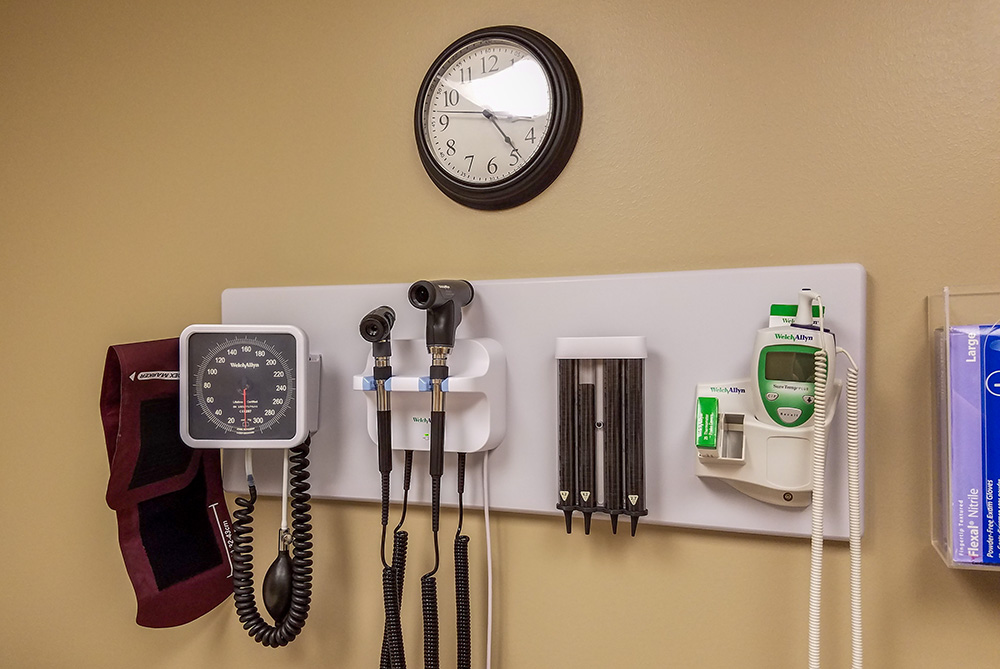
Why does Medical Time stress us? It interrupts what we want to do. Our real lives are abruptly halted for a while, and we do not know the timeline. Time is turned around for us — schedules that formerly included meetings, meals, TV shows or a Zoom call are replaced by specific medical events. A schedule of meals, showers, physical therapy, and conferences with social workers is our new clock.
So, how can we manage Medical Time? First, it might help to admit that attention to medical issues is a part of life and very important if we choose to stay as healthy as we possibly can. But it can help if we speak with our nurses, receptionists and doctors to try to consolidate our appointments, avoiding repeat visits. We could start using digital medicine like MyChart. Getting involved in our care might give us a bit more control of our often uncontrollable 25th time zone.
Getting sick is not for the weak. We have to do our "work" through uncertainty, weakness, pain and fear. Anxiety can fill our time of healing. We can easily become overwhelmed when we hear news about blood work not at a healthy level or a wound that is not healing or when our physical therapy "plateaus" and there is no improvement.
I find my prayer at times of fear, uncertainty and hope. I am moved to repeat mantras, simple words and often only one sentence from a psalm repeatedly through the day. My prayer becomes simplified, with fewer words.
With prayer, mindfulness, hard work and collaboration with medical professionals, we can accept health issues as challenges in our lives. What we do with Medical Time is one of the most important pieces of our recovery.