"It can sometimes be the tiniest things in nature that arouse wonder in us," writes Sr. Anne Henson. "Being receptive and attentive to that sense of wonder could transform the world."

by Sr. Anne Henson
Some words are overworked. "Awesome," for example, is frequently used to mean something nice or pleasant, not awe-inspiring. "Awestruck," on the other hand, is not in everyday use. Perhaps this is because it carries an intense sense of wonder, often an emotional and physical response with elements of surprise, contemplation, joy and bliss.
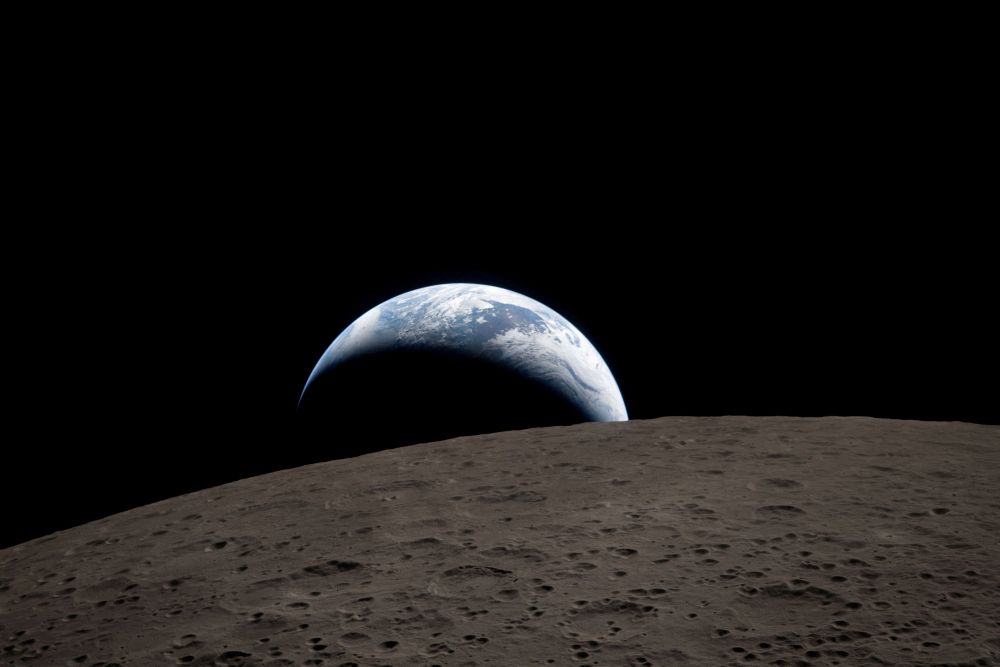
The four astronauts who returned from their space mission Artemis II in April were awestruck and will be forever changed by their experience, as were their predecessors on earlier space missions. Astronauts undergo a profound cognitive shift after seeing the wonders of the moon and stars at close range. Moreover, even at that great distance, they feel a deep connection with planet Earth. One Artemis II astronaut, Victor Glover, said that our planet looks like "one thing, homo sapiens is all of us." His first words to the media after splashdown were that he wanted to thank God in public, expressing gratitude for what he had seen and experienced as well as for the company of his fellow astronauts. TV images certainly showed the team as closely bonded.
We need that message in these troubled times when there are more than130 armed conflicts across the globe. The Artemis II crew described Earth as a special place, urging us to treat our fragile planet with care and to live in unity with one another.
Previously, the American astronaut Alan Shepard, spoke of how fragile Earth looks in the darkness of space, adding that it's tough that people are fighting each other instead of trying to get together to protect our vulnerable home. This experience was so overwhelming for Shepard that he admitted, "When I first looked back at the Earth, standing on the moon, I cried."
It can sometimes be the tiniest things in nature that arouse wonder in us. … Being receptive and attentive to that sense of wonder could transform the world.
The closest most of us can come to that sense of wonder is perhaps when we go to a headland and gaze out over the vast expanse of ocean and simply become lost in awe at its immensity, its beauty and its mystery. At night we simply need to gaze in wonder at the moon and stars to become lost in wonder.
It can sometimes be the tiniest things in nature that arouse wonder in us. Think of the perfection and the delicate nature of a violet or a ladybird. And what about the daily occurrence of a sunset, the stirring of a gentle breeze or the perfume of a flower? At such times the human spirit knows an inner stillness. Being receptive and attentive to that sense of wonder could transform the world.
Whatever our differences, we all share this beautiful world. It is our home. In Laudato Si', his message to the world about care of the environment, Pope Francis said: "Concern for the environment needs to be joined to a sincere love for our fellow human beings and an unwavering commitment to resolving the problems of society."
Advertisement