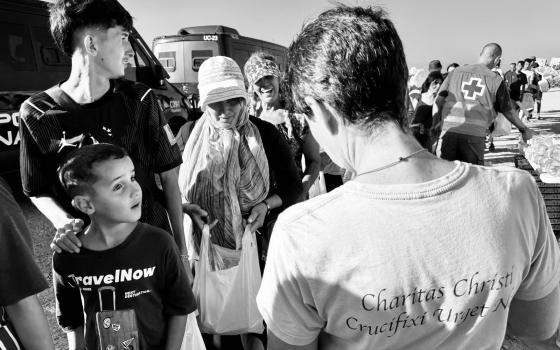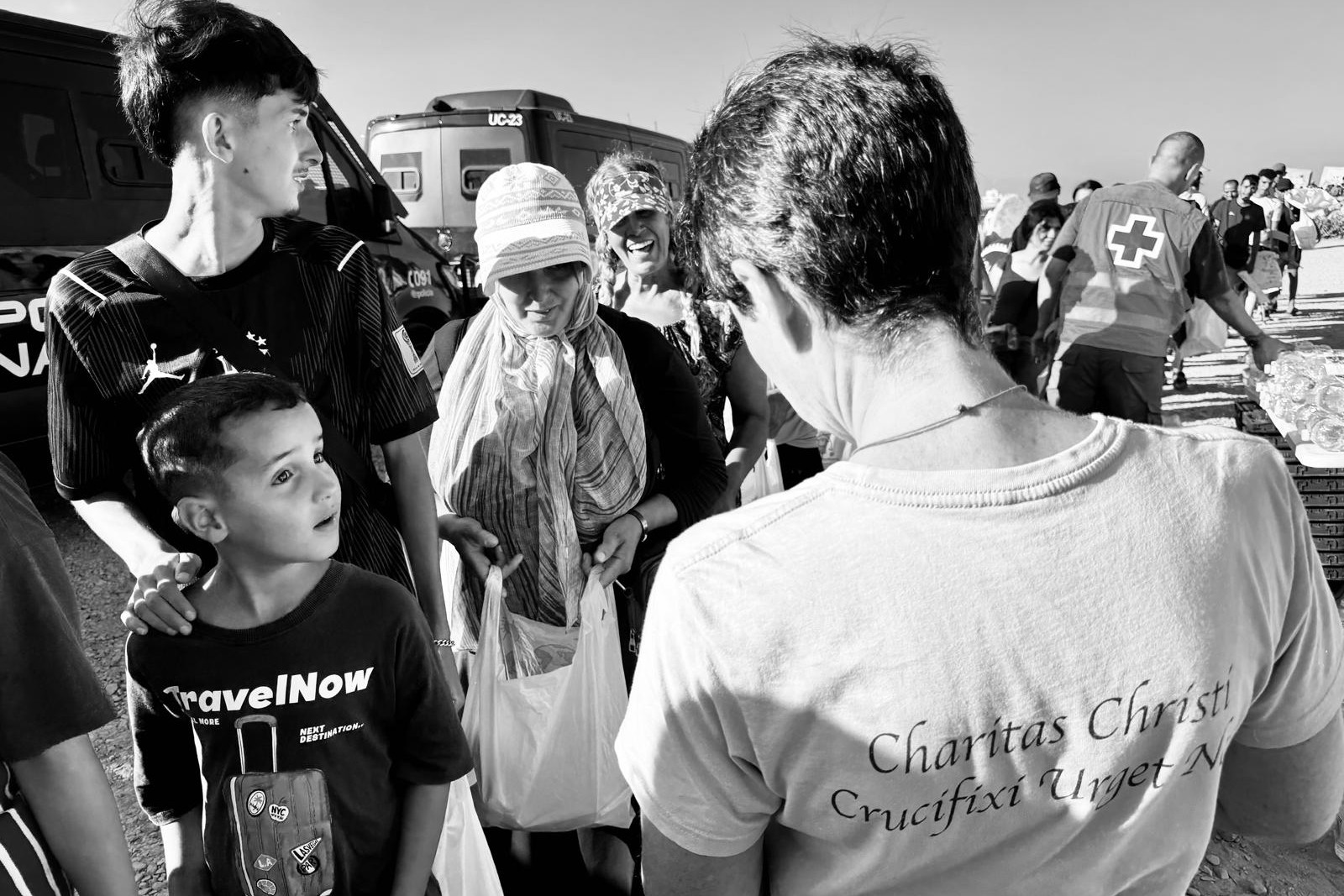
The Daughters of Charity and the Spanish Red Cross distribute food, medicine and other essential supplies to migrants who arrived in Ceuta, a Spanish city in North Africa, near the border with Morocco. At the end of July, more than 70,000 people entered the city. (Courtesy of Mari Carmen Sapiña)

Isaura Maolen Rodríguez Pérez
Sr. Mari Carmen Sapiña began her mornings in Ceuta with the Eucharist before helping a group of 50 migrants shower at the San Antonio Center. It was among the daily responsibilities taken on by five Daughters of Charity of St. Vincent de Paul who arrived in the Spanish city on Aug. 12.
Ceuta, a Spanish autonomous city in North Africa bordering Morocco, experienced a massive influx of migrants in late July that overwhelmed its capacity to respond. According to Spain's Ministry of the Interior, approximately 72,000 people crossed into the city. By Aug. 4, Interior Minister Fernando Grande-Marlaska estimated that roughly 70,000 had returned to Morocco, although thousands of migrants continued to arrive or remained in the city in the following weeks.
Three months later, Ceuta was still grappling with the humanitarian consequences. As of Oct. 31, approximately 7,500 migrants were staying in government-established reception facilities, while an estimated 3,000 to 4,000 others remained outside those accommodations, according to El Faro de Ceuta. The city was also caring for 3,626 migrant minors, with an estimated 400 to 500 additional children still living on the streets.
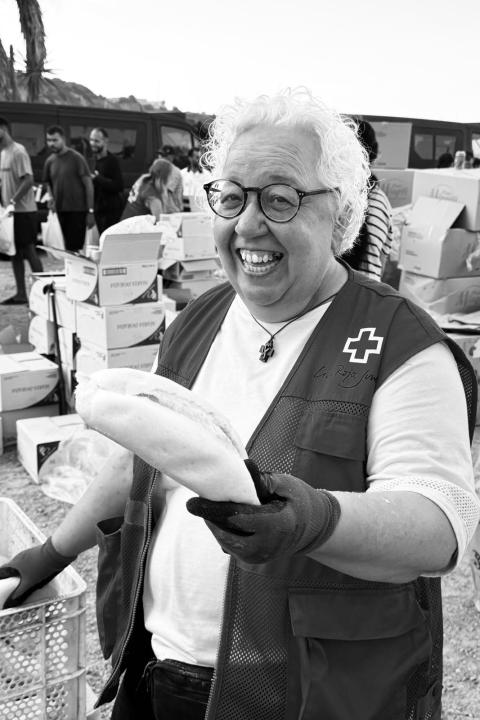
Sr. Mari Carmen Sapiña distributes food to migrants in Ceuta, a Spanish city in North Africa. In collaboration with the Spanish Red Cross, the five Daughters of Charity sisters assist those who arrived in the city following the mass influx in July. (Courtesy of Mari Carmen Sapiña)
The figures came nearly a month after Spanish authorities cleared a makeshift migrant encampment on Trampolín Beach on Oct. 4 and 5, where more than 3,000 people had been living. Some were transferred to temporary reception facilities, while others left the area before police arrived.
For the Daughters of Charity, the emergency response had meant providing food, care and companionship to migrants of all ages. Working alongside the Spanish Red Cross and the international organization Doctors of the World, the five sisters helped distribute meals, taught daily Spanish classes and accompanied children through painting, singing and games.
Among their responsibilities was distributing food to thousands of migrants who had gathered on Trampolín Beach. At the time of Sapiña's interview in September, the Spanish Red Cross reported distributing an average of 3,500 food kits daily. The bags contained "water, milk or juice, bread, tuna or cheese, mortadella, fruit or a sweet treat," Sapiña said, adding that "that is all they have each day."
The sister warned that "there are people who are starving" and described the arrival of migrants: "First, mothers with their children come in; then other minors, and finally, men in groups of a hundred."
Sapiña, who holds a degree in social work from the University of Valencia in Spain, described migrants living in makeshift shelters constructed from cardboard and plastic, without access to toilets, electricity or running water. Many also lacked adequate healthcare, she said. "The hospital only treats emergencies."
Sapiña also expressed concern that pregnant women were not receiving specialized care.
"No one has any idea how many pregnant women there are; there are also unaccompanied minors who are still out on the streets," she said after having spent more than 40 days in Ceuta.
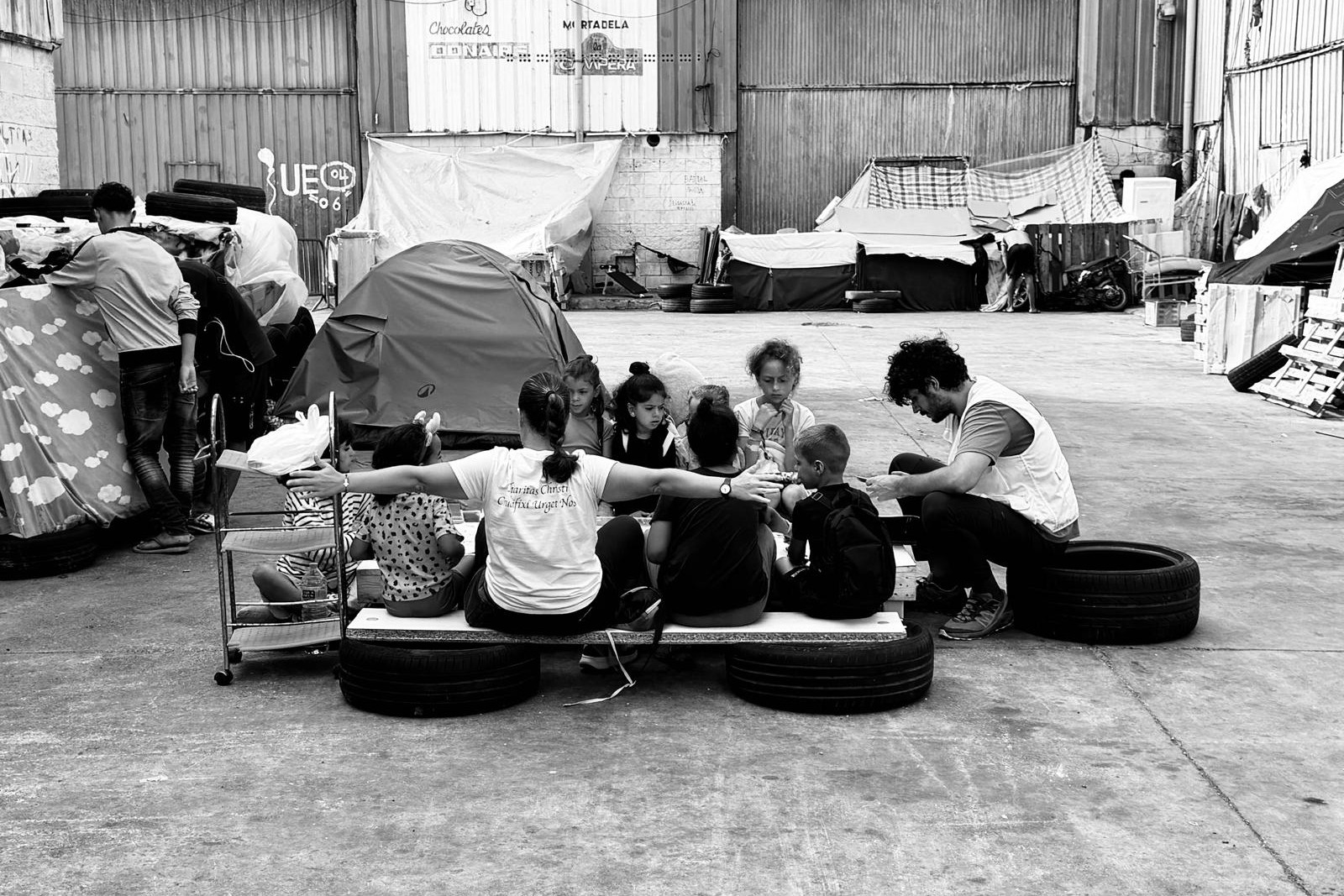
Unaccompanied migrant minors sit in a tented area in Ceuta, where they receive assistance from the sisters' staff and the Red Cross. (Courtesy of Mari Carmen Sapiña)
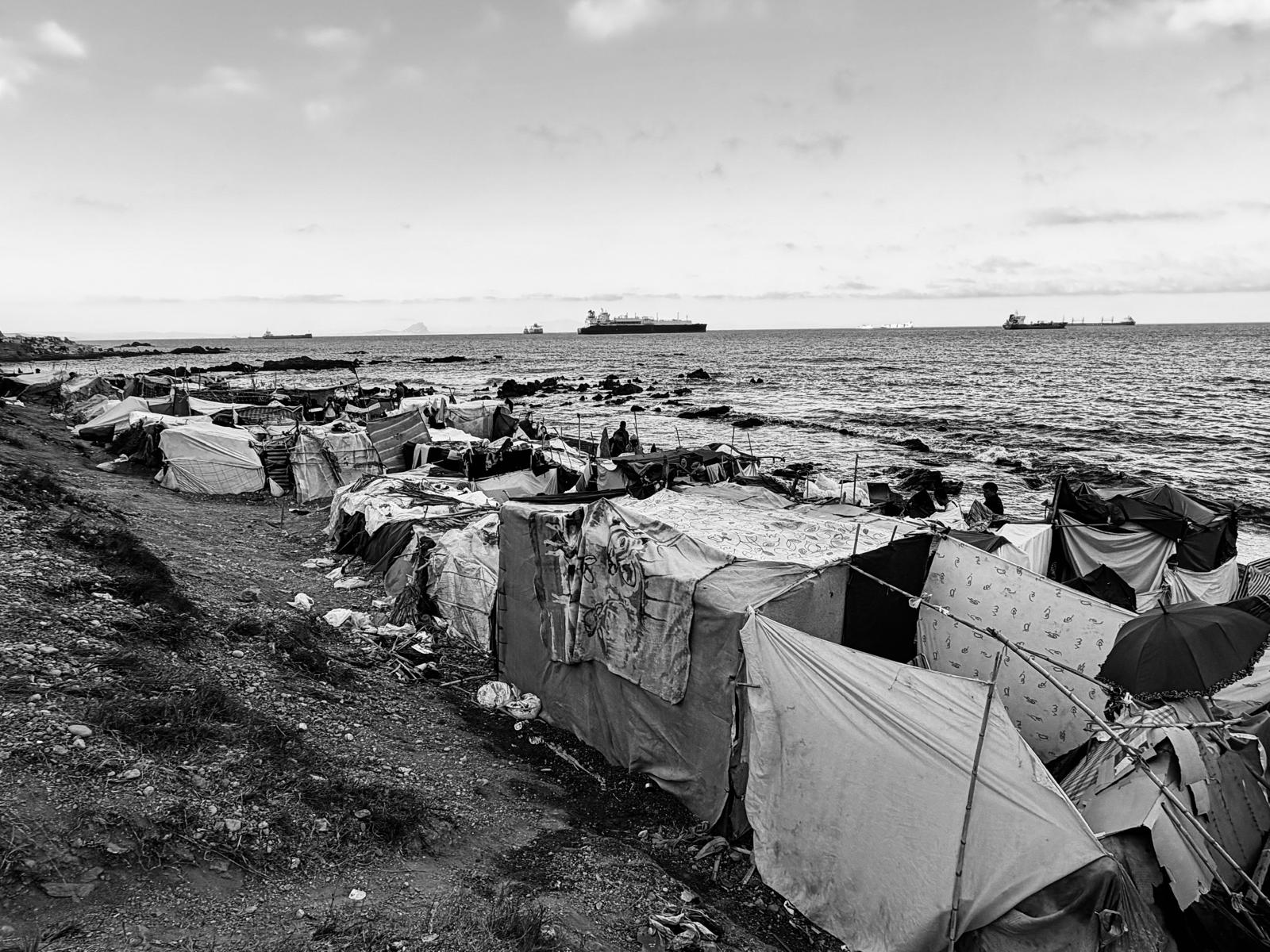
Makeshift shelters constructed from cardboard and plastic housed migrants on Trampolín Beach in Ceuta, Spain, before authorities announced the clearing of the encampment on Oct. 4, 2026. (Courtesy of Mari Carmen Sapiña)
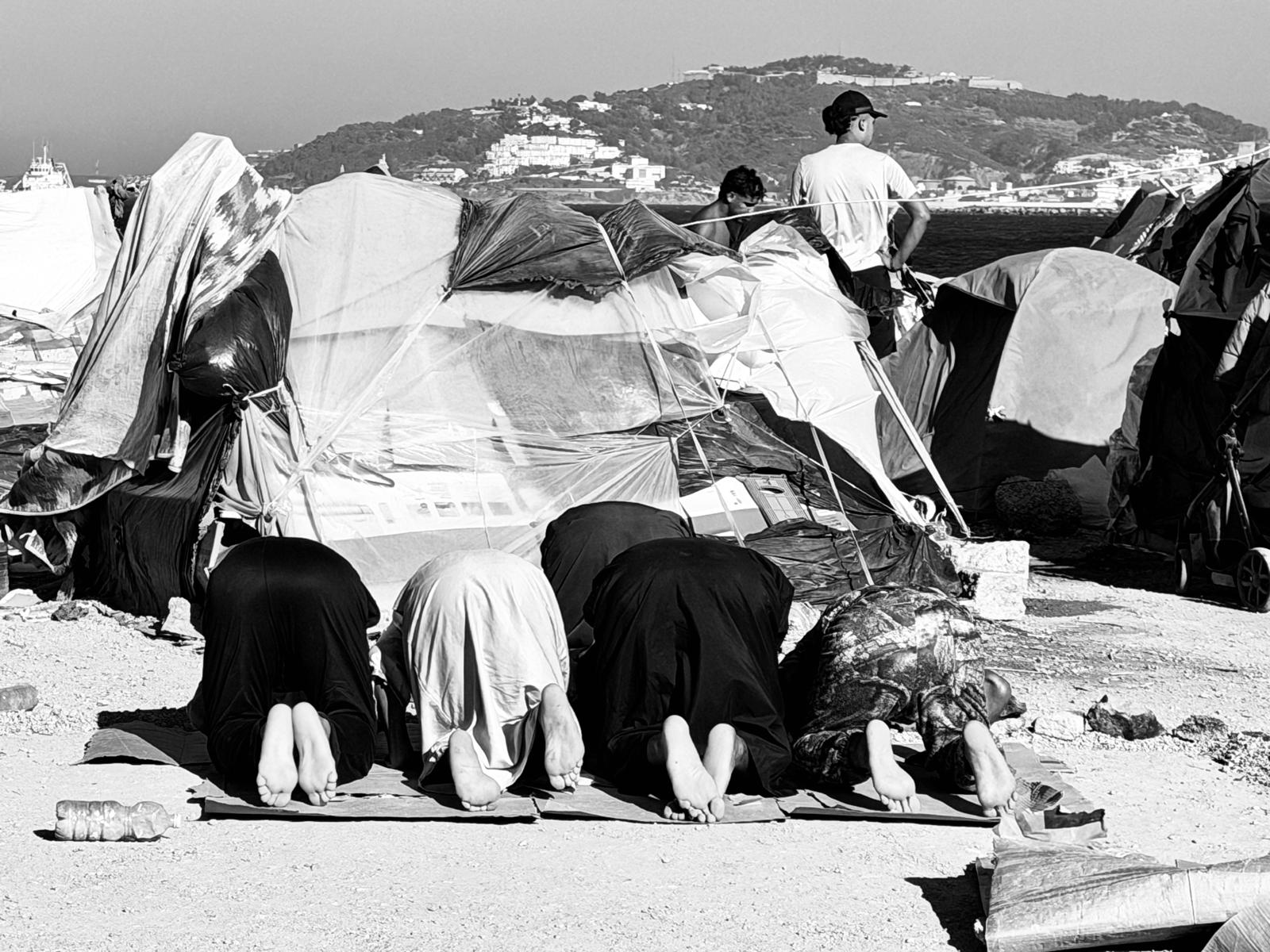
Migrant women kneel in prayer in Ceuta, a Spanish city in North Africa, following the arrival of more than 70,000 people from Morocco in late July 2026. (Courtesy of Mari Carmen Sapiña)
By mid-September, an estimated 13,000 migrants remained in Ceuta, either living without legal status or staying in reception facilities, according to the city's president, Juan Jesús Vivas. That figure was equivalent to roughly 16% of Ceuta's registered population.
Ten days later, Ángel Víctor Torres, Spain's minister for territorial policy and democratic memory, reported that approximately 3,500 migrants, including hundreds of minors, were still living on the city's streets. (Unlike the earlier estimate, this figure excluded those staying in reception facilities and referred only to people living on the streets.)
Beyond the official figures, Sapiña said "I had never seen an influx like this, so large as the one in Ceuta," describing the situation as "overwhelming" in a phone interview on Sept. 26. In her 35 years of religious life, Sapiña said, she had never experienced a situation like the one in Ceuta.
'As long as necessary'
The Daughters of Charity of St. Vincent de Paul serve in hospitals, schools, children's homes and nursing homes for older people. They also accompany people experiencing homelessness and provide support in supervised apartments, day centers, addiction rehabilitation programs, and social and employment integration centers.
Five sisters arrived in Ceuta on Aug. 12: Mari Carmen Sapiña, Cristina, Clara, Araceli, Julia and Vicenta, who served there for several days. All but Sapiña asked to be identified by their first name only.
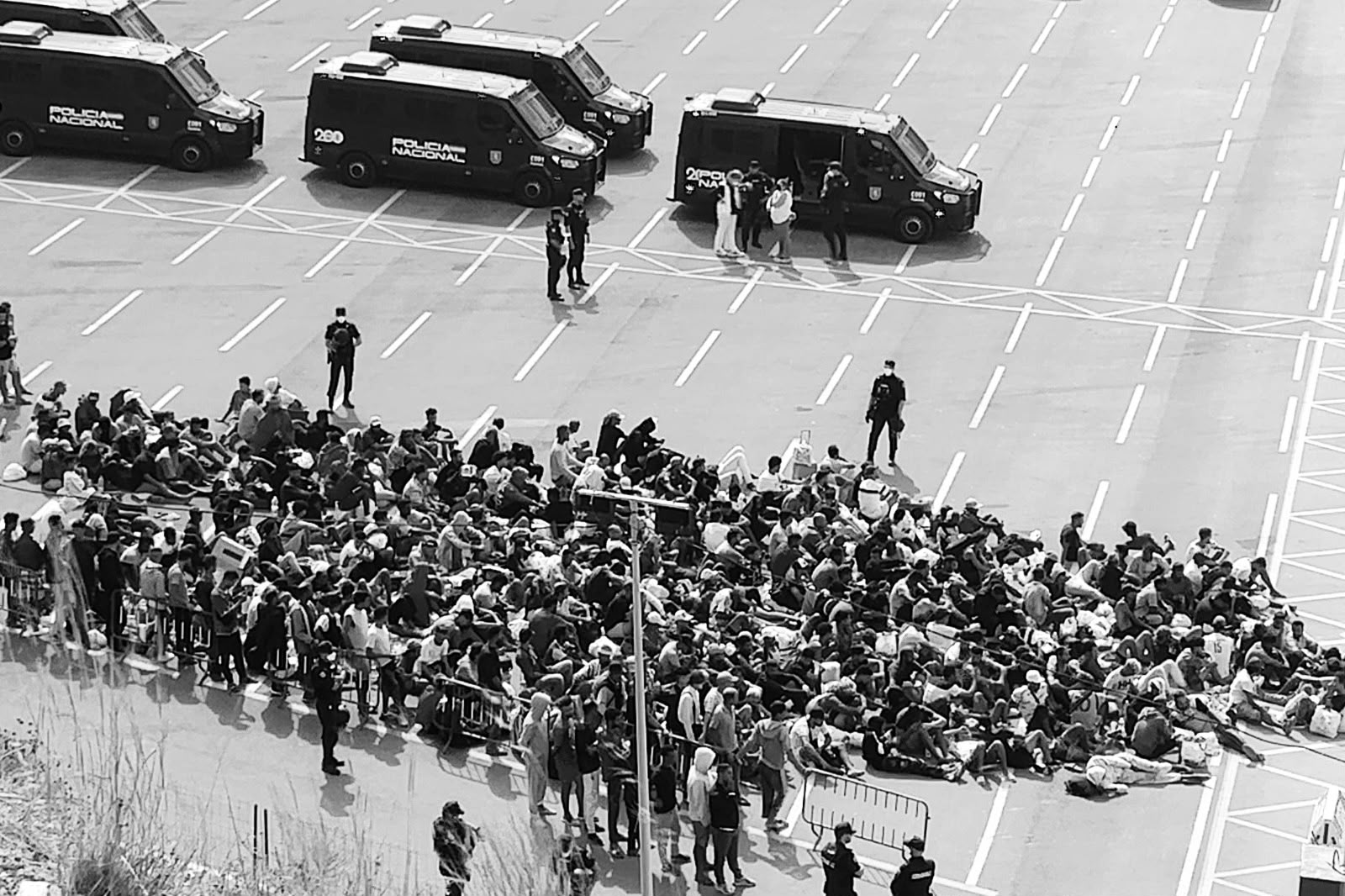
Dozens of migrants sit on the ground in a parking lot under the supervision of police officers in Ceuta. (Courtesy of Mari Carmen Sapiña)
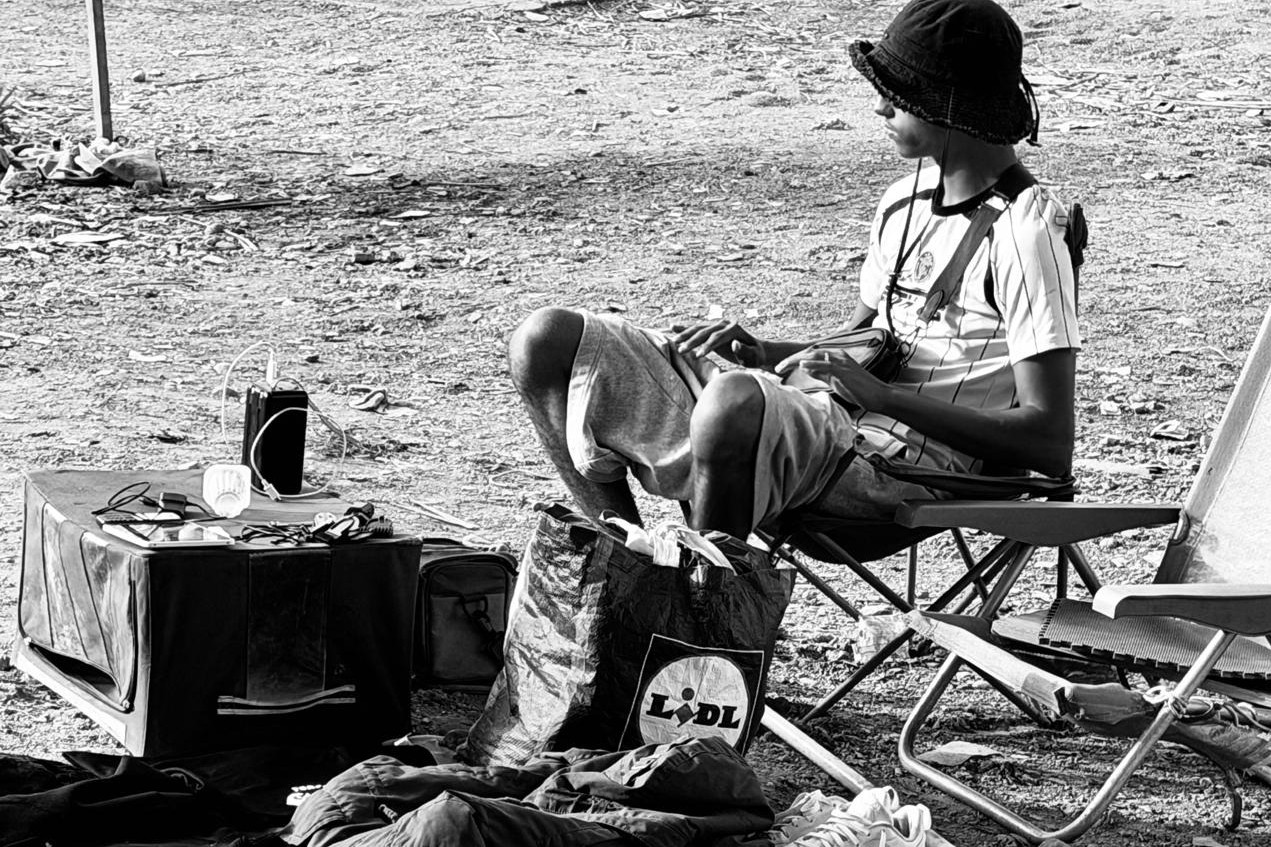
A teenager sits on a chair on a beach in Ceuta, Spain, with some of his belongings scattered on the sand nearby. On Sept. 21, 2026, Spanish Minister of Territorial Policy and Democratic Memory Ángel Víctor Torres reported that approximately 3,500 foreign nationals remained on the city's streets. (Courtesy of Mari Carmen Sapiña)
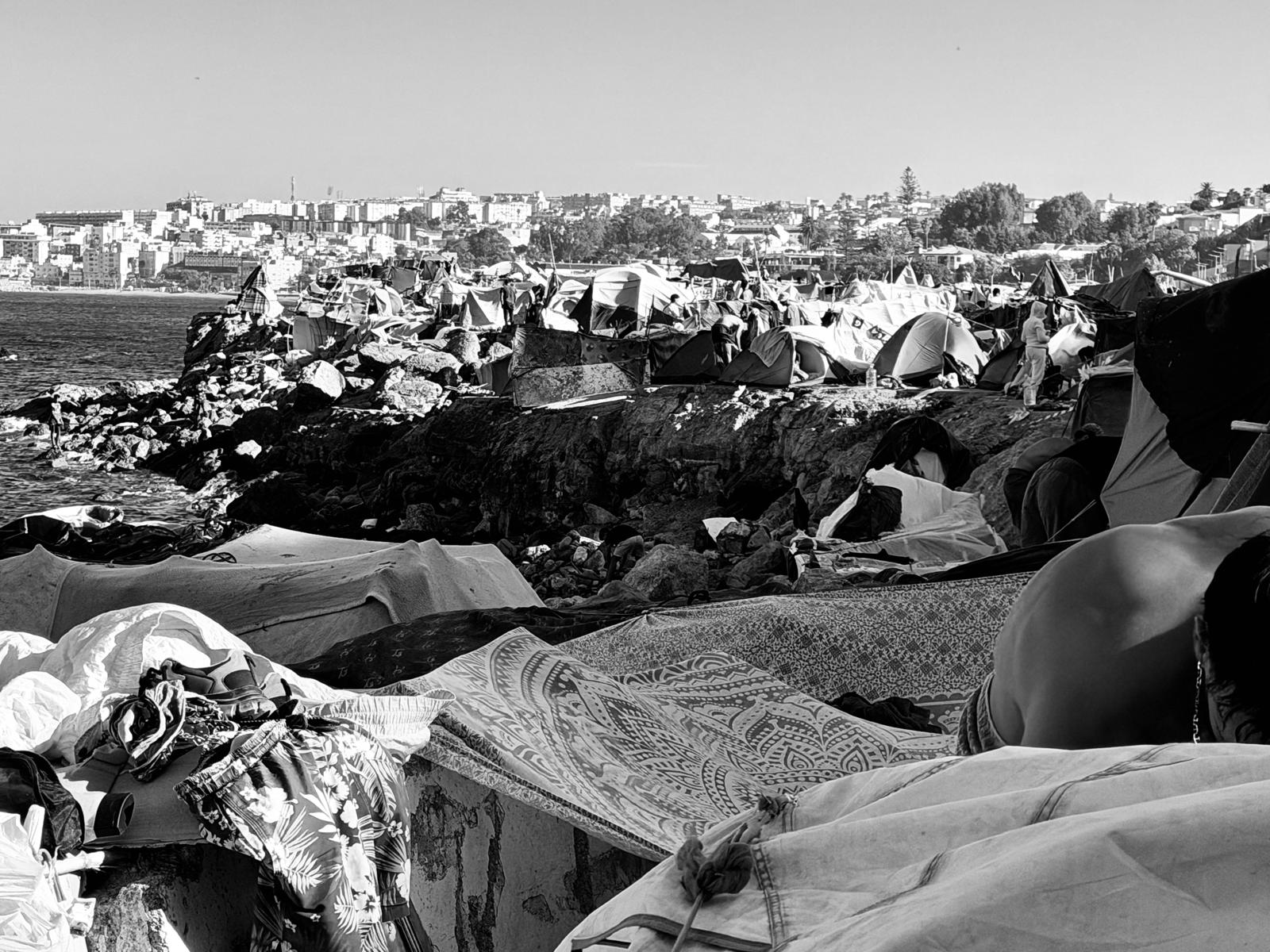
Makeshift shelters constructed from cardboard and plastic fill the foreground of this image, with the city of Ceuta, Spain, visible in the background. Describing the mass arrival of migrants from Morocco in July 2026, Sr. Mari Carmen Sapiña said, "I had never seen an influx like this, so large as the one in Ceuta." (Courtesy of Mari Carmen Sapiña)
The sisters volunteered to join the emergency response, organizing their trip in just two days.
When asked how much longer they expected to remain in Ceuta, Sapiña replied, "As long as necessary."
Advertisement
In a reflection she wrote about her experience, Sapiña recounted: "I only raise my eyes so that they meet the eyes of each person who passes by … yes, even if there are thousands of them! And every day I am amazed at how they, too … with their heads bowed … raise their eyes and we connect … and the miracle of an instant smile, of gratitude, of affection takes place."
Sapiña also described the relationships the sisters developed with migrants through their daily activities and encounters.
"Many already know us because they see us all day wherever they are, when they go to shower, to get medical attention, to learn some Spanish … or when they are out on the street and shout at us: 'Thank you!' And they call us by our names … and they are surprised when we also call them by their names and say a few words to them in Darija" — the language commonly spoken in Morocco — "and laugh with them."
Several migrants Sapiña spoke with told her they did not want to return to Morocco because they saw few opportunities for education and training there. They hoped to work in Spain and send money to their families.
For the Daughters of Charity who traveled to Ceuta, accompanying migrants became a daily commitment — one they were prepared to continue as long as necessary.
[This is an updated version of the story that was originally published in Spanish Oct. 26, 2026.]