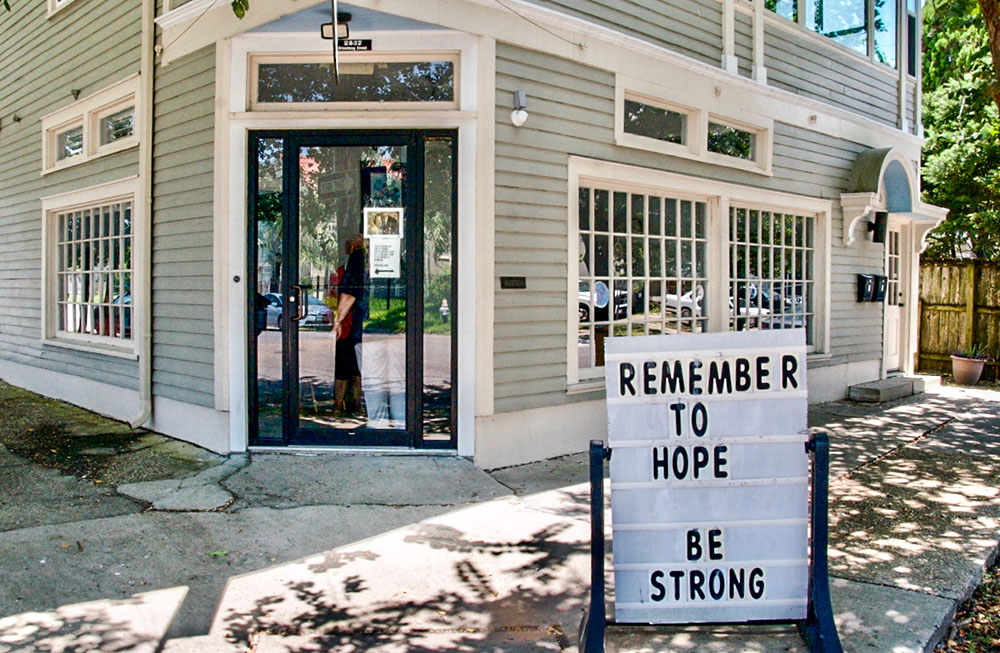
The Peace Center, a ministry of the Dominican Sisters of Peace, is seen in July 2026 in New Oleans' Gert Town neighborhood. (GSR photo/Dan Stockman)

Marcia Freeman is tidying up, putting books away, pushing in chairs at the Peace Center in the Gert Town neighborhood of New Orleans.
She lives down the street, but this place feels like home: Freeman first started coming here with her mother, who has since died, to take computer classes. Now Freeman volunteers at the Peace Center and her grandchildren attend afterschool and summer programs here.
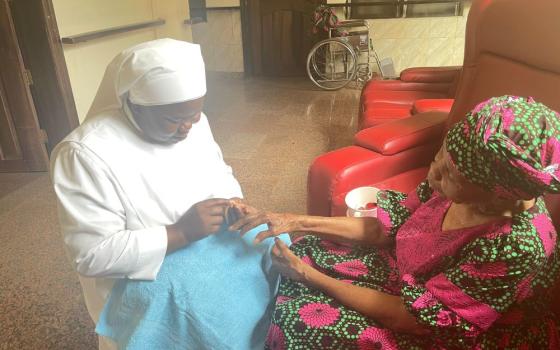
"It's really had a big impact on the seniors in this area," Freeman said. "This has really worked well — it really combats the loneliness. It's a great mission."
When the Dominican Sisters of Peace first started the Peace Center 13 years ago, they weren't sure what the mission would be.
"It started as a thought from congregational leadership that the presence of sisters in New Orleans needed a little boost," Sr. Pat Thomas said. "We had no sense of what we were going to do ... but we wanted to do something."
So they canvassed the neighborhood around St. Mary's Dominican High School to learn what residents needed. They then converted a former neighborhood grocery store, shuttered after Hurricane Katrina, into a community center on the first floor and an apartment upstairs, where three Dominican Sisters of Peace moved in.
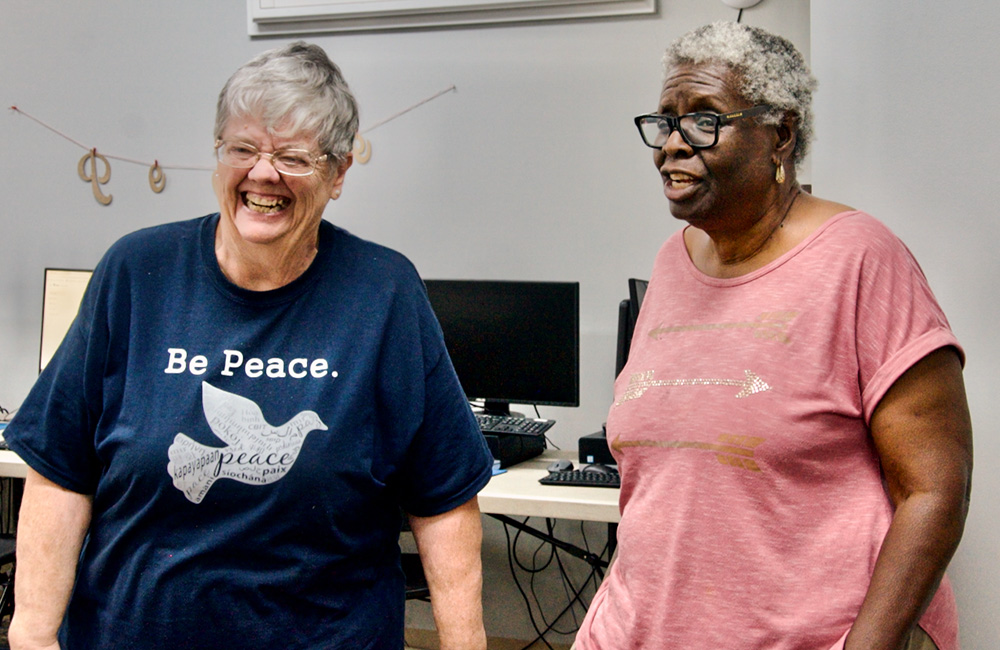
Sr. Pat Thomas (left) and Marcia Freeman share a laugh in the Peace Center, a ministry of the Dominican Sisters of Peace in the New Orleans neighborhood of Gert Town. (GSR photo/Dan Stockman)
It's an area where one-third of the people live in poverty and nearly three-fourths of renters pay more than 30% of their income toward rent. The average annual household income in Gert Town is just under $46,000 — less than half of the U.S. figure of $113,500.
Sr. Suzanne Brauer is a New Orleans native, and when she heard about the idea for a mission in her hometown, she thought, " 'Oh, that's very nice. I hope somebody does it.' Then I realized they would need someone from New Orleans to pull this off."
Brauer would know: She knew white New Orleans culture, but not African American New Orleans culture, and the neighborhood they planned to minister in is steeped in it. She had spent a few years in southwest Louisiana, where she had to learn Cajun culture, then in Arizona where she had to learn Mexican American culture.
"I'm just very interested in how people live their lives, and especially how they come to God," Brauer said. So she got a master's degree in African American studies at nearby Xavier University's Institute for Black Catholic Studies. Nearly 70% of the population of Gert Town is Black.
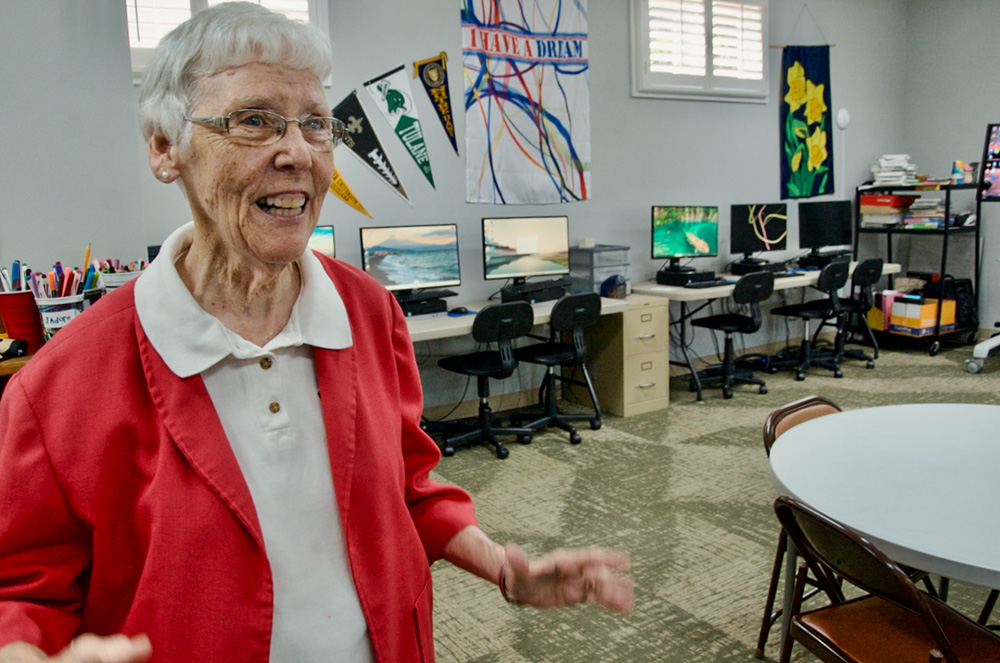
Dominican Sr. Suzanne Brauer gives a tour of the Peace Center in the New Orleans neighborhood of Gert Town. (GSR photo/Dan Stockman)
Thomas, Brauer and Sr. Ceal Warner then began working to become part of the neighborhood, attending the meetings the police department would have with neighborhood leaders. (Warner has since moved on to a different ministry.) Thomas went to Sunday services at each of the six Baptist churches in the area to introduce herself.
"I said, those services are too long for you, but she went," Freeman said. "At first, a lot of people were hesitant — these white nuns show up. But they've made a big, big impact in this area, especially for kids — they don't want to go home."
Over the years, some of the programs have changed to meet new needs or to avoid duplication. The first three summers, for example, they ran camps for the neighborhood kids, but realized there was a plethora of summer camps available, so instead of running their own, they began sponsoring kids to go to other camps, like an art camp, athletic camps, and even a sports journalism camp run by Loyola University New Orleans.
"We could expose them to these things that just opened up a whole new world for them," Thomas said. And after the day camp was over, the kids could attend the Peace Center's "after camp," where they would take field trips and do other activities.
Advertisement
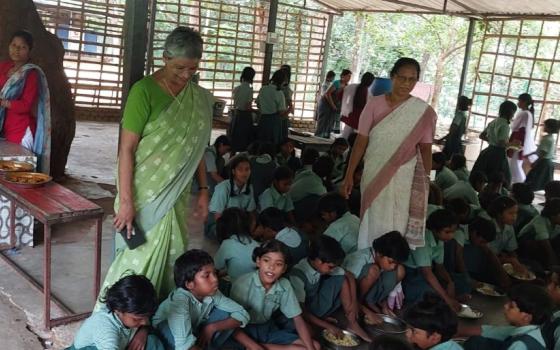
During the summer, more than a dozen kids visit the Peace Center, and even more come to the programs after school when it is in session.
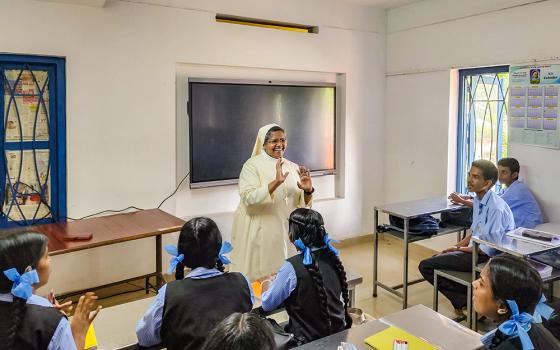
"We had our first college graduate two years ago," Thomas said. "Our youngest kid started coming when he was 6 years old, now he's a junior in high school."
About 35 seniors attend programs at the Peace Center, but by far the most popular is the twice-a-month bingo games. And a fixture at the bingo games is Mabel Harris Thomas, affectionately known as "Miss Mabel." Miss Mabel turned 100 on May 14.
"I love it," she said, sitting at her kitchen table. "I meet a lot of people I love over there."
And while Miss Mabel may have been born when Calvin Coolidge was president, she still lives alone and still drives to church.
"I don't have a cane or anything," she said. "I don't need it — I do a lot of exercise."
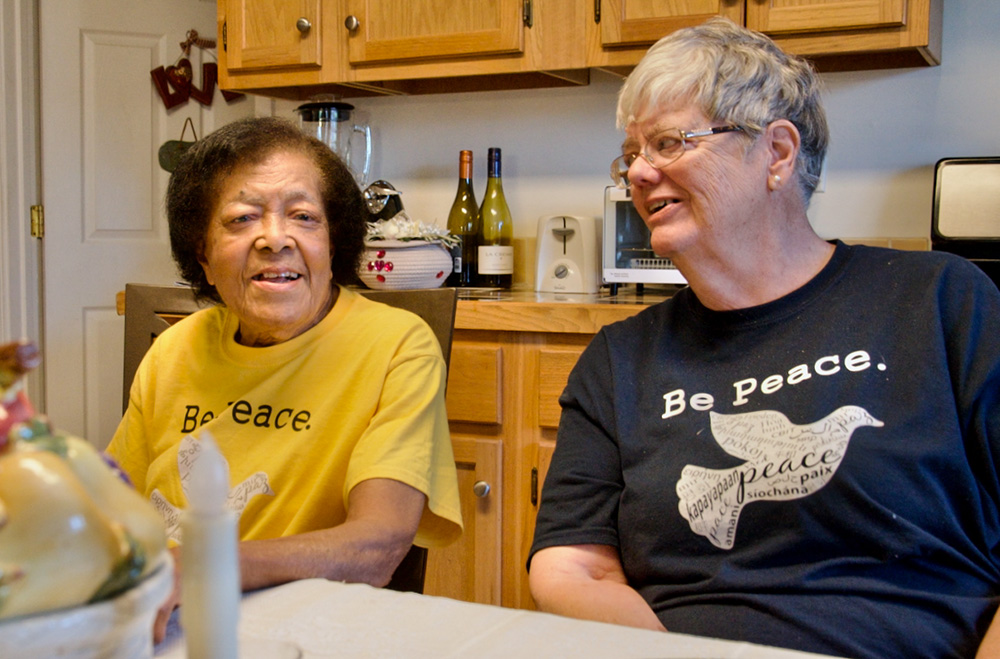
Mabel Harris Thomas (left), affectionately known as "Miss Mabel," and Dominican Sr. Pat Thomas talk in Miss Mabel's kitchen about her love for the Peace Center in the New Orleans neighborhood where she lives. (GSR photo/Dan Stockman)
Thomas met Miss Mabel at one of the police department meetings "where Miss Mabel was taking care of her neighborhood — she got a bar closed down," Thomas said. "She showed us all sorts of ways to be involved — she's helped us more than we've helped her."
Miss Mabel said the bingo games are fun and the friendships are wonderful, but there are also speakers, such as the pharmacist talking about medications, police officers and fire fighters talking about safety, even experts on insurance. She also loves the field trips, like the one to Middendorf's Seafood Restaurant, a local fixture.
The Dominican Sisters of Peace was born in 2009 when seven Dominican congregations merged into one new religious institute. An eighth congregation joined in 2012. Each of the eight had their own ministries; the Peace Center was the first new ministry of the combined communities.
"None of us had any experience in neighborhood centers," Brauer said. "I told God, 'Please let it work for at least a year.' There was no plan, so we took what we knew and started different activities. ... I said people need jobs, so we started an employment program."
Both of the sisters say they have gotten back much more from the neighborhood they minister to than they have ever put in.
"We didn't in any way bring God to them," Brauer said. "We discovered God in them."