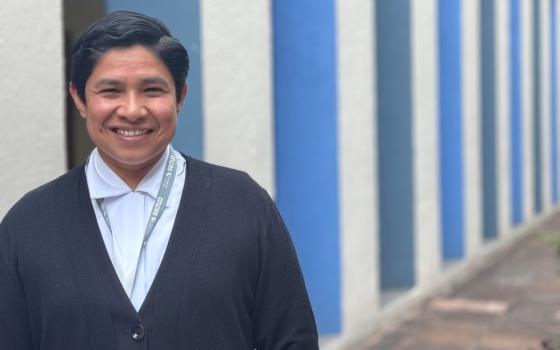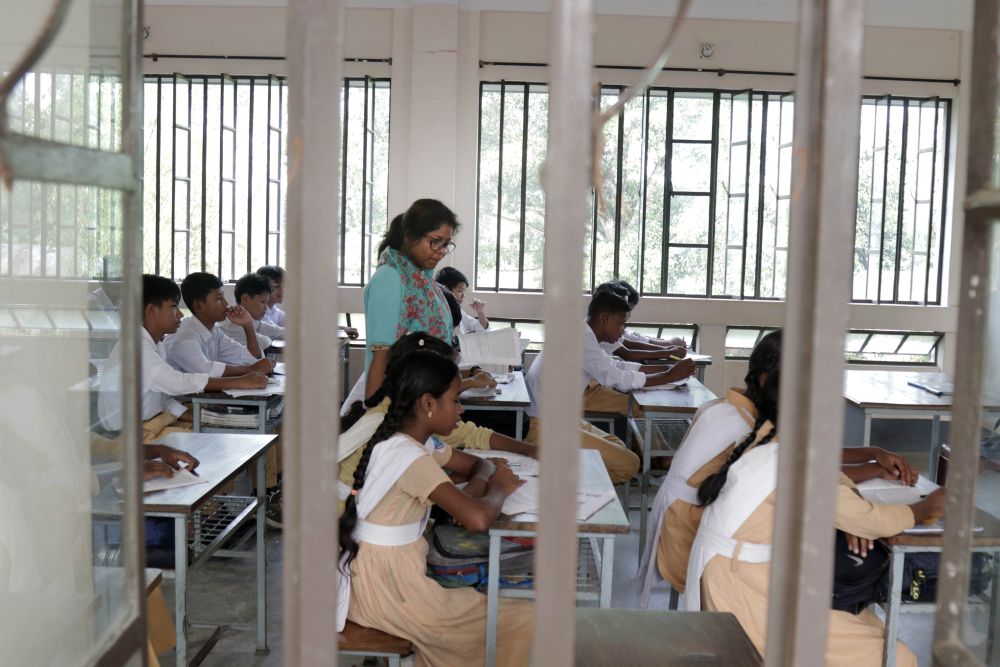
Marish Missionary Sr. Shila Gomes teaches English at St. Marcellin High School in Sreemangol, Bangladesh. Her congregation runs a hostel in the northeastern Bangladeshi Sylhet Diocese for girls of families from the tea garden community. (Stephan Uttom Rozario)

by Stephan Uttom Rozario
Missionary Sisters of the Society of Mary, popularly known as Marist Missionary Sisters, are showing hope to the Indigenous tea workers and other girls in the northeastern Bangladeshi Sylhet Diocese.
Marist Sisters run Snehomoy Maria Girls' Hostel for the daughters of the families who come from the tea gardens and Punjee, a traditional settlement of Khasi Indigenous. Tea workers in Bangladesh, usually Khasi and Garo Indigenous, are a marginalized, poor and neglected community.
Tea workers in Bangladesh are among the lowest-paid workers in the country. They face poverty, exploitation and discrimination, and many also struggle with health issues. They do not have enough opportunities for education and healthcare.
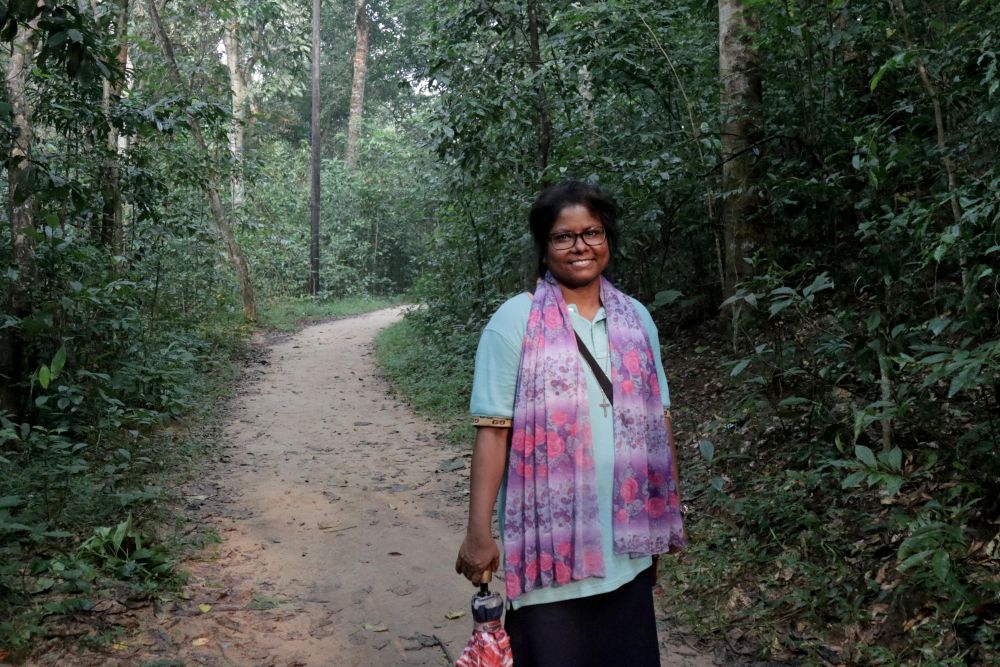
Sr. Shila Gomes walks to visit a village in the forest in northeastern Bangladesh. (Stephan Uttom Rozario)
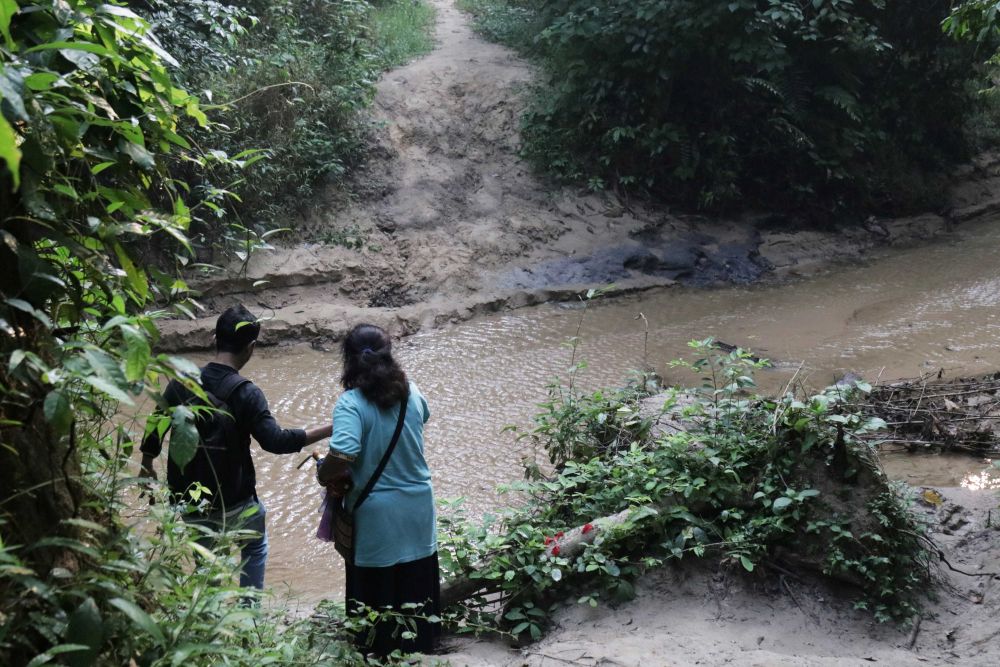
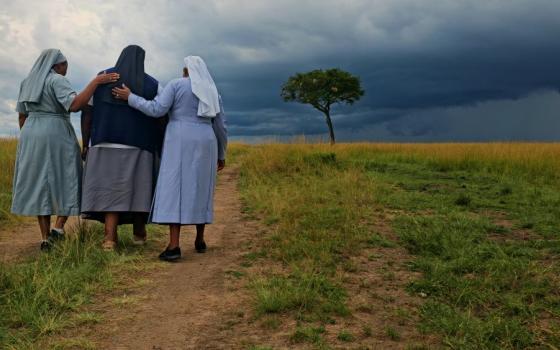
To visit the Indigenous villages, Missionary Sisters of the Society of Mary often travel a long way. (Stephan Uttom Rozario)
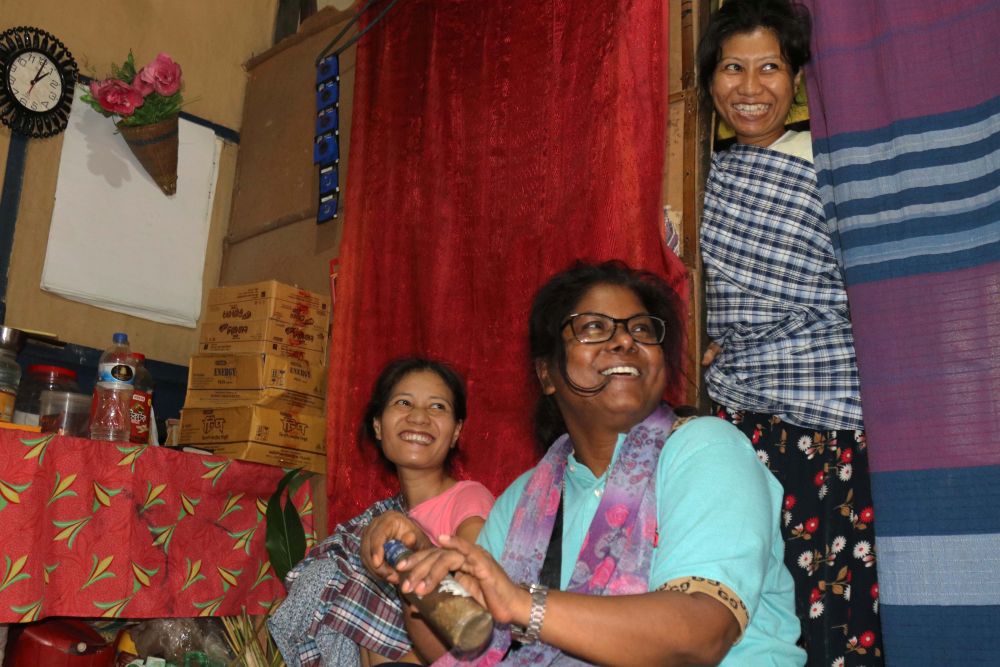
Sr. Shila Gomes visits with a Khasi Indigenous family. (Stephan Uttom Rozario)
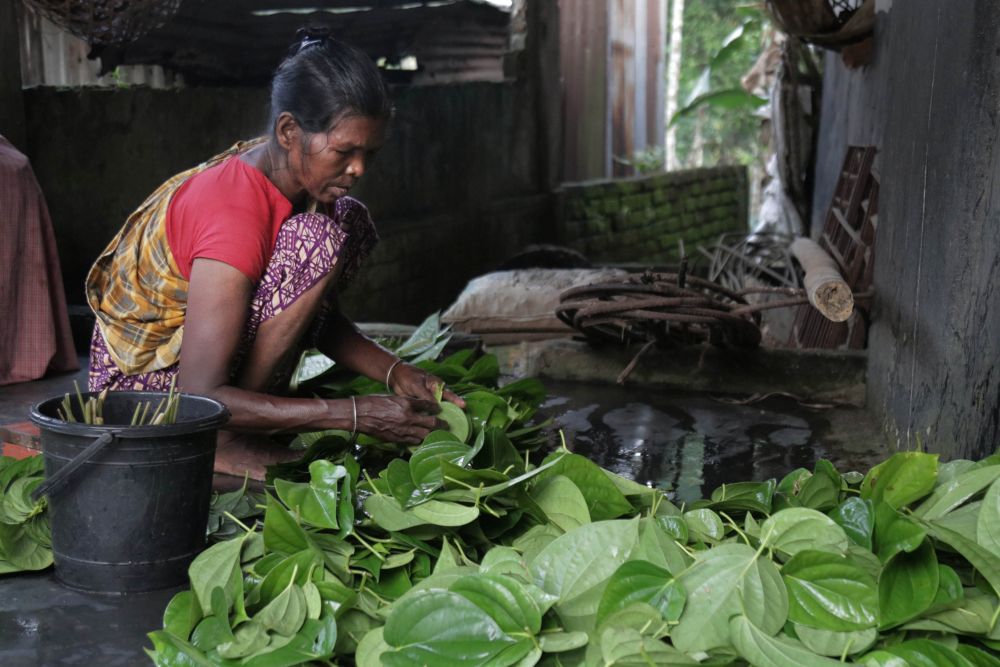
An Indigenous woman picks the best betel leaves to prepare them for sale. (Stephan Uttom Rozario)
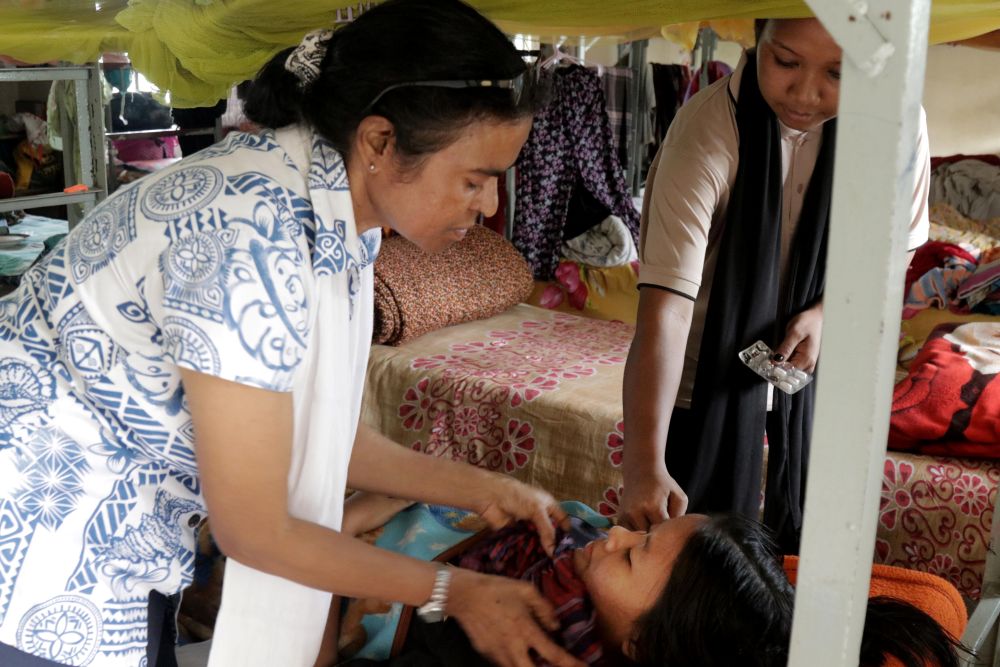
Sr. Shakuntla Devi Arjun takes care of a sick girl who lives in Snehomoy Maria Girls' Hostel. (Stephan Uttom Rozario)
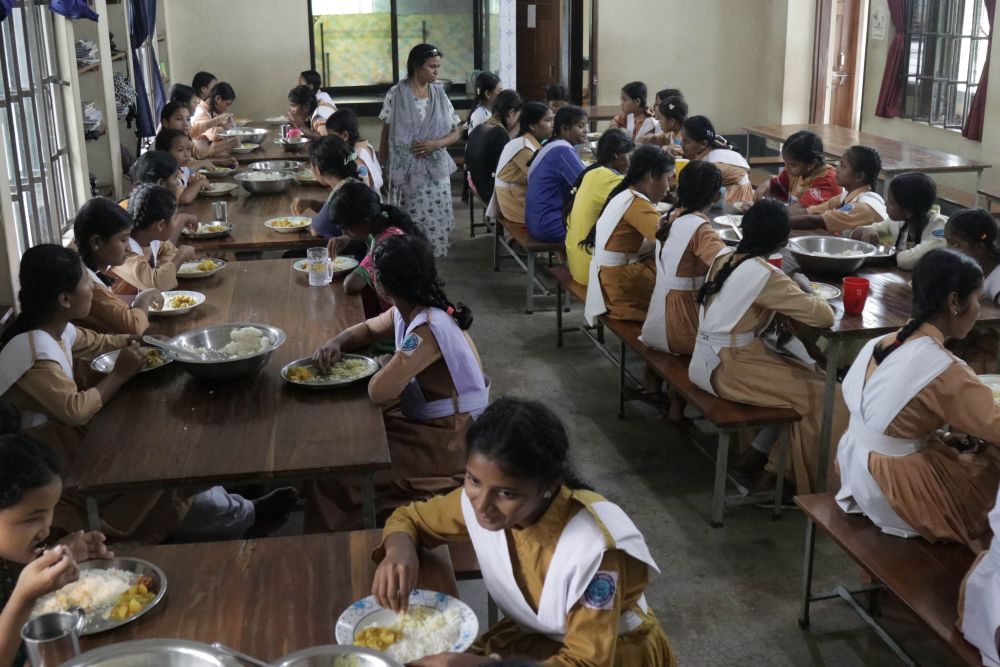
Students eat dinner at Snehomoy Maria Girls' Hostel. (Stephan Uttom Rozario)
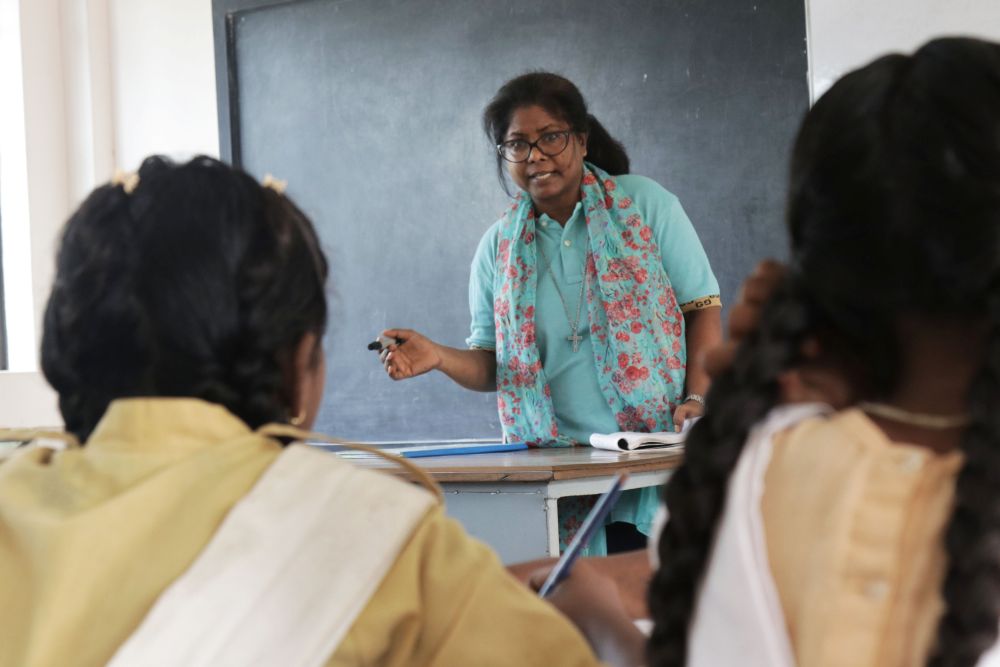
Sr. Shila Gomes, a member of the Missionary Sisters of the Society of Mary, teaches students at St. Marcellin High School in Sreemangol, Bangladesh. (Stephan Uttom Rozario)
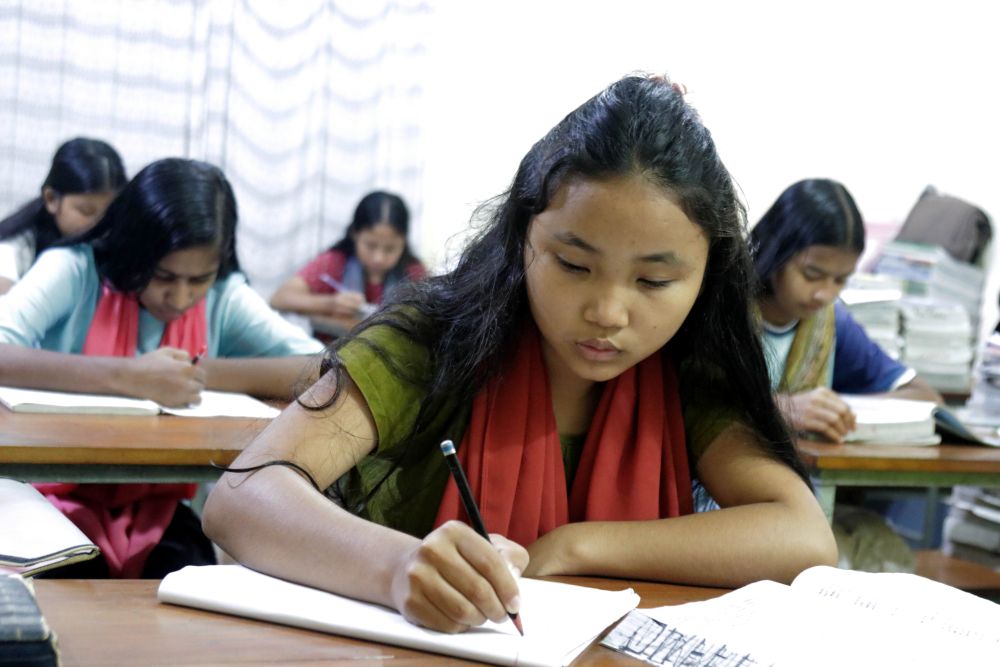
Sr. Shila Gomes, a member of the Missionary Sisters of the Society of Mary, teaches students at St. Marcellin High School in Sreemangol, Bangladesh. (Stephan Uttom Rozario)
The Marist Sisters operate this hostel to educate girls at little or no cost. The students attend St. Marcellin High School, managed by the Marist Brothers.
Sisters often visit the tea workers and Punjee families, motivating parents to send their girls to the hostel for an education.
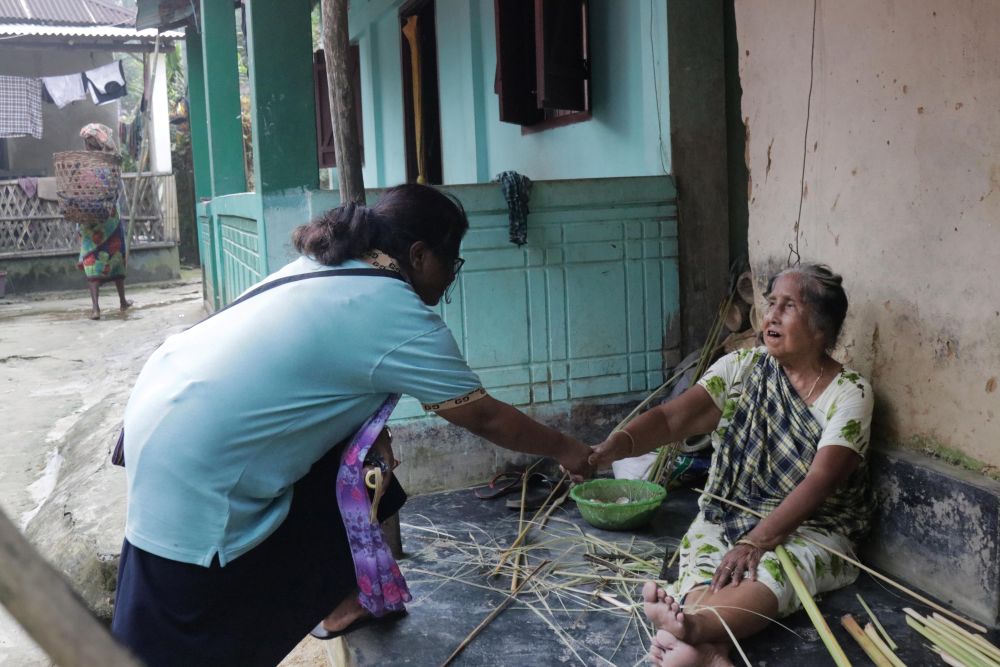
Sr. Shila Gomes visits people in the village. (Stephan Uttom Rozario)
Marist Sr. Shakuntla Devi Arjun, supervisor of the hostel, told Global Sisters Report that if the girls are educated, they will raise their voices against injustice.
"We are actually making them sustainable in terms of rights and justice through education. Many students are now getting higher education after completing our hostel, and we provide them with a stipend for their education," Arjun said.
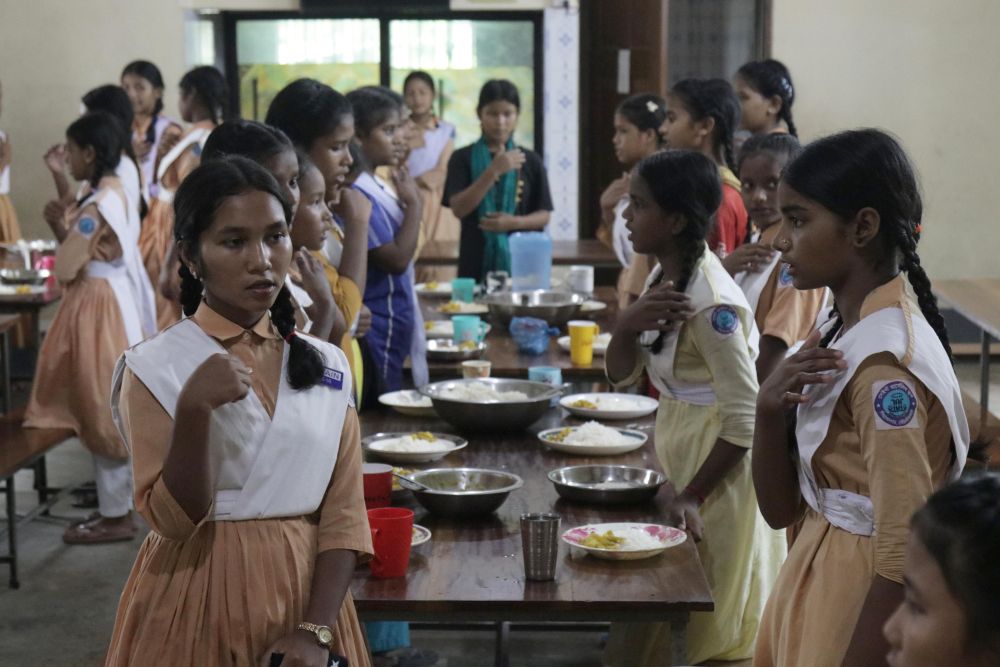
Girls pray before dinner at Snehomoy Maria Girls' Hostel. (Stephan Uttom Rozario)
Most worker families reside in a single small room — provided by the estate authorities — measuring merely 7-8 x 11-14 cubits (10.5-12 feet by 16.5-21 feet). Within this tiny space, three to four generations — or 6 to 10 family members — live huddled together. Often, due to the lack of space, family members must sleep on the veranda or on makeshift raised platforms.
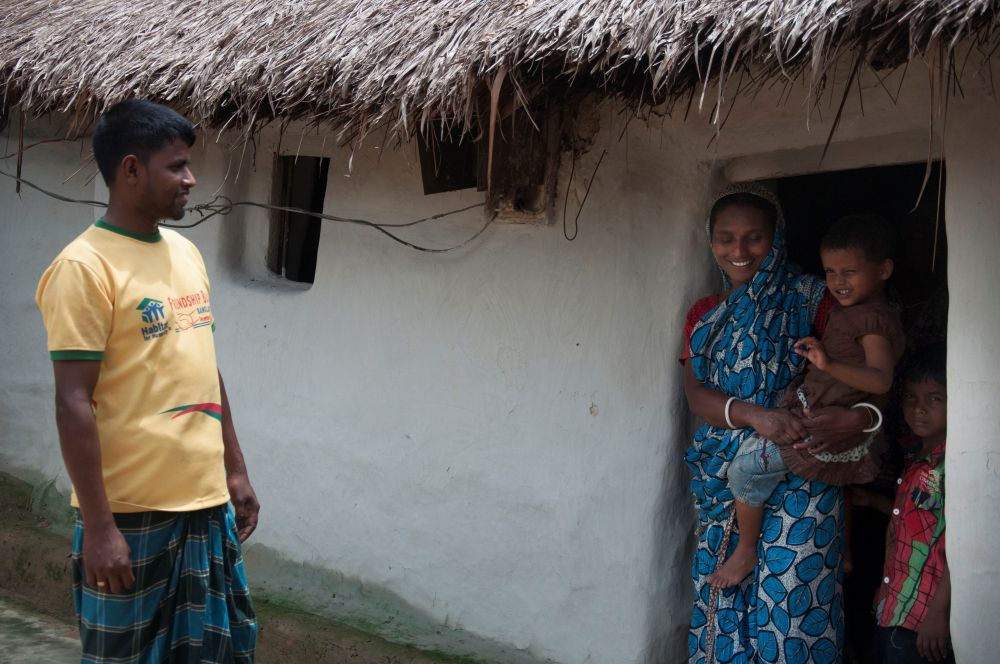
Tea garden workers in Bangladesh live in small houses provided by the garden owner. (Stephan Uttom Rozario)
The daily wage for tea workers in Bangladesh is 187 taka (US$1.52); however, the government mandated in 2023 for a 5% annual wage increase to 196 taka (US$ 1.59). According to the Bangladesh Tea Board, there are 116,762 registered tea workers across 166 gardens. Union leaders estimate that up to a million people live within tea garden communities.
Advertisement