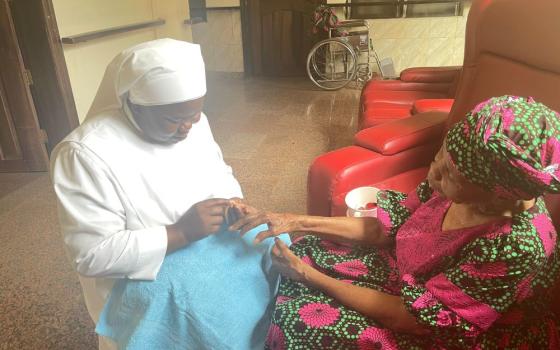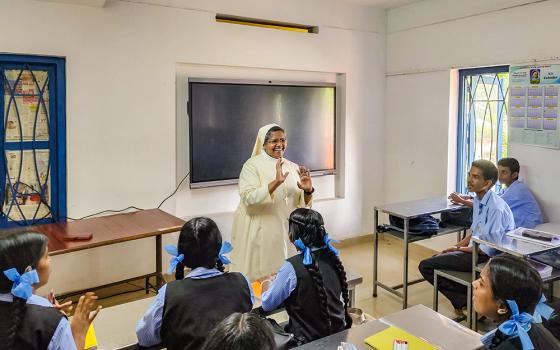
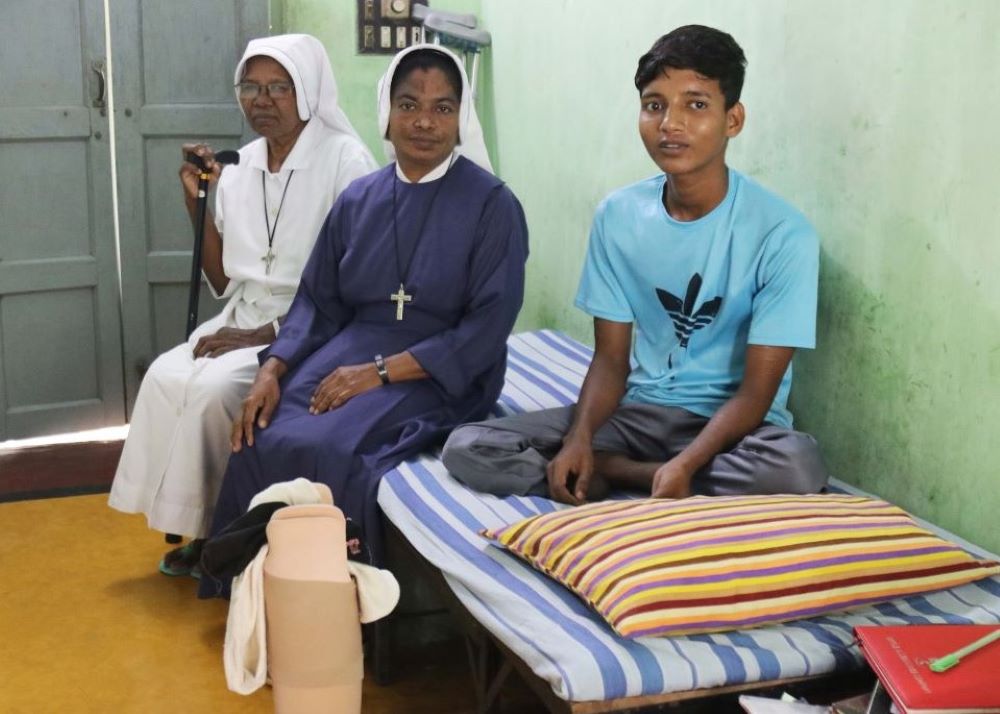
Maria Bambina Srs. Agustina Tudu, 69 (left), and Flora Rozario, 45, care for Mohammad Sowrav, a patient in the sisters' tuberculosis shelter in the Diocese of Rajshahi. (Stephan Uttom Rozario)

by Stephan Uttom Rozario
Maria Bambina Sr. Agustina Tudu, 69, is a Santal Indigenous from Dinajpur, a northern district of Bangladesh. Tudu took her first vows in 1984, her final vows in 1989 and later trained as a nurse in India. She has been working in a tuberculosis shelter in the Diocese of Rajshahi for the past 21 years. Although the shelter was established by the Pontifical Institute for Foreign Missions (or PIME) fathers in 1989, the Sisters of Maria Bambina now serve there and have full responsibility.
Tudu recently spoke to Global Sisters Report about the state of tuberculosis in Bangladesh and the challenges she and her sisters face in running a tuberculosis shelter.
GSR: Can you tell us about the tuberculosis shelter?
Tudu: We saw that many patients were being infected with tuberculosis, and they came to our general ward without realizing they had it. We also observed that the government and other NGOs provided them with medicine. However, these patients cannot recover by taking medicine alone. They also need adequate nutrition. Therefore, it became mandatory for those infected with tuberculosis to stay with us for two months. They stay with us, eat nutritious food and take medicine.
Most poor patients stay with us for months because they do not have enough food at home. Many stay for more than a year.
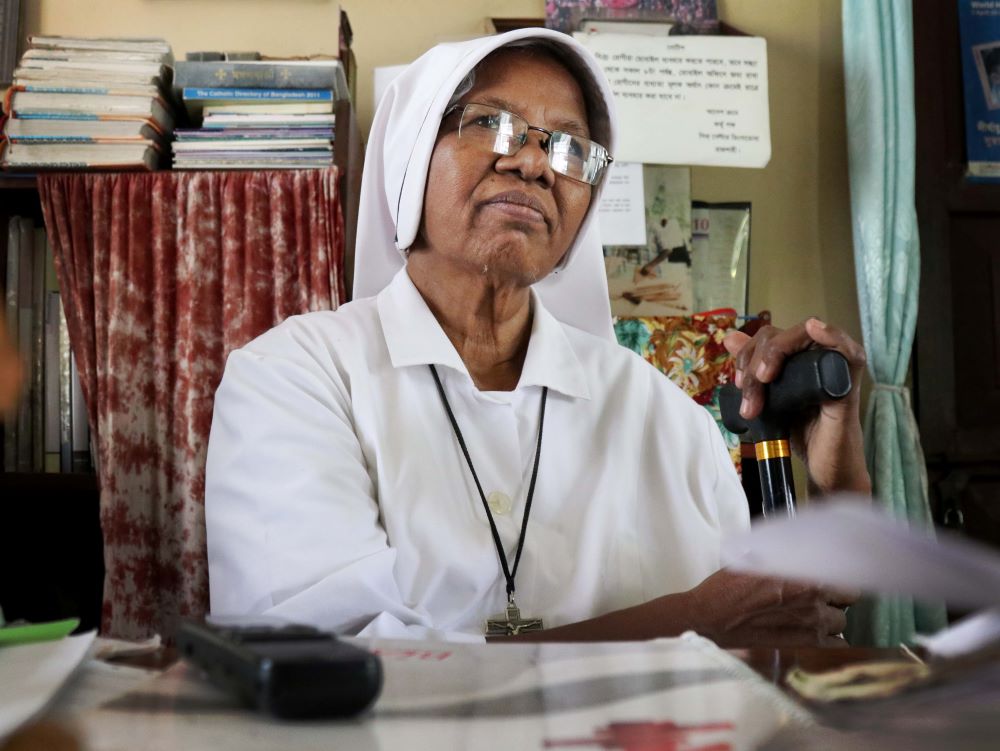
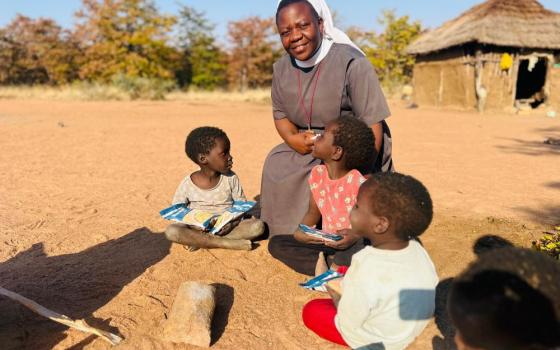
Maria Bambina Sr. Agustina Tudu, 69, is a Santal Indigenous from Dinajpur, a northern district of Bangladesh, serving patients in a tuberculosis shelter in the Diocese of Rajshahi. (Stephan Uttom Rozario)
Patients come from all over the country and we serve about 400-500 tuberculosis people every month. Four sisters provide treatment, and we have 35 staff members. We used to have a large number of fieldworkers who visited the villages and brought patients here, but now that service has been stopped because people are now fairly aware. On the other hand, we need a lot of money to keep the fieldworkers.
How are you managing the financial aspect now?
The PIME fathers used to finance the shelter. They still provide some financial assistance, but we have to look after the rest, including management. The fathers don't want this work to stop. They said, if we can run it, they will help us. We have no problem running the shelter.
In the past, our health workers used to go to the villages and bring patients. Lately, fathers and sisters from various parishes have been sending us patients here.
Tell us more about your patients.
Our country is underdeveloped. People in remote areas have poor hygiene, do not get proper nutrition and are more prone to this disease. No money is ever taken from patients, though.
People in the villages hide in their houses because it is a contagious disease, and they are ashamed to talk about it. Their weight often decreases. Fathers and sisters of various parishes only send them here when it becomes serious. We only receive payment when we send the patient's bill to the fathers in the parishes. This is how we have been running the hospital. If a patient stays here for a month, it costs about $490 for food and medicine.
What region of Bangladesh has the highest number of tuberculosis patients, and why?
TB patients are everywhere in Bangladesh. However, this disease is more common in tribal areas, and about 80% of our patients are Indigenous. Those who work in the garment industry are more susceptible to this disease.
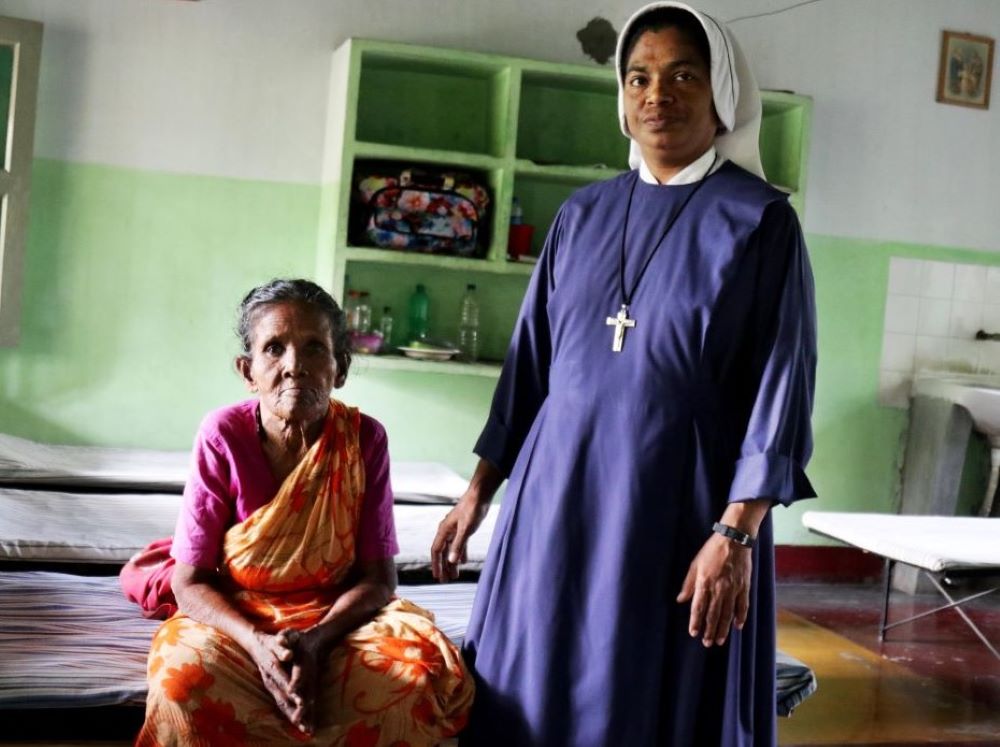
Maria Bambina Sr. Flora Rozario, 45, cares for Catharine Murmu, a tuberculosis patient without any relatives who has been staying at the sisters' tuberculosis shelter for several years. (Stephan Uttom Rozario)
What challenges do you face in providing this service?
The price of daily necessities in Bangladesh is very high. Food and medicine are expensive, and we are suffering from this. Despite that, we continue our work.
Since treatment was free in the beginning, many now do not want to pay. They do not understand that foreign fathers and sisters used to provide for us, and no longer do so. I often wonder where we will get money from.
We need financial support to move our work forward. Poor people cannot pay for treatment, but come here anyway because they trust us and believe they will be cured here.
Advertisement
We need to continue providing treatment for this disease because there are a lot of patients. Where will these poor people get treatment if we do not provide it? This service will continue if God wants. And if he does not want it, then it will stop.
What is the government's position on tuberculosis?
The government says there is almost no tuberculosis in the country. But tuberculosis is not just a physical illness. We must also provide spiritual, physical and mental care. We do not take or use government medicine. If we accept their help, they will impose various conditions, and the quality of our work will be ruined. The government gives us a little but takes a lot. Maybe God will continue providing for us through other means.