(Unsplash/Jess Zoerb)

by Sr. Lou Ella Hickman
A story I share with my spiritual directees from time to time concerns a retired math teacher. After many years in a high school classroom, she volunteered to teach calculus to a group of high school seniors who were dying of various forms of cancer. She did what she did best: She didn't minimize their health issues, and she was tough with the homework. Over time they became as much her students as her former ones, even though the classroom had become a hospital ward. I share the story with my directees because it is such a great one about hope.
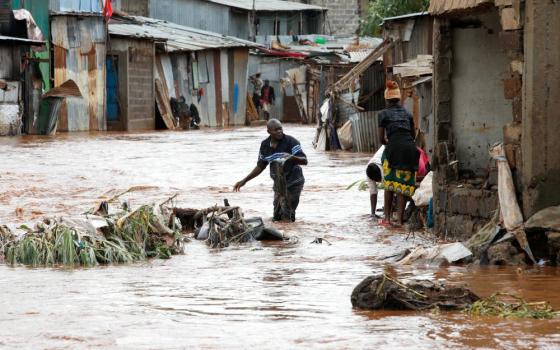
Hope. If people on the street were asked how they would define it, they most likely respond with "looking forward to a better future." True enough. Most parents work hard so their children can have a better future. However, too many children's dreams and possibilities are crushed under the weight of poverty and, as a result, its cycle continues. Then there is the tragedy of those who complete suicide because they believe tomorrow won't be any better than today. Sorry, Emily Dickinson, hope is not a thing with feathers. For these people, it is a life-and-death reality.
For me, St. Paul's great hymn to love in 1 Corinthians contains perhaps the greatest summary of the spiritual life. "Now I will show you the way which surpasses all the others. ... There are in the end three things that last: faith, hope and love and the greatest of these is love."
St. Paul, like Jesus, spoke of the way. That way begins with faith. However, faith is not merely my belief in God; it is my awareness that God is in my life. Hope is how I respond to that awareness and love is the reason why I do what I do. Then when I can no longer be active, either by ill health or age, grace helps me to learn how to live in the presence of God with the radical acceptance of my limitations.
This summary also hides a profound truth about hope. I believe hope is the middle child on this mini list of virtues. It is no secret that middle children who feel invisible discover that acting out can bring a moment of recognition even if it comes as a punishment. Yet it is hope's invisibility that attracts like elegant fragrance.
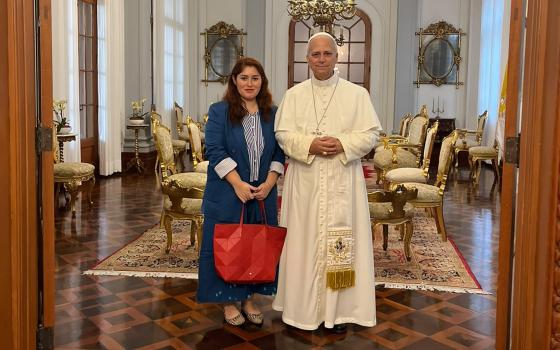
A Protestant pastor whose church is down the street from our convent has made it a point to visit us on occasion. After lunch, she sits in the quiet of our chapel resting in the time she has carved out from her busy schedule. How she described her visits to me later was her sense of hope, a fragrance she wears back to her daily ministry. Such is the power of the invisible middle child.
Advertisement
Being faithful during this difficult era has been a cross-country marathon for so many people as well as many Catholic religious sisters. Perhaps we could glean a bit of wisdom about hope from St. Ignatius of Loyola's rules for discernment. Rule number five (my short version): When in desolation (not depression or burnout), continue what you are doing and don't make any changes.
His insight is that the routine of prayer is not what you feel; it is what you do, and should continue doing. Hope is what I have already been doing and will do both in my spiritual life and in my ministry. While this may be obvious, it is important to remember that hope has been there all along and God will make use of it as he wills for the future.
Hope is also integral to the vow of poverty professed by consecrated religious. Paradoxically, its doing includes waiting. We vow to wait the way the poor and many elderly wait. Such waiting can teach us that we are the invisible middle child named hope when we do what we do best, only to experience how slowly the arc of the universe bends toward justice.
To speak of hope is to turn to Mary. Trust and love were not the only part of the reply she gave to the angel's greeting at the Annunciation. "Let it be done to me" was her unconditional how-can-I-cooperate response. For 30 years, she lived the ordinary routine of a Jewish wife and mother. Perhaps we could ask her for the grace to see hope in the ordinary, even the mundane events in our lives, then bring them to the greatest of thanksgiving — the Eucharist.
The retired teacher's math class revealed hope because she continued to do what she did best.
She gave her dying seniors hope because she gave them dignity in treating them as they wanted and needed to be treated rather than focusing on a better future they would not see. While we are responsible for helping to create a better tomorrow for all children, tomorrow is promised to no one. Hope is today in what we do and how we do it and in doing so, hope also becomes why we do it. What better place than to be the middle child whose middle name is Hope than today?