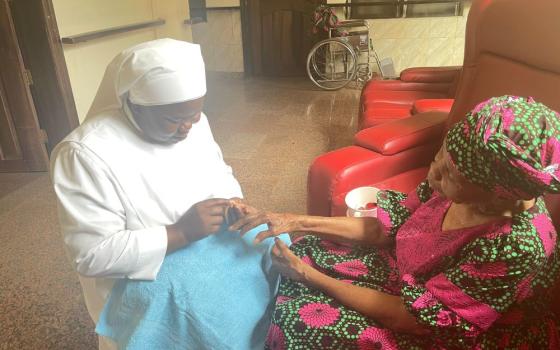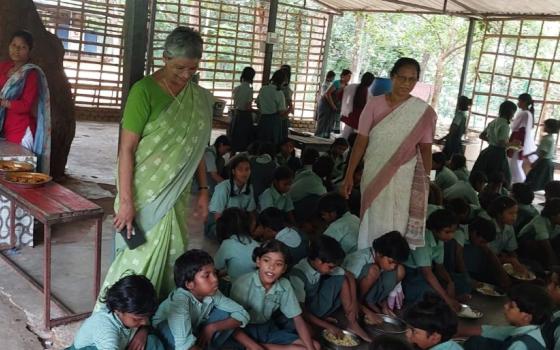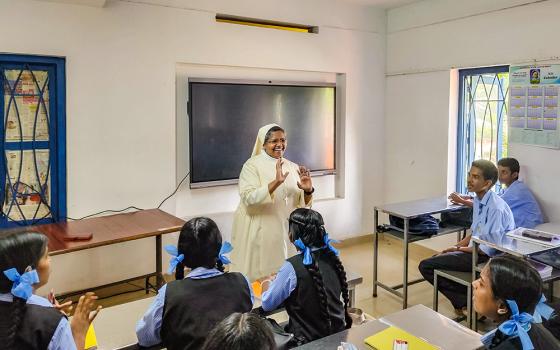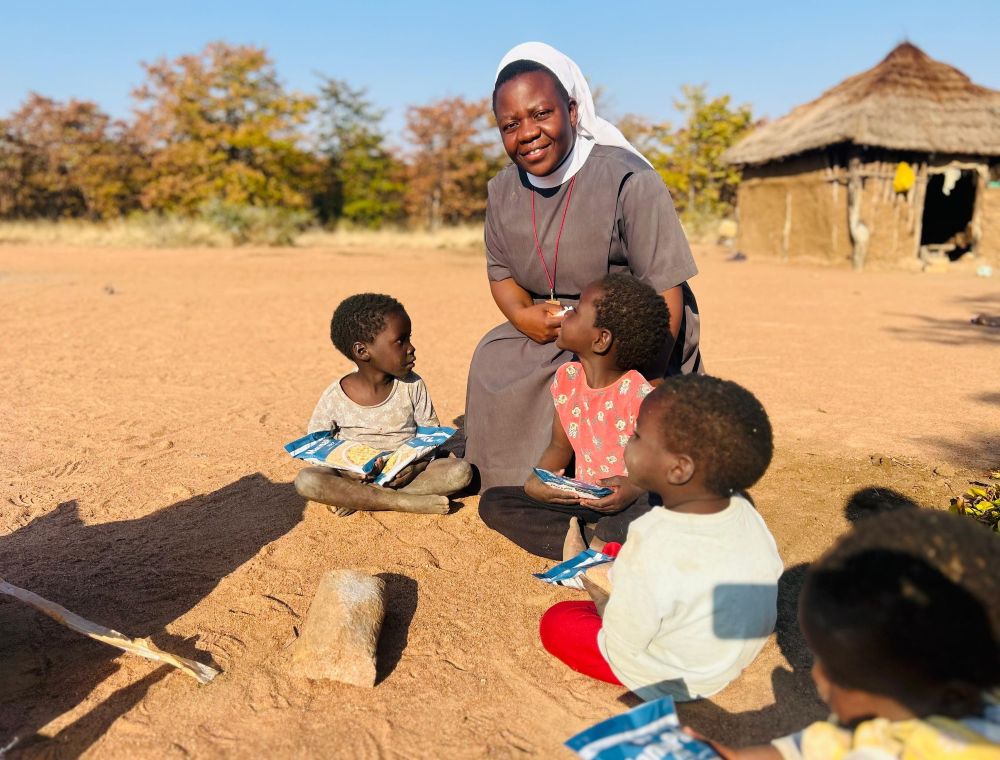
Under the administration of Sr. Felistar Dube, the Sikhethimpilo Centre in Maphisa, Kezi, a rural district about 65 miles north of Bulawayo, Zimbabwe, supports orphans and provides humanitarian assistance in an area many aid agencies find difficult to access because of poor, dangerous roads. (Marko Phiri)

by Marko Phiri
Zimbabwe is one of many African countries that have experienced the devastating effects of HIV/AIDS, claiming thousands of lives and leaving orphans without a safety net, as many do not attend school and lack food and other basic needs.
In response, the Sikhethimpilo Centre in Maphisa, Kezi, a rural district about 65 miles north of Bulawayo, was established in 1998 by German-born Precious Blood Sr. Ludbirga Schumacher.
Under the current administration of Sr. Felistar Dube, the center supports orphans and hundreds of villagers, including providing humanitarian assistance in an area that many aid agencies find difficult to access because of poor, dangerous roads.
The center also trains home-based caregivers to look after the sick at a time when the country's authorities say nurses and doctors are not eager to take up posts in rural areas because of difficult living conditions.
Dube spoke to Global Sisters Report about her work at the Sikethimpilo Centre to support orphaned children and the local community.
GSR: Tell us more about your apostolate.
Dube: Sr. Ludbirga Schumacher had a soft spot for the orphaned and vulnerable members of society. She saw the number of orphans increasing and saw an opportunity to reach out and help the vulnerable by having volunteers work together as home-based caregivers. The goal was to empower communities to take initiative and responsibility to manage the effects of HIV and AIDS effectively.
As more people passed away, volunteers were confronted with growing numbers of orphans, and the need to care for them became urgent, as extended families were in many cases unable to accommodate additional children. Many orphans have been traumatized and need counseling and assistance so they can come to terms with their situation.
In the past 13 years, an average of 3,000 beneficiaries per year have benefited from psychosocial camps, skills training courses, education assistance, sports leagues, youth clubs, HIV support groups and income-generating projects. A pool of 400 supports the work we do at Sikhethimpilo.
How many orphans are presently under the care of the center and what assistance do they receive?
A total of 55 orphaned and vulnerable children benefit from education assistance, and 40 families benefit from food assistance. This includes payment of fees, stationery and school uniforms.
Food hampers are distributed monthly, consisting of mealie-meal, cooking oil, salt, sugar, tea leaves, beans, soya chunks, matches and soap. However, we struggle with limited funding. Many families cannot afford basics. Their needs keep increasing, but we do not have much to give.
There are transportation challenges, and rural distances make home visits difficult, especially with only one vehicle and limited funds for fuel. Some children live in remote areas, making it difficult for staff to reach them regularly.
We manage through God's providence, support from our congregation, donations from well-wishers, and other income-generating projects, including renting accommodation and conferencing facilities, selling meals, poultry projects and gardens.
Advertisement
What other projects would you pursue if resources allowed?
If resources were available, we would improve and expand the infrastructure of our accommodation and conferencing facilities so we become self-sustaining. Once we expand these, we could generate more income, which would also assist the community programs.
We would like to establish or strengthen vocational training programs where young people can learn practical skills such as sewing, carpentry, agriculture, catering, electrical systems and other income-generating skills.
Also, we would like to support vulnerable households with seeds, livestock, farming equipment, and training in sustainable agricultural practices so they do not rely on donations but work for themselves.
Our aim is to uplift the whole community, not just the children. We are involved in different activities aimed at improving the lives of rural communities, including parish ministry and catechesis, and visiting the sick and elderly in their homes.
There is another focus on young people, particularly those who are out of school, with awareness programs on drug and substance abuse as well as HIV/AIDS. This is done through sports tournaments and other social activities, like marathons and quizzes. The aim is to help them develop life skills and identify opportunities that can improve their livelihoods.
Our dream for Sikhethimpilo is to continue expanding to a model center that not only cares for orphans but also empowers them to be self-reliant. We hope to keep the family spirit that makes Sikhethimpilo a home.