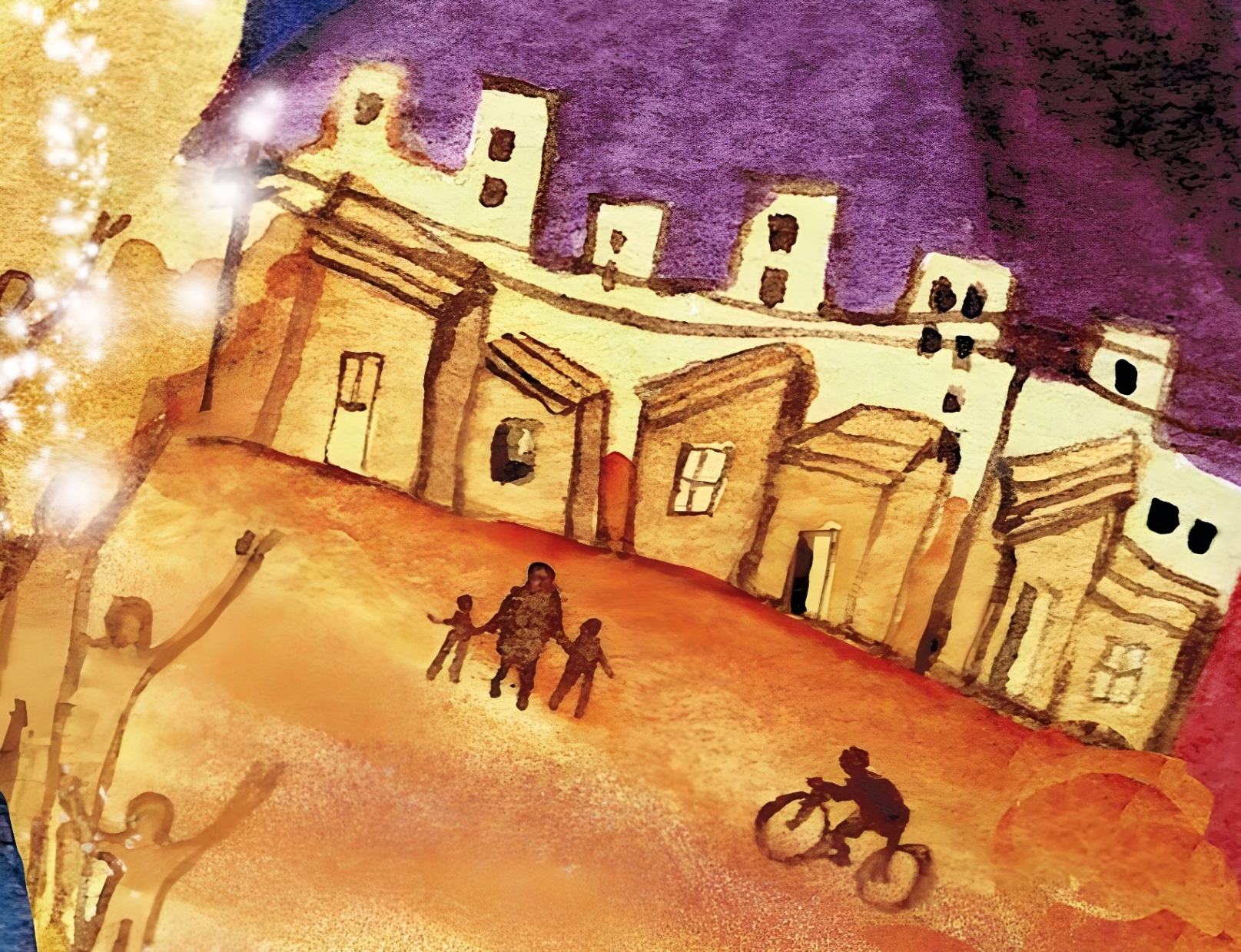
The nocturnal landscape on the cover of "Born Anew" evokes the journey through darkness that religious life in Latin America is experiencing today, a central image in the discernment process proposed by CLAR in its 2025-2028 Inspirational Horizon. (Courtesy of CLAR Magazine)

by Rhina Guidos
In a new document, the Confederation of Latin American Religious says consecrated life in the region must listen to the call of the spirit, seek new paths, and leave behind past ecclesial models in order to "be born again" and give hope in times of darkness.
"Latin America and the Caribbean are going through one of the most challenging moments in history," the document says. "The profound crisis of civilization we are experiencing is not only political or economic; it is, above all, an anthropological and relational crisis that wounds human dignity, destroys the profound meaning of life, and enthrones the tyranny of individualism. The throw-away culture and the logic that organizes everything so that 'only the strong are saved' are advancing, weakening the social fabric, disfiguring the essential values of our communities, and removing the common good from any civilized political discussion."
The document, titled "Be Born Again," is a guide to help the leading organization representing religious life in Latin America and the Caribbean discern and take action. But more than a document, "it is a song of hope for all religious life," says CLAR.
'This is not a time for fear or indifference. It is a time to assume our historical responsibility, to set out on the road, to go out to meet others, to embrace just causes, to build bridges of peace, and to sow hope where there seems to be no future.'
—Confederation of Latin American Religious
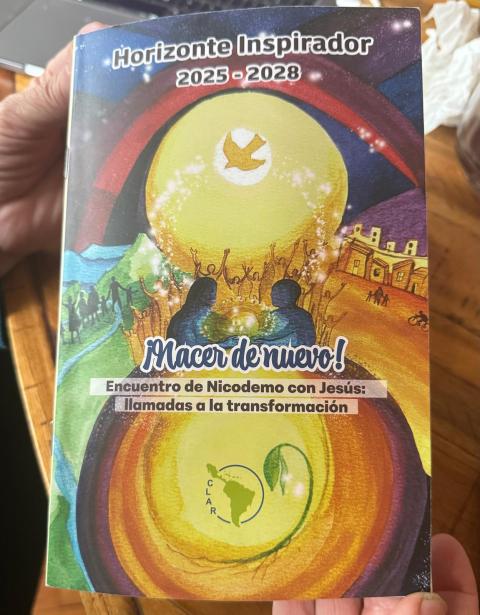
The cover of the document "Be Born Again," a guide that aims to help the Confederation of Latin American and Caribbean Religious discern and take action. (GSR photo/Rhina Guidos)
In an interview with Global Sisters Report, Fr. José Luis Loyola, the organization's president, said that even in a time of darkness, the spirit continues to accompany religious life, as well as all humanity, "and continues to open up horizons for us in the midst of this journey," which at the moment seems to be going through a time of darkness.
Fragile democracies, a rise in organized crime, exploitative capitalist systems that bleed Latin American territories dry, and a throwaway culture continue to plague Latin America, the document says. Many of these conditions have affected religious life at a time when it is experiencing a rapid decline in vocations. But we must embrace that smallness "with our eyes fixed on Jesus" and "recreate ourselves in a new way, interrelating numbers and reorganizing forms and structures in favor of the mission," the document says.
Although tension exists within the region's religious life between those who wish to preserve structures of the past and those who promote reform, in the face of momentous changes, the church must break out of traditional patterns, the document says.
"This is not a time for fear or indifference," the document says. "It is a time to assume our historical responsibility, to set out on the road, to go out to meet others, to embrace just causes, to build bridges of peace, and to sow hope where there seems to be no future."
Fragile democracies, a rise in organized crime, exploitative capitalist systems that bleed Latin American territories dry, and a throwaway culture continue to plague Latin America, the document says.
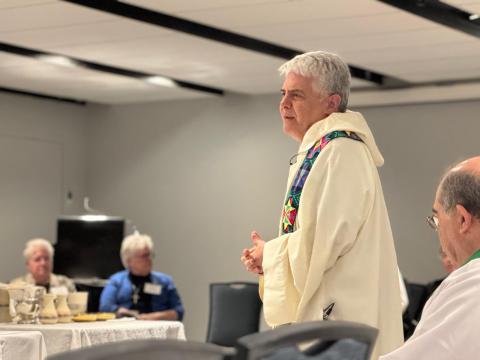
Fr. José Luís Loyola, president of the Confederation of Latin American and Caribbean Religious, known as CLAR, addresses a group of women religious from Latin America and the United States Oct. 31, 2025, in Mexico City. Loyola, superior general of the Congregation of the Missionaries of the Holy Spirit, said that even in moments of darkness, the spirit continues to accompany religious life, and through discernment lead to a transformation. (GSR photo/Rhina Guidos)
The cover of "Be Born Again" depicts the encounter between Jesus and Nicodemus based on the Gospel according to St. John, where the biblical character visits Jesus at night and talks to him about how one can be born again. Nicodemus is an icon for religious life, inviting consecrated men and women to go out to meet Jesus during moments of darkness, said Loyola, superior general of the Congregation of the Missionaries of the Holy Spirit.
"And he invites us, like Nicodemus, to dare to go out again, so that we can be born again" and take new paths of transformation, including the path of synodality, he added.
"We are in the midst of a global and ecclesial process in which a new era is being defined. Therefore, ecclesial culture cannot continue to replicate past forms," the document says. "The challenge is to achieve the synodality of the whole church, not as a simple aggiornamento (updating), but as a new creation, capable of responding to the present times for the sake of its evangelizing mission."
Part of that process means abandoning colonial logic and opening dialogue with various cultures, relinquishing power, leaving behind comfort, defending rights, healing wounded memories, accompanying processes of resistance and resilience, caring for life, including the common home, moving from a ritual or devotional faith to an existential and committed faith, among other changes, the document says.
Although Latin America faces unique problems, "the situation of light and shadow affects all of humanity; it is not just a question for religious life in Latin America," Loyola said.
"We also experience this horizon with our consecrated sisters and brothers in the United States," he said. "With them, we experience the same joys and hopes and also, of course, our ecclesial and social challenges."
'We also experience this horizon with our consecrated sisters and brothers in the United States," he said. "With them, we experience the same joys and hopes and also, of course, our ecclesial and social challenges.'
—Confederation of Latin American Religious
Advertisement
In recent meetings, a representative of the Leadership Conference of Women Religious, or LCWR, has mentioned a possible alliance among the U.S. group, CLAR and a counterpart group in Canada.
Little has been publicly said about what the possible alliance among consecrated life in the Americas would look like, but Loyola said that perhaps recent experiences could serve as "an invitation for us to build and be born again at the same time. In that sense, the bond and closeness we have with each other, between CLAR with LCWR, is very important."
This story was originally published in Spanish on Jan. 19, 2026.