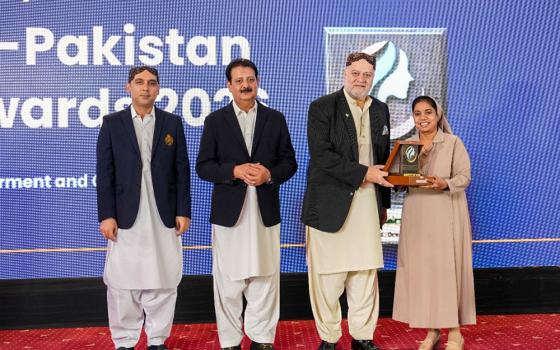
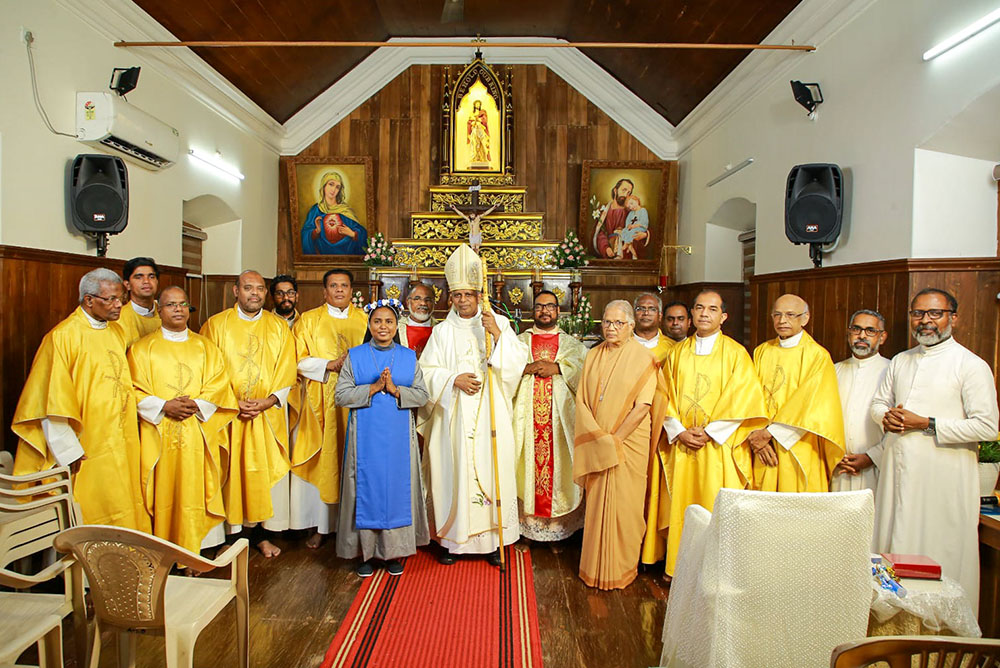
Sr. Jomol Kreupasanam, a member of the Order of Sacred Virgins, poses for a photo with Bishop James Raphael Anaparambil (center) and Fr. Joseph Valiyaveettil (center right), founder of the Kreupasanam center in the Alleppey Diocese in the southwestern Indian state of Kerala. Also seen is formator Canossian Sr. Margaret Peter, during Sister Jomol's consecration to perpetual virginity on Nov. 21, 2025. (Kreupasanam Media Vision)
by George Kommattam
When Sr. Jomol Kreupasanam stood before the altar on Nov. 21, 2025, to consecrate her life to God, it ended her years of study, work and search.
"I wanted to respond only when I was certain this was truly God's call," said the first member of the Order of the Sacred Virgins, a pious community founded by the director of a Marian retreat center under the Alleppey Diocese in the southwestern Indian state of Kerala.
Born Eliswa Mariyam, she took "Kreupasanam" as her surname to acknowledge Kreupasanam (Seat of Mercy), the religio-socio-cultural center, which she said had shaped her spiritual journey.
The 37-year-old former nurse-turned-social worker with a theology degree is among scores of women professionals who chose religious life in the past year.
"What we see is a real change in the pattern of religious vocations. A few decades ago, mostly teenage 10th graders joined the convent, now women who have been nurses, doctors or techies respond to God's call," said Sr. Ardra Kuzhinapurathu, the first woman head of the Kerala Conference of Major Superiors, which includes 267 women religious congregations with more than 34,000 members.
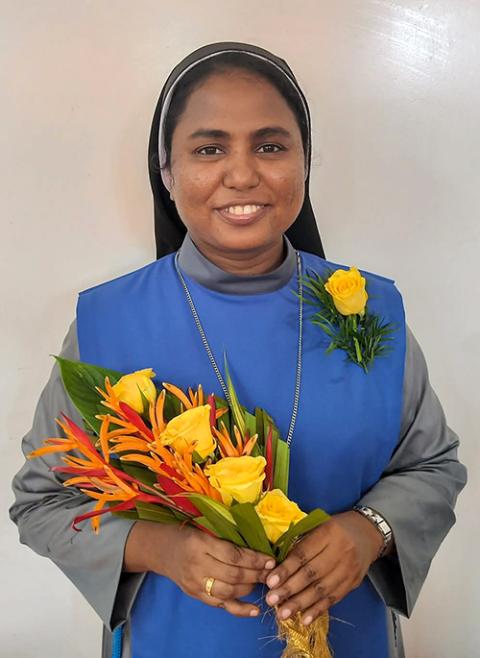
Sr. Jomol Kreupasanam after her first profession on Nov. 25, 2025 (Courtesy of Jomol Kreupasanam)
Kuzhinapurathu said her Syro-Malankara congregation too has welcomed professionals, including a doctor who now serves in the congregation's health care ministry.
"When someone responds to the religious life later in life, we call it late vocations. These women have experienced personal freedom and have more clarity about life," the member of the Sisters of the Imitation of Christ told Global Sisters Report in December.
Similarly, Sr. Blessy James, director of novices of the Missionary Sisters of Mary Immaculate, finds late vocations bring experience, emotional maturity and practical skills to congregations.
"This is the time of professionals. They know what they want. It is a blessing," she told GSR.
As they have worked in offices, hospitals, schools or companies, the new sisters are familiar with responsibility, teamwork and leadership, the novice director explained.
Late vocations are especially drawn to newer congregations, many founded through charismatic renewal movements and evangelization ministries such as Jesus Youth, said Sr. Christy Babu who serves as the vocation promoter of the Missionary Sisters of Mary Immaculate and is involved in youth ministry.
Babu, a former member of the Jesus Youth, said the movement has produced many late vocations.
The movement helps its members develop "a deep life of personal prayer, regular participation in the sacraments, and a strong sense of fellowship," she said.
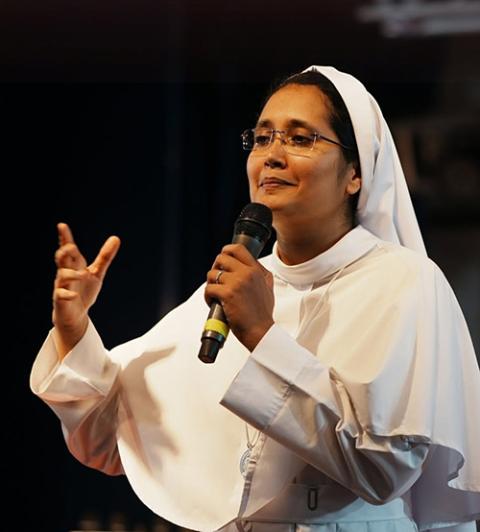
Sr. Christy Babu, a member of the Missionary Sisters of Mary Immaculate, preaches during a youth program in Kerala, a southwestern Indian state. (Courtesy of Christy Babu Cherpanath)
This experience provides them a solid spiritual foundation and clarity in faith, helping people discern religious life later as a path to grow closer to Christ, Babu added.
Sr. Liza Puthenveedu, a councilor of the Pala province of the Sisters of the Adoration of the Blessed Sacrament, has also seen more late vocations in congregations started by the Gospel preachers.
One such community is the Daughters of the Divine Grace, a Syro-Malabar contemplative order founded under the spiritual guidance of Fr. Dominic Valanmanal, director of a retreat center at Kanjirapally, a town in Kerala's Kottayam district.
Sr. Anie Bencita, superior of the community, said their first members were seven women who had professional degrees from India and overseas. They took their first vows in October 2025. The superior declined to share her people's personal or professional details as their focus during the formation period is the growth in spirituality and community life.
Its members stress prayer, simplicity, community life and proclamation of the Gospel. Besides the three vows of poverty, chastity and obedience, they take a fourth vow to preach the Gospel.
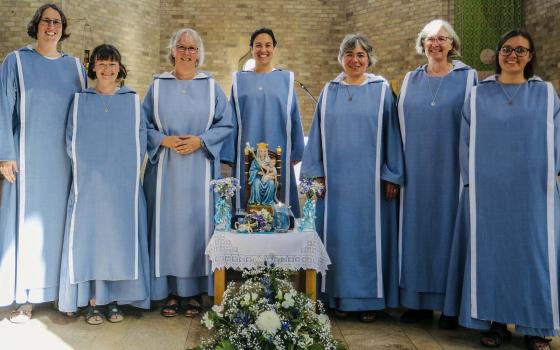
Another contemplative community in the Syro-Malabar Church is the Abhishekagni (Anointing Fire) Sisters of Jesus and Mary, founded by Fr. Xavier Khan Vattayil in 2014 in the Palghat Diocese. Raised as an autonomous monastery in 2017, it has around 30 members, all former professionals.
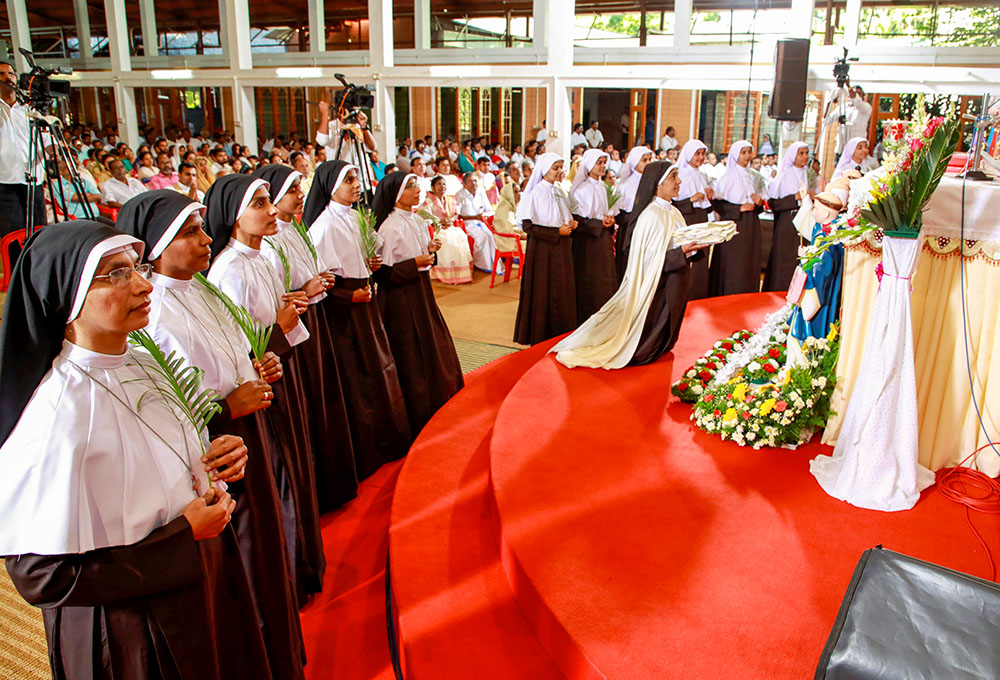
A member of the Abhishekagni Sisters on her profession day at the Abhishekagni Mount monastery in the Palghat Diocese, Kerala, southwestern India (Courtesy of Abhishekagni Sisters)
Rooted in charismatic prayers, the sisters lead an ascetic life conducting intercessory prayers, spiritual retreats, inner healing and deliverance ministries. The community too refrains from highlighting individual backgrounds and focuses on their shared mission, Puthenveedu explained.
Even older congregations attract late vocations such as Babu's, who had worked as a software engineer at Infosys, one of India's largest information technology companies, before joining the 63-year-old congregation at the age of 33.
"Vocations are not declining in Kerala but they are maturing," she told GSR. In the past three years, she has accompanied more than 20 women in discerning their religious vocation. "Many have bachelor degrees or are professionals," she added.
About her vocation, Babu said she had felt something missing when she had everything — good job, good salary and job security.
"Through prayer and serious discernment, I understood that God was calling me to something more."
Advertisement
Babu told GSR that late vocations tend to be more stable in religious life. "Those who come later make a very free and conscious decision," she said. "Once they enter, fewer leave. Their commitment is strong."
Puthenveedu said her 117-year-old congregation too has computer specialists and business management experts as members.
"Late vocation is not a widespread trend, but it is definitely growing," she told GSR.
James, the novice director, finds training the late vocations not always easy.
"Adjusting to community life, obedience and structured religious discipline challenge them, as they had lived independently for many years," she said.
Babu's provincial, Sr. Soja John, said their province has seven new members, including two engineers and a doctor.
"Obedience after years of independent decision-making requires adjustment for latecomers. But their conviction is very strong. Their dropout rate is almost zero," she told GSR.
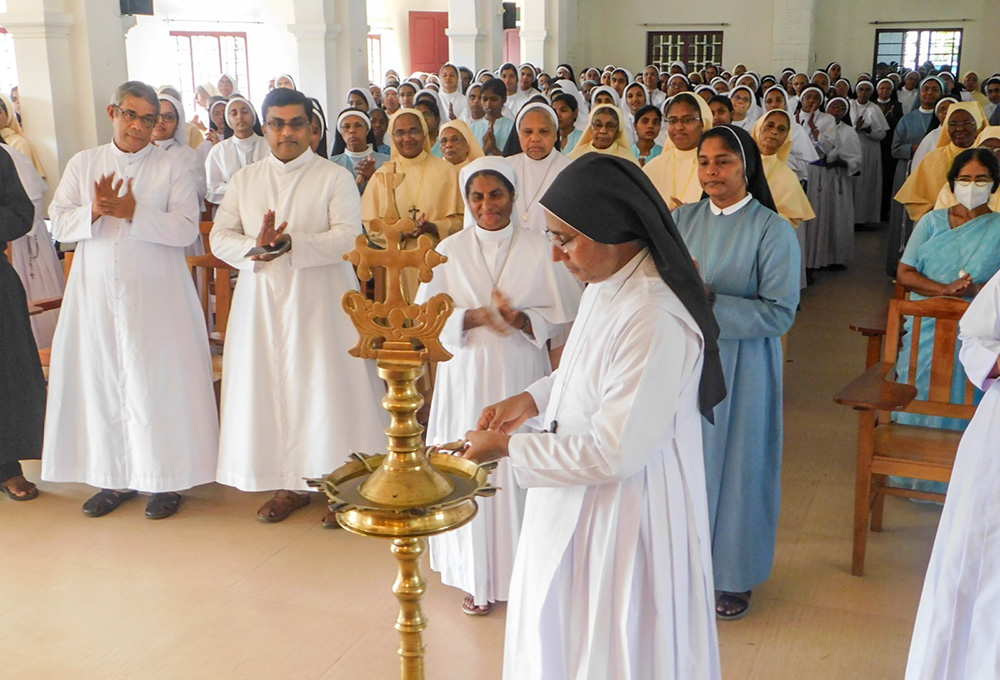
Sr. Ardra Kuzhinapurathu of the Sisters of the Imitation of Christ opens a leadership training for the members of the Kerala Conference of Major Superiors in 2023. (Courtesy of Ardra Kuzhinapurathu)
Kuzhinapurathu said late vocations need emotional and spiritual formation but such challenges fade away before the strengths late vocations bring to religious life.
"Their faith is deep and their sense of mission stronger. They think carefully and act consciously, so their ministries are more mature and fruitful," she said.
John, who joined the convent after obtaining a bachelor's degree, says those who join religious life, even later in life, are a sign of hope for the future.
However, some older congregations in Kerala face a serious shortage of vocations.
Sr. Arpita Joseph of the 159-year-old Congregation of Mother of Carmel said her Thamarassery province has had no candidate for the past six years.
Sr. Jomol Kreupasanam, who too has worked with young people as the public relations officer at the retreat center, says vocation is no longer an earlier decision shaped by social expectations.
"Instead, it is a mature response shaped by education, work, prayer and lived experience," she said.