
A slice of bread and glass of water are pictured in an illustration. Global Sisters Report's panelists discussed their Lenten practices for the Feb. 23, 2026 edition of The Life. Several mentioned the practice of fasting. (OSV News/Bob Roller)

by The Life Panelists

As sisters grow in religious life, their understanding of Lenten practices often deepens through formation, ministry and personal experience. What may have begun as structured observance develops into a more personal and creative spiritual journey.
This month we asked our panelists to reflect on the question:
"How have your Lent practices changed since you were younger or in formation? Are there new traditions, surprises, or creative ways you've observed Lent over the years?"
Sr. Alice Nyazungu is a Carmelite Sister, known as Handmaids of Our Lady of Mount Carmel, based in Zimbabwe. Born a Catholic, she joined religious life in 2002. Nyazungu has an honors degree in religious studies from the University of Zimbabwe. After receiving her degree, she worked for four years with migrants and refugees in a refugee camp. Currently, she works at a Catholic boarding school where she teaches Catholic ethos and conducts counseling sessions for students.
When I was young, my mother taught me that during the Lenten season as Christians we are obliged to fast, share with the poor and pray. She also taught me that during Lent I should fast not only from food but also from bad habits such as lying, stealing and gossiping. These habits helped me a lot as I was growing.
When I was in formation, I was taught to fast, especially from the things I love most at both the personal and community levels. We shared items such as food and clothes with people in need. On the issue of clothes, my formator emphasized: "Dear sisters, we do not give rags to the needy but the best." During my formation period, there was structure, accountability and a shared spirit that reminded me daily that Lent was not just an ordinary practice but a sacred calling for conversion.
From the guidance I received during formation about the Lenten season, I made a resolution that during Lent, I would leave my comfortable bed and sleep on the floor as a way of making a sacrifice. It was not easy, but I managed to do that throughout my formation period. These practices helped me cultivate discipline and a genuine sense of sacrifice.
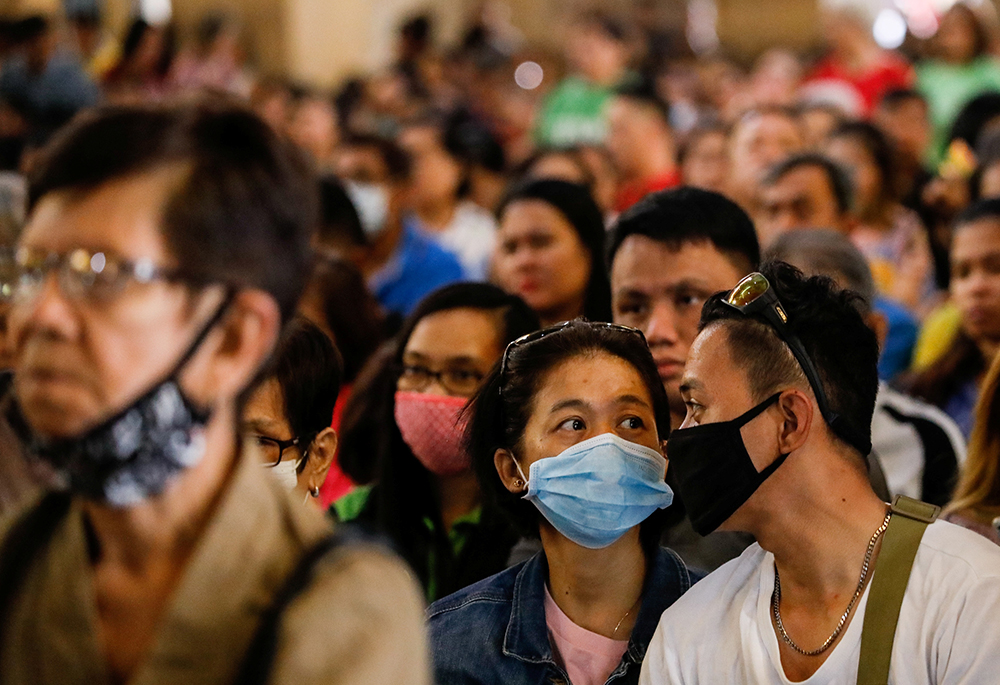
A couple wearing protective masks attend Ash Wednesday Mass at the National Shrine of Our Mother of Perpetual Help in Manila, Philippines, Feb. 26, 2020, amid the coronavirus outbreak. Sr. Alice Nyazungu writes: "My understanding of the Lenten season transformed significantly in 2020 during the COVID-19 pandemic." (CNS/Reuters/Eloisa Lopez)
While many devotions and prayers were once embraced with enthusiasm, Lent sometimes feels like a formality or routine. What was once lived with intention can slowly become mechanical and, at times, feel meaningless. I have come to realize that this familiarity can lead to losing the taste of Lent, its sharpness, its challenge and its call to renewal. Familiarity does not disturb my comfort or question my behavior, and the danger is that one cannot be transformed. I have experienced these realities.
My understanding of the Lenten season transformed significantly in 2020 during the COVID-19 pandemic. During that time, I was able to examine myself deeply. I reflected more intentionally on the importance of Ash Wednesday, Palm Sunday and Good Friday, and I worked on deepening my understanding of the pillars of Lent — prayer, fasting and almsgiving. The Lenten season of 2020 brought me renewal and helped the sense of formality fade.
Sr. Catherine Martinez is a member of St. Joseph Monastery, an autonomous Benedictine community based in Tulsa, Oklahoma. She was raised in southern California. Her current ministry is coordinating a high school equivalency program with Catholic Charities of Eastern Oklahoma. She has a passion for creating relationships with diverse populations. Her various trips to Mexico with her grandmother developed her openness to new experiences and supported her facility in acquiring languages and making connections with all whom she meets. She enjoys reading, writing, all types of crafting and traveling.
Lent and Lenten practices have always presented a puzzling challenge to me. I am not naturally attracted to penance and sacrifice. I have not yet acquired the maturity necessary to "offer my sufferings" up graciously, as many are able to do. I know that fasting would provide a challenge for me since I am not someone inclined to forego food for a noble cause.
A few years ago, I heard a priest speak about Lenten fasts in a very unique manner. He talked about the possibility of fasting from some of the habits and faults that I can easily slip into if I am not careful. As I listened to this talk, I asked myself, "What would my life look like if I fasted from passing judgment on others during Lent rather than fasting from coffee, or chocolate or Pepsi?"

(Unsplash/Brett Jordan)
This notion of fasting came in very useful to me during Lent of that year. One of our community members, whom I did not know very well, was moving back to the monastery permanently due to recent health issues. Although I did not know her very well, I had observed enough to know that there would be many opportunities for us to be in significant conflict with one another. I could easily see potential areas of disagreement. I have never been known to back down from a good debate; I knew I needed to do something to plan for potential problem points.
Advertisement
As I was preparing for her arrival, I remembered that new perspective on fasting and decided it might be a good idea to extend my new learning beyond Lent and incorporate it into my life. When our community member returned, I chose to take a stance of curiosity every time I was tempted to turn to judgment or criticism. Whenever she said something that could easily annoy me or acted in a way that seemed confusing to me, I tried to find a way to ask something that would both engage her and provide a new insight into what was important to her. It almost became like a game for us because she was watching for opportunities to build relationship with me. By the end of the first month, I could notice a shift in our relationship. We were giving one another the same grace we were hoping to receive from the other.
I realized that I was much more focused on looking for alternative explanations for behaviors that, in the past, were terribly annoying. As I extended grace to others, I was able to see them in a more positive light.
'I realized that I was much more focused on looking for alternative explanations for behaviors that, in the past, were terribly annoying. As I extended grace to others, I was able to see them in a more positive light.'
—Sr. Catherine Martinez
Sr. Christine Kresho is a member of the Sisters of St. Joseph of Baden, Pennsylvania, a congregation dedicated to loving and serving the dear neighbor rooted in prayer, community living and the Gospel. As a team member of the St. Joseph Spirituality Center, she hosts a weekly Zoom session titled "Spirit Companions." She is a retreat presenter and an author. In addition to five novels, her nonfiction books include Second Childhood: Aging into Divine Relationship; God is Better than Santa Claus: A Book for Adults; Praying to Our Everywhere God; and A Way of the Cross: In Communion with Creation.
My approach to Lent changed as my understanding of God evolved. I used to believe I had to be perfect, which made me scrupulous about my Lenten fasting. Giving up candy was also my typical penance, and I was driven by the idea that my Lenten practices would bring me closer to perfection and make me more pleasing to God.
Through God's mercy and goodness, I came to know a far greater God. I recall that after reading Tomorrow's Catholics by Michael Morwood about 40 years ago, I experienced a profound and tangible connection to everyone, including most especially those I knew or had known. This sense of unity stemmed from the realization that we all live within one God. My understanding shifted to embrace the idea of an everywhere God — a God from whom no one can ever be separated. I came to believe that there is nothing in creation, no one, and no event that exists outside of God.

This is a detail of a painting by Matthias Grunewald entitled "The Small Crucifixion." (OSV News/Samuel H. Kress Collection via National Gallery of Art)
I came to see that God became human in Jesus to reveal unconditional love and show us how to live. Jesus showed that God is always with us — sharing in our joys, caring for us, healing and supporting us through hardship. His actions, based on integrity and trust when speaking truth to power, gave us proof that God is one with us, even in suffering and death. Through his courageous choices and his resulting crucifixion, we see the demonstration of divine solidarity — God stays with us, always and especially in our darkest trials.
Now, as I observe Lent, I continue my small, human penances, but my motivation has completely changed. I no longer believe that my Lenten penances will earn me anything or make me more pleasing to God. I do not expect any reward, except some growth in human discipline. Instead, I hope that my Lent will help me become more aware of my identity as a beloved daughter, more consciously alive within God's loving embrace, and more gratefully awake to the truth that all I am and all I do is a gift from my God.
Today, as I continue through Lent, I strive to deepen my belief in a God of unconditional love, even as traditional interpretations present Jesus' death as a sacrifice for sin. I reflect on how this perspective developed, questioning the idea that a loving Father would require his son's death, especially since Jesus taught forgiveness without limits. When I contemplate the crucified Christ, I wonder how I could not expect crucifixion for myself if I follow this loving, nonviolent man hanging on the cross.
Sr. Josephine Kwenga is a member of the Sisters of St. Joseph of Tarbes, an international congregation whose charism is living and building communion. She serves as the development coordinator for the Kenyan province, a role focused on resource mobilization to support mission initiatives. Her passion lies in advocacy for sustainable development, partnership building and collaboration. In 2023, she received the People's Choice SDGs Award from the United Nations' Journalists and Writers Foundation for her outstanding contribution in promoting regenerative agriculture. Kwenga holds certificates in project management and fundraising, peacebuilding, leadership and advocacy, a diploma in education, a degree in development studies, and a master's in social transformation.
Lent has been a meaningful season throughout my life, beginning at my childhood in the village, where I gladly participated in the spiritual exercises at our local church. When I later joined the Sisters of St. Joseph of Tarbes, the Lenten season took on a deeper and more intentional character and became a sacred moment to pause, pray, and renew my openness to God.
During my early formation, Lenten practices were structured and centered on communal discipline. We fasted on designated days, avoided certain foods, participated in community prayers, observed silence and followed the spiritual timetable faithfully. These practices nurtured self-denial, consistency, and the beauty of walking together as a faith community. They laid the foundation of my spiritual life, teaching me that shared commitment strengthens one's journey toward God.
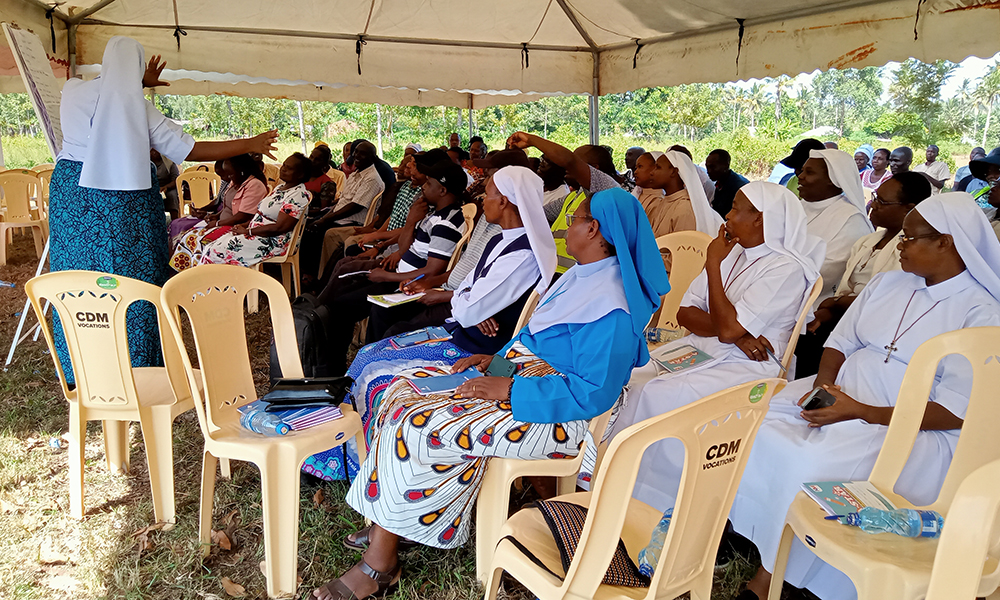
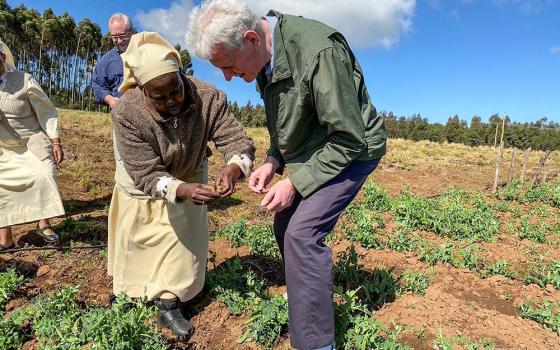
Sr. Josephine Kwenga of the Sisters of St. Joseph of Tarbes participates in a reflection on Lenten campaign material development with the Association of Sisters in Kenya in 2024. (Courtesy of Josephine Kwenga)
As I matured in religious life, Lenten observance gradually shifted toward a more interior and relational experience. External practices remained important, yet they were enriched by a more contemplative approach that emphasized listening, reflection and a personal encounter with God. This deeper rhythm allowed me to notice God's presence in ordinary experiences and to respond more sincerely to the movements of grace.
In recent years, Lent practices have become more creative and intentional. I often choose a "Lenten companion," a Gospel passage that guides my prayer and reflection throughout the season. Some years, my focus turns toward ecological care, such as planting trees or reducing waste, embracing Lent as a time to participate in healing creation. At other times, the season calls me to nurture relationships through reconciliation, accompaniment or offering encouragement where it is needed most.
A significant enrichment to my current Lenten experience is the Kenyan Annual Lenten Campaign program. Its weekly themes and reflections draw my attention to the social, economic, environmental and moral issues affecting our country. This campaign challenges me to connect prayer with concrete action and to see Lent not only as a personal journey but also as a call to promote justice, compassion and solidarity in society.
"Silence continues to anchor my Lenten spirituality, now serving as a deeper space for attentive listening to God in daily life. I have also grown to value 'inner fasting,' letting go of attitudes, fears, or habits that block love."
—Sr. Josephine Kwenga
Silence continues to anchor my Lenten spirituality, now serving as a deeper space for attentive listening to God in daily life. I have also grown to value "inner fasting" letting go of attitudes, fears, or habits that block love. This form of fasting is demanding but also deeply transformative.
Communal creativity also enriches the season through shared prayer spaces, reflective walks, visits, and Scripture circles, which strengthen our collective pilgrimage toward Easter.
Looking back, I see how Lent has continually unfolded new depth and meaning, inviting me each year to grow, listen and love more deeply.

Sr. Marian-Hagar Dadzie is a perpetually professed Sister of the Society of the Infant Jesus, an Indigenous women religious congregation in Ghana. She is full-time media personnel who works with CAFDIL TV in the Catholic Archdiocese of Cape Coast as a television host, producer and public relations practitioner. She has worked in the media space for four years now. She is also the communications officer for her congregation. Currently she is pursuing a master's in business management and corporate governance.
I grew up in a Catholic family that was, and still is, devoted to the faith. They participated in the liturgical seasons and took all the kids along. We joyfully went to holy Mass, festivities and devotions together. We did not really understand the mystery or the reasons behind what we did, but it was joyous and fulfilling to be part of it.
Then the time came for me to be enrolled in catechesis lessons to be prepared to receive my first holy Communion. The liturgical seasons were taught, but they made little impression on me because they were too deep to comprehend at that level, although it remains a mystery that even now, I cannot fully understand.
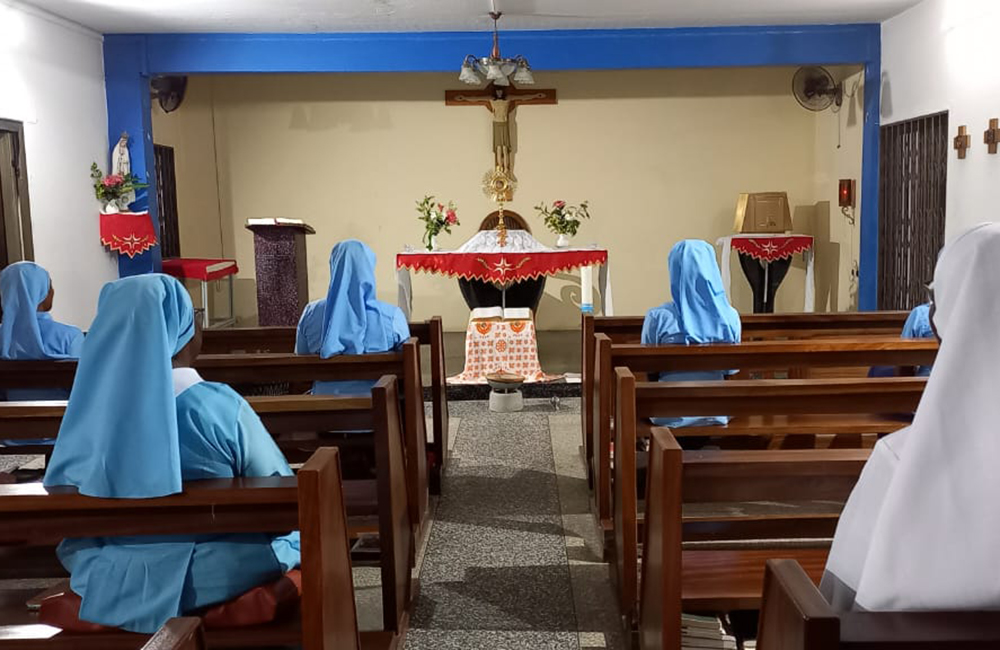
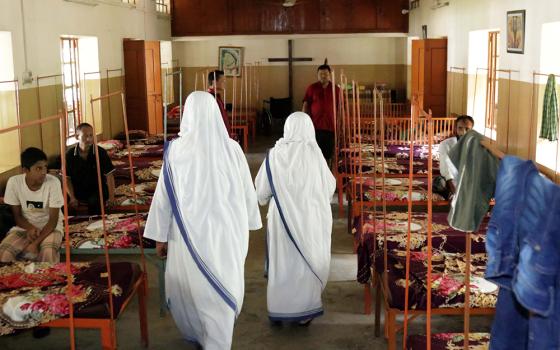
Sisters of the Infant Jesus Novitiate Community spend time before the blessed sacrament, at the novitiate in Cape Coast, Ghana. (Courtesy of Marian-Hagar Dadzie)
The reality of this stage of being catechized was that everything seemed to me like a formal process. As with most of my classmates, I was only fulfilling a requirement for first holy Communion and later for confirmation. At that time, all the liturgical seasons — Advent, Christmas, Ordinary Time, Lent and Easter — seemed the same. The only difference that was easily noticeable was the festivities and "fun" that came with Christmas, when, as children, we appeared in our best clothes and the food also changed. The rationale behind these seasons, and especially Lent, was not something that concerned me or my companions.
The dramatic change began to unfold when I became a teenager. Even then, the seasons were hardly known by name; they were described according to the major event. The season of Lent was called "Akomkyer mber," meaning "fasting period." The prominent days were Ash Wednesday and Good Friday.
The turning point of my faith regarding Lent came during my secondary school days. My interest in the season was marked by my yearning for answers, which helped me appreciate my faith better as its practice became meaningful.
Entering religious life was the culminating moment of my faith journey in understanding the Lenten season. Now, as a religious of 11 years in vows, my Lenten observance has taken on new depth in the following ways:
- Contemplating religious songs: Taizé and Gregorian chants have been moments to concentrate and contemplate;
- Taking rosary walks contemplating on the sorrowful mysteries as a participation in the Passion of Christ;
- Watching the movie "The Passion of the Christ" to give an emotional and picturesque experience of the Passion, and death of Christ;
- Spending more time before the blessed sacrament.