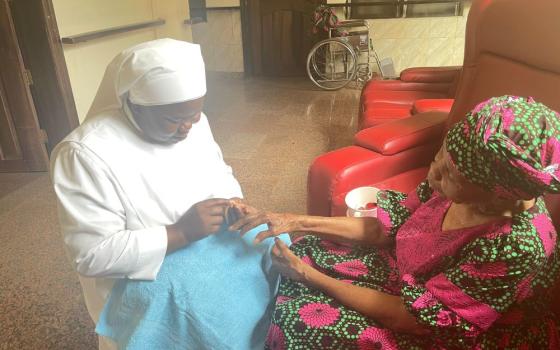
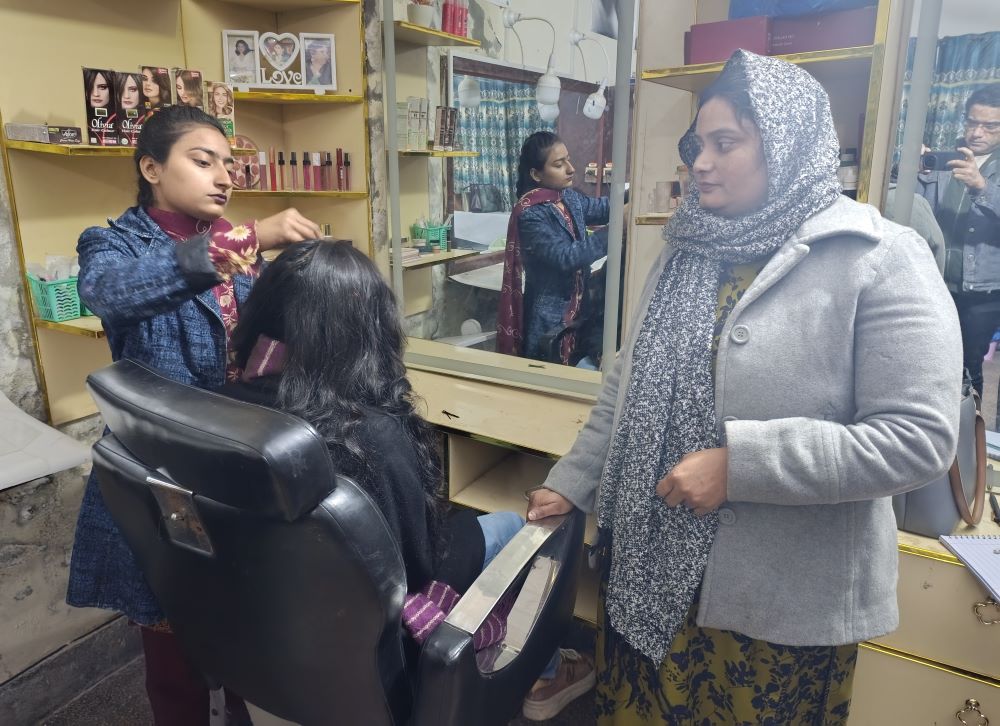
A beautician trainee works at New Life Ministry, a small vocational training center Sr. Rita Samson, a "secular nun," founded in 2005 in Youhanabad, a low-income Christian neighborhood on the outskirts of Lahore, Pakistan. (Kamran Chaudhry)

by Kamran Chaudhry
Sr. Rita Samson works quietly among poor women in Pakistan's Punjab province, carrying out her religious vocation in a form that remains unfamiliar — and often misunderstood — in the local church.
Unlike most Catholic sisters in Pakistan, who live in convents and wear habits, Samson is known as a "secular nun." She lives alone and runs New Life Ministry, or NLM, a small vocational training center she founded in 2005 from her home in Youhanabad, a low-income Christian neighborhood on the outskirts of Lahore.
The center offers a one-year course in beautician skills and six-month diplomas in glass painting, tailoring and fiber painting. It also provides hostel facilities for 12 children ages 10 to 14, most from rural areas of Punjab.
This year, on the morning of Jan. 10, 50-year-old Samson welcomed a new batch of aspiring beauticians. To the young women gathered in the training room, she is simply known as "Sister Jee" — a local honorific that conveys respect, warmth and social recognition.
While the Catholic Church does not formally use the term "secular nun," such women dedicate their lives to God while continuing to live and work among ordinary people, under the pastoral care of their diocesan bishop.
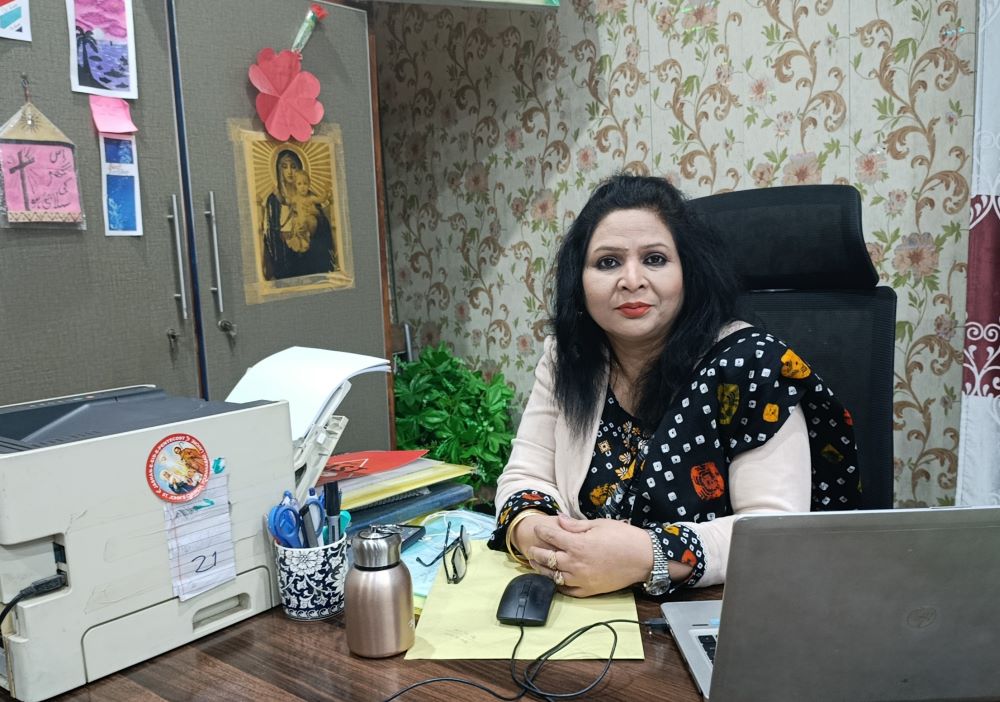
Sr. Rita Samson, a "secular nun," has taken vows of chastity, obedience and simplicity, but lives on her own. She founded and runs New Life Ministry, a small vocational training center in Youhanabad, a low-income Christian neighborhood on the outskirts of Lahore, Pakistan. (Kamran Chaudhry)
"I never felt called to separation or seclusion," Samson told Global Sisters Report. "My prayer, my vows, my faith — all of it had to be lived among people, especially women who are struggling and persons with disabilities."
Samson belongs to Ancilla Domini, a secular institute of consecrated life. She is the second lay nun of the Ancilla Domini in Pakistan; Martha Laal was the first, but she ceased contact with Samson during the formation of New Life Ministry.
Samson lives in the world while striving for personal holiness and working for the sanctification of society from within. In Pakistan, however, such a vocation often raises questions.
"People here understand nuns in convents," she said. "They do not easily understand a woman who is consecrated but lives independently. Some even asked whether this was really a vocation or just an NGO."
Samson lives vows of chastity, obedience and simplicity without the daily structure of convent life. This freedom, she said, also requires greater personal discipline and responsibility.
Last year alone, 35 women graduated as beauticians, while 20 adults completed basic literacy courses at her center, she said.
One trainee is 23-year-old Monica Younus, who joined in August and hopes to open a small beauty parlor in her home after completing her diploma. However, her hopes were dashed when she tried to enroll at a sewing center run by her own apostolic church.
"They preferred educated women," Younus said. "Here, I have already learned facials, manicure, pedicure and body waxing. I cannot read the Bible, but I have learned new prayers and psalms."
Younus moved in with her brother, a rickshaw driver, after the recent death of their parents, and hopes to help support her family through her skills.
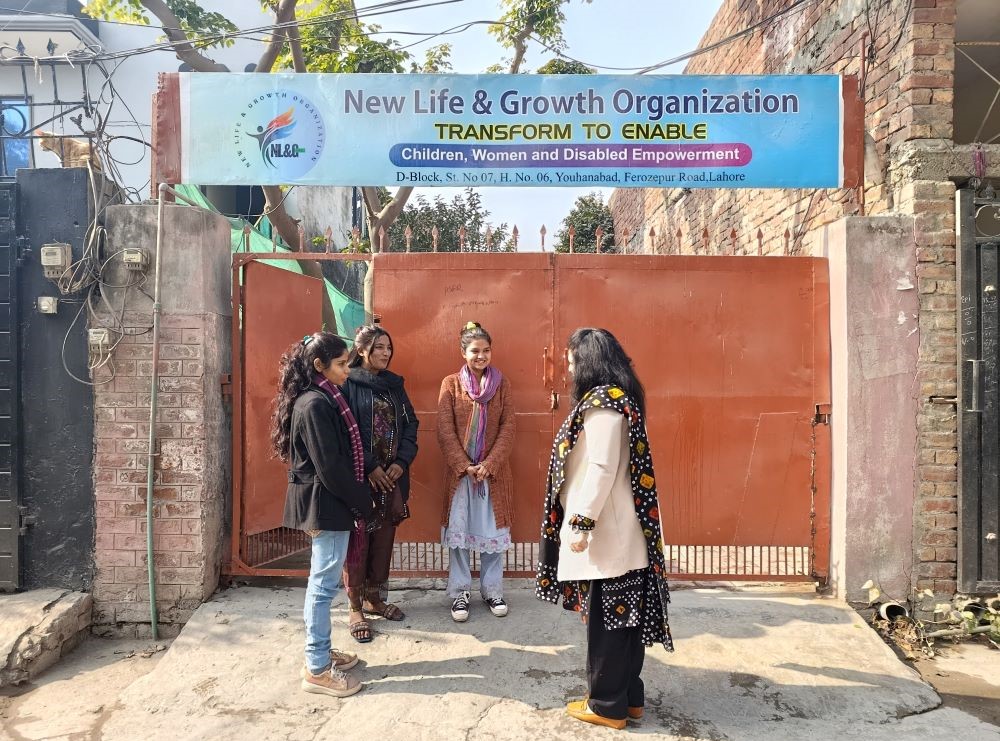
Sr. Rita Samson (right), a "secular nun," belongs to Ancilla Domini, a secular institute of consecrated life. She runs New Life Ministry, a small vocational training center in Youhanabad, a low-income Christian neighborhood on the outskirts of Lahore, Pakistan. (Kamran Chaudhry)
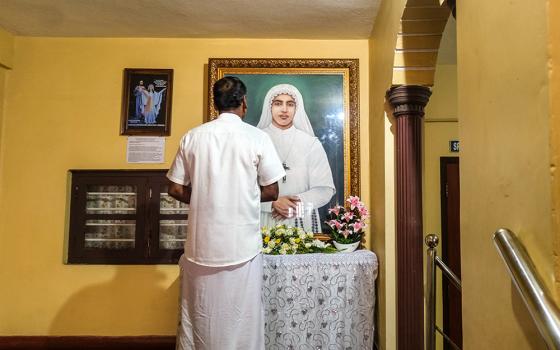
Photographs on the center's walls tell another side of Samson's ministry — images of children with disabilities she supported in the early years of her work.
One is Waseem Qadir, now 34, who was born with a folded left leg and once depended on crutches to walk. Samson helped finance two surgeries and his basic education.
Today, he walks with therapeutic footwear to a garment factory, where he earns about 30,000 rupees ($107) a month.
"My father died when I was young," said Qadir, a Catholic father of two. "Now I live with my family in a rented house and earn my living with dignity. I pray for sister from my heart.”
Oblate Fr. Khaliq Salim, chaplain of New Life Ministry, praised Samson's work while acknowledging the challenges she faces.
"It is hard for a consecrated woman in plain clothes to earn equal respect," he said. "Such ministries complement organized religious life in spirituality and development. She can organize more programs than many religious communities. The church always welcomes lay participation."
Advertisement
The priest said the center has protected the dignity — and in some cases the lives — of hundreds of poor women and children.
"These include daughters of housemaids who accompany their mothers to work in wealthy households and become vulnerable to abuse by other servants or even family members," he said. "There are also children with disabilities who were once used as beggars by their parents."
The center's skills training, he added, has also helped families resist the temptation of prostitution as a means of easy income.
For Samson, the work is simply the Gospel lived in everyday life. "This is where God placed me," she said. "And this is where I belong."