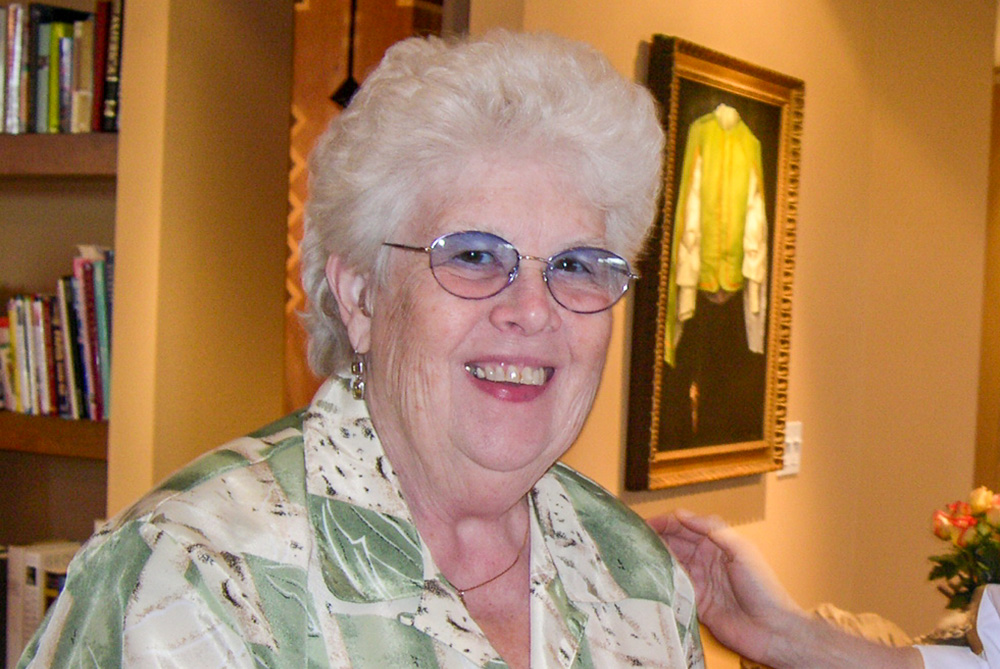
Sr. Monica Gail Grimes of the Sisters of Notre Dame de Namur died July 5 at age 88, after "a life of goodness, kindness and community, always ready to be part of every effort to work for justice, peace and equity," in the words of Sr. Ann Kendrick. (Courtesy of Hope CommUnity Center)

For more than five decades, the Sisters of Notre Dame de Namur have worked alongside farmworkers, immigrants and Black and Hispanic communities in Apopka, Florida — a ministry whose legacy is perhaps most visible today in the Hope CommUnity Center and the Farmworker Association of Florida.
Sr. Monica Gail Grimes was one of the sisters who helped build that legacy.
At her funeral Mass in Apopka on Sept. 19, the impact that she and other Sisters of Notre Dame de Namur have had on this Central Florida farming community was on full display. Along with a slideshow of photos showing her at celebrations and gatherings were milestones marking the building of the Hope CommUnity Center and her work with the Farmworker Association. She died July 5 at age 88.
"We celebrate Sister Gail, who's lived a life of goodness, kindness and community, always ready to be part of every effort to work for justice, peace and equity," Sr. Ann Kendrick, the remaining sister of the four considered to be the core group of "Apopka Nuns," said at the opening of the Mass.
When I first read of Sister Gail's death back in July, my tears were matched by a smile of joy. She lived what so many of us aspire to: a life of service that transformed love into action that has made a tremendous difference to thousands of people in Central Florida and beyond.
Sister Gail, along with Srs. Ann Kendrick, Teresa McElwee and Cathy Gorman, were considered the core group of Sisters of Notre Dame deNamur who became known as the "Apopka nuns," working with poor, largely Black and Hispanic communities who labored in the fields, citrus groves and construction sites surrounding Orlando. Sister Ann described Sister Gail as being "a force of nature — she had a brilliant mind and a stubborn character."
Advertisement
Their legacy is most physically evident in the Hope CommUnity Center, housed in two buildings in Apopka. The center offers immigration and legal services, youth leadership and college-prep programs, community organizing, LGBTQ support, and referrals to social services and healthcare.
But their legacy extends beyond programs and buildings to the people they served and inspired throughout Central Florida. "We made lifelong allies and friends in those communities," Sister Ann said. "We had such joy with the families we worked with."
The Sisters of Notre Dame de Namur were invited in 1971 by the then-bishop of Orlando, William Borders, to serve and empower the poor, Black and Hispanic communities in the region. Sister Ann was among the original sisters to answer the call.
Sister Gail arrived in Apopka in 1975. She made her final vows in 1963 and earned bachelor's and master's degrees in chemistry before teaching at her alma mater, Notre Dame High School in Moylan, Pennsylvania.
While teaching high school, Sister Gail felt a call to work with the project in Florida, said Sr. Mary Hayes, the retiring archivist for the Sisters of Notre Dame de Namur. Both of them were among the sisters who founded the congregation's "Base Communities," designed to minister and deliver social services in small groups. As part of her transition into her new ministry, Sister Gail spent a semester working at a community center in Atlanta.
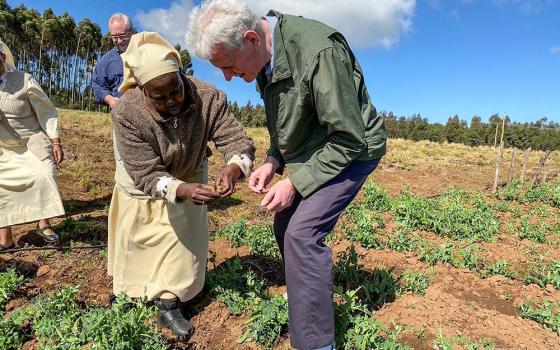
In Apopka, Sister Gail embraced the Black community. She never mastered Spanish, so focused her efforts with the Haitian and Black communities, Sister Ann said. "She was smart about finance and organizing. She made friends with them, went into the fields to work with them and in the heat of summer, she'd be out there," Sister Ann recalled. "But she loved it and they loved her."
I knew the region from covering Florida agriculture for the Miami Herald in the 1980s. It's a part of the state that tourists rarely see, particularly the living conditions of farmworkers, which ranged from modest to deplorable.
The sisters bought a house in South Apopka, and the four white women were a curiosity to the neighborhood in deeply segregated Central Florida. But they knew what they didn't know, and listened to the needs of the community. They listened to residents' needs — including healthcare, banking, decent wages and working conditions — and helped establish a clinic, credit union, housing project, the Farmworker Association and Hope CommUnity programs.
Sister Gail "was really running the organization," said Meilyn Santana, chief of staff. "Sister Ann and Sister Gail were such a duo. Sister Ann is the visionary and dreamer — 'Let's go do this.' But Sister Gail was the one making it happen, and the two of them were so good together."
The work was rewarding and joyful and, in many ways, safer and easier than today, given the situation facing immigrants with the crackdown by Immigration and Customs Enforcement, Sister Ann says. Florida, along with Texas, leads the nation with arrests by ICE. "They weren't rounding up people in such an illegal and unrespectful way," she said.
Sister Gail's analytical approach "helped her longing for justice because she had an ability to zero in on what the core issue was," Sister Mary said. "We might take one step forward; Gail would take five steps forward." Sister Gail was also selected to represent the province in the United States Leadership Group and elected to the General Chapter in 2002.
Her death shocked the community, Sister Mary said; just weeks earlier, she had been vibrant and actively participating in a Zoom meeting.
Sister Gail was very direct. "If she had something to say to us, she said it," said Milka Melendez, director of programs and integration. "She worked for justice, and even in her last minutes in the hospital, she wanted us to work for the Black community — even when she was leaving us she had something to say to us," Melendez said. "She wanted to have us not just work for Hispanic community but to expand to others. She was very inclusive with Hispanics and Blacks.
"She treated people with that dignity. It was so hard, we never thought she would be leaving us. She worked so hard but went in peace."