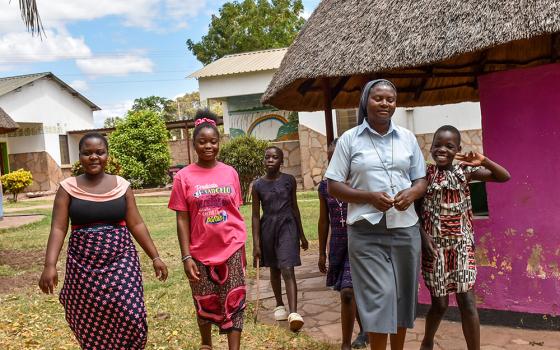

Dimesse Sr. Redemptor Ikonga is pictured with children at Talitha Kum Children's Home in Nyahururu, Kenya, on Nov. 10, 2025. She ministers to abandoned, abused and HIV-positive children. (GSR photo/Doreen Ajiambo)

by Doreen Ajiambo
As Catholic sisters from more than 30 African countries gathered in Lusaka for the Talitha Kum Africa Second Regional Assembly, their discussions on human trafficking, exploitation and child protection echoed powerfully in the quiet morning routines of places like Talitha Kum Children's Home in central Kenya.
Talitha Kum Africa, which is part of the global Catholic sisters' network Talitha Kum under the International Union of Superiors General (UISG), met Nov. 17-21 at Kasisi Retreat Center under the theme "Stronger Together: Building Resilience in Combating Human Trafficking." The regional assembly adopted a three-year strategic plan aimed at confronting trafficking's fast-evolving forms across the continent.
Delegates warned that vulnerabilities are rising sharply as poverty, conflict, hunger, online exploitation and climate displacement disrupt families and widen risks for women and children.
But the global commitments discussed in Zambia are already being lived out daily in Nyahururu, where Sr. Redemptor Ikonga of the Daughters of Mary Immaculate (Dimesse Sisters) ministers to abandoned, abused and HIV-positive children — many of whom were exposed to the same crimes the assembly seeks to eradicate.
Throughout the assembly, speakers emphasized that the fight against trafficking must begin in villages, parishes and shelters, the places where sisters often serve as the first and sometimes only line of defense.
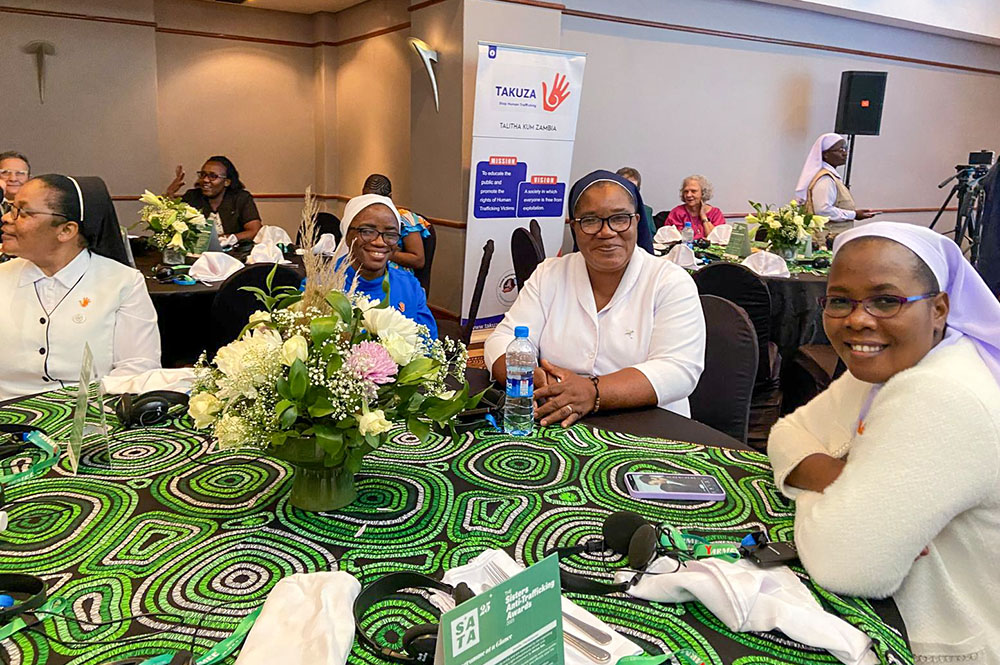
Religious sisters and delegates participate in the Talitha Kum Africa Second Regional Assembly that was held in Zambia Nov. 17-21, 2025. (Courtesy of UISG)
"Trafficking is one of the greatest violations of human dignity in our time," Cardinal Stephen Brislin of Johannesburg, South Africa, told participants in a virtual address. "It reduces God's children to objects."
Little Sister of St. Francis Sr. Jane Wakahiu, associate vice president of program operations at the Conrad N. Hilton Foundation (a major funder of Global Sisters Report), noted that the assembly overlapped with the G20 Summit in South Africa and the International Day for the Elimination of Violence Against Women.
The third Sisters' Anti-Trafficking Awards were also celebrated on Nov. 21, honoring three sisters who work to end human trafficking. Comboni Missionary Sr. Benjamine Nanga Kimala from Chad received the Common Good Award, St. Joseph of the Sacred Heart Sr. Margaret Ng of Australia was awarded the Servant Leadership Award, and Teresian Carmelite Sr. Martha Pelloni of Argentina was given the Human Dignity Award.
"These awards recognize the extraordinary leadership of Catholic sisters who stand on the front lines of modern slavery," Wakahiu said. "We cannot do it alone. We must do it together."

Little Sister of St. Francis Sr. Jane Wakahiu, center, associate vice president of program operations at the Hilton Foundation, interacts with participants during the Talitha Kum Africa Second Regional Assembly that was held in Zambia Nov. 17-21, 2025. (Courtesy of UISG)
The new regional strategic plan focuses on prevention, survivor support, youth engagement, and strengthening collaboration with governments and civil society. Delegates were urged to promote accurate information in communities, confront stigma around survivors, and address the economic and climate pressures driving many into trafficking traps.
Speakers such as Sacred Heart of Jesus Sr. Rosemary Nyirumbe of Uganda reminded participants that trafficking often occurs "hidden from public view," while Kenyan Loreto Sr. Jackline Mwikali Mwongela stressed that exploitation cannot be separated from hunger, insecurity or climate displacement. Sr. Kayula Lesa, a member of the Religious Sisters of Charity in Zambia, cautioned young people to verify job offers carefully, warning that trafficking "often begins with deception rather than force."
In Kenya, urgency is already visible
More than 2,000 miles away, at Talitha Kum Children's Home in Nyahururu, Ikonga begins each day before sunrise by checking every child's room, a quiet act of vigilance shaped by years of encountering the consequences of neglect and exploitation.
The home can accommodate more than 110 children, most living with HIV/AIDS or rescued from abuse, abandonment or trafficking. Cases brought to the sisters are becoming more complex as economic hardship grows and family bonds weaken.
"Most of these children have been abandoned and even abused," Ikonga said. "Serving children is my innermost calling because they are usually the most vulnerable."
Advertisement
Her concerns mirror those raised in Lusaka.
"Before, blood used to be thicker than water when it came to family," she said. "Now things have changed. Many people don't consider family ties."
She recalled a recent case involving a girl defiled by her grandparents, with relatives attempting to hide the crime "to preserve dignity," until the sisters intervened. Other children are discarded in markets, hospitals or along roadsides, places where exploitation can occur within hours.
"When children are abandoned, they are exposed to labor trafficking, human trafficking, defilement and abuse," she said.
The home currently shelters 21 children and two youths, with dozens more supported in surrounding communities.
The young people Ikonga serves illustrate the vulnerabilities highlighted at the assembly.
Nineteen-year-old Brian Keru, rescued from a dumping site as an infant, discovered in Grade 7 that he had HIV.
"I thought the world had come to an end," he said. Encouraged by the sisters, he now studies hairdressing and beauty therapy. "This is my home. The sisters rescued me and gave me a name."
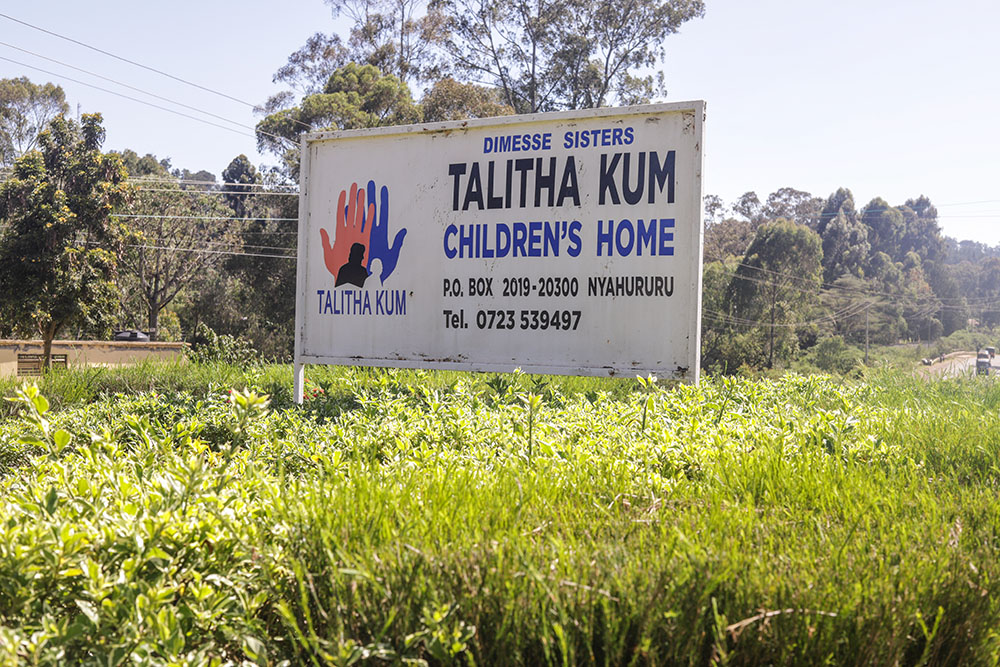
Talitha Kum Children's Home in Nyahururu, Kenya, is run by the Daughters of Mary Immaculate, commonly known as the Dimesse Sisters. (GSR photo/Doreen Ajiambo)
Fourteen-year-old Jeremy Maina, abandoned at age 5 because of his HIV status, was forced into domestic and farm labor before being dumped at a hospital when he fell ill. Nurses alerted the sisters.
"I was 10 years old when I came here," he said. "I want to be a soldier when I grow up."
Their stories underline the urgent need for prevention and protection — the core focus of the regional assembly's new strategy.
Linking local reality to global hope
For Ikonga, the Lusaka assembly reaffirmed that the struggles she faces each morning are part of a much wider continental effort, and that sisters on the front lines are not fighting alone.
"It means the vulnerable are going to get a voice," she said. "We sisters are like whistleblowers bringing out what is not seen."
Any recognition for her work, she added, would simply highlight God's mission.
"I'd embrace recognition in the spirit of humility," she said. "It would encourage others to partake in this noble mission of serving vulnerable populations."
As she moves from bed to bed during her dawn rounds, Ikonga hopes that governments, faith leaders and communities will embrace the spirit of collective responsibility emphasized in Lusaka.
"Fighting human trafficking and helping the vulnerable is a responsibility for all of us," she said. "It doesn't belong to a specific group."
And as the Talitha Kum assembly concluded, urging renewed action across Africa, Ikonga offered one message that she believes must guide both policymakers and communities:
"If we truly want to protect children, then we must listen to them."