(Pixabay/Couleur)

In the Gospel of Matthew there is the story of the Canaanite woman who comes to plead with Jesus to free her daughter from a demon. At first, Jesus doesn't say anything to her. His disciples press him to send her away. Jesus is silent for a moment and then responds with what he believed to be his calling: to free the lost sheep of the house of Israel. The woman continues to plead with Jesus acknowledging her unworthiness. Jesus uses the language of the day, likening this foreigner to dogs who wait for the food that falls from the table. The woman responds again with a plea that even dogs get scraps. Faced with this act of faith in him, Jesus experiences a transformation. He does not send her away. He does not condemn her. Rather, he proclaims that her faith is great and, having heard, says, "Let it be done for you as you wish." And the woman's daughter was healed.
I've certainly heard that Gospel before, but today it took on new meaning. I imagine Jesus standing there quite still as the woman pleaded that her daughter be healed. He was quiet and listened to her. It jarred him since he assumed his calling was only to those lost sheep from the house of Israel. And yet, here she was begging him to do what he knew he could do. Something didn't sit right with him. He became more aware of what he assumed he was called to do and how that didn't feel right. His reaction at first was to try to justify his inaction by likening her to the dogs who wait for the food that falls from the children's table. Why should he heal those who do not belong, who come and want the same things we have? But the woman kept begging, and Jesus listened. He listened so deeply that he awakened to a new understanding of who he was and of his calling. He awakened to the beauty of someone else's faith, not his own. I can just imagine Jesus throwing his arms wide open and exclaiming, "O woman, great is your faith." Almost exasperated. His resistance is transformed into response, and the woman's daughter is healed, as Jesus widens his vision of who he is and to whom he has been sent.
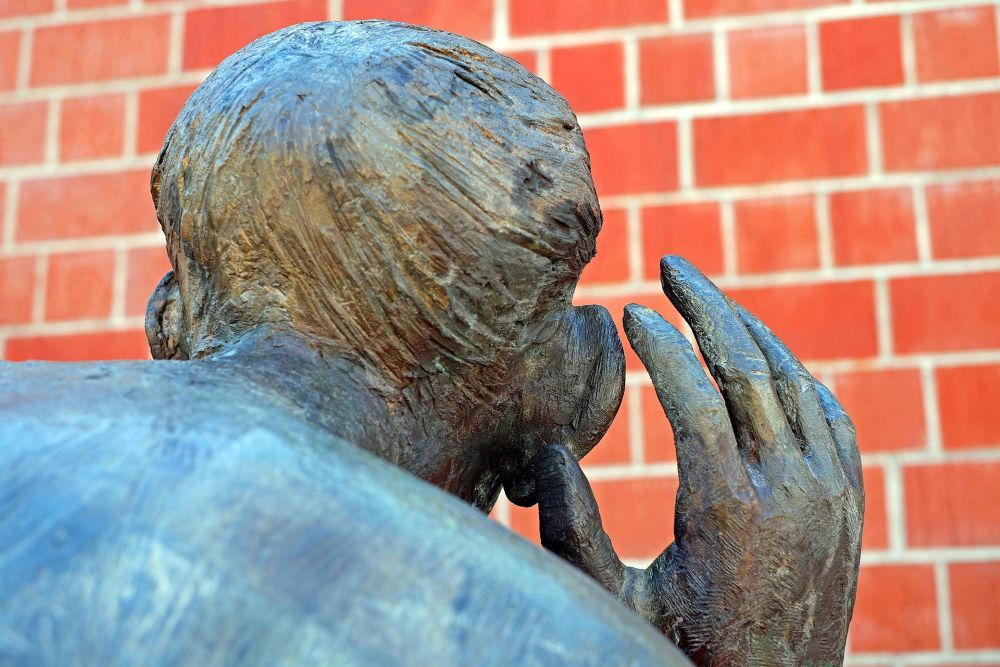
Listening is transformative. Whenever I teach about the transformative power of contemplation, listening is a key component. Contemplation invites us to listen in new ways, not simply to our own thoughts but to enter into a deeper silence that at first might seem empty but is actually quite full — of the presence of divine mystery animating our hearts. That silence awakens us to what we might have thought was the way things are and opens us to a new way of seeing ourselves and the world. Over time, contemplation frees us to respond rather than react to the world around us.
Listening is not easy today. We are inundated with podcasts, blogs, videos and photos, all moving across our screens faster and faster. The content might either be totally one-sided or in such a mix that we're dizzy with what to believe. We need to slow down. Not only to comprehend what is happening but to be able to enter into a stillness where we can see more clearly who we are and what we believe.
We need that stillness to be able to "feel" that shift that jars us to look again with fresh eyes at what we believe. That shift gives us the freedom to change, to use different lenses to see the world and to respond out of love to what is being asked of us today.
In the U.S., we are entering a frenzied period before the November elections. We need to listen to each other in new ways. We need to listen as Jesus listened and awaken to how we treat the "other" and how we want our country to protect and reverence the dignity of every person and all of creation so that we can vote wisely.
Let us make time to enter into contemplation in these next weeks and share our wisdom with others, especially those who may be losing hope or feeling alienated. The Canaanite woman did not give up. Neither can we.
Advertisement