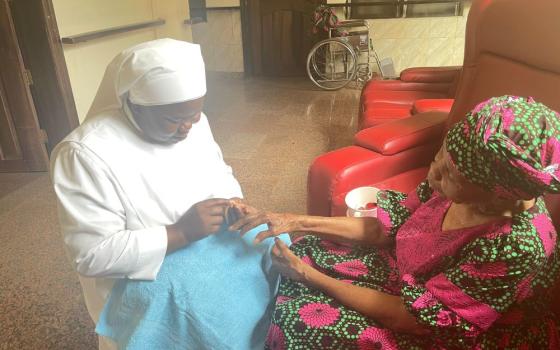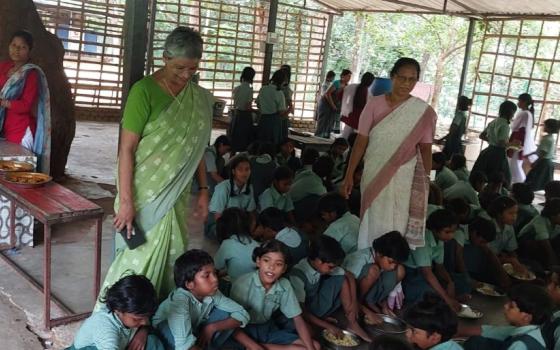
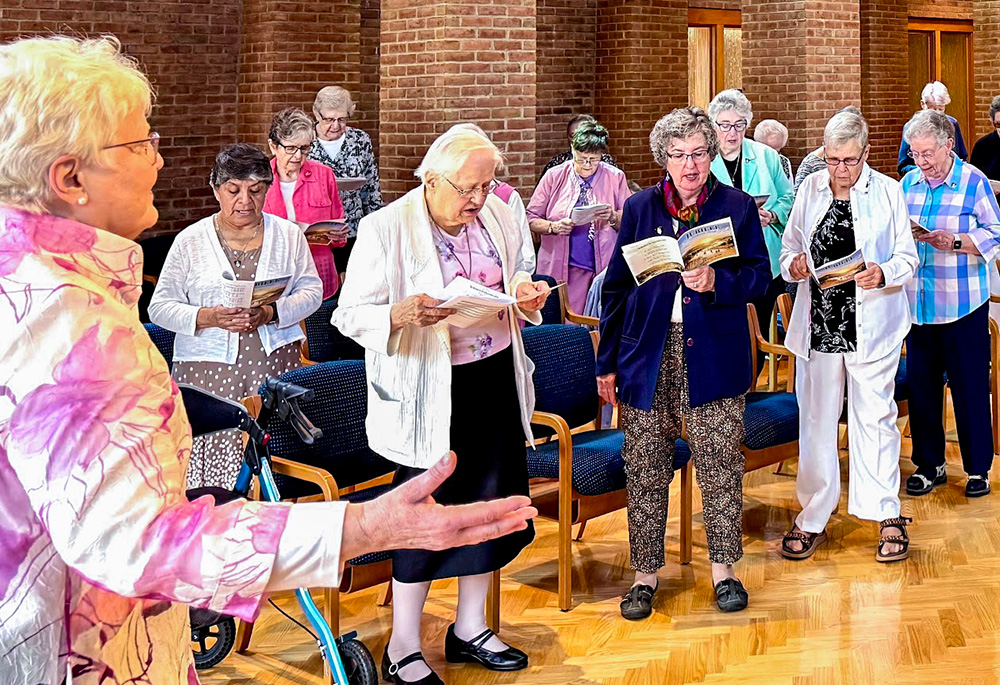
At the motherhouse of the Dominican Sisters of Peace in Columbus, Ohio, jubilarians renew their vows on June 7, 2026, at a gathering to celebrate their milestone anniversaries of religious life, ranging from 50 to 80 years. (Courtesy of Ana Gonzalez)

by Sr. Ana González
Looking at those front rows, I found myself reflecting on decades of prayer, ministry, service and fidelity lived one day at a time. Each of these women had once said yes to a call whose future she could not fully imagine.
Ours is a community nourished by the Eucharist and by the witness of the Dominican sisters who came before us — women who mentored us in faith and handed on the rich inheritance of our tradition.
As I looked at the jubilarians, who were celebrating milestone anniversaries of religious life, ranging from 50 to 80 years, I reflected on their humble and courageous discipleship, on the many ministries they have served, and on the countless lives they have touched. At some point, each of them made the first of many difficult choices to embrace a lifelong, loving encounter with our triune God.
I have had the honor of speaking with some of the jubilarians and hearing their vocation stories. In their sharing, several spoke of entering religious life with a sense of what their future might hold, only to discover that God had imagined something far wider.
One jubilarian, Sr. Dominic Savio Estorge, told me that she had expected to become a teacher and remain in New Orleans for the rest of her life. She entered the Dominican Sisters of St. Mary in New Orleans shortly after graduating from high school in 1956. Her religious life, however, unfolded through seasons of change and continued encounters with the people of God.
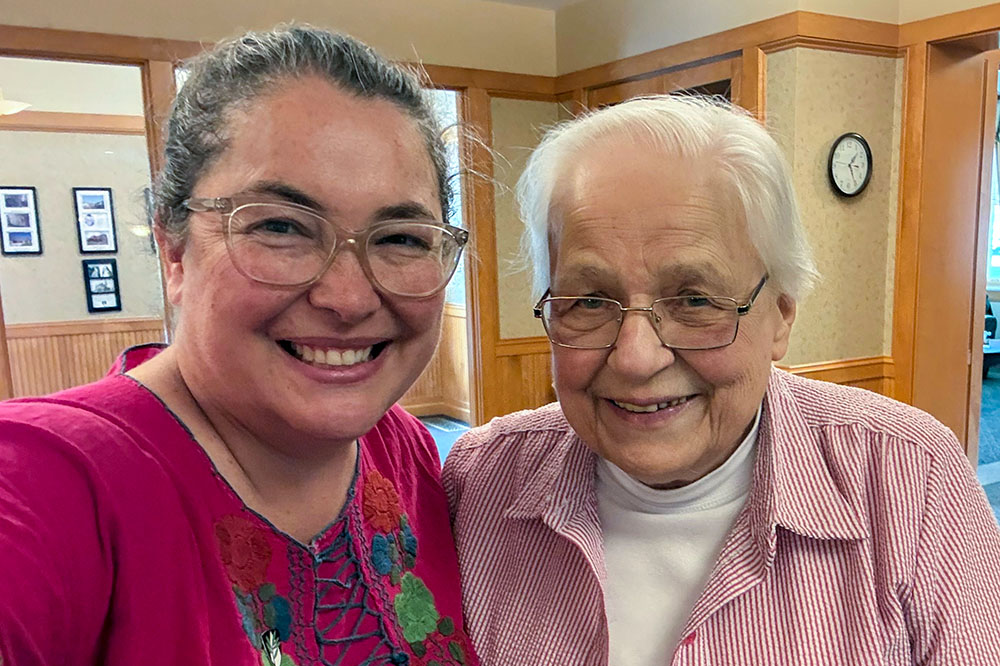
Dominican Srs. Ana Gonzalez and Dominic Savio Estorge at the motherhouse of the Dominican Sisters of Peace in Columbus, Ohio, in June 2026 (Courtesy of Ana Gonzalez)
From a young age, Sister Dominic had a passion for learning and reading. After studying English education, she ministered in education for more than 60 years. While she was an educator for most of her life, her call to be a holy preacher also led her to serve in other capacities, including school administration, congregational leadership, mentoring and writing.
During her ministry and life as a religious sister, Sister Dominic navigated the Spirit-led changes brought forth by the 1962-65 Second Vatican Council, generational shifts that transformed education and ministry, and, ultimately, the courageous movement that led to the union of the Dominican Sisters of Peace. From expecting a familiar life, Sister Dominic came to embrace the uncertainty of God's ways and the constancy of change.
Mindful that both the world and religious life continue to change, she encourages me to remain grounded in my relationship with God and not become fixated on unrealistic expectations of the way things "ought" or "should" be. Sister Dominic reminds me that God is love, that I must be attentive to God's love for me and that I am called to share that love with those with whom I minister.
Her story is not unique. Earlier this year, I had the opportunity to spend time with another jubilarian, Sr. Rachel Sena. She spoke of entering religious life from Arizona, ministering in the bayous of Louisiana, and later accompanying the Maya people of Guatemala during a time of violence and oppression.
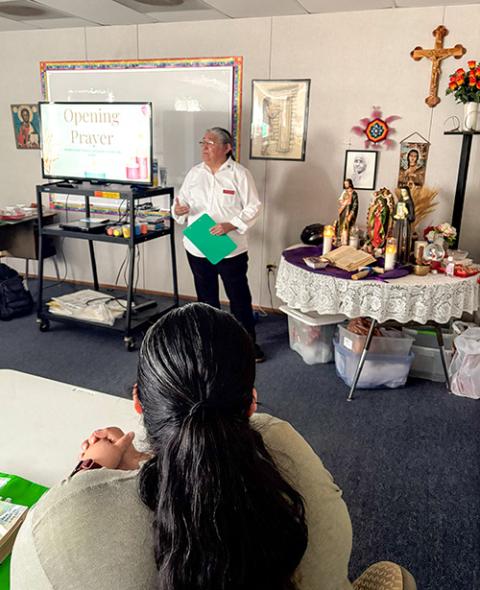
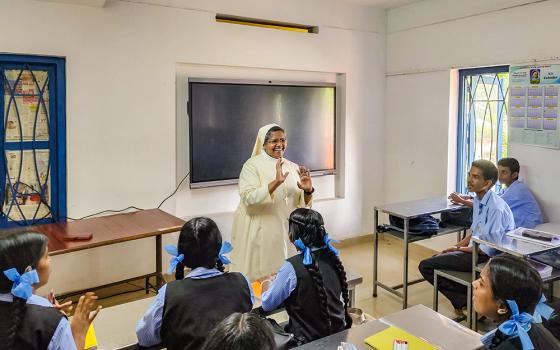
Dominican Sr. Rachel Sena teaches a class during a confirmation retreat at Mission San Xavier del Bac in Tucson, Arizona, on March 28, 2026. (Courtesy of Ana Gonzalez)
In the 1980s, Sister Rachel accepted an invitation to minister with Indigenous communities in Guatemala. As she entered the unknown among the Maya and other Native communities, she became increasingly aware of oppression by multinational businesses against the land and the people who lived there. She witnessed military groups terrorizing the very people they were supposed to protect in order to defend mining interests and the exploitation of natural resources. Her ministry included accompanying the people of God and providing education and health awareness.
Ultimately, her grounding in Catholic social teaching and her advocacy for Indigenous people made her a target. After leaving Guatemala, her understanding of social and political structures led her to minister to Guatemalan migrants in Florida. There, Sister Rachel co-founded and directed the Maya Ministry Family Literacy Program in Lake Worth. She accompanied Guatemalan refugees, providing literacy support, housing ministry, AIDS outreach and pastoral presence as the community navigated an uncertain landscape in which their wisdom was often overlooked.
Today, Sister Rachel ministers with the Pascua Yaqui and Tohono O'odham nations at Mission San Xavier del Bac in Arizona. She tells me that she has gained great wisdom from the Indigenous communities she has encountered and served. She is moved by the deep spirituality shared from generation to generation. Their strength in faith, even amid despair, poverty and oppression, is grounded in the hope of the Resurrection.
The more I listened to these women, the more convinced I became that religious life requires a willingness to meet the people of God where they are and to embrace change rather than resist it. Again and again, the God of surprises has led our Dominican sisters to move courageously through the changes ushered in by Vatican II and through the many other changes brought about by the ongoing work of the Holy Spirit.
Advertisement
In living their vocation, our Jubilarians responded to the pain of God's people. As contemplatives in action, they placed their gifts at the service of God's creation. They did not simply serve; they loved with God and in God.
When I asked Sister Dominic whether she had any regrets or had ever thought of leaving, she answered without hesitation:
"How could I? I remain faithful because I am constantly shown God's grace and love. What would I do without my God? Nothing! Some things don't make much sense, but I believe that God is working, and I want to be part of God's work. I know that this is where I belong."
The lifelong commitment made by our jubilarians and by my sisters is a profound inspiration to me. In living their vocation — loving and caring for God's people and creation — they have encountered God ever more deeply. They have placed their whole selves at the service of the kingdom and learned to recognize the pain in the lives of those to whom they minister. In this way, their witness moves beyond service alone and becomes prophetic.
Jubilees are powerful vocational witnesses. In them, we recognize that we are all called, and that our world still longs for women and men committed to proclaiming the good news of salvation.
Though the ceremony has ended, its celebration continues in my heart. The organ still echoes in memory, and I find myself singing with my sisters, "We are companions on the journey ..."
Indeed, they are companions on the journey — living reminders that a life given wholly to God becomes a blessing for the church and for the world.