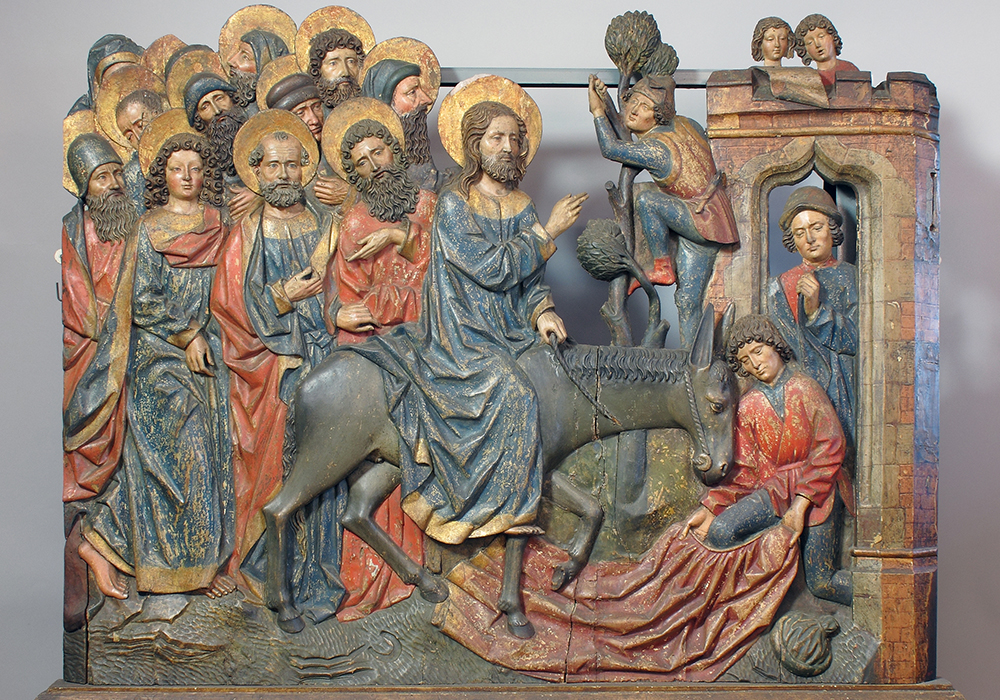
"Entry into Jerusalem Relief," a 15th-century German sculpture (Metropolitan Museum of Art)

by Sr. Rose Uchem
Editor's note: Welcome to Theologians' Corner, where each week a different woman theologian from around the world offers a fresh reflection on the Sunday readings.

Palm Sunday of the Lord's Passion
March 29, 2026
Palm Sunday ushers us into Holy Week. It sets the tone for the Easter triduum later in the week. The liturgy opens with movement, a procession, outside the church, the waving of blessed palms or any other greenery, and the jubilant chanting of "Hosanna." It feels festive, almost triumphant. Yet our attention is quickly drawn to the passion of our Lord Jesus Christ. This year we read from Matthew's version. On Good Friday, however, we read it again but from John, as done every year.
One might wonder: Why does the liturgy bring us so quickly from celebration and jubilation to hearing of agonizing suffering? My guess is that it is because Palm Sunday is not really about triumph. In so many ways, it is more about the fragile and shifting loyalty of the human heart.
In the Passion narrative, one theme that catches and holds my attention is betrayal. In the story of Jesus' final days, multiple layers of betrayal are interwoven throughout. Betrayal seems to lie deeply buried in the darkest recesses of the human psyche. It leaves behind a taste of disappointment and a wound that words cannot describe. It baffles the imagination that Jesus chose to embrace this particular human reality as well. He endured hunger, fatigue, misunderstanding and suffering, amongst others; besides moments of unalloyed joy. Nevertheless, he also accepted betrayal.
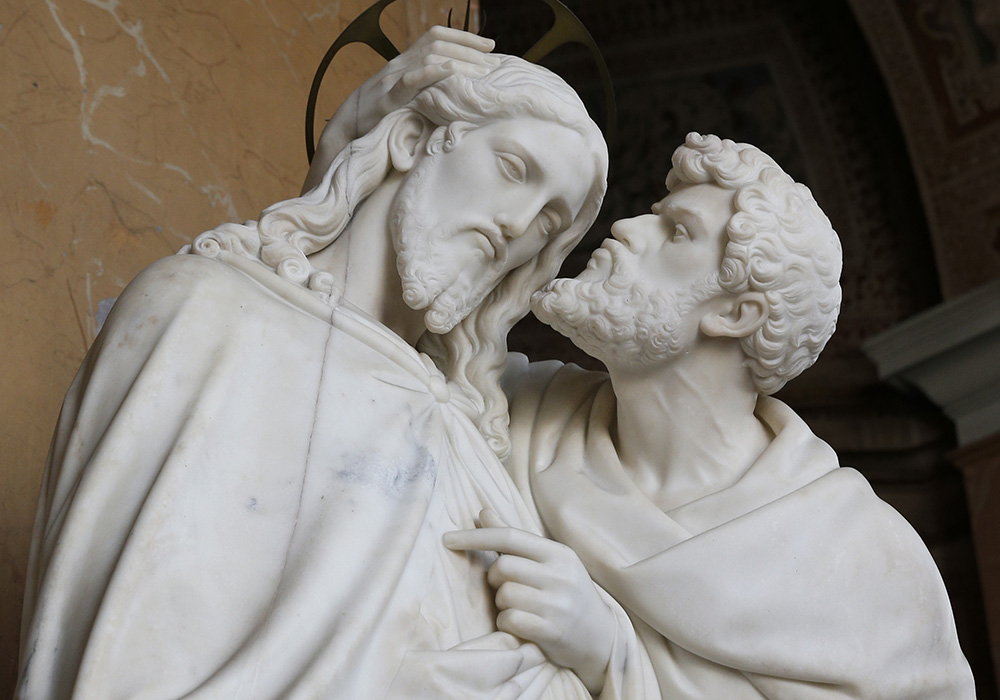
Judas kisses Jesus in this statue at the base of the Holy Stairs in Rome in this March 10, 2014, file photo. Tradition maintains that Jesus climbed the stairs when Pilate brought him before the crowd. It's believed that Constantine's mother, St. Helen, brought the stairs to Rome from Jerusalem in 326. (CNS/Paul Haring)
Judas stands as the classical symbol of betrayal. Yet Judas was not alone. Peter, though beloved and sincere, denied Jesus three times. The other disciples fled. Their loyalty collapsed when danger reared its head. Peter's denial felt particularly painful because of his earlier bravado and unbridled confidence: "Even if all fall away, I will not." Yet when the moment came, fear exposed the limits of his courage.
Then there was the crowd. Only moments earlier they were shouting, "Hosanna in the highest!" Yet not long afterwards, a crowd, perhaps some of the same voices, began shouting, "Crucify him! Away with him!" It is unsettling to imagine how fickle human loyalty can be.
Advertisement
History itself is replete with the need to forgive. Nelson Mandela, after dedicating his entire life to freeing his people from the apartheid system, found himself not celebrated but imprisoned for 27 years. When he emerged from prison, he could have become bitter and vengeful. Yet he chose reconciliation. He refused revenge, knowing that hatred would only deepen the wound.
There is yet another face of betrayal in the life experience of a Sudanese girl named Josephine. As a young girl she was kidnapped and sold into slavery. She was resold repeatedly, beaten, and even stripped of her own name and called "Bakhita," meaning "fortunate." Quite a cruel irony! Those who were supposed to protect her treated her as a commodity. Yet when she later gained her freedom and encountered Christ, she did not cling to hatred. She chose forgiveness. She chose peace. Today she is known and revered as St. Josephine Bakhita.
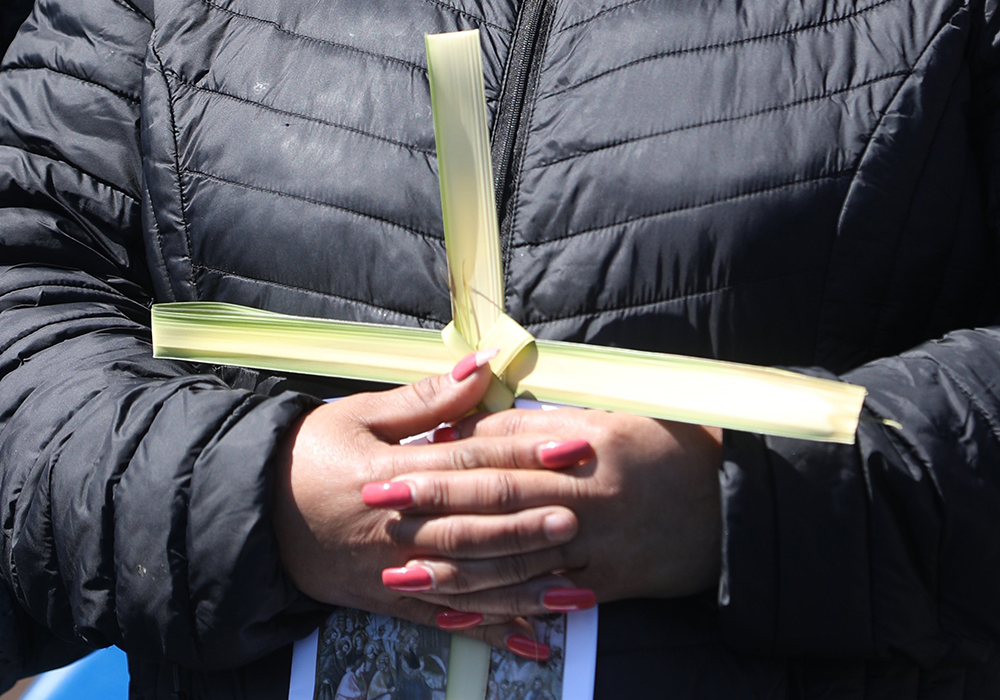
A woman holds a palm frond cross during Palm Sunday Mass outside St. Mary's Chapel at the National Shrine Grotto of Our Lady of Lourdes in Emmitsburg, Md., April 2, 2023. (OSV News/Bob Roller)
Palm Sunday liturgy presents us with an even greater role model, Christ himself, who experienced not only injustice but also abandonment. I find myself thinking of the many people Jesus had fed, healed and taught during his earthly lifetime and they pledged to go with him anywhere. Yet when he needed them as witnesses, defenders and friends, they opted to be silent. Some turned against him, and he stood all alone.
Palm Sunday reveals a painful mystery: God does not save us from a distance but rather from the inside of the human reality of brokenness. Jesus suffered not only physical pain but also emotional and relational wounds humans know so well — abandonment, disappointment, ingratitude, disloyalty, betrayal and rejection. In tasting it all, he removed the sting from their poison.
As we hold palms in our hands, we are not only welcoming Jesus into Jerusalem. We are also welcoming him into the unstable territory of our own hearts; hearts capable of devotion one moment and denial the next.
Jesus knew betrayal would come, yet he entered Jerusalem. He accepted the palms and the donkey ride, knowing they would lead to the cross. The cross is a powerful symbol of resistance. It is not a mark of passivity nor silent acceptance of injustice and oppression. This is quite unlike other ideas and practices that allow oppressors to go free while holding down victims.
As we hold palms in our hands, we are not only welcoming Jesus into Jerusalem. We are also welcoming him into the unstable territory of our own hearts; hearts capable of devotion one moment and denial the next. We are also contemplating how we can embrace the cross more in the form of advocacy actions against injustice and oppression around us, regardless of what it costs us.