(GSR graphic/Olivia Bardo; photo: OSV News)

by Sr. Colleen Gibson
Columnist
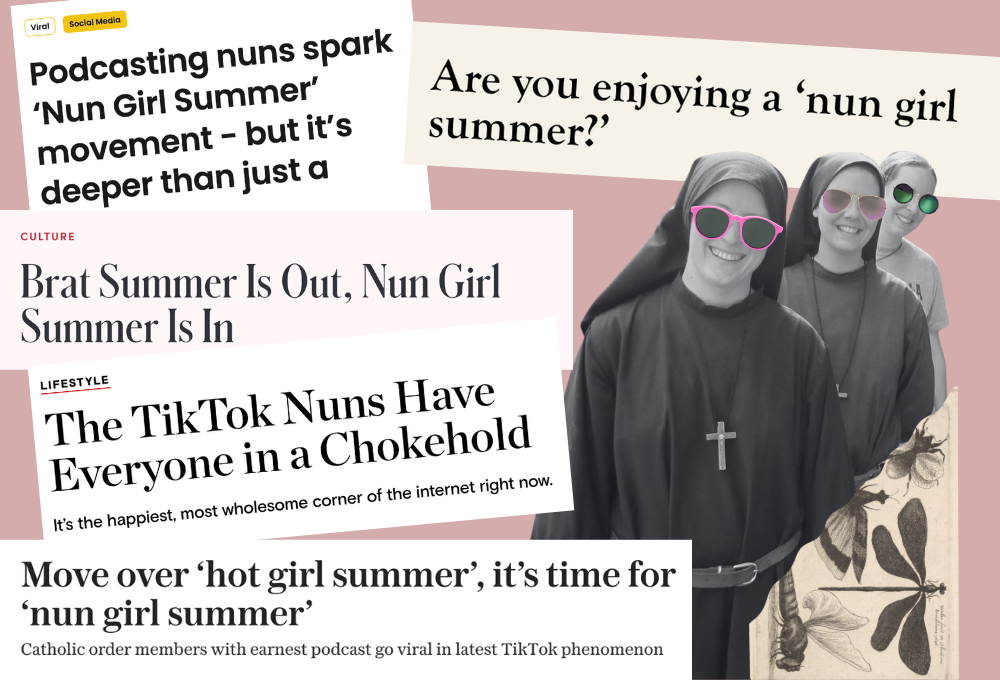
At the end of June, a post on Instagram by Cosmopolitan magazine named the trend that seemed to be sweeping social media. "Sister, it's a nun girl summer," the post pronounced in all caps, emblazoned over an image of a smiling religious sister perched in front of a podcasting microphone.
As I scanned my own social media feeds, the trend was undeniable: Sisters were showing up in force. There were the Salesian Sisters who were rooting for the San Antonio Spurs as they pursued the NBA championship. In response, a group of Sisters of St, Joseph brought their own fandom to the pages of the New York Post for some sisterly competition as they blessed Madison Square Garden and rooted for their beloved New York Knicks.
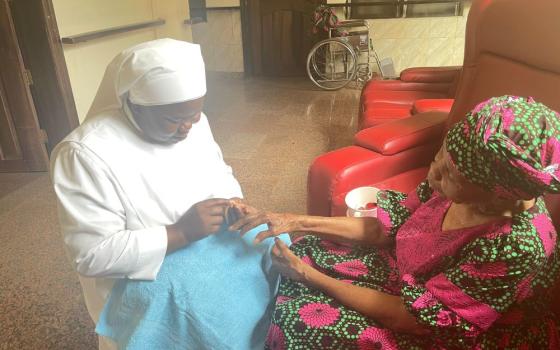
There were sisters on the pages of The New York Times and Washington Post in sections including metro news and sports with headlines like "The Nuns Who Took Over an Assisted Living Center," "These Nuns Wake Up at Midnight to Pray for New Moms" and "Rent Is So High, New Yorkers Are Living With Nuns." With each new story, more attention came upon the unassumed work of sisters in the world.
Then there was "Dominican Sisters Open Mic," the podcast that churned out viral TikTok videos and Instagram reels that exposed people to a particular style of speech and manner of relating between religious sisters. With statements punctuated with the sweet salutation of "Sister," these sisters warmed hearts and opened internet commentators to a certain brand of "nun culture." The draw of that culture was (and is) the simplicity and freedom that comes across in spades in the conversations about virtues and hobbies that fill "Open Mic."
At its heart, nun girl summer was fueled by these aspects of "nun"-ness. Beneath the playful banter and easily identifiable "nun" imagery (be it veils or short cut grey hair and sensible shoes), something more captured the cultural zeitgeist. In a culture of division and drama, these sisters projected an inner joy that people of all ages wanted to tap into. People wanted to laugh freely, to be free from the usual things that possess our attention, and to attend to the deeper desires of their hearts.
In short, these sisters had something that the broader culture, especially Gen Z and millennial consumers, wanted more of. Rather than embracing the "hot girl summers" of old, the idea of being a little more sisterly, with its freedom and simplicity, felt like a fitting response to the pressures of summer 2026.
Now as summer fades into fall, the question arises: What season of sisters might be on the horizon?
Sitting amongst the crowd at the Leadership Conference of Women Religious in August, I couldn't help but sense that a synodal season might be upon us. The very fact that LCWR dedicated the majority of its 70th anniversary celebration and assembly to fostering and facilitating synodal processes is a sure sign of this seasonal shift.
Looking around the ballrooms filled with religious from around the world and from multiple representative groups, I had to marvel at the fact that the diversity of vowed religious life is far broader than the imagery of nun girl summer would have you believe. Yes, some of us wear habits. And yes, sensible shoes and an older demographic are surely parts of the reality of religious life today. And still, these identifiable attributes are far from the whole story of what religious life is today.
If nun girl summer lifted up anything beyond those tropes, it highlighted the transformative power of communal discernment and deep listening that religious have fostered for centuries. With such listening in such short supply today, the prospect of listening deeply and being heard fully is even more attractive.
Imagine the model of synodal listening that might come to pass if sisters from the Council of Major Superiors of Women Religious and LCWR member congregations came together to share in synodal conversation about the future of religious life and the grounding of our lives in the church and the gospel.
Imagine if the conversation around women's roles in the church and the ongoing discernment around women deacons wasn't confined to passive conversation but engaged at all levels in a synodal fashion. If diaconal ministry were reopened to women and at the heart of that reinstitution was the experience and dialogue of countless women religious.
Imagine if the laughter and grace that captivated so many this summer could be harnessed for far more than feel-good stories or self-serving self-improvement plans. Imagine if the joy of a life lived in pursuit of God's goodness could reveal the gift of holding one another accountable in community. If we could show the world — and continue to show ourselves — the value of hearing one another's laughter and sorrow without judgement or reserve.
In order to be attentive to the movements of the Holy Spirit, it is essential that we continue the work of implementing synodality. Trusting in the spirit's guidance and the goodwill of those who we share with, we are setting a path toward something bigger than any of us … a path that will inevitably open our hearts and our minds and push us from nun girl summer to a season of synodality with eyes set on the work of building up the reign of God.
Advertisement