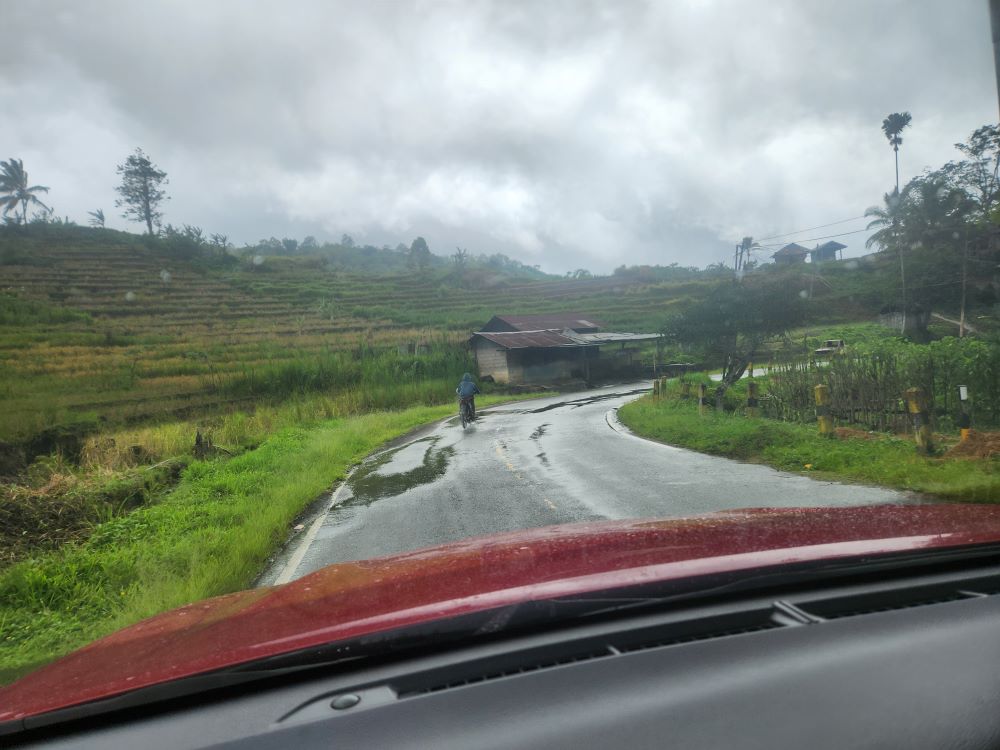
From inside a car, Indonesia's rainy season is evident on the road on the island of Flores. (GSR photo/Chris Herlinger)

What was it like to travel outside the United States during a highly charged few weeks of international turmoil and domestic violence back home?
It was strange, dispiriting and yet, perhaps in the end, hopeful — hopeful because the work of sisters in Indonesia and Minnesota is a salve in a fragmented and wounded world.
I have just completed a two-week assignment in Indonesia, focused on the work of Catholic sisters on the island of Flores and in the capital of Jakarta. The sisters are ministering to women and children who have survived human trafficking, and sexual, physical and domestic abuse.
We plan to highlight this work in our ongoing series on gender-based violence called "Out of the Shadows: Confronting Violence Against Women."
Not to my surprise, the work of three congregations I visited — the Franciscan Missionaries of Mary, Missionary Sisters Servants of the Holy Spirit and the Sisters of the Good Shepherd — proved not only healing but a needed antidote to often troubling news.
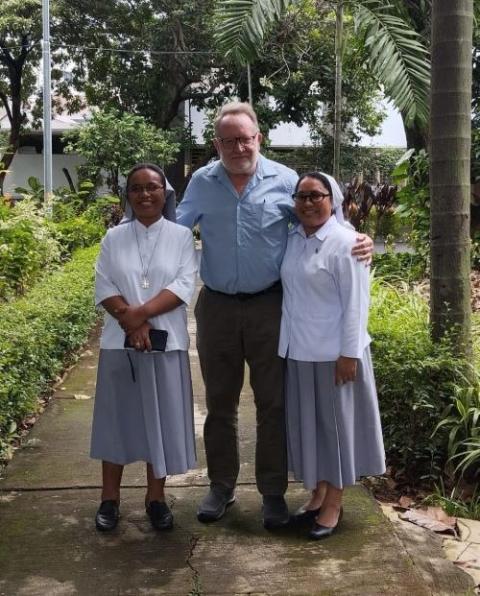
GSR international correspondent Chris Herlinger, center, stands with Franciscan Missionaries of Mary Srs. Yuliana Minus, left, and Angela Marici, at the congregational convent in the Indonesian capital of Jakarta. (Courtesy of the Franciscan Missionaries of Mary)
Though in my reporting and interviews I was focused on my immediate assignment, I was curious, as an American journalist, how those I met might be reacting — if at all — to the news of U.S. threats against Greenland and to the ongoing violence by federal agents in Minneapolis and elsewhere.
It is instructive, and actually helpful and reassuring, to note that in our media-saturated world, Indonesians are not obsessed with the United States, President Donald Trump and imperial machinations by any superpower — though Indonesians are a bit cautious and concerned about China, the great power in Asia.
To put it into perspective, one lay Catholic NGO worker in Jakarta told me over dinner one night that as one of the "middle powers," Indonesia has its own challenges. A city like Jakarta is as developed as any in the world — its well-used subway system is fully modernized, for example. But just as income inequality and poverty are common in urban areas, limited opportunities on islands like Flores prompt migration to Jakarta and other large cities. In either environment, those without much money really struggle.
Given that, in a world in which the great powers — China, the United States and Russia — are trying to corral their dominance into spheres of influence, people in countries like Indonesia are less worried about who "controls the world than making sure they have rice on the table for their families," the NGO worker told me.
Which isn't to say that people want to be controlled by outside countries. Indonesians are proud of their heritage and culture, and have no interest in being taken over — certainly militarily — by any of the "great powers."
Other Indonesians I met were mystified and wary of the threats against Greenland, noting their own country's one-time colonial domination by the Netherlands.
'Every country has its own reality'
It is true that President Donald Trump has withdrawn his threats about a possible U.S. takeover of Greenland, for now.
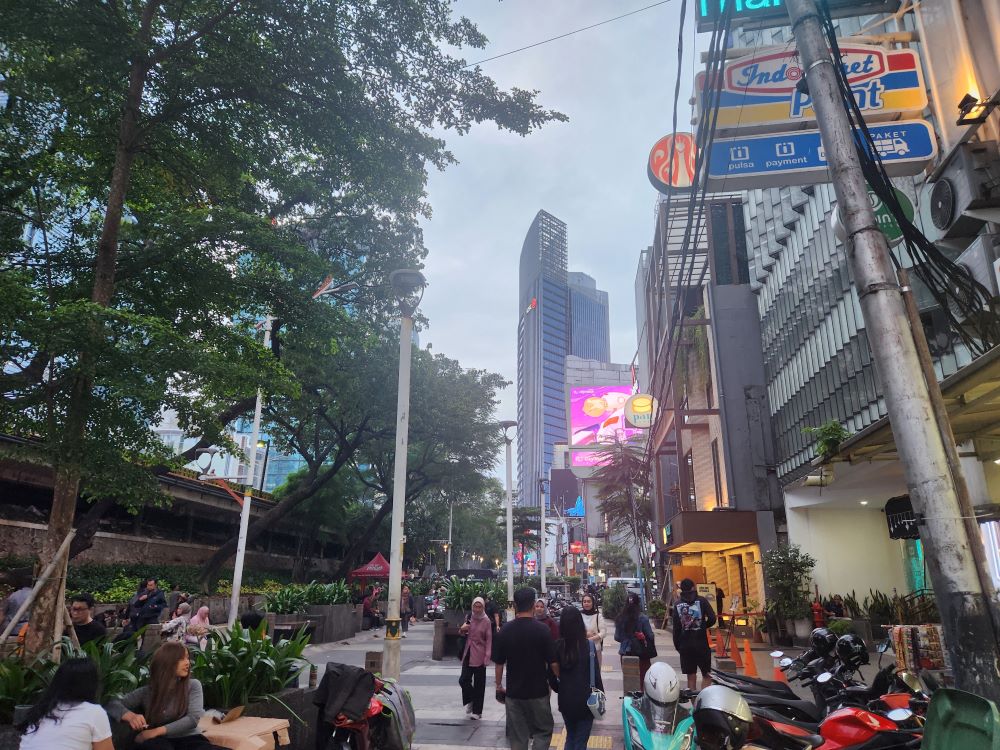
Urbanization is evident in the central district of the Indonesian capital of Jakarta. (GSR photo/Chris Herlinger)
But the idea of colonial powers taking over countries was on my mind as I traveled through Flores, itself once a Portuguese enclave and the only island of the Indonesian archipelago that is predominantly Roman Catholic.
It was the rainy season, and as we drove through Flores' sweeping rain-soaked valleys and winding wet roads, a young Catholic priest who was acting as driver for me and another priest said that Dutch colonial control of his country remains a bitter and baleful legacy for Indonesia.
It is also a reminder of a basic fact that has stuck with me throughout my reporting career.
"Every country," the priest-driver said, "has its own reality." And as such, countries seek their own paths, not wanting to be dominated by any outside power.
Scratch beneath the surface of such a reality and you can find fissures and tensions. One Indonesian sister in her late 60s told me of older Indonesian sisters who still harbored bitter feelings and even hatred for Dutch missionary sisters because they felt they were aligned in some ways with the Dutch colonial expansion. (Many of the religious congregations in Indonesia have European missionary roots.)
It was bracing to hear a sister speak of older peers as "hating" the Dutch, making it hard for them to accept fellow religious from the Netherlands. But then again, sisters are human, and are prone to the same feelings of nationalistic sentiment and resentment as we all are.
No matter where sisters stand, they are keen observers of life around them — including, in Indonesia, the opinions of fellow citizens regarding the current state of the world.
In my last assignment days, in Jakarta, Sr. Yuliana Minus, a Franciscan Missionaries of Mary sister and school administrator, told me that there is probably less fear about the future of the world in rural villages than in the big cities, where the possibility of a clash, maybe even war, between, say, China and the United States, feels more real.
She hopes that temperatures between the big powers cool down and that energy be refocused on doing the "right thing" for the world — starting with economic justice and working toward peace.
Her fellow Franciscan Missionaries of Mary sister, Sr. Angela Marici, who is the Justice, Peace and Integrity of Creation coordinator for Indonesia, agrees.
While acknowledging Trump's current outsize dominance in the world, she said that his big gestures and threats sometimes puzzle Indonesians who are a people accustomed to reconciliation and peace. (Though to be clear, Indonesians have also experienced dictatorship.)
As citizens of a "middle power," Sr. Angela said, Indonesians see themselves as bridge builders, "a country of peace. It's in our DNA."
Like the lay NGO worker I met, Sr. Angela, who is also the secretary of the anti-trafficking Talitha Kum network in Jakarta, said Indonesians are focused on their own problems, not the imperial dreams of larger nations.
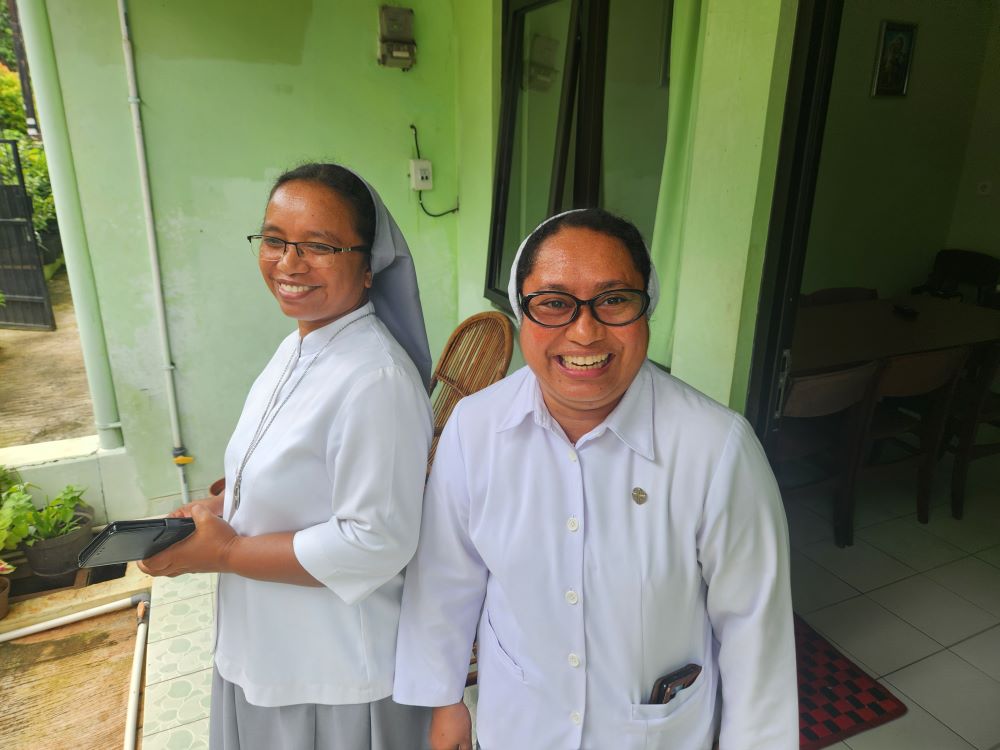
Franciscan Missionaries of Mary Srs. Yuliana Minus, left, and Angela Marici, in Jakarta (GSR photo/Chris Herlinger)
That was heartening to hear — encouraging, actually — as the final days of my assignment were overshadowed by events back home, particularly the death of Alex Pretti by federal ICE agents on the streets of Minneapolis.
I attended college in Minnesota, so I was doing my best to keep abreast of events there while in Indonesia. Naturally, I was saddened, even horrified, by what happened, and was curious how sisters and others there were reacting to events.
In Minnesota, the hope in 'looking after neighbor'
On one of my last days in Indonesia I spoke by Zoom to Sr. Irene O'Neill, founder and president of Sisters Rising Worldwide, a sister-run nonprofit which supports the work of sisters globally and is based in St. Paul, Minnesota.
Sr. Irene's ministry is itself a kind of bridge between several of the worlds I have known in my life — the world of the Midwest where I began my reporting career, and the global realities I cover at the United Nations in New York and in countries like Indonesia.
Sr. Irene described what is unfolding in the Twin Cities as "horrifying" but also clearly having echoes with 1930s Germany.
"This has happened before in another place," she said, adding that the danger ICE agents pose "is imminent. It's right around us."
"They're popping up in the suburbs. They're popping up in the small towns, and for sure, obviously Minneapolis."
"They're everywhere," she said. "It's not a pretty story."
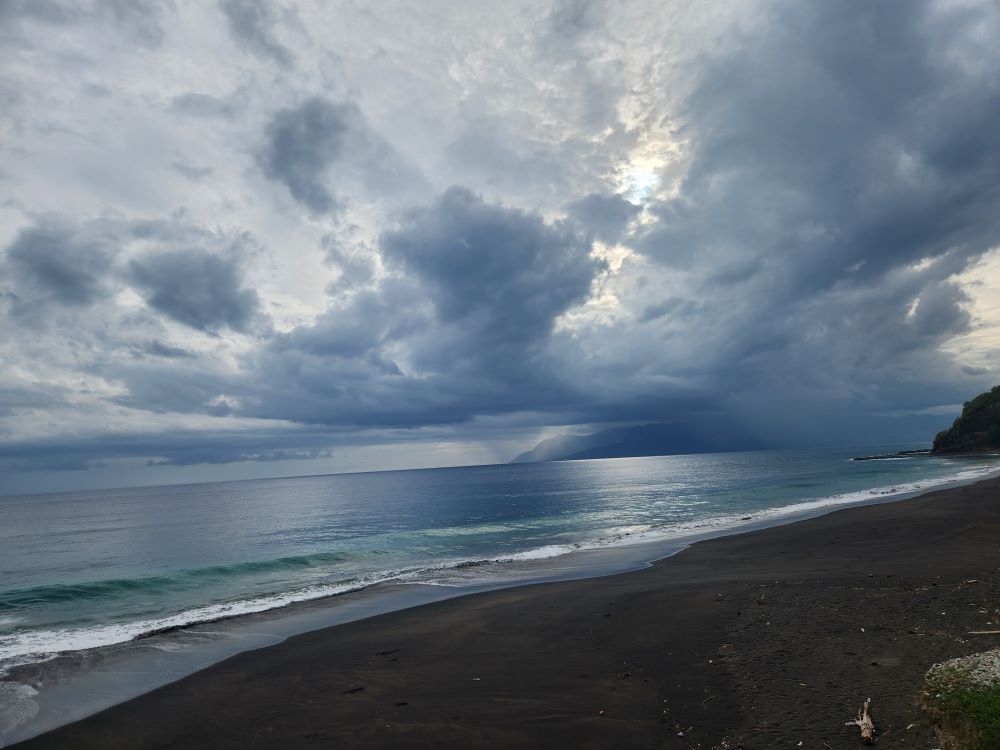
Indonesia’s rainy season is evident along the coast of the island of Flores. (GSR photo/Chris Herlinger)
But amidst what seems like an unwelcome siege, elements of hope exist.
Sr. Irene, a member of the Sisters of St. Joseph of Carondelet, said sisters in the Twin Cities are witnessing in both private and public spaces, with some, including herself, attending peaceful vigils in subzero cold.
At her St. Paul home, Sr. Irene is joined by sisters, friends, clergy, laity and neighbors for weekly peace prayers. Meanwhile, members of her congregation continue running a health clinic, founded in the early 1990s, for the uninsured — many are immigrants — with volunteer doctors and nurses. The St. Joseph sisters also run a school and "safe space" for trafficked and traumatized women, all immigrants.
The overall story, Sr. Irene told me, is that "Minnesotans are responding in a way where everybody's looking after their neighbor."
That's a real hope right now.
Advertisement
Echoing what I heard in Indonesia, Sr. Irene referenced the idea posed by Canadian Prime Minister Mark Carney at meetings in Davos — of "middle powers" taking the lead in global affairs — as giving her hope because it speaks "of leadership with integrity."
Sr. Irene grieves that the United States seems to have lost its standing in the world. But, she suggested, perhaps the era of superpowers needs to come to an end anyway — that the world needs a new path, highlighted by common earth care and economic justice.
Given her ministry, O'Neill is constantly monitoring the work of sisters globally.
"All around the entire map are these places where people are helping make a difference," she said. People everywhere, she added, know that sisters "care about people, that they see in every person a potential doctor, theologian, teacher, engineer, and who knows, maybe a prophet."
"If people can become who they're meant to be, the world would flourish. And so we [sisters] get to stand in the middle of that potential all the time, and to help that happen."
I have witnessed that dynamic in countless locales. And I look forward to sharing how I saw that unfold in Indonesia in the coming weeks.
Editor's note: Sr. Irene O'Neill of Sisters Rising Worldwide will join GSR international correspondent Chris Herlinger and Sr. Kayula Lesa, leader of Talitha Kum Zambia, for a Feb. 11 Witness and Grace conversation on the themes raised by GSR's Out of the Shadows series. Soli Salgado, Global Sisters Report editor, will moderate the session.
Registration is here: Witness & Grace Conversations: Out of the Shadows & SRW | Global Sisters Report