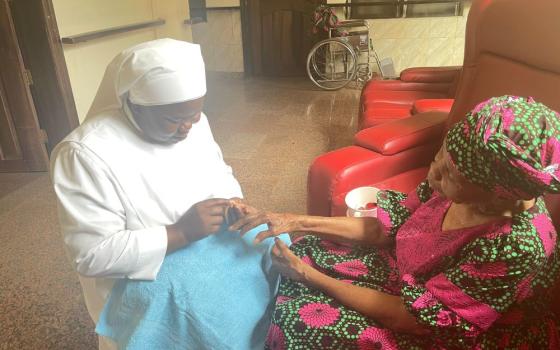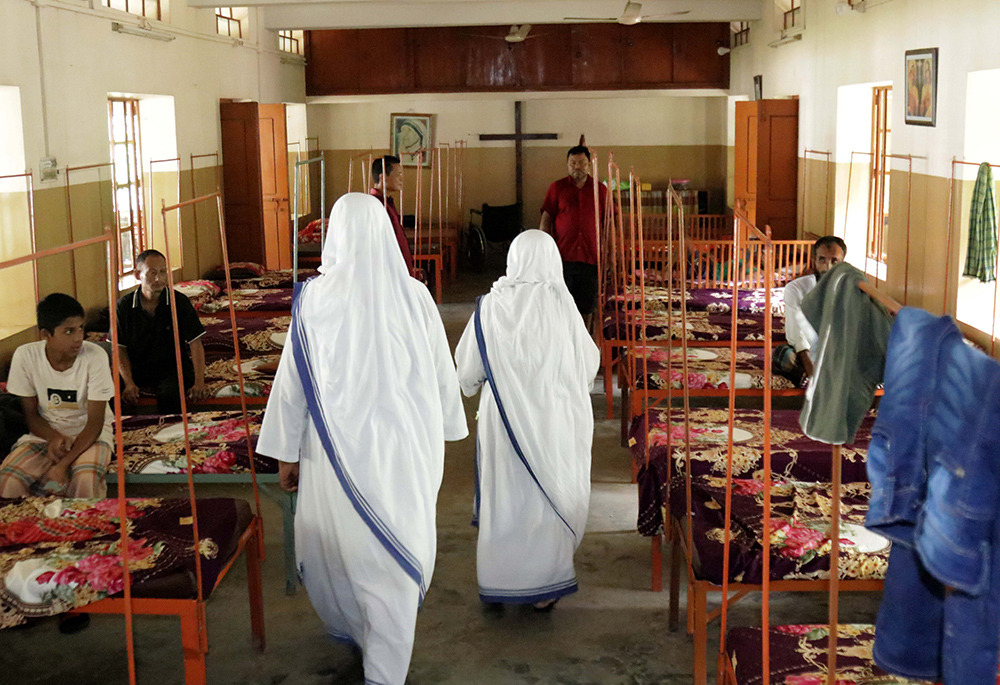
Sister Natali and Sister Bandita inspect the patients' rooms at Mary's House of Love, an 80-bed facility that prioritizes the local Indigenous Garo population. (Stephan Uttom Rozario)

by Stephan Uttom Rozario
In the Madhupur forest in remote Bangladesh, the Missionaries of Charity nuns are working to address the health, education and housing crises faced by marginalized Garo Indigenous communities.
The nuns manage Mary's House of Love, an 80-bed facility that prioritizes the local Indigenous Garo population, giving advanced medical care to avoid long-distance travel and economic hardship. The facility, which opened in 1996, is usually fully occupied.
"Here, the [Missionary of Charity] sisters provide essential care to patients — administering medication, supplying nutritious food and arranging for advanced medical treatment at other hospitals, when necessary," said Missionary of Charity Sister Natali.
"We do not turn anyone away. We provide the best care we can to everyone who comes to us," added Sister Natali, the superior of Mary's House of Love.
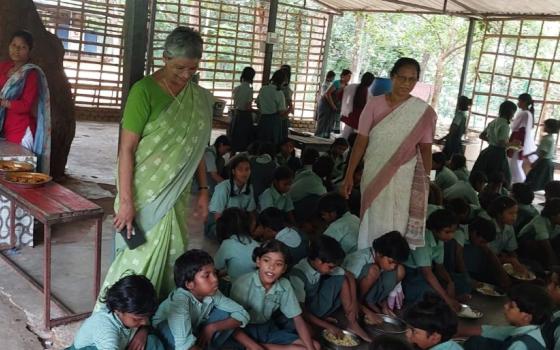
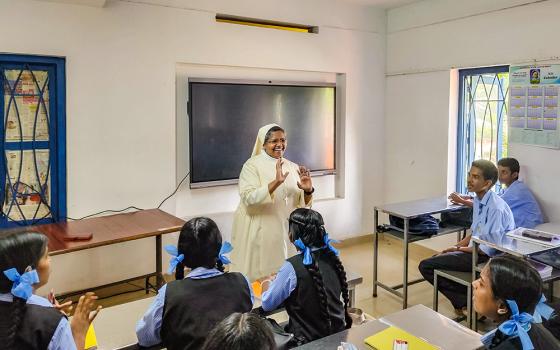
Located approximately 150 kilometers northwest of Dhaka, the capital of this South Asian nation, the nuns visit remote villages looking for patients that they can bring to their center for care. Beyond patient care, the sisters also tutor Garo children in the afternoons, distribute nutritious food and provide catechism.
Over the past two decades, the sisters have built and repaired at least 200 homes for the poor in the area, installed tube wells in villages lacking them, and constructed latrines for households that did not have one.
Their goal is for the local Garo Indigenous community to become self-reliant and independent.
"In the past, most people here would go to Dhaka to work as domestic helpers, but now they are finding better employment. Some work in beauty parlors, and a few have even become parlor owners," said Sister Bandita, who worked with the Garo people 14 years ago.
Advertisement
In 2019, the nongovernmental organization Society for Environment and Human Development (SHED) identified 44 villages in this region inhabited by the Garo Indigenous community, making up almost 34% of the total population.
The government does not recognize customary land rights, even though forest-dwelling communities seek legal recognition for such ownership. Most Garos do not hold formal land titles; instead, they adhere to the Indigenous tradition of customary ownership.
Eugene Nokrek is the president of the Joyenshahi Adibashi Unnayan Parishad — an organization formed to advocate for land rights among the Garo people. "We are in such a precarious position regarding land that we could be rendered homeless at any moment," he said. "We have no rights to the land we have inhabited for centuries."
He noted that missionaries have improved their living conditions, provided education and raised awareness about their rights.
"Had the missionaries not come to our villages — and had we not become Christians — we would not have been able to survive here. Long after we settled here, the government placed these areas under the jurisdiction of the forest department, and now it is attempting to evict us," Nokrek said.
Many Garo adhere to the religious rites of the Catholic Church while observing traditional festivals, speak their native language and wear traditional attire. To meet their needs, the church has compiled prayers and the Bible in the Garo language. Priests also offer Mass in the native language.
The Garo Indigenous people face a "double minority" status in this region: as an ethnically Indigenous group and as Christians in a Muslim-majority country.
"Since we are few in number, supporters of whichever government is in power tend to oppress us and attempt to seize the land we occupy and cultivate," said Nokrek.
Although the local Garo Indigenous people are few in number, many have received higher education thanks to the contributions of missionaries.
"We are working for them and will continue to do so as long as the people here need us. We believe that one day, these Garo Indigenous people will become aware, secure their land rights, and stand on their own feet," said Sister Bandita.