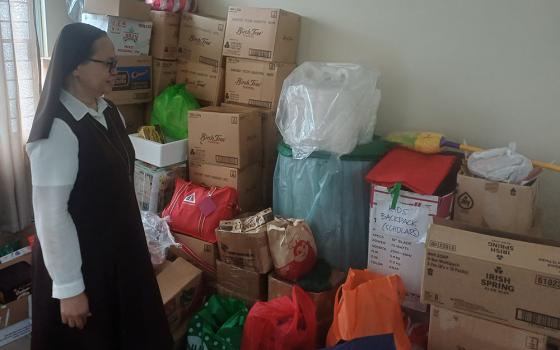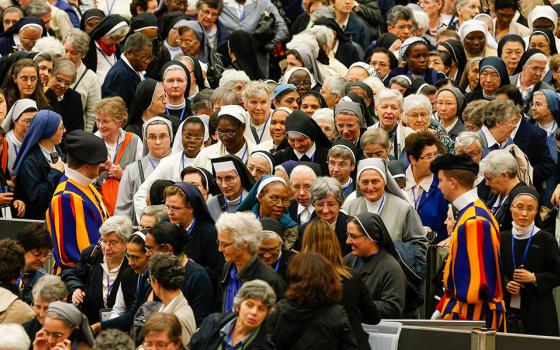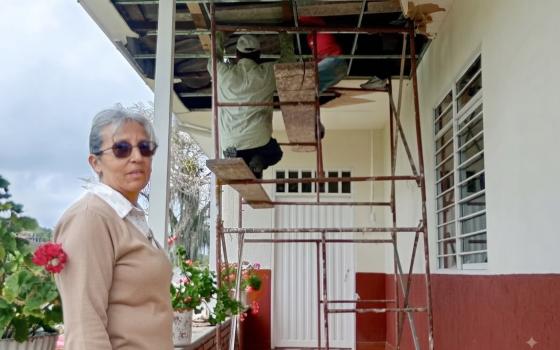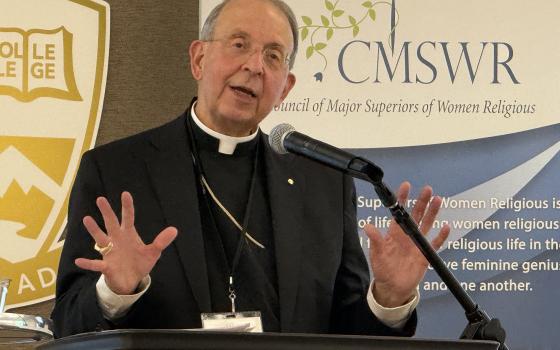
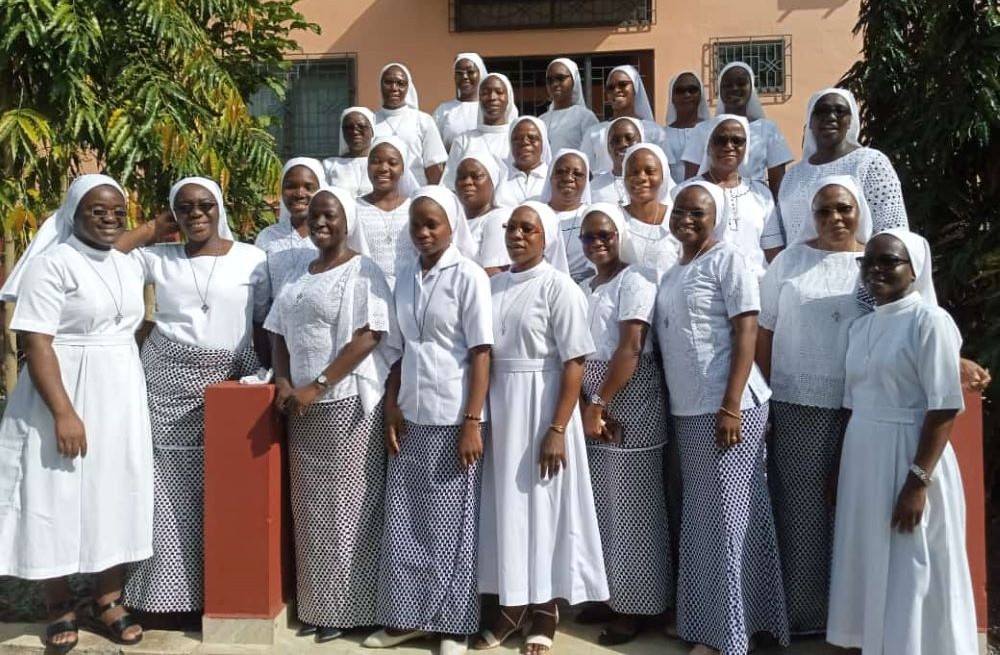
Among the recipients of the Anna Trust Foundation's new grant is the women's Conference of Major Superiors of the Ivory Coast, and their geriatrics curriculum project in partnership with the Higher Institute of Religious Life for use within religious communities. (Courtesy of The Anna Trust)


Aging Catholic sisters around the world will get additional support thanks to a new grant program.
The Anna Trust Foundation, founded in 2024 in Rome to help congregations of women religious serve their older sisters, announced on March 31 its inaugural round of grants, each of which could be worth up to $40,000. (The Conrad N. Hilton Foundation, a major funder of Global Sisters Report, created The Anna Trust.)
Officials say the seven projects chosen will develop dynamic and sustainable innovations in care.
The grants were awarded to the following:
- Union des Superieures Generales des Congregations Feminines Autochtones de l'Afrique de l'Ouest (ANIMA UNA), West Africa: A collaborative framework among 17 congregations across the region.
- Hermanas de la Caridad Dominicas de la Presentación, Peru: A content development initiative for the care of elderly sisters, involving three congregations working together.
- Conférences des Supériers Majeurs – Côte d'Ivoire (CSM-CI) – Branche Féminine, Côte d'Ivoire: A geriatrics curriculum project in partnership with the Higher Institute of Religious Life for use within religious communities.
- Congregation of Sisters of Charity of the Incarnate Word, San Antonio, Texas: A digital tools program designed to support the emotional and physical health of sisters.
- Society of Helpers, Chad and Rwanda: An elderly care planning initiative across two countries in collaboration with local conferences.
- Corporación Tejiendo Solidaridad, Chile: A content enhancement project for an existing elderly sisters' home, serving as a model for 16 congregations.
- Congregation des Soeurs Bene-Tereziya, Burundi: A 10-year collaborative planning initiative with ASUMA to guide other congregations.
Advertisement
Loreto Sr. Patricia Murray, chair of The Anna Trust Foundation, said opportunities for support for all congregations go beyond the seven projects that were chosen this time.
"The Anna Trust Foundation is committed to supporting, also in the future, those congregations that were not funded in this phase, acknowledging the importance of their work," she said in a statement announcing the grants. "We are fully dedicated to fostering a shared path that both strengthens early-stage project development and ensures that elderly sisters may experience the highest possible level of well-being within their communities."
Vice Chair Incarnate Word Sr. Teresa Maya thanked the congregations submitting proposals and their commitment to aging sisters.
"We are so grateful for the Institutes willing to submit applications for grants to try new options and test possibilities for meeting the needs and honoring the wisdom of our elderly sisters, now and in the future," Maya said in the announcement. "The Anna Trust is committed not only to intentional and carefully planned collaboration for our religious communities, but also to the future that this can mean for the dignity of all of the world's vulnerable elderly."
A new call for proposals will be launched by the end of the year.
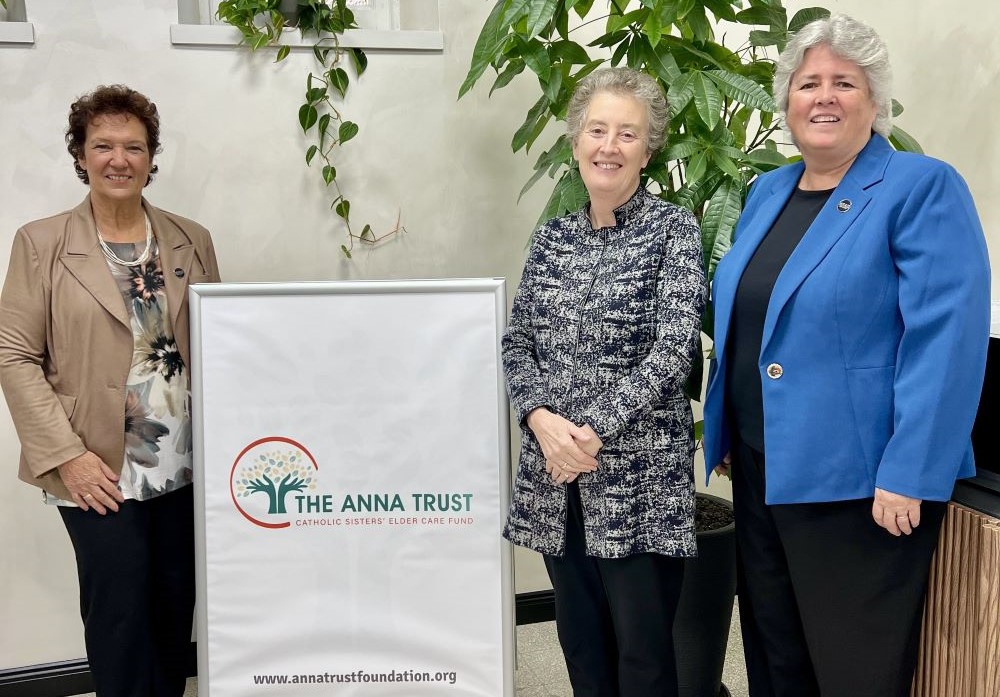
The Anna Trust is partnering with Maria College in Albany, New York, on a program to train those caring for Catholic sisters in dementia care. From left: Maria College vice president of institutional advancement Vicki Dilorenzo, The Anna Trusts' cognitive impairment program director Sr. Siobhán O'Keeffe and Maria College president Lynn Ortale. (Courtesy of The Anna Trust)
Training sisters in dementia care
The Anna Trust has also partnered with a U.S. Catholic college to train sisters caring for sisters in dementia care.
Maria College in Albany, New York, founded by the Sisters of Mercy, will launch a noncredit certificate course to train Catholic sisters as trainers of those providing care.
Officials said in the announcement that "Graduates will gain practical skills to support aging members of their congregations while teaching peers and lay partners best practices in supportive dementia care." It noted that 57 million people worldwide live with dementia; and that by 2030 that could grow to 78 million.
"Religious sisters have touched countless lives around the world," said Lynn Ortale, president of Maria College, in the announcement. "Through this partnership, we are living out our Mercy mission and paying our gratitude forward to the sisters for their lifelong ministries."
Maria College will develop and deliver the certificate curriculum in collaboration with Germantown, N.Y.-based Avila Institute of Gerontology, and combines instruction with hands-on exercises.
"Through this training program, essential concepts of dementia care will be disseminated globally, enabling sisters to gain practical knowledge and a deeper understanding of dementia and optimal care practices," said Carmelite Sr. M. Peter Lillian Di Maria, director of the Avila Institute of Gerontology, in the announcement. "We are delighted to partner with Maria College to support the formation of dementia trainers through its non-credit certificate training program."
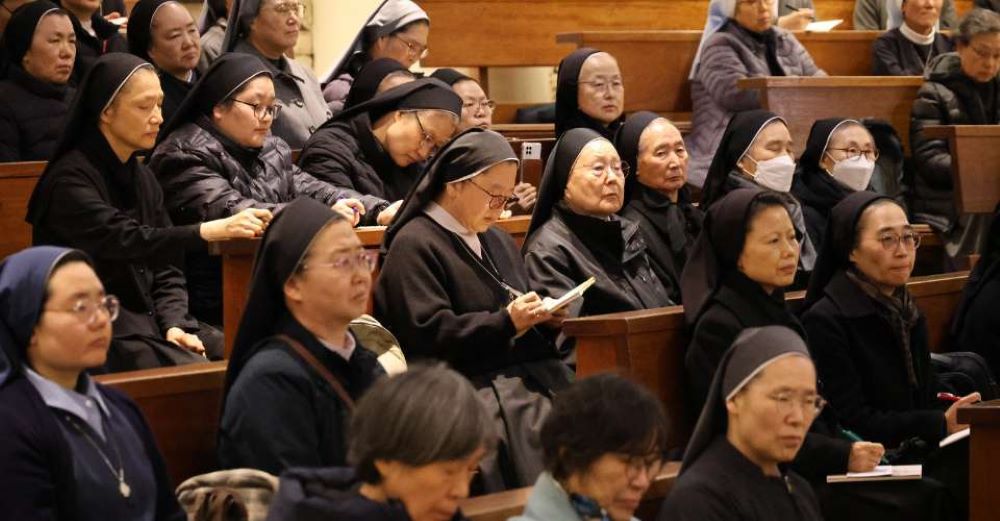
South Korean nuns attend a lecture on the use of AI in the capital Seoul on Feb. 24. (UCAN/Catholic Times of Korea)
Korean nuns use AI to boost ministries
A collective of Catholic women religious congregations in South Korea has launched a series of artificial intelligence (AI)-related lectures and workshops to help nuns better discern and use the rapidly developing technology.
The Federation of Superiors of Women's Religious Orders in South Korea organized the first lecture, titled "Faithful Before Technology," at the Franciscan Education Center Chapel in Jeong-dong, Seoul, Feb. 24.
The lecture series was started after the 58th Regular General Assembly of the federation decided last October that religious sisters must discern the use of AI and contemplate its future direction.
Some 250 people, mostly nuns, attended the lecture, which was led by Fr. James Bang Jong-woo, a professor at the Catholic University of Korea.
Bang pointed out that many religious are already using AI for searching data, creating content and proclaiming the Gospel, but warned that it also carries risks because it mimics human language and thought. He cited the case of a 16-year-old boy in the United States who died by suicide following monthslong conversations with an AI chatbot.
Bang urged the gathering not to reject AI but understand how it should be used.
Like the development of science and technology, which has benefited humanity, AI is also evidence of humanity's ability to participate responsibly in God's creative work, Bang said.
Sr. Jung Yun-jin, secretary general of the federation, said the challenges brought forward by advanced technologies like AI demand a strengthening of spiritual sensitivity from religious.