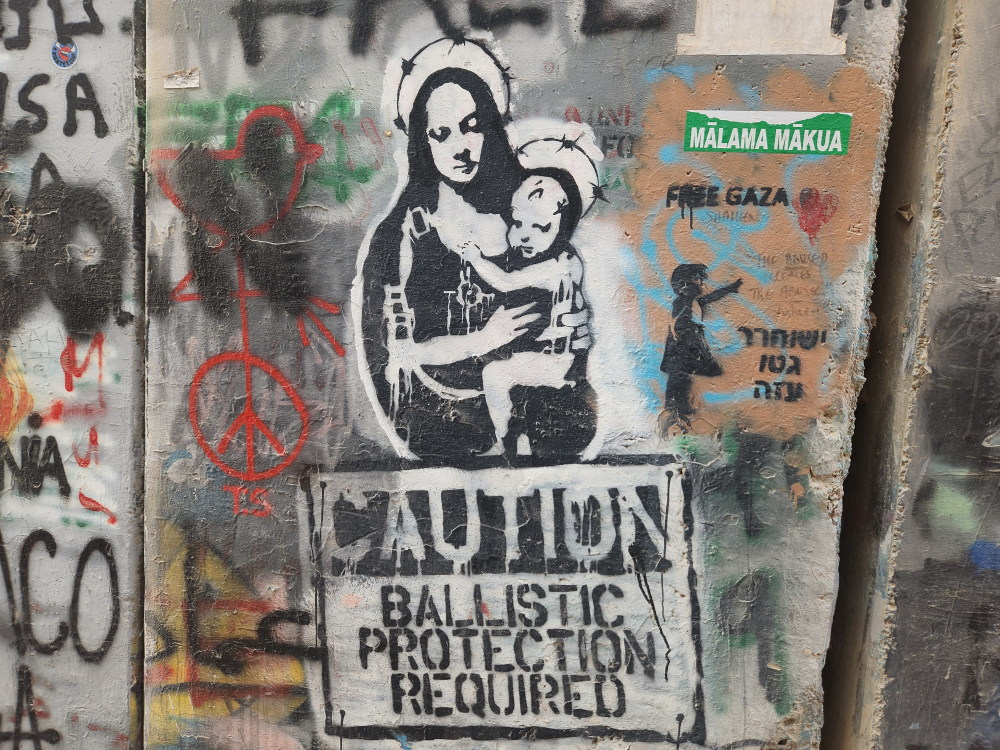
A stark, spray-painted picture of Mary and the baby Jesus, both adorned with barbed wire halos, peers out from the concrete separation wall in Bethlehem, the city where Christ was born. (NCR photo/Chris Herlinger)
A stark, spray-painted picture of Mary and the baby Jesus stands out amid declamatory Palestinian protest graffiti on the two-decades-old concrete separation wall in Bethlehem, the city where Christ was born.
Beneath the modified portrayal — both Mary and Jesus have barbed wire for their halos — is this blunt warning: "CAUTION: BALLISTIC PROTECTION REQUIRED."
The stenciled portrait and warning is a potent symbol of the continued limbo of Christians in the Israeli-occupied Palestinian territories.
It speaks of all sorts of conditions as Advent heads toward Christmas: Israel's lingering military occupation of the West Bank, the vulnerability of innocents and and the uncertainty of a still-shaky ceasefire in Gaza.
And, of course, the haunting legacy of events since Hamas' abductions and murders of Israeli civilians on Oct. 7, 2023, including what some international bodies and human rights groups — those in Israel included — call Israel's genocide in Gaza; a charge that the Israeli government denies.
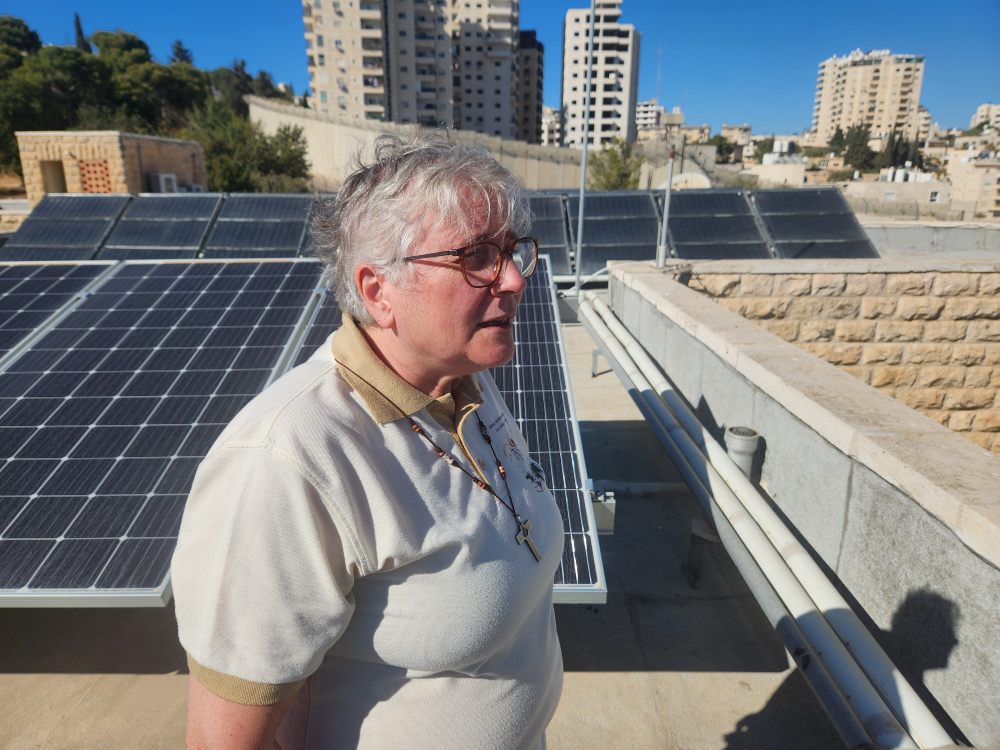
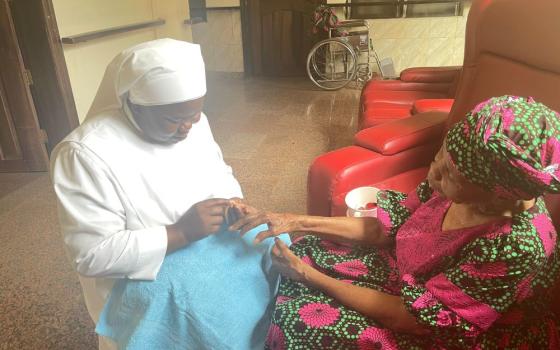
Italian Comboni Sr. Mariolina Cattaneo, the interim coordinator for a small community of Comboni Missionary Sisters based in East Jerusalem, says, “We see that more pilgrims are coming to visit Jerusalem and Bethlehem, so we are happy about it because a bit of life is returning.” (NCR photo/Chris Herlinger)
There are a few signs of hope. Following two years of absence, public Christmas festivities, including holiday lights in Bethlehem and other locales, are returning. Also making an appearance, say some observers, are dribbles of visitors to the Holy Land.
"We see that more pilgrims are coming to visit Jerusalem and Bethlehem, so we are happy about it because a bit of life is returning," Italian Comboni Sr. Mariolina Cattaneo, the interim coordinator for a small community of Comboni Missionary Sisters based in East Jerusalem, recently told NCR.
Mexican Comboni Sr. Lorena Sesatty, a trained therapist who works in Bethlehem and lives in the community Cattaneo leads, echoed the statement. She lauded the return of Christian pilgrims as particularly welcome because "they not only support local families economically but also spiritually and emotionally, helping them feel truly seen."
Being seen is important at this moment, said the Rev. Munther Isaac, a prominent Palestinian theologian, Lutheran pastor and author, who recently told a group of visiting journalists and scholars, most from the U.S., that the last two years have traumatized Palestinians, with many feeling "that our lives don't matter."
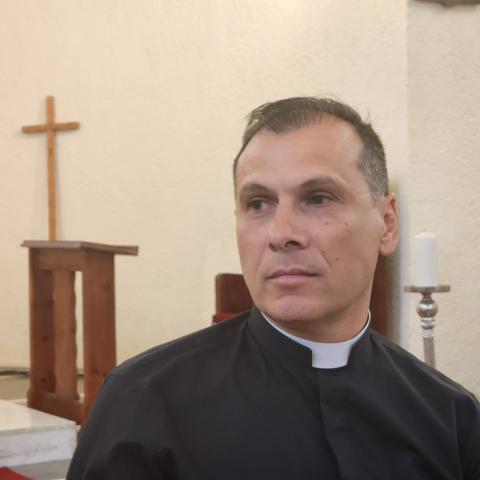
The Rev. Munther Isaac, a prominent Palestinian theologian, Lutheran pastor and author. (NCR photo/Chris Herlinger)
At least 70,000 Palestinians have been killed in Gaza as a result of Israel's military offensive there, according to the Hamas-run health ministry in Gaza, the BBC recently reported.
Given that somber reality, Advent and the promise of Christmas are a welcome balm, particularly in Bethlehem.
Mitri Raheb, another prominent Palestinian Christian theologian who also met the journalists' and scholars' delegation, affirms that Bethlehem "is where the divine met the human" — a locale that remains a "beacon of hope" for Christians of all denominations.
Hope, yes. But also worries. Attacks on Palestinian communities by Israeli settlers in the West Bank have increased "in numbers and violence," Cattaneo said, "and the situation is still so very uncertain and we need to rebuild — rebuild first of all relationship, trust."
Cattaneo underlined the word uncertainty. "Uncertainty is still the word I would use to describe this moment: We do not know what is going to happen or how the situation will evolve."
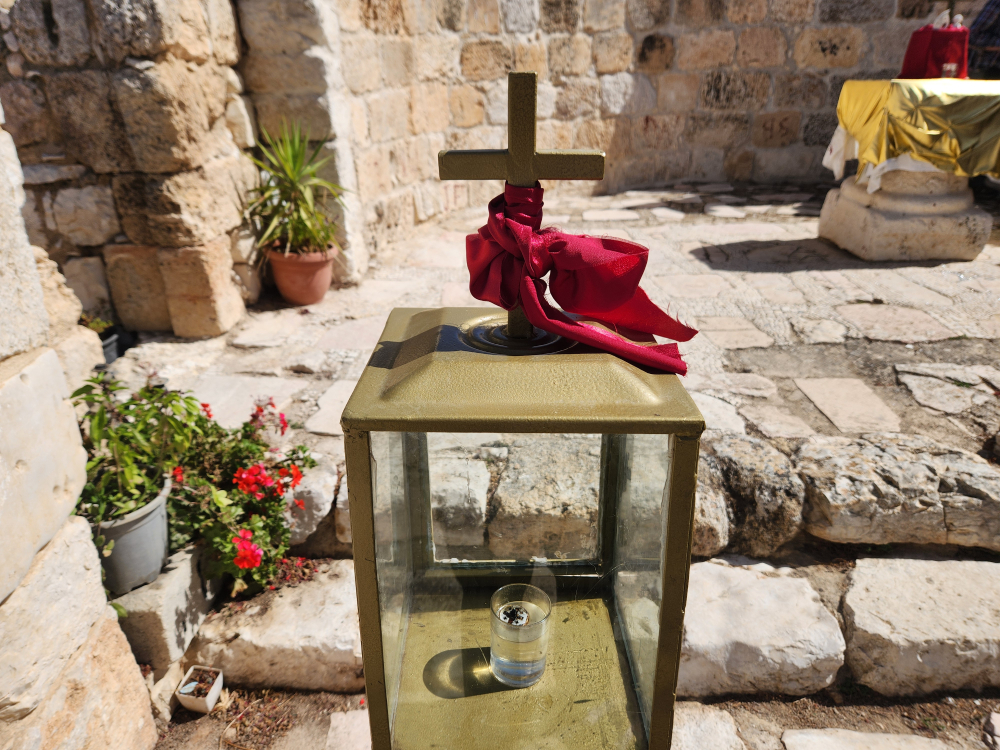
The ancient Byzantine Christian site of the Church of Saint George in Taybeh, West Bank. Christian leaders cite oft-repeated figures that the Christian presence in the Holy Land may in fact disappear by the year 2050, due in large part to emigration caused by ongoing political and social tensions. (NCR photo/Chris Herlinger)
Sesatty looks to the hope, saying that "things are slightly better this year, and yes, there is hope in the air — a humble hope, a 'spring hope' emerging in the middle of 'winter.'"
"Advent in Bethlehem is holding together the cold and the light, the wounds and the tenderness, the winter we live in, and the spring that God is already planting."
Despite promise of Advent, news remained grim
Still, as Advent dawned on the Holy Land, much of the news continued to be somber.
Between Nov. 25 and Dec. 1, Israeli security forces killed four Palestinians, including one child, bringing the total number of Palestinians killed in the West Bank in 2025 to 227, United Nations News reported Dec. 5.
Citing information from the United Nations' relief coordination office called OCHA, the U.N. news outlet said that an increase in military raids, combined with violence against Palestinians by Israeli settlers, "is creating new displacement, shutting schools and disrupting essential services for tens of thousands of Palestinians."
Given that news, Raheb and fellow Palestinian Christian leaders say they cannot, and will not, sidestep or underplay grim realities.
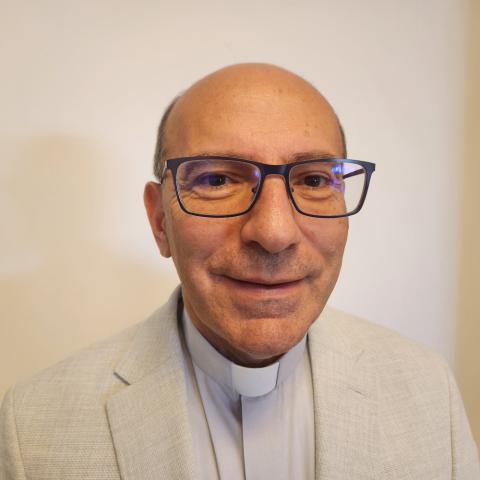
Mitri Raheb, a prominent Palestinian Christian theologian and Lutheran pastor who is also the founder and president of Dar al-Kalima University in Bethlehem. (NCR photo/Chris Herlinger)
Yes, they say, the ceasefire in Gaza is a welcome and needed development. But Raheb, a Lutheran pastor who is also the founder and president of Dar al-Kalima University in Bethlehem , views the agreement with wariness, suspicion and even incredulity.
He points out that killing in Gaza continues and notes that Palestinians were largely sidelined from the negotiations brokered by the United States.
"People don't see a light at the end of the tunnel," Raheb said.
"We hear 'Peace, peace, peace' from President [Donald] Trump, but it's not 'Peace, peace, peace,' " he said, arguing that the agreement leaves Israel in an unchanged position to continue its occupation of the West Bank, which includes major cities such as Bethlehem.
Moreover, Raheb, like other Christian leaders, has underlined that the tragic events of the last two years did not begin in October 2023.
Western leaders such as Trump continue to speak of terror by Palestinians but have not used similar language to describe actions against Palestinians by the Israeli military and Israeli settlers, Raheb said.
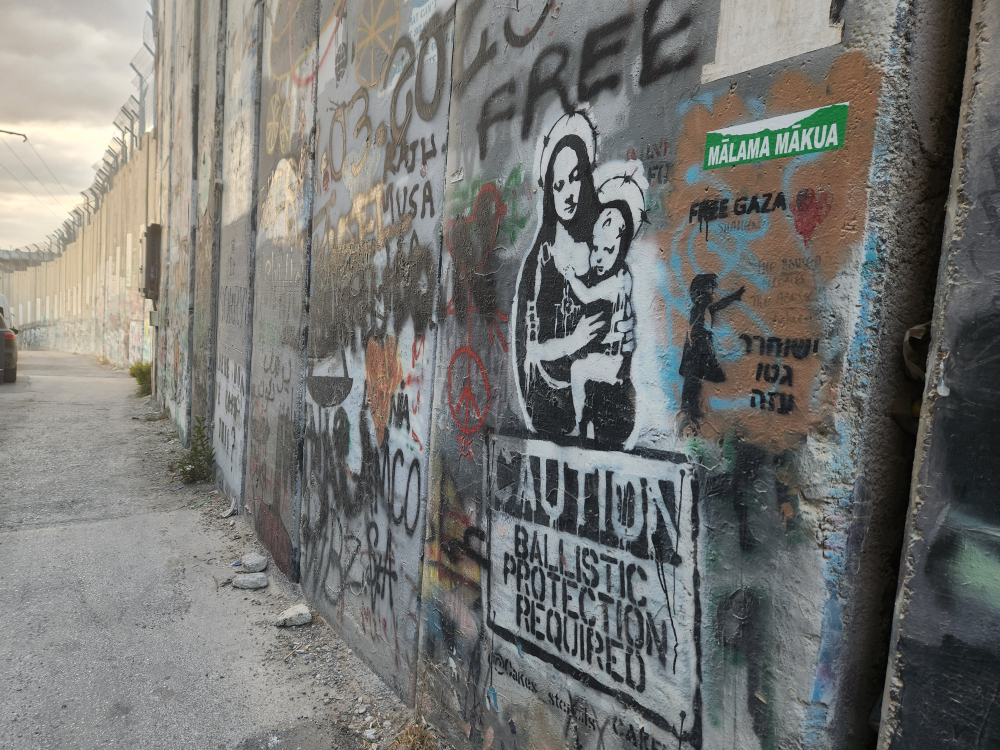
A stark, spray-painted picture of Mary and the baby Jesus, both adorned with barbed wire halos, peers out from the concrete separation wall in Bethlehem, the city where Christ was born. (NCR photo/Chris Herlinger)
That suggests a double standard that is becoming more and more apparent to much of the world, Raheb argues.
"Gaza opened the eyes of the world to a real political problem — not only about Israel but also about the West's support for Israel," Raheb said, adding that through the years, the United States has spent millions of dollars on promoting human rights in the Middle East. "But when Gaza happened, it was silent."
That was a disquieting moment for Palestinians of all faiths, he said.
"People in Gaza did not lose their faith in God, they lost it in humanity."
Isaac agrees. In his new book Christ in the Rubble: Faith, the Bible and the Genocide in Gaza, he argues that "If Christ were to be born today, he would be born under the rubble of Gaza," adding that the image of Christ in the rubble is a "prophetic protest of a world in which genocide is permissible."
Worries about what could happen in the West Bank
With uncertainty still hovering over Gaza, Isaac said he is equally concerned that Israeli killings, harassment and intimidation in the West Bank, as confirmed by the U.N. reports, will continue and even expand.
Israel has defended its action in Gaza as necessary for security against Hamas, and has also cited Israeli security for the crackdowns in the occupied territories, as well as for the 440-mile security barrier. Palestinians, meanwhile, say they have suffered from a nearly six-decades-long Israeli military occupation and that the security barrier, which is being expanded, is actually used to annex more land for Israel.
"The status quo in the West Bank is not sustainable," Isaac said, and even suggested, "What happened in Gaza could happen here."
"We are really looking at the unknown right now," he said, adding that the future "does not look good" but that he and other Christians — a smaller and smaller presence in Palestine — can and must affirm their religious faith despite dwindling numbers.
Citing oft-repeated figures that the Christian presence in the Holy Land may in fact disappear by the year 2050, due in large part to emigration caused by ongoing political and social tensions, Isaac said that "everything tells us to leave," and that "our faith is tested, our resilience is tested."
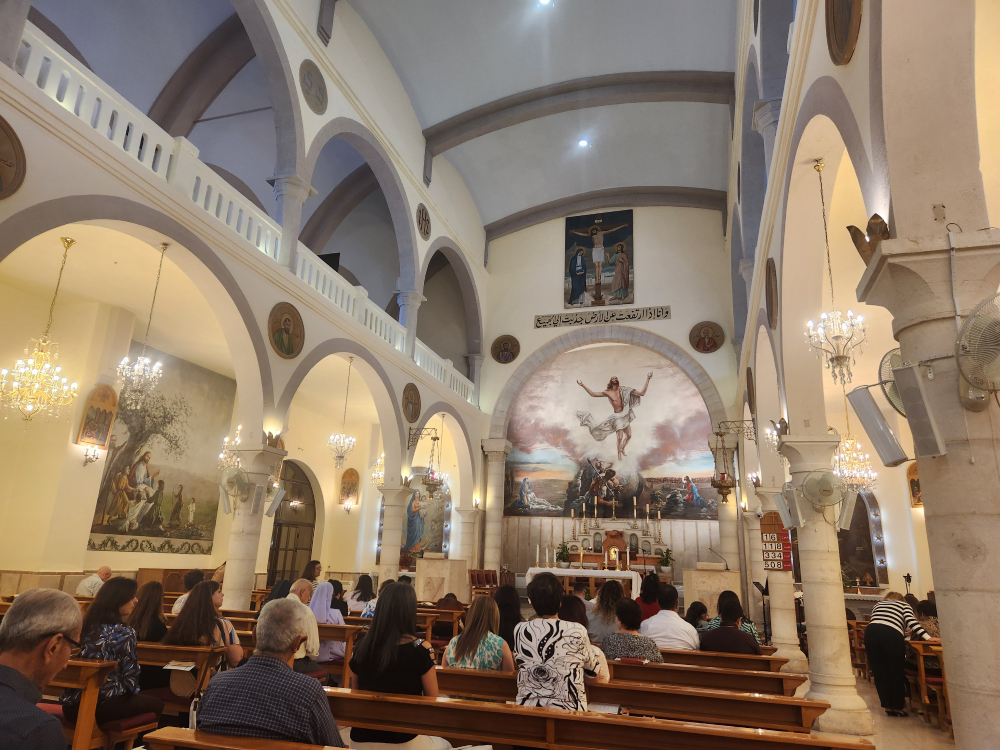
Worshippers arriving at the Holy Family Catholic Church in the Palestinian city of Ramallah. (NCR photo/Chris Herlinger)
"It could happen," he said of the possible end of a Christian presence in Christ's birthplace, saying there is a real chance that locales like Bethlehem and Jerusalem could simply become "museums" to the Christian faith rather than locales with living Christian communities.
Isaac, like Raheb, is seen as a proponent of Palestinian liberation theology, a theology which Isaac argues is born from the contemporary context of Palestine, affirming the dignity of Palestinians amid a military occupation.
Like liberation theologies elsewhere, Palestinian liberation theology is controversial. To its critics, the theology is too political. To proponents like Raheb and Isaac, it is based on the belief that God sides with the marginalized, in this case the Palestinians.
Raheb makes a related argument when he says that most of the Bible was penned "under the occupation of [what is now] Palestine" and could not have been written in, say, the United States, "the belly of the Empire, because empires behave as if they are the Gods."
"If you want to find the God of Scripture, come here."
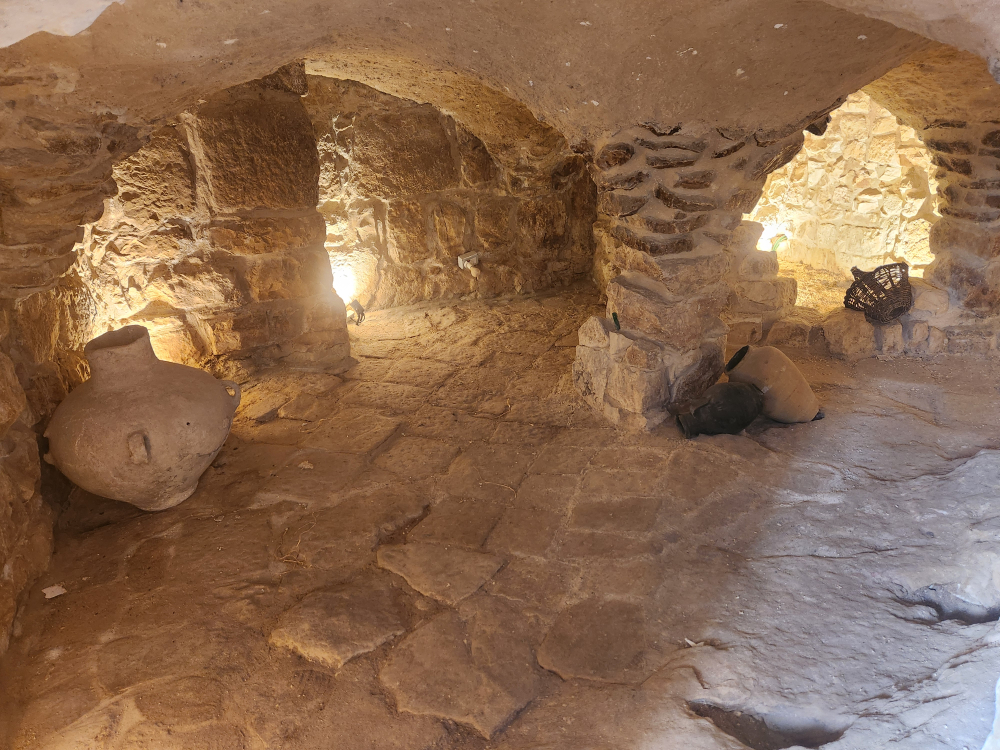
The inside of a traditional Palestinian house in the courtyard of Christ the Redeemer Roman Catholic Church in Taybeh, West Bank. The house is said to be about 250 years old but may resemble living quarters in Jesus’ time, with different spots for families and their animals. (NCR photo/Chris Herlinger)
That could mean encountering God in unlikely places — like in an image of Mary and Jesus adorned with barbed wire halos painted on a concrete separation wall, with the detritus of stones, glass shards and litter at the foot of the barrier.
In such places, the Advent message of hope may be difficult to see given the current context, Cattaneo said.
Certainly the year ends on a mournful note in Israel.
"[With] Hanukkah, the Jewish Festival of Light, approaching the end of 2025 finds many of us in a low place, a dark place," said Rabbi Avi Dabush, who heads the Israel-based human rights group Rabbis for Human Rights and is a survivor of the October 2023 Hamas attacks.
Advertisement
"The ceasefire [in Gaza] is not real. For more than 800 days, this war has been going on," Dabush told NCR, adding that Israel's political leadership "is preoccupied with power struggles and taking over the judicial, security and media systems. The prime minister [Benjamin Netanyahu] is interested only in his personal and political survival."
Moreover, Dabush said, some 100,000 Israelis "have emerged from this war deeply wounded, in body and in soul. One in three Israelis reports trauma. This number will only grow."
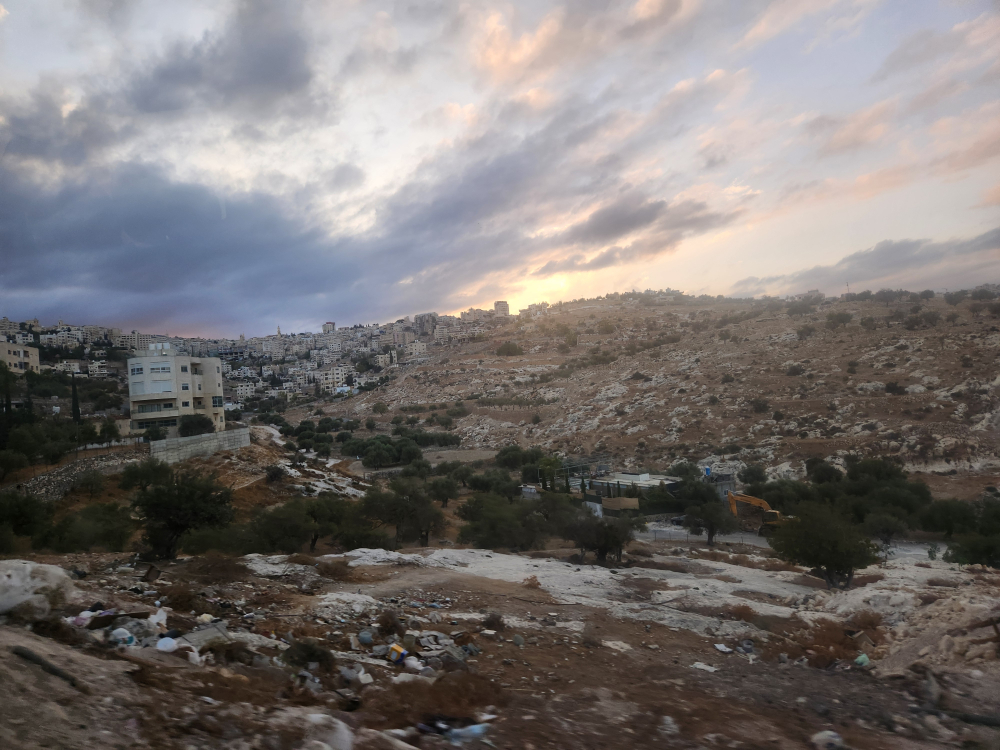
Bethlehem, the city of Christ’s birth, seen from its present-day outskirts. (NCR photo/Chris Herlinger)
Adding to the somber mood is the recent mass killing of Jewish Australians during a Dec. 14 Hanukkah celebration in Sydney.
Dabush’s hope? "That in times like these, only togetherness, mutual aid and a shared struggle for a better future for Israeli society — one that holds a great deal of light — offer encouragement as we look toward 2026."
A feeling of "winter" seems all too prevalent right now, said Sesatty. "'Winter' is still very present: occupation, oppression, uncertainty, families uprooted, olive trees torn out by settlers and the list goes on."
But at the same time, Sesatty sees "small acts of 'spring' emerging."
These include "[Palestinian] students giving up their seats on buses at checkpoints after such bad treatment," explaining that passengers at checkpoints "all have to get off. After being checked, [passengers] get back on, and some of the youth give up their seats for the adults."
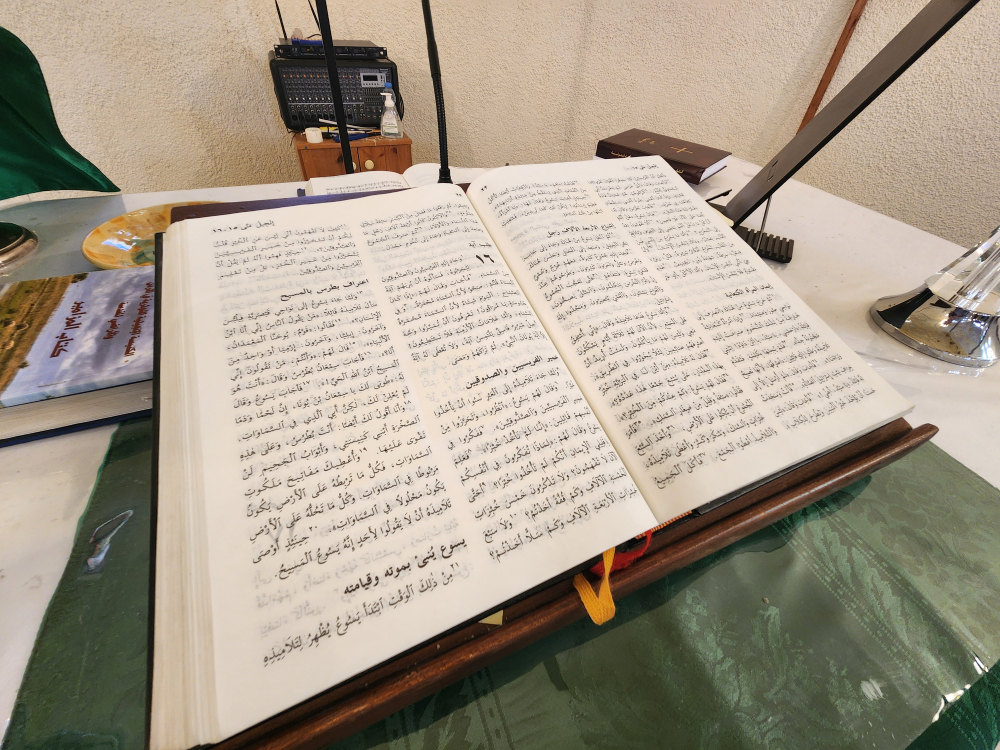
An open Bible in Arabic at the Evangelical Lutheran Church of Hope in Ramallah. Palestinian liberation theologians say their theology is biblically based, affirming the dignity of Palestinians amid a military occupation. (NCR photo/Chris Herlinger)
Other acts of kindness: "youth whose dreams were broken during war, preparing Christmas plays and gifts for children; adults from refugee camps using puppets and stories to help children process fear and trauma; families teaching the meaning of the Nativity; hotels turning on their Christmas lights for pilgrims."
"These quiet gestures speak of Jesus already coming, in small, tender ways."
They also speak of the light to come, said Cattaneo.
"We need to continue believing that the light is coming, that this moment of silence is the prelude for something new, something unexpected and good."
GSR international correspondent Chris Herlinger recently visited the West Bank as a member of a delegation of journalists and scholars sponsored by the Jerusalem-based Sabeel Ecumenical Liberation Theology Center. That visit was augmented by additional reporting in Israel and the West Bank.