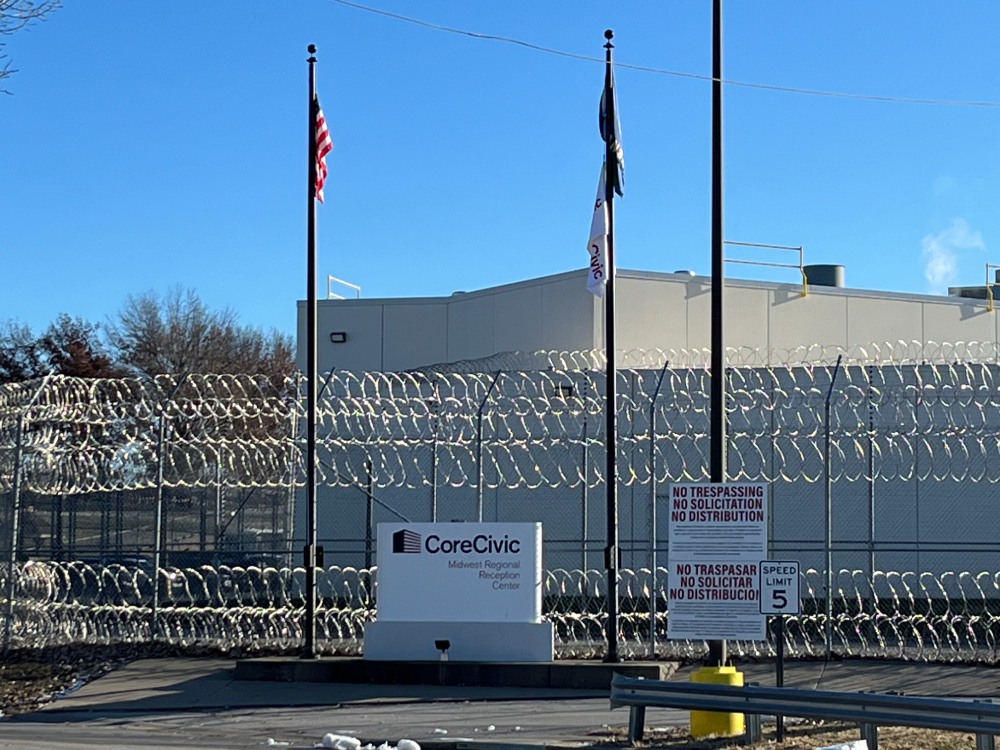
CoreCivic is a private company seeking to reopen a detention facility in Leavenworth, Kansas, as a detention center for undocumented immigrants. (Joe Kenny)

by Joe Kenny
The Sisters of Charity of Leavenworth, Kansas, are helping lead resistance to a private prison company's attempts to reopen its vacant detention facility in Leavenworth as an immigrant detention center.
After months of legal battles over the closed facility, the private prison company CoreCivic applied for a permit Dec. 8 with the City of Leavenworth to operate the 1,000-bed facility for the U.S. Immigration and Customs Enforcement in a new contract that would pay the company $4.2 million a month.
The Sisters of Charity's Office of Justice, Peace and Integrity of Creation organized a rally and prayer vigil this summer protesting the firm's planned use of the site.
"When you stand in solidarity with people you love, it's hard not to take action," said Ashley Hernandez, organizing and policy coordinator for the office. She also emphasized a need for community activism and advocacy against ICE's no-bid contract with CoreCivic.
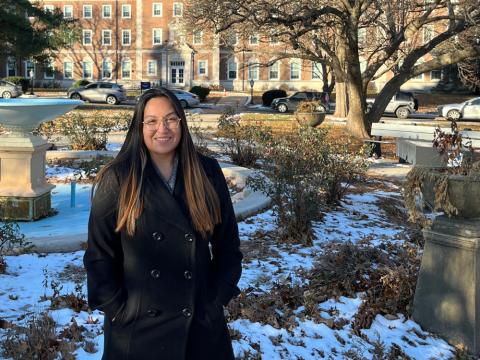
Ashley Hernandez, organizing and policy coordinator for the Office of Justice, Peace and Integrity of Creation for the Sisters of Charity of Leavenworth, Kansas, stands outside on the sisters' campus. (Joe Kenny)
ICE has used emergency funding to award no-bid contracts, instead of the usual competitive bidding, with CoreCivic and other private prison companies to run immigrant detention centers amid the Trump administration's increased deportation enforcement.
Hernandez told the National Catholic Reporter that the Sisters of Leavenworth are involved in this issue because it conflicts with their beliefs. She said the facility is not good for the community nor safe for the detainees and employees.
"We do things through the lens of Catholic social teaching — human dignity, responsibility and solidarity. None of those are fulfilled by having an ICE detention facility run by a private prison corporation with a long history of abuse and neglect and stripping people of their civil rights and human dignity within their doors."
The private prison corporation, formerly known as Corrections Corporation of America, stopped housing inmates at the facility in 2021.
It was closed by the U.S. Justice Department after reports of understaffing, injuries, lack of local law enforcement access and repeated sewer system problems. The conditions were documented by the American Civil Liberties Union and also by the Justice Department in a 129-page audit report. Correctional officer vacancies reached a high of 23% and closure of some security posts, according to the report.
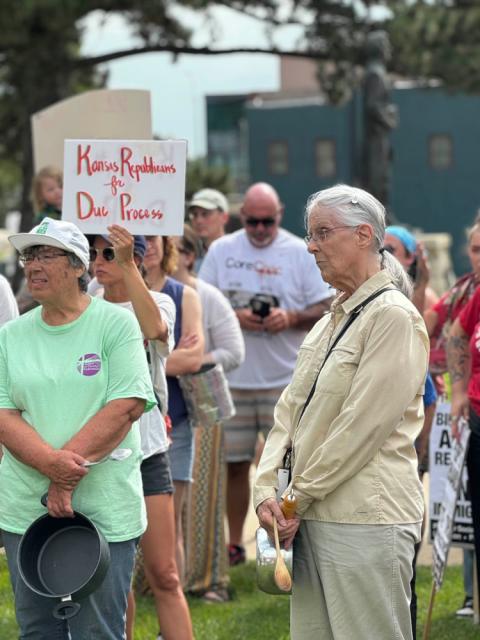
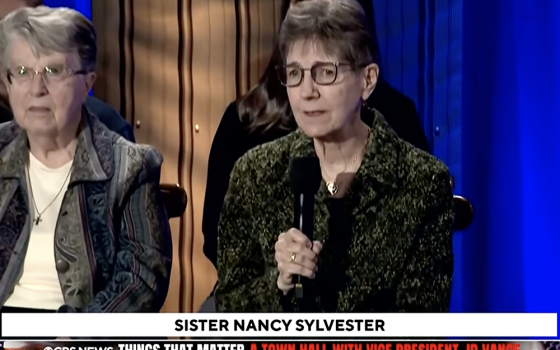
Sisters Pat Johannsen and Susan Chase, Sisters of Charity of Leavenworth, Kansas, listen to a speaker at the “Pots and Pans March," a rally held in July protesting the use of a closed prison as an immigration detention center. (Courtesy of the Sisters of Charity)
The City of Leavenworth sought in its petition to the county district court to allow a special use permit. The petition quotes U.S. District Court Judge Julie A. Robinson, in United States vs. Mathew Clark, who wrote of the earlier operation of the facility: "The only way I could describe it frankly, what's going on at CoreCivic right now, is 'it's an absolute hell hole.'"
The City of Leavenworth filed a court challenge to require a use permit, and on Nov. 24, U.S. District Court Judge Toby Crouse dismissed a federal lawsuit filed by CoreCivic against the city. Hearings are now scheduled to take place in February.
The city's petition stated that CoreCivic was embroiled in multiple widely publicized scandals resulting from its gross mismanagement of the facility and the ensuing rampant abuse, violence and violations of the constitutional rights of its detainees and staff."
William Rogers, a former correctional officer at the Leavenworth facility, said he had been assaulted seven times at the facility, which he blamed on a lack of staffing.
He told NCR that inmates were to receive an hour of daily outside recreation which was eliminated sometimes for a week when staff wasn't available. Also on hold were requests for supplies and phone calls. "Our inaction caused them to take action, and I understood it," he said of the violence that resulted.
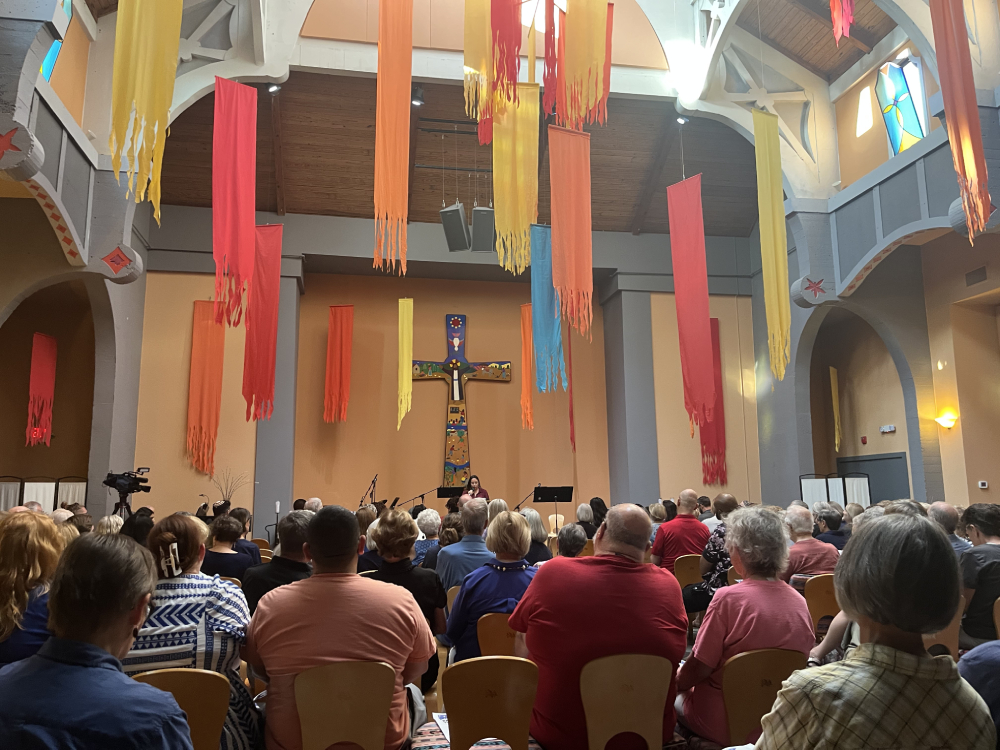
Ashley Hernandez, organizing and policy coordinator for the Sisters of Charity of Leavenworth, Kansas' Office of Justice, Peace and Integrity of Creation, speaks at a prayer vigil and rally in July hosted by Kansas Interfaith Action in opposition to a proposed immigration detention center. (Courtesy of the Sisters of Charity)
The ACLU of Kansas issued a statement that "CoreCivic's severe understaffing and profit-driven shortcuts ensured that stabbings, suicides, and homicides occurred with alarming frequency. Weapons, drugs, and other contraband were a common occurrence. In addition to all of the violence, CoreCivic neglected basic human needs in its Leavenworth facility, restricting food, curtailing or cutting off contact with legal counsel and family, limiting medical care and even basic necessities like showers."
Similarly, migrants in custody are routinely subject to cruelty, neglect and dehumanization, according to a report from Amnesty International, which cited facilities in Florida, Arizona, Texas and Louisiana. Human Rights Watch reports a lack of food and water, unsanitary conditions and medical neglect at the ICE-run Krome Detention Facility in Florida.
Advertisement
Esmie Tseng, communications director of the ACLU of Kansas, told NCR that the opposition to the detention facility in Leavenworth comes from people of a variety of backgrounds who remember CoreCivic's previous failings and do not want it to operate without accountability.
"The Sisters of Charity have been a consistent voice and serve as a conscience for the rest of the community," Tseng said. "They've given a voice to that human element."
She also emphasized that the people of Leavenworth will not back away from CoreCivic. As she put it: "The community has not forgotten what they put this city through."