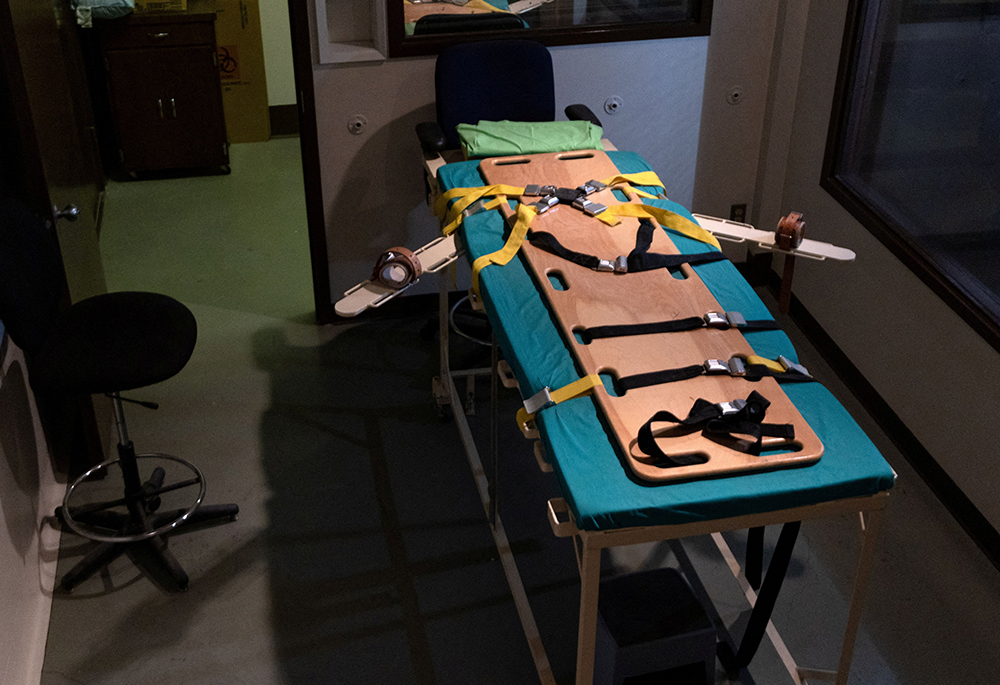
A lethal injection chamber at Washington State Penitentiary in Walla Walla, Washington, is seen Sept. 6, 2024, in this file photo. (OSV News/Reuters/Matt Mills McKnight)
by Sr. Nodelyn Abayan
The children are always ours, every single one of them, all over the globe; and I am beginning to suspect that whoever is incapable of recognizing this may be incapable of morality.
—James Baldwin
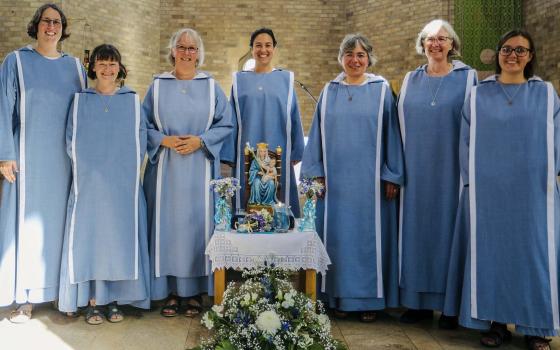
In mid-October my community, the Sisters of Social Service, began preparing for Chapter 2027. Chapter is the highest governing body of a religious community. For us, we gather once in every four years to discuss the current and future life of the community. This is also the time to elect new leadership which we call the chapter of election. The chapter planning committee of my community selected the theme "Choosing Life!"
With that theme I cannot help but reflect on the words from the book of Deuteronomy: "Choose life, then, that you and your descendants may live!" (30:19). These words from the Hebrew Scriptures ring as true now as then. Their urgency and power remain strong.
It is not easy for many of us to ignore the reality of assaults on life. Violence seems unstoppable. It cuts lives short almost everyday. In our country, there was recently talk about executing someone live on social media. As a religious and an early childhood educator for more than two decades, I am also saddened by the silent trauma many immigrant children experience because of unjust and abrupt immigration enforcement.
I was so touched by Caitlin Dickerson's most recent report for The Atlantic. Her story in the November magazine, "The Babies Left Behind in America," is a window onto little ones suffering through the government policy of family separation. It seems as though human suffering is reduced to political talking points, the value of human dignity pushed aside.
It feels like collective failure as a human race. As an educator, my question is, what are we teaching our children? And what happens to our own hearts — when we consider deliberately terminating a human life in public?
Advertisement
My ministry is with children and families. I have journeyed with so many of them. This daily reality completely shapes my perspective. When we say we choose life, it is not an abstract thing. It starts from the mindset that each human person is created in the image and likeness of God. Every child that walks into my program arrives carrying the fragile but beautiful weight of possibilities we cannot yet fathom. Every single family — whatever their legal status — deserves unconditional dignity. As a Sister of Social Service whose charism is based on the social teachings of the church, these realities force me to ask a harder question: What does true justice look like when we refuse to abandon our own capacity for empathy?
Recent news about executions has left me deeply troubled and unsettled, including reports of repeated problems with a death penalty case in Tennessee and plans to turn the execution of Nidal Malik Hasan, convicted of killing 13 people at Fort Hood, into a livestreamed spectacle, although as of press time, that plan seems to have been abandoned. These reports feel to me like evidence of the collective failure of the human race.
As an educator, my question is, what are we teaching our children? And what happens to our own hearts when we contemplate terminating human life in public?
I am not in any way minimizing the agonizing pain of victims and families. Their grief demands absolute compassion and accountability. Yet, the tension still exists between justice and mercy. Is there a way to honor the memory of victims without transforming death into a spectacle? What would it look like to hold people accountable and keep our humanity intact?
At the end of the day, I still believe that God intended for us to genuinely work to hand on to future generations a world that protects and nurtures our children. The choices we make right now must reflect an unwavering reverence for the sanctity of every human life, and all of life.