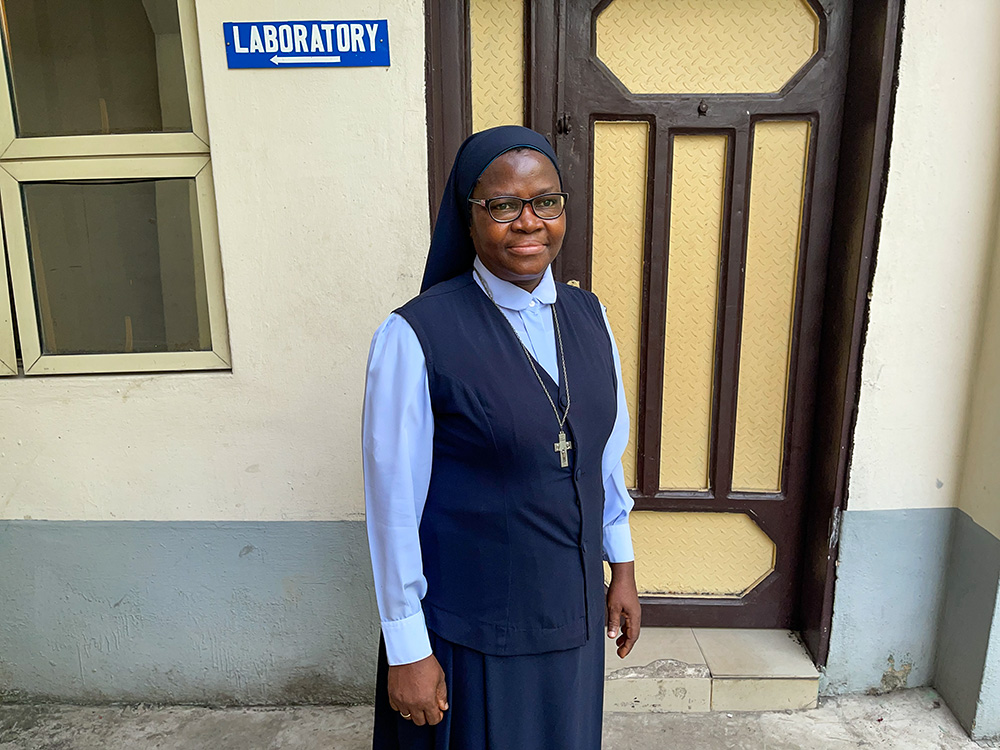
Sr. Dr. Uzoma Maria-Joannes poses for a photo outside Holy Family Hospital and Maternity in Owerri, Nigeria. (John Chukwu)
by John Chukwu
From her childhood in Owala, a small village in eastern Nigeria, Uzoma Maria-Joannes knew she wanted to become a sister. This was long before she fully understood what that meant.
"When I finished my primary education, if I was asked what I wanted to be, I would say a reverend sister," Maria-Joannes said. "I hadn't even met one then."
As a schoolgirl later in Ihiala, she found herself drawn to the quiet presence of priests she saw in church, captivated by their "sparkling white" robes and the life they seemed to represent.
"When I go to church, instead of concentrating I would be reflecting on them, hoping to be like them," she said.
That early conviction was tested when a friend who shared her dream urged her to delay joining the convent, first until after secondary school, then until after university. She accepted the first advice but rejected the second, choosing instead to enter religious life.
She joined the Holy Family Sisters of the Needy in 1987 and took her first vows in 1990. After a brief posting in Calabar, in Nigeria's Niger-Delta region, where she worked in an elderly care home, she traveled abroad for studies: earning degrees in catechesis and nursing in the United States before proceeding to Dublin's Royal College of Surgeons in Ireland, where she studied medicine, surgery and obstetrics, graduating in 2003.
Medicine is touching lives and so is our apostolate. I can't thank God enough that allowed me to serve humanity in these two ways.
Today, Maria-Joannes is both a religious sister and an obstetrician-gynecologist at Holy Family Hospital and Maternity in Owerri, Nigeria, combining faith and medicine in her work with pregnant teenagers, abandoned children and other vulnerable groups.
In an interview with Global Sisters Report, she reflects on her journey, the realities of poverty she encounters, and the mission that continues to shape her life.
GSR: What drew you specifically to the Holy Family Sisters of the Needy?
Maria-Joannes: I was drawn by the impactful humanitarian work they do. At the time, I knew little about different congregations, but I was fortunate that our founder, Very Rev. Fr. Denis Mary Joseph Ononuju, was my parish priest. When I shared my desire to become a sister, he explained the different apostolates, especially the one he had founded, and offered to introduce me to the sisters.
We traveled together to meet them, and after seeing their work, I knew that was where I belonged. Their mission, especially caring for teenage mothers and protecting unborn children, deeply resonated with me.
Back then, many young girls who became pregnant were rejected by their families. Some turned to abortion out of desperation. Our founder wanted to change that by creating a place where they could be sheltered, cared for throughout pregnancy, and empowered to rebuild their lives.
Why did you go into medicine, and how does it connect to your vocation?
Becoming a medical doctor was a decision of the congregation. Because of the nature of our apostolate, especially caring for pregnant young girls, it became clear that we needed trained medical professionals.
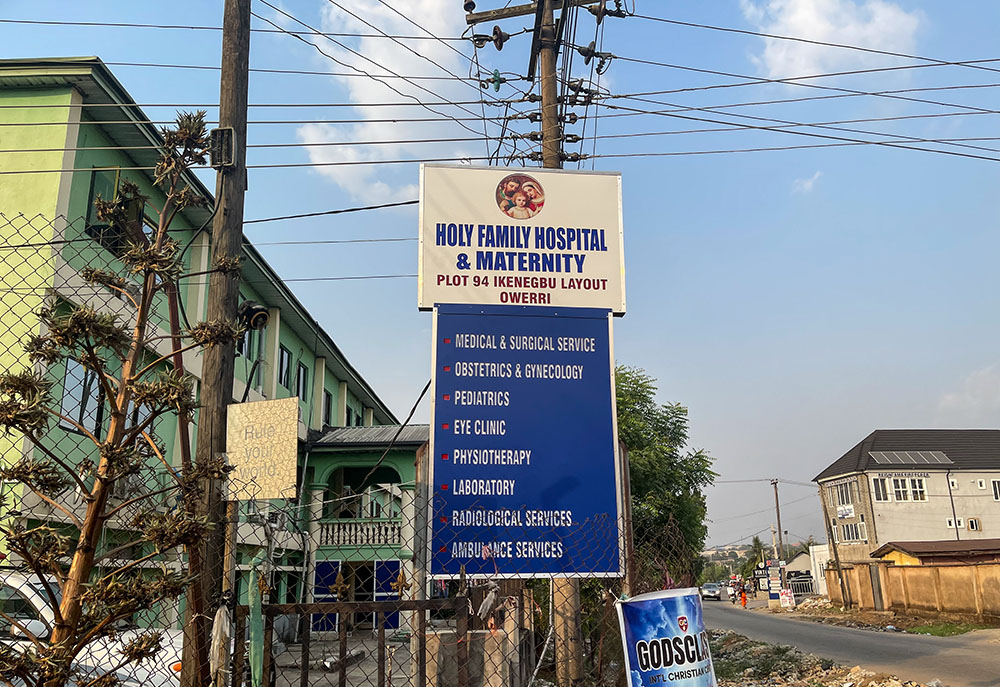
A sign outside of Holy Family Hospital and Maternity in Owerri, Nigeria, where Sr. Dr. Uzoma Maria-Joannes works (John Chukwu)
Initially, we used to take the girls to public or private hospitals, which exposed them and compromised their privacy. To address this, the congregation established its own medical facility to provide comprehensive and confidential care.
That is why many of us are nurses and doctors. I chose obstetrics and gynecology so I could better care for these young mothers.
You serve both as a doctor and a religious sister. How do these roles complement each other in your daily ministry?
I am very much blessed. I am privileged to be involved in the two worlds because medicine is touching lives and so is our apostolate. I can't thank God enough that allowed me to serve humanity in these two ways.
Could you describe the mission of the Holy Family Sisters of the Needy and the communities you serve?
Our topmost mission is pro-life work: caring for unwed mothers, protecting unborn children, and rehabilitating young girls so they can reintegrate into society.
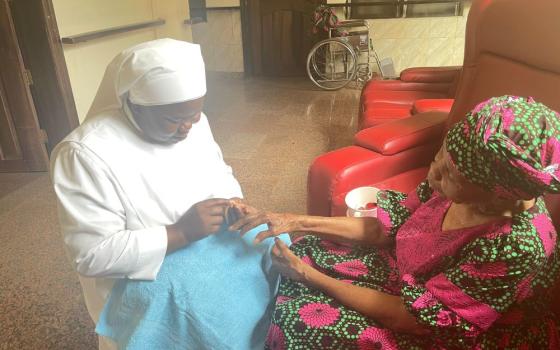
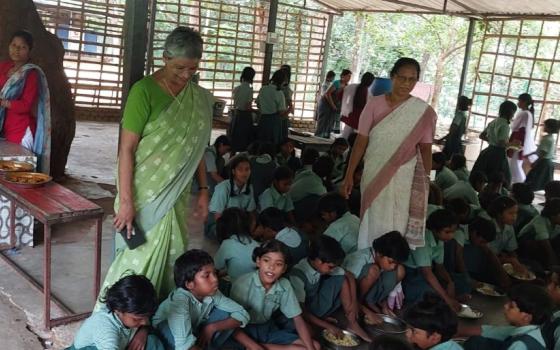
Beyond this, we care for orphans, the elderly and people with disabilities. We run orphanages, nursing homes and adoption programs, and we regularly distribute food and basic items to those in need.
Every other Friday, large numbers of people come for support. During festive periods like Christmas and Easter, the scale of poverty becomes even more visible as more people come for support. We distribute rice and other essentials, but the need remains overwhelming.
Advertisement
What are some of the realities about the elderly and marginalized that people may not understand?
When people gather for support, some may not appear to be in need at first glance. But when you listen to their stories, you realize how difficult their situations are. You may see someone dress well, but they will be scrambling for a small package of rice, and you'll be wondering: This person has hands and legs and is well-dressed, why is he here?
Some will tell you that they learned a skill but do not have anyone to support them in using it. Others try to build small businesses, only to watch them collapse under the pressure of feeding their families. A few manage to become independent, but many do not, not for lack of effort, but because of the economic realities they face.
In your medical work, what are some of the most common health challenges you encounter among the elderly and vulnerable people you care for?
Like I said, I am a gynecologist, so I deal mainly with pregnant women and women's health, not the elderly. However, in our apostolate as the Holy Family Sisters of the Needy, we also care for elderly people.
Many of them are in difficult situations. Ideally, the government should be doing more, but many have no one to care for them. Some do not even have enough food. When we gather to support them, you see elderly people coming just to receive a small share of bread. Many are seriously ill but cannot afford proper medical care. They often have to eat before they can even think of going to the hospital.
Some have been abandoned by their children, while others have no family at all and depend entirely on the goodwill of others. We also receive blind and frail individuals. In some cases, the sisters visit them in their homes, take note of their needs, and provide food that can last for weeks. Rather than asking them to come to us, we go to them. That is how we reach out to those who are most vulnerable.
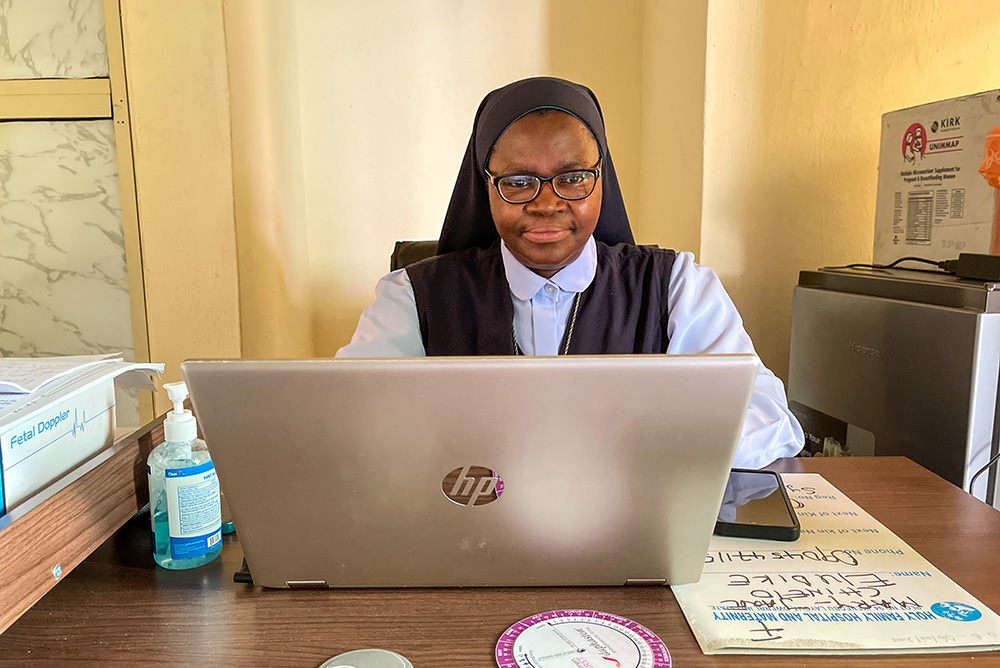
Sr. Dr. Uzoma Maria-Joannes works in her office at Holy Family Hospital and Maternity in Owerri, Nigeria. (John Chukwu)
How do you support those who cannot afford medical care?
Anyone who comes to the hospital is treated without upfront payment. If a patient has no money, we cover the full cost of care. If they can pay a little, we accept what they have, and if they cannot complete the bill, they are still allowed to go.
Sometimes, people of goodwill help settle outstanding bills. We do not deny anyone health care because of a lack of money.
How is your congregation able to raise money to do your humanitarian work?
People of goodwill support us. Some donate food items such as rice, noodles and other essentials. Most of the time, we rely on these donations, although the need continues to grow.
Beyond medical treatment, how do the sisters provide emotional, spiritual or social support to those who come to you for help?
All the sisters are involved in caring for those who come for support, especially during distribution days, which can be overwhelming. The work requires patience, as managing large crowds can be challenging. We engage them one-on-one to understand their needs and identify those who require extra attention, particularly the elderly who may no longer be able to come on their own, so we visit them at home. We ensure that no one leaves empty-handed and combine material support with spiritual care through Mass, counseling and health talks.
What are some of the major challenges you face in this ministry?
It is heartbreaking to see the conditions many people live in, especially those abandoned by their families. Government support is limited, and the number of people in need keeps rising.
With more resources, we could reach more people and provide more meaningful support.