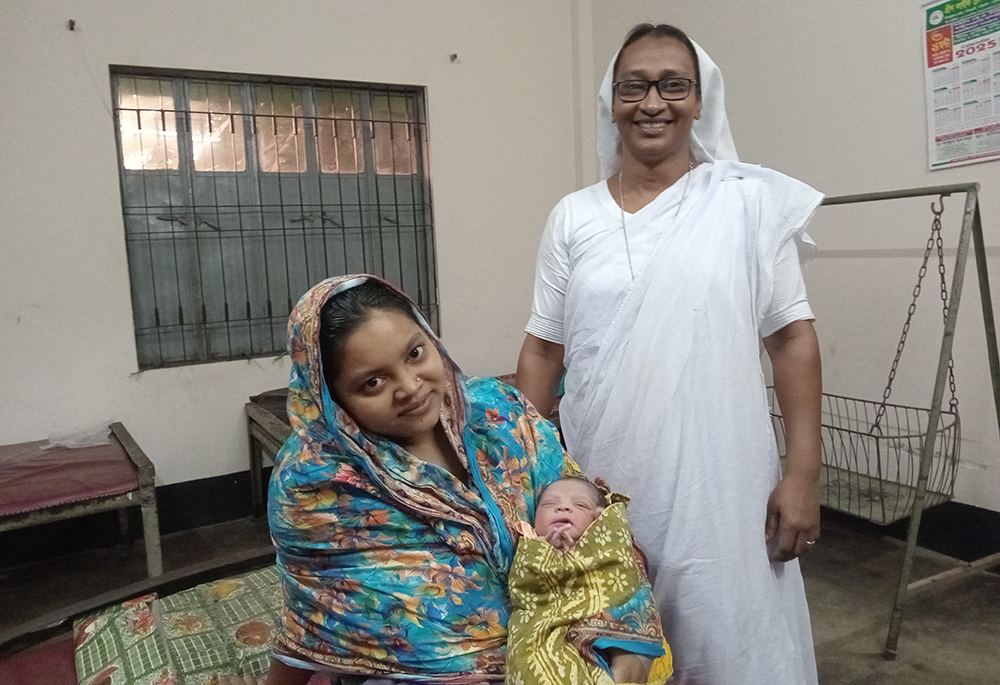
Sumaiya Akhtar, a recent patient of the Aloka Health Centre, described her traditional delivery with Sr. Lucky Gomes as "feeling like home," praising the sisters' sincerity and the center's affordability. (Sumon Corraya)

by Sumon Corraya
In a remote corner of southern Bangladesh, where no well-equipped hospital exists for miles, Sr. Lucky Gomes of the Little Handmaids of the Church has become a lifeline for pregnant women seeking safe, compassionate and affordable care. The Aloka Health Centre in Gournadi — modest in structure but rich in trust — has gained a reputation for prioritizing traditional deliveries, reducing unnecessary surgery, and offering maternal support that draws Muslim, Hindu, Christian and Buddhist families alike.
Bangladesh has witnessed an alarming rise in caesarean births, with over half of all deliveries now taking place through surgery. An official with Noora Health told Bangladesh's The Daily Star that he observed that most C-sections took place in private hospitals, and he cited financial incentives as a key factor. Many studies link C-sections with health conditions, according to The U.S.-based National Center for Health Research. In this challenging landscape, the work of Gomes stands out as a countercultural, potentially lifesaving ministry rooted in human dignity and ethical health care.
One recent patient, 22-year-old Sumaiya Akhtar, described her traditional delivery at Aloka Health Centre as "feeling like home," praising the sisters’ sincerity and the center’s affordability. Her safe delivery cost only 4,000 taka — far less than the 30,000 taka often required at private hospitals for cesarean births.
Gomes became a sister in 1999 and trained at Kumudini Nursing College. At 46, and after more than two decades of service, Gomes continues to accompany women and couples not only through pregnancy but also through infertility struggles and natural family planning education. Her patient, culturally sensitive approach has earned the admiration of local Muslim leaders and strengthened community trust.
In this conversation with Global Sisters Report, Gomes shares her mission, the challenges rural women face, and the joys of witnessing God's presence in every birth she assists.
GSR: Tell us about your mission.
Gomes: The Aloka Health Centre was established in 1972 by the Holy Cross Sisters, and later our congregation assumed responsibility for it. Our mission has always been simple: to provide primary care to people without a hospital nearby, especially pregnant mothers from villages. When they come, we check their blood pressure and weight, advise them on nutrition, and accompany them throughout their pregnancy. We focus strongly on traditional deliveries and teach what safe, healthy motherhood truly means.
I listen carefully to each woman’s situation, including their physical struggles and worries, and guide them accordingly. Every year, around 3,000 patients come for outpatient care, and we assist with 30 to 40 normal deliveries each month. Our costs are intentionally low so women from poor families can come without fear. If any danger signs appear, we immediately refer the mother to a hospital. Many mothers have had all their children delivered normally here, even one who had seven children with us.
Mothers also bring their children for medical treatment, a tradition from when the Holy Cross Sisters served here. Families trust our gentle care. We also see many skin diseases, which have increased notably since the COVID-19 pandemic. Many come with diarrhea, diabetes, colds or fevers. Whoever comes, we serve sincerely and with attention.
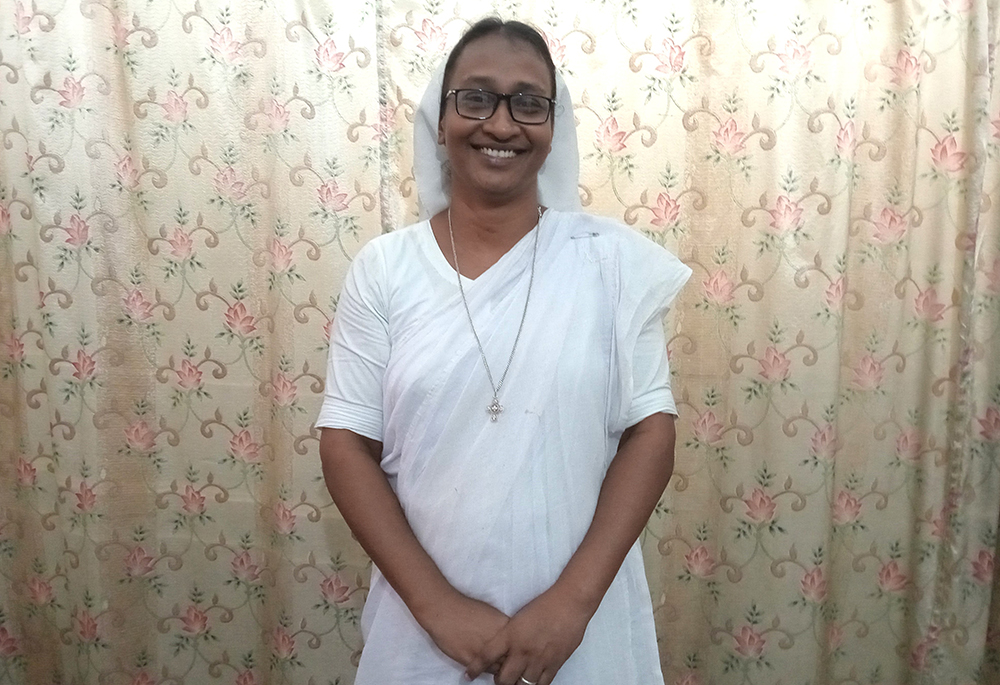
Sr. Lucky Gomes of the Little Handmaids of the Church has become a lifeline for pregnant women seeking safe, compassionate and affordable care in rural Bangladesh. (Sumon Corraya)
Safe and healthy motherhood is a major concern in Bangladesh. What do you teach your patients?
From their first visit, I teach that safe motherhood begins with regular checkups. I advise at least four prenatal visits, starting as soon as possible. I tell mothers not to lift heavy objects, to eat nutritious foods and vegetables, and to rest moderately. I also explain the five danger signs of pregnancy and childbirth: bleeding, watery discharge, severe headache with blurred vision, prolonged labor beyond 12 hours and convulsions. If they experience any of these, they must come immediately or go to the nearest hospital.
Because mothers share their experiences, women now travel 30 to 40 kilometers [about 18.6 to 24.8 miles] to receive care here. Word of mouth spreads quickly when people are treated with dignity.
What challenges do pregnant women face in rural villages?
There are many misconceptions. Some older women believe that if a pregnant mother eats more, the baby will grow too large. But proper nutrition actually leads to a healthy baby and a safe delivery. When a mother eats too little, she becomes weak, dehydrated and malnourished, and the baby suffers.
I advise mothers to eat small meals frequently rather than large meals infrequently. Awareness is improving across the country, and neonatal deaths have decreased significantly over the last few decades, but there is still much misunderstanding. Rural areas especially need continued education.
Why do so many women choose your center over nearby clinics?
They come because they trust us. They know this is a missionary clinic run by sisters who do not think of money. They believe we will always attempt a traditional delivery unless it becomes unsafe. Women trust the honesty of our approach.
Most say that they love the peaceful environment. Our center is not modern or high-tech, but it feels like a home. They say they feel safe here. Many clinics in the area prefer C-sections, even when not necessary, so women come to us as their last hope for a normal delivery. Their trust is our greatest strength.
Advertisement
What obstacles do you face as a health worker here?
Misconceptions are a major obstacle. Some families believe that going to a hospital means an automatic surgery, which is not true. Some mothers-in-law still insist on home births, even when danger signs appear. Often, a woman is taken to a hospital only at the last minute — when it is too late to save her or the baby.
There is also a shortage of skilled midwives in rural areas. Untrained attendants unintentionally contribute to maternal deaths. Bangladesh needs more trained, compassionate workers and much more awareness so that no mother or baby dies from preventable causes.
Do couples come to you with infertility problems?
Yes, many. Some couples come after spending large sums at different clinics without success. I teach them natural family planning, because understanding fertility strengthens the relationship between husband and wife. …
Several couples have conceived after following this method, and they come to thank me. At the same time, many women suffer emotionally because their husbands blame them for infertility. They share their pain with me, and I counsel them with compassion.
How do you witness your Catholic faith in a mostly non-Christian environment?
I do not preach directly. I try to show my faith through my behavior, speech and service. I wear a cross, and people ask about it. I simply explain that it represents Jesus, whom Muslims know as Prophet Isa. People ask why I am not married, and I explain that serving others is my vocation. They respect this deeply. Many say that choosing a life of service instead of family life is admirable.
Is there anything more you would like to share?
I feel deeply privileged to cooperate with God’s creation in this way. Every time I place a newborn in the mother’s arms, I feel joy and blessing. People of all religions show us love and respect — Muslims, Hindus, Christians and Buddhists. Even the local Imams appreciate our work. I thank God that I can serve mothers and families with my whole heart.