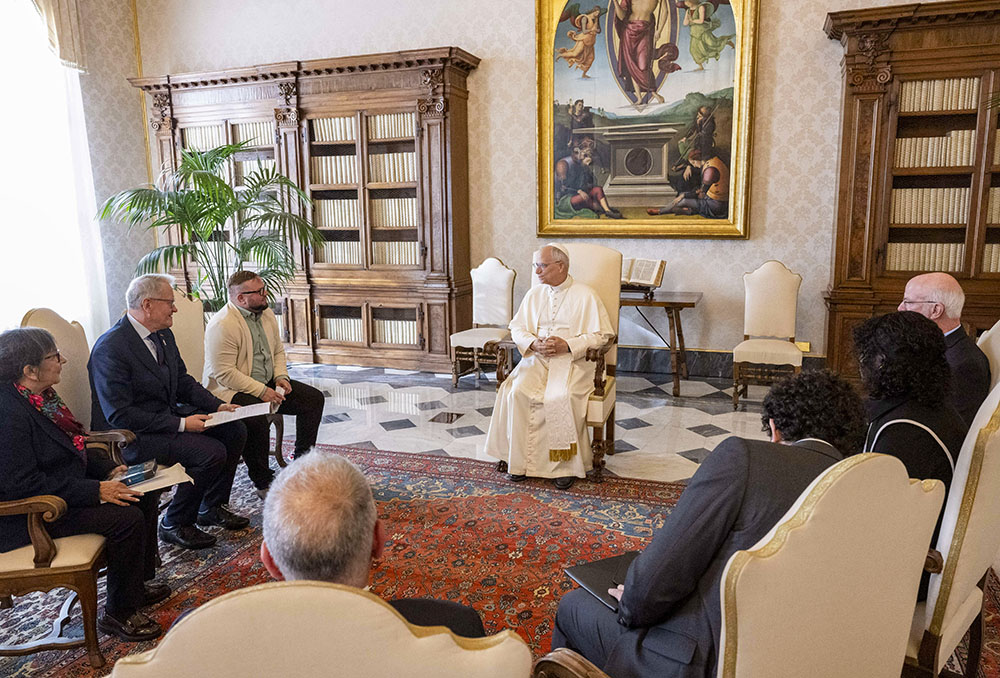
Pope Leo XIV meets with members of the board of Ending Clergy Abuse, a coalition of survivors and human rights advocates working to end clergy abuse, enforce accountability and promote justice and truth, during an audience in the library of the Apostolic Palace at the Vatican Oct. 20, 2025. Also present is Pedro Salinas, a Peruvian journalist and abuse survivor. (CNS/Vatican Media)

by Theologians' Corner contributors
To mark the first year of Pope Leo XIV's pontificate, Theologians' Corner convenes four sister theologians from around the world to reflect on his efforts to address abuse, strengthen accountability, and advance reform in the church.

Julia D.E. Prinz is a German Verbum Dei sister, working in the San Francisco Bay Area and the San Joaquin Valley with migrant populations. She teaches as an adjunct professor at the Jesuit School of Theology at Santa Clara University and the Graduate Theological Union. She is in leadership for the Institute of Catholic Spirituality and Spiritual Direction program educating spiritual directors in English and Spanish for the Central Valley. Under an Interfaith America grant, she teaches spirituality in healthcare and healing to healthcare professionals and students. She formerly directed the Women of Wisdom and Action Initiative across Asia from 2002 to 2019, empowering women religious to study theology, and she worked with the International Union of Superiors General from 2020 to 2024 to get the international theological initiative for religious sisters off the ground.
Recently, Pope Leo XIV called out: "Enough of the idolatry of self and money! Enough of the display of power! Enough of war!" This gives me consolation, both because of its immediate context, the 2026 unconscionable war against Iran by the U.S. and Israel, but also because Leo's call links with Pope Francis' words and signals an ongoing cultural shift in the church and, hopefully, in society at large.
During the late 1990s, at the same time Fr. Gustavo Gutiérrez was being silenced by the Peruvian ecclesiastical leadership, another group was given voice and power in Latin America: the Sodalitium Christianae Vitae.
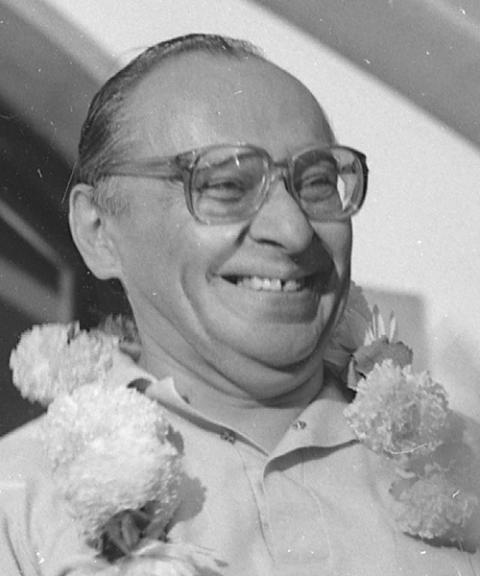
Fr. Gustavo Gutiérrez in 1988 (NCR photo/Tom Fox)
Gutiérrez's main offense was his critique of the structural private appropriation of wealth that created an endless cycle of poverty. The main reason for the success of the Sodalitium was its good standing with the wealthy, catering to the elites with an authoritarian spirituality.
Gutiérrez insisted: "There was a time when poverty was considered to be an unavoidable fate, but such a view is no longer possible or responsible. Now we know that poverty is not simply a misfortune; it is an injustice." The Sodalitium, on the other hand, only pitied the poor while enriching themselves, exercising fascist submission and loyalty practices for its members, including humiliating contorted sexual methods enhancing the power of its own leadership.
Nearly a quarter century later, the truth about Sodalitium has been laid bare. On April 14, 2025, following years of investigation into the sadistic abuse of authority, spirituality and sexuality in the group, Francis, working closely with Cardinal Robert Prevost, the future Pope Leo, suppressed and dissolved the Sodalitium. At the same time, Francis honored Gutiérrez for his life's work on behalf of the poor and his fierce advocacy for truth and justice.
Here in the United States, the "Deus vultus" battle cry echoes through the current U.S. administration, abusing the Christian Gospel while justifying a cruel war that is inflicting massive suffering across the Middle East and beyond. Meanwhile, the administration's domestic rhetoric of superiority and elitism opposes our very Christian identity by denying human dignity to all people and undermining humanization efforts in the one world we share. That rhetoric shows resonances of the fatal mix of spirituality and warfare that characterized Sodalitium.
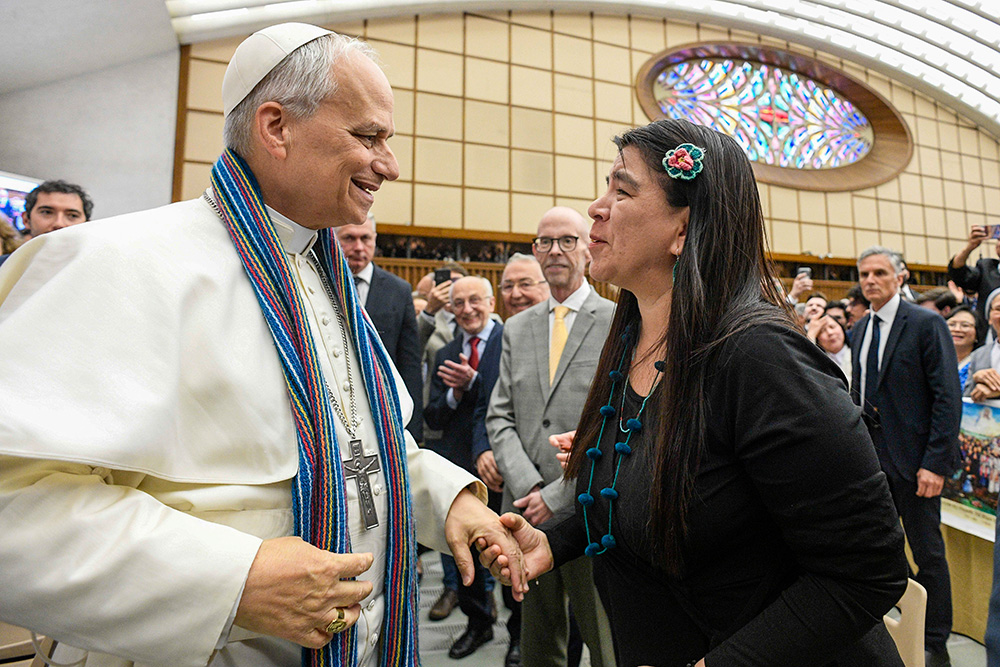
Paola Ugaz, a Peruvian journalist who helped expose the abuse committed by leaders of the Sodalitium Christianae Vitae, gives Pope Leo XIV a stole made of alpaca wool, during the pope's meeting with members of the media May 12, 2025, in the Paul VI Audience Hall at the Vatican. (CNS/Vatican Media)
Leo has not been afraid to confront those whose idolatry of self and money utterly distorts the word of God inside and outside the church. He calls out practices, policies and politics that attack the core Christian commitment to the flourishing of all people.
So, my hope for Leo's addressing structural change is his resistance to strains of thought in the church and world that focus on the pernicious, privileged understanding that powerful people in the church and civil society have a right to own everybody and everything, including the natural world and outer space. However, they do not.
We can join Leo's protest against the "delusion of omnipotence that surrounds us and is becoming increasingly unpredictable and aggressive." The world and its people belong to God.

Sr. Mercy Shumbamhini is a member of the Congregation of Jesus in Zimbabwe. She is a registered professional clinical social worker, a theologian, spiritual director, safeguarding consultant, narrative therapist, researcher and writer with an extensive background in leadership and project management. She served as regional leader for her congregation in Zimbabwe for eight years and is the former president of the Conference of Major Superiors in Zimbabwe. She worked as development officer for Arrupe Jesuit University and currently serves as mission developmental director of her congregation in Zimbabwe. She sits on a number of boards, and lectures at the university level on social work, theology, spirituality, strategic thinking and planning, and has been an external examiner for the University of South Africa.
Through my experience in pastoral care, safeguarding, and trauma-informed accompaniment in African church contexts, I have come to understand the church's response to the crisis of abuse as a continuing journey of conversion into the heart of Christ. At the center of this journey is the Good Shepherd who bends down to carry the wounded sheep, drawing the church into deeper truth, compassion and healing.
Pope Leo XIV's emphasis that the most vulnerable must remain "at the center of the Gospel," and that the poor are "creative subjects who challenge us to find novel ways of living out the Gospel today," speaks directly to what I have encountered in communities shaped by both suffering and resilience. Children, women, marginalized persons and survivors of abuse are not only those served by the church; they are also those through whom Christ speaks, calling the church to accountability, conversion and renewal.

Pope Francis distributed a card with this painting of the Good Shepherd, by German artist Lucas Cranach der Ältere, to Italian bishops during their 2021 assembly on "the synodal journey of the church in Italy." (CNS/Courtesy of Holy See Press Office)
Pope Francis reminds us, "The pain of the victims and their families is also our pain." This is not only a moral statement but an ecclesial truth that reshapes how we understand communion in the body of Christ. In the African wisdom of ubuntu — "I am because we are" — this becomes concrete: No wound is isolated, no healing is individual, and no community is whole until all are restored.
Safeguarding, accountability and reform
The church's response under Pope Leo XIV shows a growing awareness that safeguarding belongs to its very identity, not only to its policies. Accountability must be grounded in the Gospel: Harm must be named truthfully, justice must be pursued with integrity, and healing must be approached with care and patience. The reform of religious communities also requires careful pastoral discernment that holds together truth, mercy and respect for persons. Even in painful situations, grace continues to work quietly and often in hidden ways.
Continuity and deepening Francis' vision
The direction under Leo XIV can be seen as both continuity and a deepening of Francis' approach. Safeguarding, formation and institutional responsibility are being held more clearly within a single vision of communion. Synodality — listening, participation and shared responsibility — is shaping this process, moving the church away from silence and isolation toward greater transparency and co-responsibility.
Hopes for the church
My hope is for a church that reflects the face of Christ the Good Shepherd: a church that does not turn away from suffering, but enters it with compassion, courage and humility. I hope for safeguarding that is not only procedural but deeply spiritual — rooted in listening, healing and restoration. I hope for communities where survivors are truly heard, where women's leadership is recognised as a gift for renewal, and where the poor are received as bearers of Gospel wisdom.
Ultimately, I hope for a church where justice and mercy meet — where those who have been hurt are seen, believed and accompanied, and where we learn again to walk together in trust, dignity and hope.

Nameeta Renu is a member of the Order of Consecrated Virgins in Bombay. She has studied the pastoral care of liminal migrants and refugees, and has a doctorate in theology on spiritual guidance and integral formation based on viriditas (greenness) in the spirituality of St. Hildegard of Bingen. She has published articles on consecrated life in various newsletters and theological journals.
I was happy with Pope Leo XIV's election. Having lived through three pontificates, I hope against hope that he continues purifying the church of institutional sin and its cover-up. Over decades, revelations of grooming, abuses and gaslighting have shocked me.
Desmond Tutu once said that neutrality in situations of injustice is not virtue but complicity. That's why I feel shattered when Leo cites the right of the accused to due process while the human rights and suffering of victims, indefinitely waiting for justice and restoration, can seem undervalued.
There's a well-known legal maxim that justice delayed is justice denied. A complainant often endures social exclusion, isolation, and struggles to survive whereas the accused is rarely pulled from ministry, and sometimes, those involved in cover-ups even lead safeguarding committees. It looks like the presumption of innocence doesn't prevent the transfer or promotion of the accused to a higher position.
Advertisement
Contrarily, Jesus in the Gospels never remains a silent bystander but takes moral responsibility for restorative justice, including conversion of sinners. If salvation were cheap, would he have paid for it on the cross? Yet, clergy accused of "breaking and eating the flesh of their flock" are, in some cases, protected by peers within existing structures of accountability.
The episcopate has judicial, canonical, juridical and pastoral authority, but moral authority must be earned. Why aren't there many examples of consecrated women in India receiving justice in the church? Why do sisters hesitate to report abuse? The modus operandi for cover-ups is clear: Victims are treated as third parties in their own cases.
In my pastoral work and research, I've seen troubling gaps in transparency and due process within church tribunals. Issues with document access and appeals highlight a pressing need for better accountability and procedural clarity.
This is only a tip of the iceberg of cover-up tactics observed over the decades. Leo's focus on the genuine need for due process has severe loopholes that stall the accountability that Pope Francis attempted to establish through Vos Estis Lux Mundi, which is little known, understood or properly implemented.
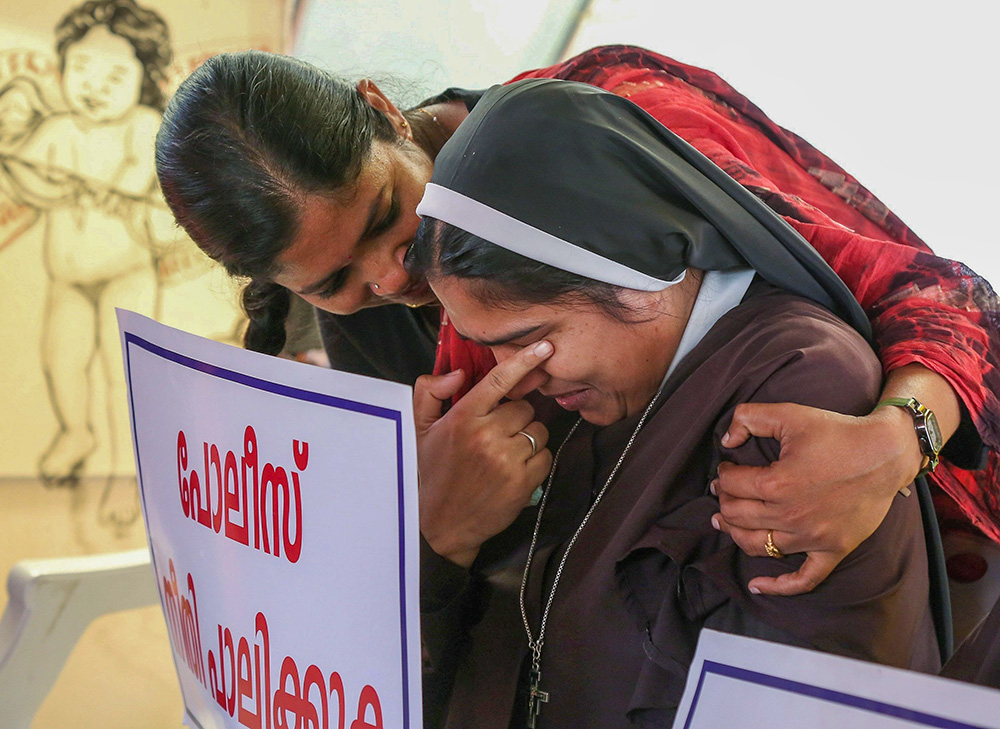
A nun is consoled during a protest on Sept. 13, 2018, in Cochin, India. The protest was to demand justice after a former religious superior accused Bishop Franco Mulakkal of Jalandhar of raping her. Indian nuns questioned the church's silence in the rape case and expressed support for the complainant nun after a court acquitted Mulakkal of all charges Jan. 14, 2022. (CNS/Reuters/Sivaram V)
This raises a practical question: How can accountability mechanisms be strengthened so that due process does not become a barrier to justice?
I suggest a global online platform with third-party auditors to receive complaints and securely store documents submitted. Furthermore, the universal church could create a multilingual and canonical AI app that could be used by tribunals for interviewing and feeding all documentation and proofs for analysis, with permission from the parties. This would remarkably shorten processes. Regular updates should be accessible online to the parties involved. Justice implies transparency and must be seen to be done, too.
Moreover, formulating canons isn't enough to achieve restorative justice. Those who have been abused need safe spaces to be heard and believed, to receive solidarity, and to see meaningful accountability — through the suspension of the accused, appropriate sanctions and institutional church reform. Holistic healing is essential for restorative justice. Secret sanctions cannot heal a wounded church!

Sr. Rose Uchem is a Missionary Sister of the Holy Rosary and former senior lecturer at the University of Nigeria, Nsukka, and the Spiritan International School of Theology in Attakwu, Enugu, Nigeria. She holds a doctorate in theological studies from Graduate Theological Foundation in Indiana, and a Master of Arts in religion and religious education from Fordham University in New York. She studied previously at the Milltown Institute of Theology and Philosophy in Dublin. Her numerous publications include Overcoming Women's Subordination in the Igbo African Culture and in the Catholic Church. Uchem is a founding director of IFENDU for Women's Development, a nongovernmental organization that promotes recognition of equal dignity for women.
In view of Pope Leo XIV's upcoming first anniversary in office, one cannot help thinking of various areas of church life that can be reviewed. One such area is the church's ongoing response to the abuse crisis, particularly under this leadership. It can be said that the achievement in this period is a complex and unfolding effort to confront both past failures and present liabilities.
For instance, it has increasingly become clear that the crisis is not just isolated incidents of personal misconduct. Rather, it is systemic, involving patterns of clericalism, institutional silence and inadequate accountability. It needed a more comprehensive and self-critical response than has happened.
One noticeable achievement is safeguarding. Policies are now in place — more structured, widespread, and preventive in orientation, across many parts of the church. Existing training programs, reporting procedures and safeguarding offices suggest a serious attempt to embed protection into church life. This significantly differs from earlier fire-brigade approaches.
Yet, much more could be done. From personal observation, there is a risk that safeguarding might become a matter of "fulfilling all righteousness" rather than genuinely internalizing a culture of care. Even more worrisome is the attitude of some authorities who seem more concerned not to be found wanting than offering genuine support to persons affected, say in ecclesiastical communities. Moreover, implementation is uneven, raising questions as to whether safeguarding is truly universal.
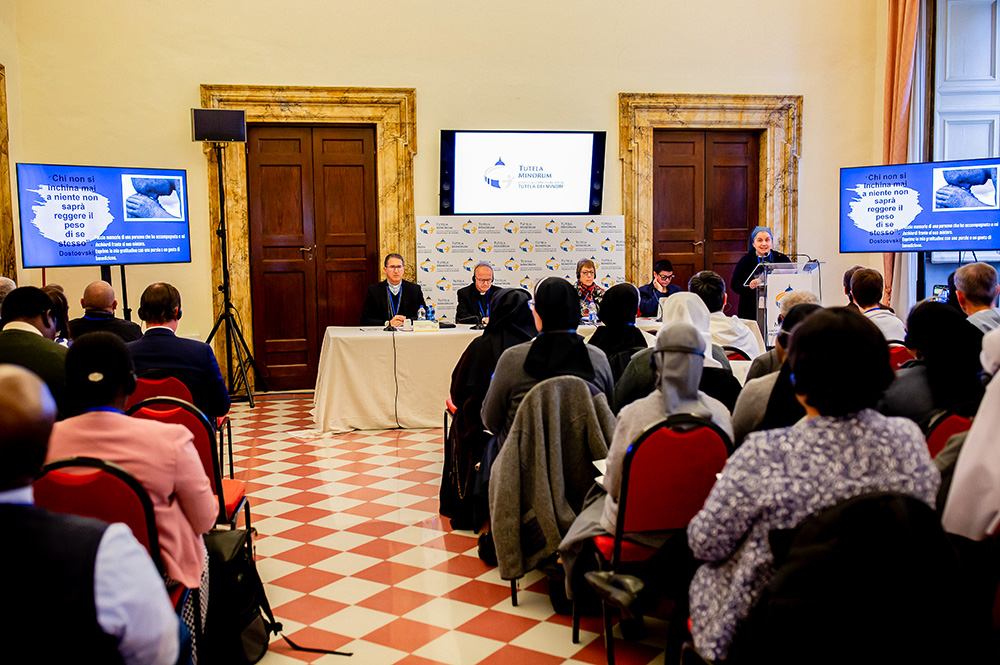
Members of religious orders from around the world attend the opening of a three-day safeguarding workshop at the Rome office of the Pontifical Commission for the Protection of Minors Nov. 17, 2025. (CNS/PCPM/Marco Cordone)
Closely allied to safeguarding is the issue of accountability. The church has taken steps toward holding not only perpetrators responsible, but also leaders responsible for failures in oversight. This signals an important movement away from a culture of secrecy, toward one of greater transparency. In face of the wider society's expectations of justice that continue to challenge the church's moral authority and credibility in this area, there is need for consistency and sustained transparency.
A particularly striking dimension of the recent response has been the reform, and in some cases suppression, of certain religious congregations. These interventions reveal an expanded understanding of abuse: not only of sexual misconduct but also of spiritual and psychological harm, involving exercise of distorted forms of authority.
Such actions are commendable, indicating a willingness to confront dysfunction at a structural level. However, they also raise important questions about following due process and transparency, as a coherent vision of renewal rather than ad hoc reactive responses to crises.
Eventually, the deeper issue may lie in the need for cultural transformation. No doubt policies and sanctions are necessary. Yet without a corresponding change in how authority is understood and exercised, they remain inadequate. For a meaningful change to take root, it is vital to address clericalism, and foster greater participation of the laity, especially women, and cultivate humility within leadership.