(GSR graphic/Olivia Bardo)

by Doreen Ajiambo
At the Sacred Heart Child and Youth Care Centre on the outskirts of this coastal South African city, girls line up for supper after school, their laughter echoing across the courtyard as caregivers move between dormitories and kitchens.
Many of the girls carry wounds that cannot be seen. Some are already living with the consequences of violence that has claimed women's lives.
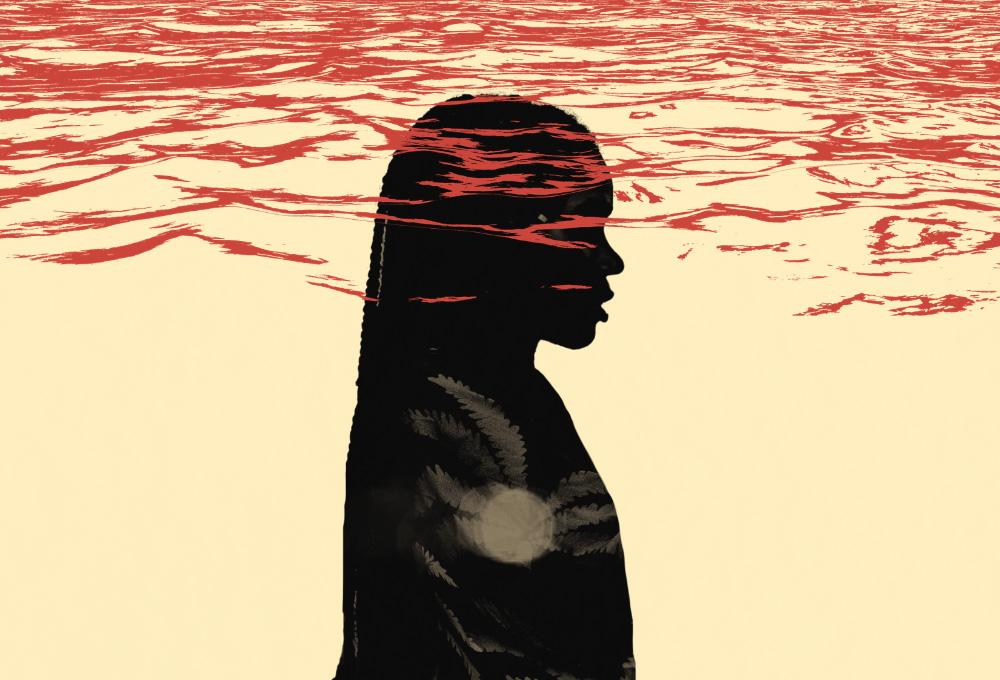
They are growing up in a country grappling with one of the world's highest rates of femicide, the gender-based killing of women and girls — a crisis Catholic sisters say does not begin with murder but with the erosion of safety inside homes and families.
For Sr. Nosipho Cwele, director of the center run by the Daughters of St. Francis, the connection between femicide and the children under her care is immediate.
"This is not only about death," Cwele said. "It is about a culture that makes girls and women vulnerable every single day."
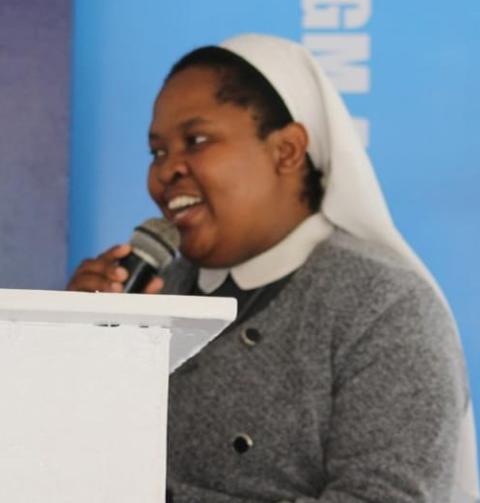
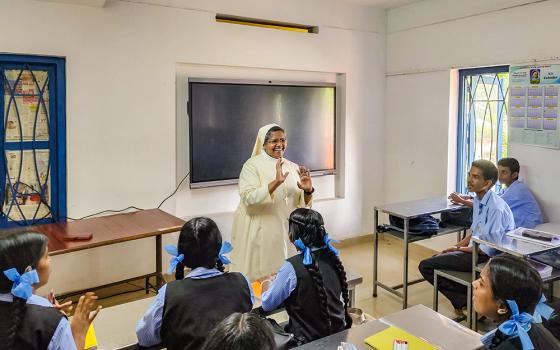
Daughter of St. Francis Sr. Nosipho Cwele (Courtesy of Daughters of St. Francis)
South Africa records hundreds of femicides each year, most committed by intimate partners or family members. In a recent three-month period alone, national crime data recorded 957 women murdered, alongside more than 1,500 attempted murders and more than 10,000 reported rapes. Advocates say the figures reflect only part of the broader reality of violence against women. The United Nations estimates that 5.5 women are killed by intimate partners per 100,000 in South Africa, far above global averages.
Researchers stress that femicide is rarely an isolated act. It is most often the final point in a continuum of harm rooted in domestic abuse, sexual violence, economic control and social norms that normalize male dominance.
Across Africa, similar patterns persist. In neighboring Kenya, police and civil society groups reported at least 170 women killed in 2024, many inside their own homes and often by people they knew.
For Catholic sisters working at the grassroots, those numbers translate into daily encounters with loss, trauma and survival.
'Why doesn't my mother love me?'
Cwele oversees a home that currently shelters about 45 children (roughly two-thirds of them girls) between the ages of 5 and 18. Most arrive through referrals from social workers after being found neglected, abused or living in environments deemed unsafe.
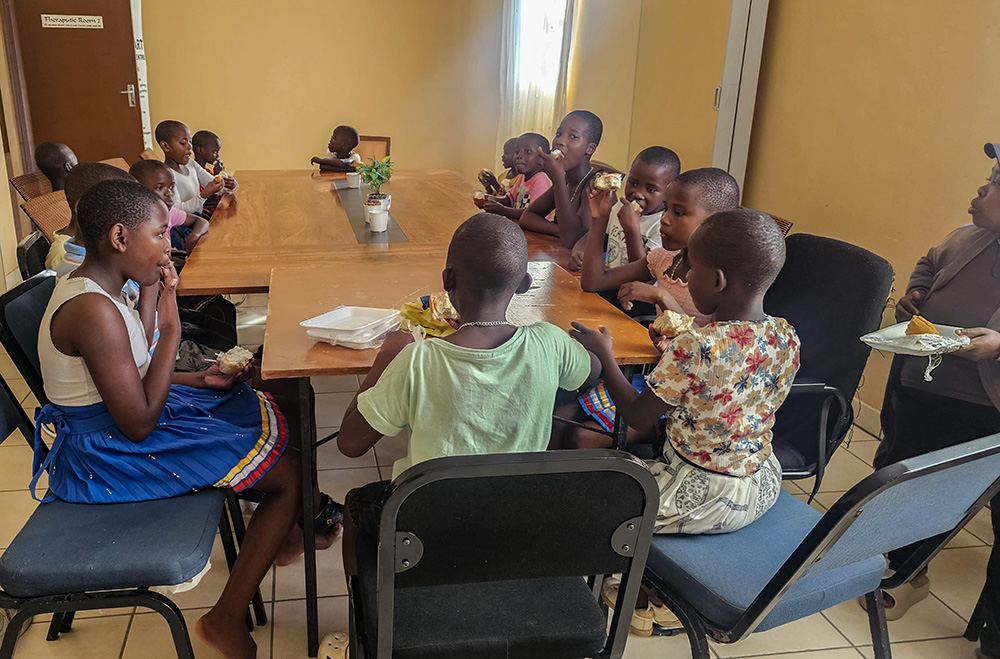
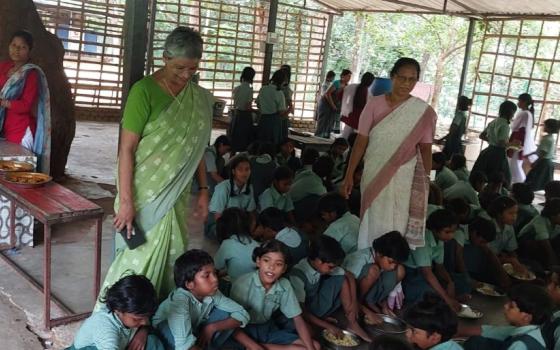
Children gather at the Sacred Heart Child and Youth Care Centre in Durban, South Africa. (Courtesy of Daughters of St. Francis)
"Neglect is the most common reason children come here," she said. "Poverty, unemployment and substance abuse leave children, especially girls, exposed."
By law, South African children must live with a responsible adult caregiver. When grandparents are too old or ill, or when parents struggle with addiction, mental illness or extreme poverty, removal is often the only way to protect a child, particularly girls at risk of sexual violence.
When mothers are killed, injured or forced to flee violent partners, their daughters are often the first to lose protection, pushed into unstable living arrangements that expose them to neglect, abuse and early exploitation.
"Institutional care is never the first choice," Cwele said. "But when violence makes a home unsafe, especially for the girl child, we have no option."
The emotional toll is heavy.
"Children ask, 'Why am I here? Why doesn't my mother love me?' " Cwele said. "That belief makes them extremely vulnerable."
When mothers are killed, injured or forced to flee violent partners, their daughters are often the first to lose protection, pushed into unstable living arrangements.
She recalled a girl who was sexually assaulted at school and later stigmatized instead of supported. Although the perpetrator was arrested, the child was forced to move after the environment became hostile.
"It was a second trauma," Cwele said. "Adults failed her."
Cwele sees such cases as symptoms of a deeper social fracture.
"Our gender perceptions are deeply broken," she said. "Women and girls are still blamed for violence committed against them."
'He wanted me dead'
One woman who asked to remain anonymous knows that continuum of violence intimately.
Married at 16 after her parents died, she said she had little choice but to remain with her husband. They had two children. After the birth of the second, he took another partner while still married to her.
When she confronted him, he beat her. She reported him to the police, but no meaningful protection followed.
"I thought he had changed," she said. "But the violence continued."
Advertisement
One morning, she said, she woke to him attacking her with a machete.
"When I tried to defend myself, he cut my legs," she said, pointing to deep scars. "Then he poured acid on me."
She survived by turning her face away. Her back and thighs were badly burned.
"He wanted to kill me," she said. "I would have died."
At the time, she was running a small business. Her husband, unemployed, demanded money to gamble. When she stopped giving it to him, the violence escalated.
"I don't understand why he wanted me dead," she said. "I regret ever getting married. This is not the life I wanted."
Her story follows a familiar arc documented in femicide cases: dependency, escalating abuse, failed intervention and near fatal violence.
Now, she worries about how her injuries will shape her children's future and whether society will protect them better than it protected her.
Advocates emphasize that femicide is the most extreme expression of gender-based violence, not a separate phenomenon.
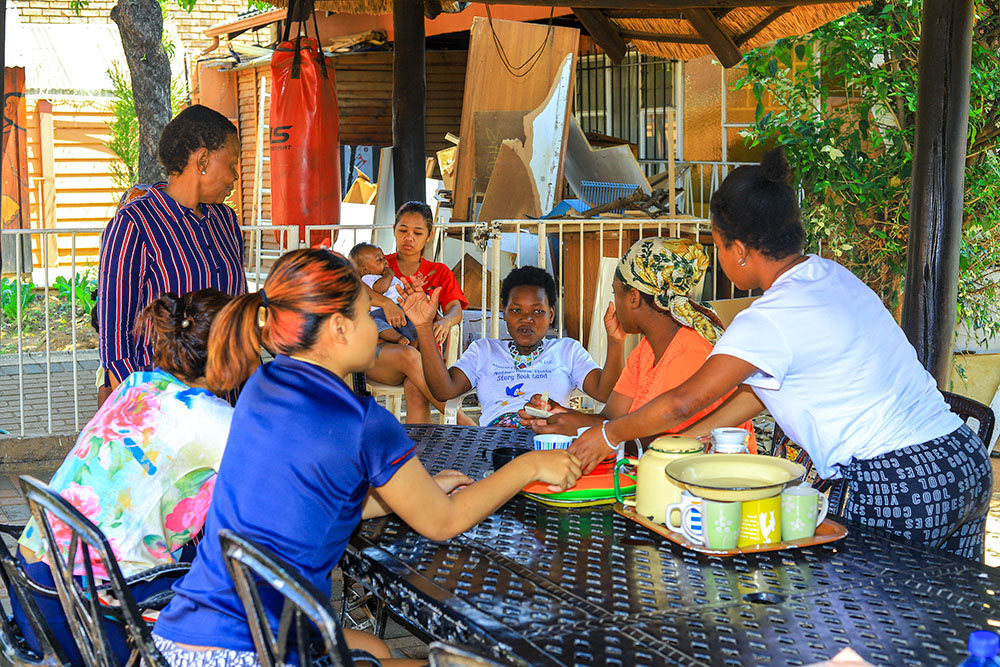
Women affected by gender-based violence seek support at a Mercy-run transitional shelter for women in distress in South Africa, Oct. 11, 2024. (GSR photo/Doreen Ajiambo)
Despite progressive laws, gender-based violence remains widespread. Weak enforcement, stigma and entrenched patriarchy allow abuse to continue unchecked until it becomes lethal, say sisters and other advocates.
"Femicide doesn't come out of nowhere," said a Johannesburg-based survivor advocate who requested anonymity fearing stigma. "It grows out of violence that has been normalized."
Cwele agreed.
"When people feel powerless, some try to feel powerful by harming someone more vulnerable," she said. "Violence comes from an imbalance within a person."
She points to poverty and neglect of boys and men as contributing factors.
"Our society has neglected the boy child," she said. "That imbalance creates serious problems in gender relations."
Sisters stepping into the gap
As public outrage grows and state systems struggle to respond, Catholic sisters are increasingly stepping into roles once seen as beyond the church's traditional scope.
Across South Africa, sisters run shelters, accompany survivors through police and court systems, and provide trauma counseling, skills training and spiritual support. Several shelters for survivors of gender-based violence are managed or supported by women religious, offering safe, faith-based spaces for healing.
At a Mercy-run center, Sr. Colleen Wilkinson, 78, begins each day with prayer before residents share chores and meals.
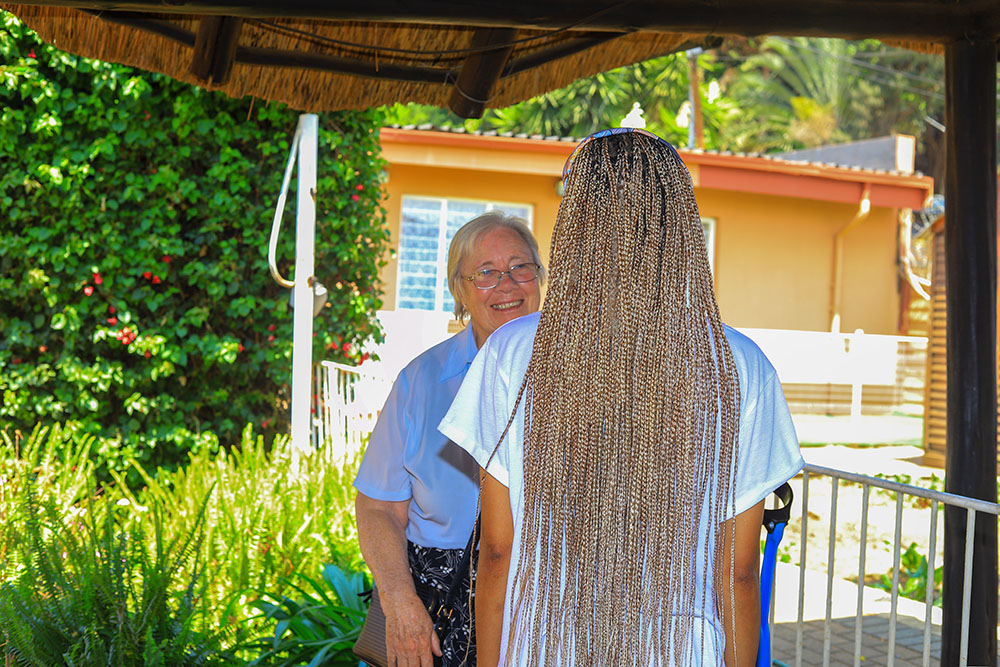
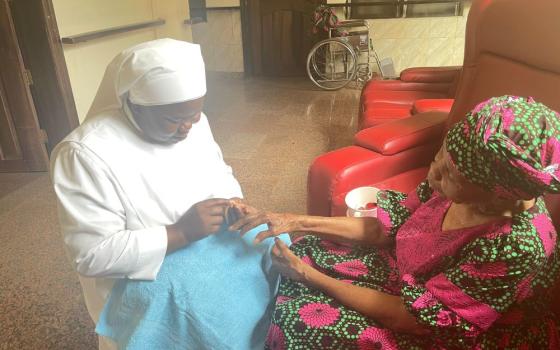
Mercy Sr. Colleen Wilkinson interacts with a migrant woman at a Mercy-run transitional shelter in South Africa. (GSR photo/Doreen Ajiambo)
"Everybody deserves dignity and respect," Wilkinson said. "That is our starting point."
Most women arrive through police referrals, some after being trafficked or coerced into prostitution.
"Our society has been exposed to violence for generations," Wilkinson said. "That violence has moved into families."
For the sisters, the work is both practical and prophetic, a call for the church to confront patriarchy openly and stand with women at risk.
For Cwele, addressing femicide demands more than crisis intervention.
"Care work is complex," she said. "The children are vulnerable, but so are the caregivers. We carry our own trauma, yet we are expected to be emotionally present for everyone."
For the woman who spoke to GSR about her husband's violence, the consequences of that societal failure remain deeply personal.
"I don't understand why he wanted me dead," she said. "But he truly did."