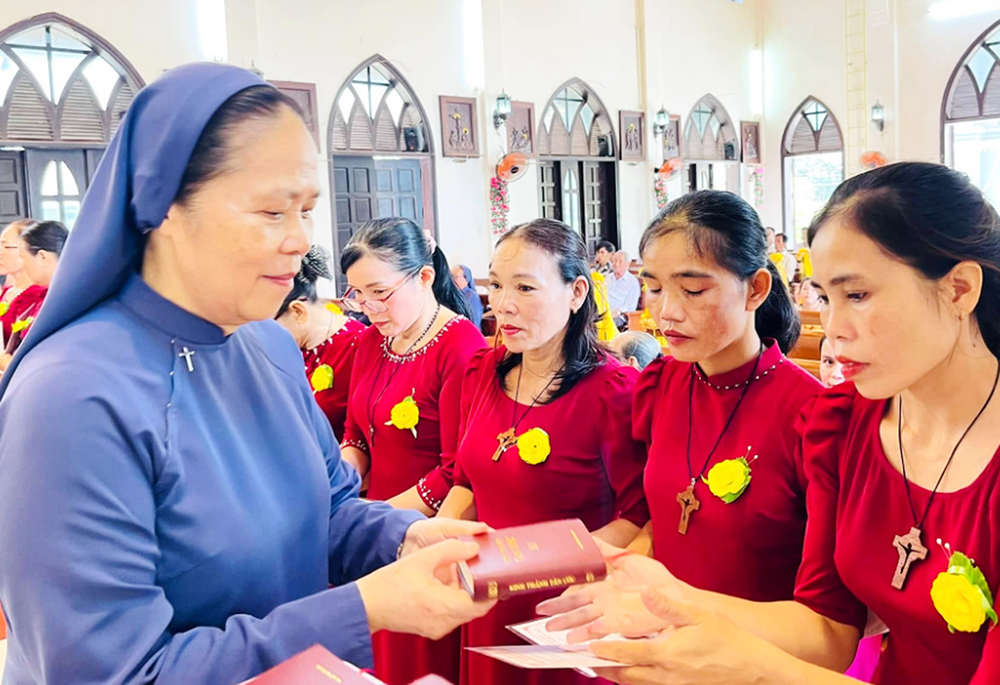
Lovers of the Holy Cross Sr. Maria Madelene Le Thi Bich offers Bibles to newcomers to the group of former sisters in Hue, Vietnam, on Sept. 14, 2025. (Joachim Pham)
When Therese Ton Nu Thuy Loan left her religious congregation at age 24, she returned home unsure how to rebuild her life.
Loan had already professed temporary vows and expected to continue her formation. But tensions within the community — including what she described as favoritism and a lack of understanding from a superior — eventually pushed her to leave.
Instead of support, she encountered whispers and quiet judgment in her parish, where leaving the convent can carry social stigma.
"I felt desperate and worried about how I could rebuild my life," said Loan, now 37.
Her family worried about what neighbors might say.
"In the beginning, my parents were unhappy because they feared people in the parish would gossip," she said. "But I tried to explain my situation, and gradually they respected my decision and accepted me."
In Vietnam, where religious life is highly respected and often tied to family honor, women who leave convents can face emotional pain, social stigma and economic uncertainty.
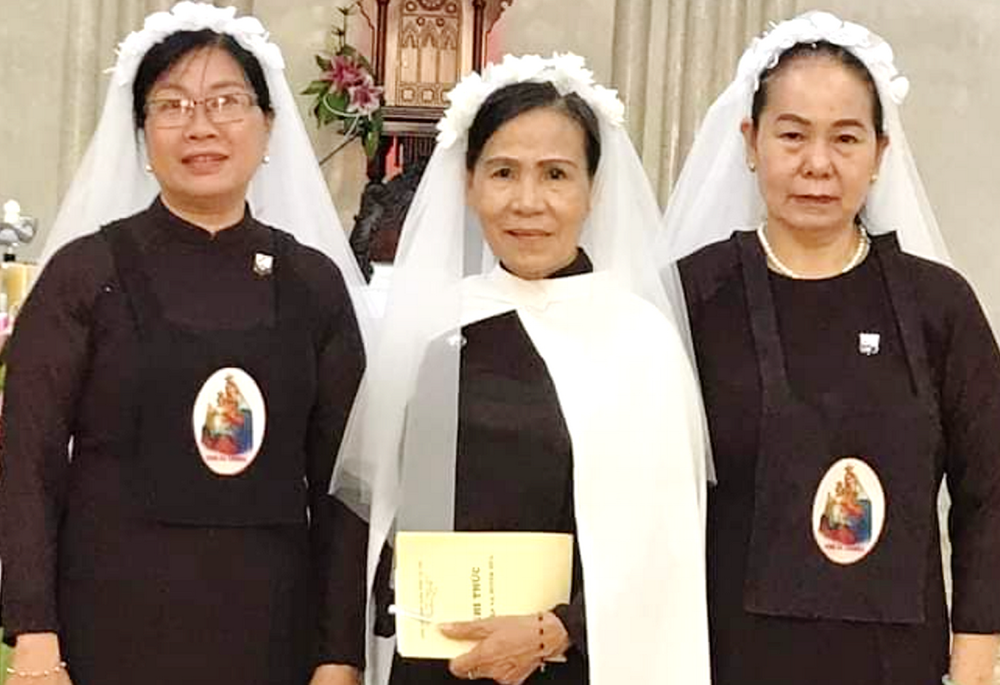
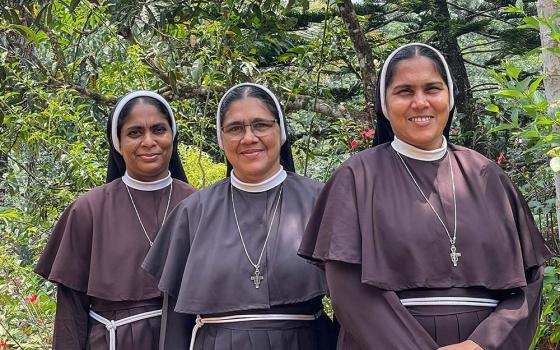
Maria Madeline Do Thi Ngoc, center, and two other lay Carmelite members pose for a photo in their vow-taking ceremony in Hue, Vietnam, on March 19, 2025. (Joachim Pham)
Their stories are rarely discussed openly, leaving many to rebuild their lives quietly on the margins of church communities.
During that difficult time, Loan found support from someone who understood her pain well: Maria Madeline Do Thi Ngoc.
Ngoc, 66, had once faced a similar crisis decades earlier. She entered the Daughters of Our Lady of the Visitation in 1974 with hopes of becoming a nun. But in 1977, as she prepared to profess her first vows, government authorities ordered the community dispersed.
Ngoc and 34 other novices were sent back to their families. "I was worried about my future and afraid of the authorities," she recalled.
Many struggled to find work, laboring in sewing factories or being sent to develop new economic zones in remote areas.
Advertisement
Ngoc joined groups of farmers digging irrigation canals and working in the rice fields. At the time, Catholics were often treated with suspicion and sometimes received the lowest work evaluations regardless of effort.
"Still, I accepted the work just to have food to eat," she said.
Over time she realized she would likely never return to religious life. In 1983 she married and eventually raised five children.
Today one of her children is a Redemptorist brother and she has seven grandchildren. "I feel happy with my vocation to family life," she said. Yet her sense of calling did not disappear.
In 2010 Ngoc joined a lay Carmelite association whose members live Carmelite spirituality while remaining in the world. She visits the sick and elderly and participates in a vocation support group run by local Discalced Carmelites.
Through connections with benefactors, she has helped secure scholarships for about 60 students considering religious life, 19 of whom have entered seven congregations.
She also accompanies people who leave religious life and struggle to rebuild their lives. So far she has helped four former sisters and two former brothers learn vocational skills and reintegrate into their communities.
"In Vietnamese culture, priests and religious are highly respected, and their families are honored," she said. "But when someone leaves religious life, they can feel looked down upon."
Some former sisters withdraw from parish life out of shame, she said. Others are teased by people who greet them sarcastically as "Sister."
"They become quiet and isolated," Ngoc said. "Some even move away to other places to start over."
Loan remembers how Ngoc listened patiently to her struggles and encouraged her to move forward.
Ngoc suggested that Loan volunteer with groups helping victims of natural disasters and consider studying accounting. Loan followed that advice.
Today she works for a bank in Hue and is raising two children with her husband.
Even so, the experience left lasting marks. "I am still sometimes seen as someone who failed in religious life and receives less respect in the community," she said.
Because of that stigma, she said she does not plan to encourage her children to pursue religious life.
Loan said her formation class had 48 women, seven of whom later left religious life and faced struggles similar to hers.
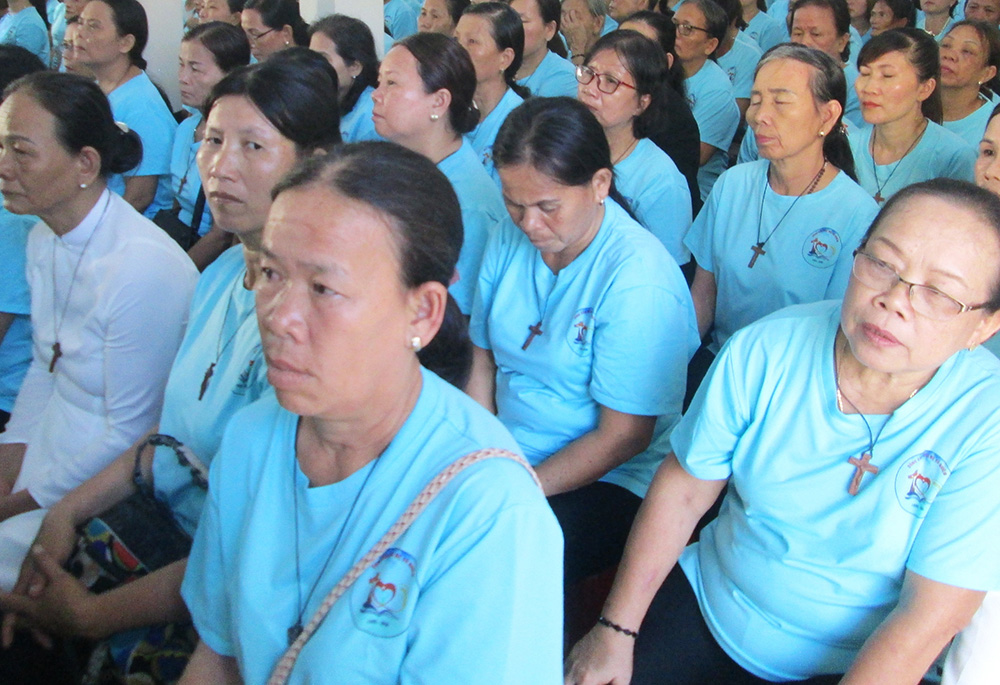
Members of the Daughters of Our Lady of the Visitation Association attend a meeting in Hue, Vietnam, on Aug. 17, 2025. Many of them are former nuns. (Joachim Pham)
While most women who enter religious life in Vietnam persevere in their vocation, departures do occur for many reasons — personal discernment, community conflict, family obligations or health concerns.
For some women, leaving the convent leads to what spiritual directors describe as a "second discernment," as they struggle to understand whether their departure represents failure or a new direction in God's plan.
Lucia Phan Thi Hoa knows that struggle well.
Hoa had professed temporary vows with the Sisters of St. Paul of Chartres. But in 2011, at age 25, she returned home to care for an orphaned nephew because her elderly parents were no longer able to raise the child, who refused to live in an orphanage.
Hoa, who holds a university degree in literature education, found work teaching at a local secondary school while caring for him. But she said her decision was met with harsh criticism.
Neighbors accused her of pretending to have a vocation or leaving the convent to marry. Some sisters from her former community gradually distanced themselves.
"I lived in loneliness and despair for years," she said.
Her life began to change in 2013 when the late Fr. Peter Phan Xuan Thanh invited her to join a small secular institute known as the Auxiliaries of Hope.
The group now has 32 members who work in various professions — teaching, tutoring, accounting and music — while supporting one another through prayer, retreats and shared ministry.
"I rediscovered my vocation while caring for my parents and nephew and praying with the group," Hoa said.
At school she tries to witness to her faith through patience and compassion toward her students. She also teaches catechism classes in her parish and encourages young people to consider religious vocations.
"Looking back, I believe God preserved my vocation in another form," she said.
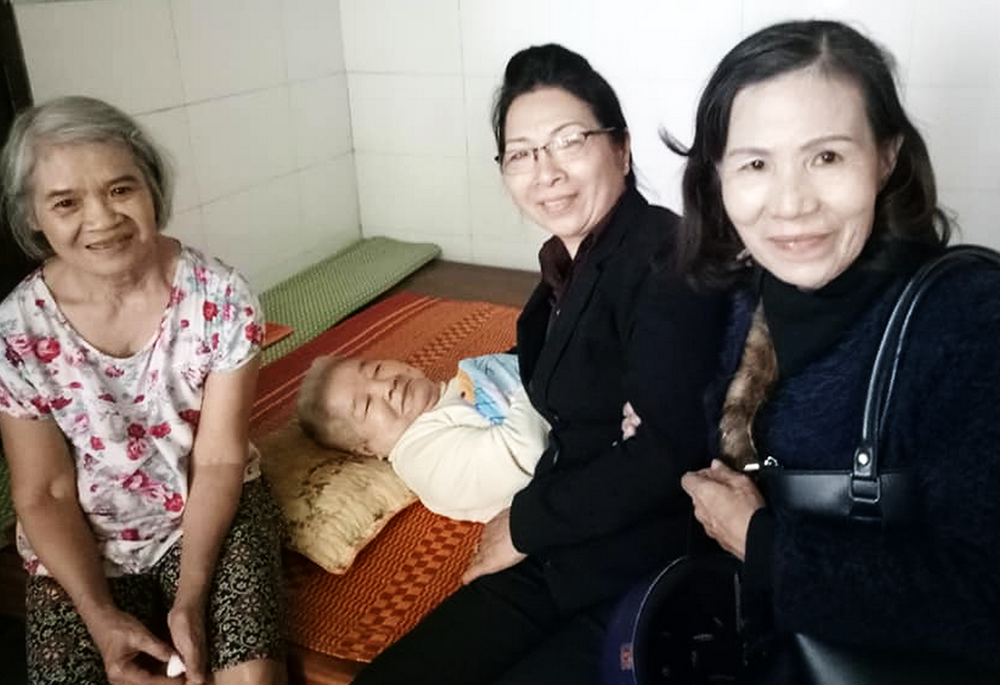
Maria Madeline Do Thi Ngoc, right, and another former nun visit older patients in Hue, Vietnam, on Dec. 20, 2025. (Joachim Pham)
Another woman, Maria Cecilia Nguyen Thi Linh San, faced a similarly painful departure.
She said was preparing to enter the novitiate of the Lovers of the Holy Cross when she was asked to leave after her mother became involved in financial scandals and fled her hometown.
At 26, Linh San suddenly found herself outside the convent gates.
"I walked back and forth outside the entrance several times to look at the convent one last time," she said. "I greeted people I knew, but no one answered."
The silence left her feeling abandoned.
Back home, rumors spread quickly. Without professional skills, she relied on her relatives before eventually learning to make rattan furniture.
Five years later she married the vocational teacher who had taught her the craft. Because he was not Catholic, some parishioners criticized the marriage and avoided her.
Over time, however, her quiet faith and dedication to family life influenced her husband, who later became Catholic and now serves in parish leadership.
Today Linh San earns a living selling clothing at a local market and participates in a lay association that supports families in need.
She admits she still sometimes feels ashamed about leaving religious life. Yet she believes her calling has taken another form.
In recent years, some congregations in Vietnam have begun accompanying former sisters through informal support networks.
Lovers of the Holy Cross Sr. Maria Madelene Le Thi Bich said many women who leave religious life experience disappointment, isolation and emotional crisis, making them reluctant to reconnect with community life.
"They need time to heal from psychological wounds, overcome feelings of shame and regain the strength to face stigma as they rebuild their lives and reintegrate into society," Bich said.
She said sisters currently accompany about 110 former members who meet every two months for prayer, Scripture reflection and charitable activities such as visiting the sick and elderly, assisting disaster victims and tutoring poor children.
Members also support one another materially when someone faces hardship and offer Mass intentions for deceased members to maintain solidarity within the community.
For Ngoc, supporting former sisters has become part of her own calling.
"When my path to religious life closed, I realized God was leading me on another road," she said. "Wherever we are, we can still serve God and bear spiritual fruit."