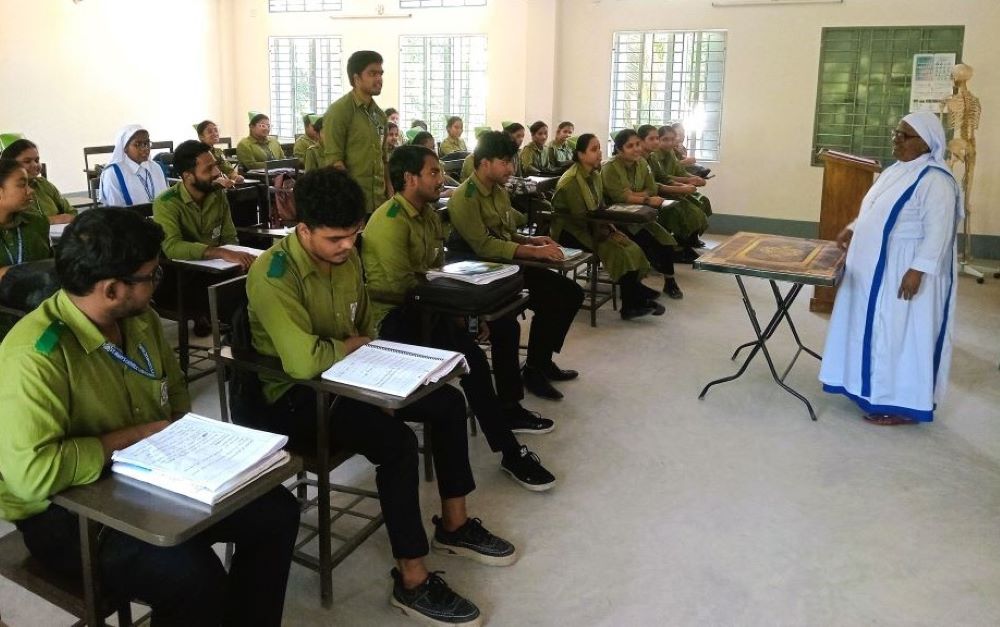
Sr. Mary Dipa, principal of St. Mary's Catholic Nursing Institute in Toomilia, Bangladesh, teaches students. The Sisters of Mary Queen of the Apostles founded the program three years ago. (Sumon Corraya)

by Sumon Corraya
In the quiet village of Toomilia, in the Gazipur district of Bangladesh, a silent revolution is unfolding within the walls of St. Mary's Catholic Nursing Institute. Just three years after its founding by the Sisters of Mary Queen of the Apostles, this modest institution has become a powerful engine of change, transforming the lives of underprivileged rural youth and addressing a critical void in the nation's health care system.
The story of the institute is inextricably linked to the vision and perseverance of its principal, 67-year-old Sr. Mary Dipa. What began as a cherished dream of her congregation has materialized into a thriving educational center where the first cohort of 35 students has graduated and successfully launched professional careers. Of those graduates, 26 are now employed at Square Hospital in Dhaka, widely considered one of the country's premier medical facilities, with others placed in various hospitals.
This success is not merely a statistical achievement; it is a profound response to a national crisis. Bangladesh's doctor-to-people ratio (1:1,581) and staggering nurse-to-patient ratio (1:5,000) fall far below World Health Organization standards, straining workers and compromising care nationwide.
In an interview with Global Sisters Report, Dipa shared the inspiration, challenges and profound societal impact of their mission.
GSR: What was the thought behind starting St. Mary's Catholic Nursing Institute?
Dipa: Our congregation has long been engaged in education, health care, women's empowerment and pastoral ministry. But we identified a specific gap: We did not have a nursing institute. We saw talented girls in rural villages whose potential was limited by poverty and geography. To study in the city, they would need significant funds for tuition and lodging — hostels, while available, are expensive. Parents from poor families simply cannot afford this.
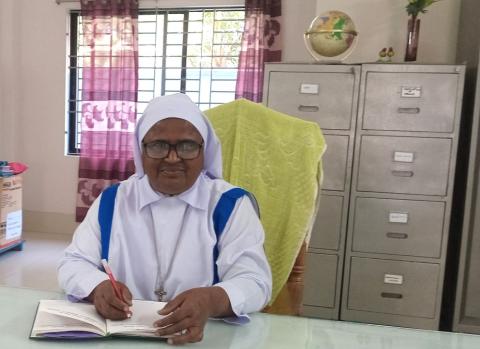
Sr. Mary Dipa, principal of St. Mary's Catholic Nursing Institute (Sumon Corraya)
So, we decided to bring the opportunity to them. We established the institute here in Toomilia so that girls from financially weak backgrounds, who may also be academically less prepared, could access quality education. Admission criteria are mindful of this. Where government nursing colleges might require 80 to 90 marks out of 100 on an entrance exam, we accept students who score 40 and upwards. This is not about lowering standards, but about providing a pathway for those whom the system often overlooks.
Our goals are to train skilled nurses for rural health care, reduce maternal and infant mortality, and foster self-reliance. This education empowers women to support families and work abroad, boosting the economy. We grew from 35 to 130 students and 15 teachers and eight staff.
Seeing your graduates secure jobs at a top-tier hospital like Square Hospital must be immensely rewarding. What are your feelings?
It is a matter of great joy and, honestly, a surprise. Initially, I thought such placements would be impossible. Our students completed six-month internships at Square Hospital. They performed so well, demonstrating not just technical skill but exceptional humane behavior, that the hospital management was impressed. They offered jobs to most of them. In a competitive institution where employment is notoriously difficult, this is our greatest pride. It has also become our strongest branding. I believe this track record will attract more deserving students to our doors in the future.
Beyond textbooks and clinical procedures, what else do you instill in your students?
We provide a strong foundation in moral and spiritual education. They have a dedicated ethics subject where they learn professional conduct, rules and the heart of nursing counsel. We emphasize politeness, courtesy, honesty, kindness, patience, trustworthiness and fairness. These are universal Christian values that make a compassionate professional.
Furthermore, we believe in nurturing the whole person. Cultural events are held five times a year, where students participate in dance, singing, poetry and drama. This builds confidence and creativity. We also maintain an environment of absolute academic integrity — no cheating is tolerated. They take model tests and practicals with honesty. When our students introduced themselves as being from the "missionary nursing institute" during their internships, they were met with immediate respect. That recognition of character is what I consider our significant achievement.
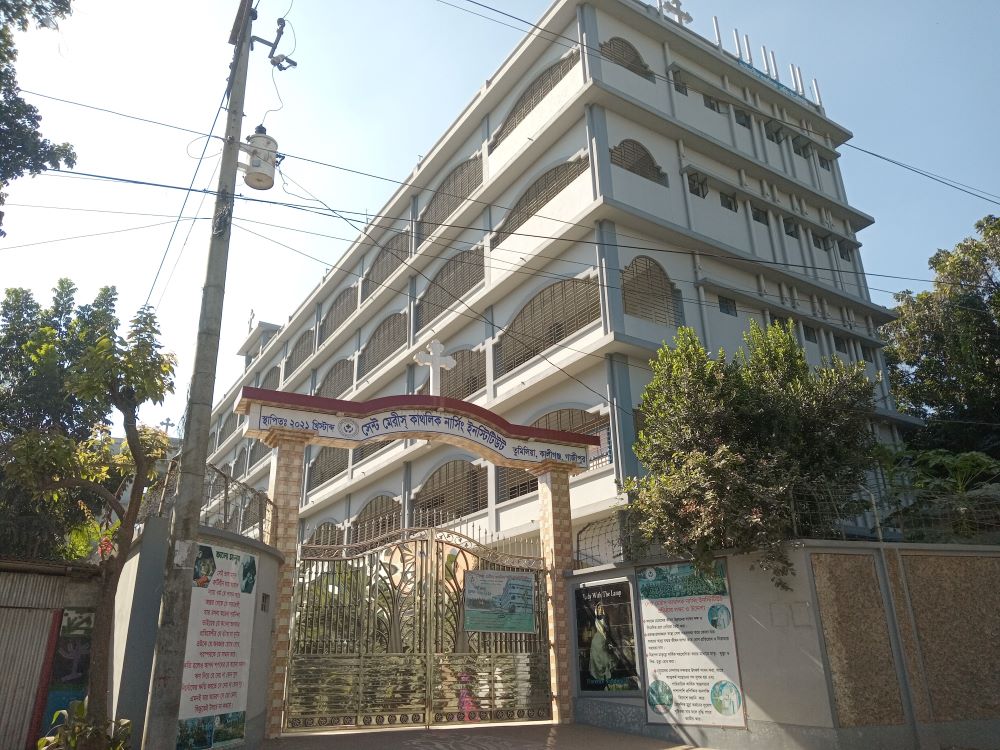
The St. Mary's Catholic Nursing Institute operates in this building in Toomilia, Bangladesh. The school, open for three years, has graduated 35 students who are filling gaps in the country's understaffed health care system. (Sumon Corraya)
Running such an institute must come with its share of difficulties. What are the primary challenges you face?
There are many, as with any new endeavor. One unique challenge stems from having boys and girls study together. Friendships form, and sometimes romantic feelings develop, which can concern traditional families. We face pressure from parents who say, "This should not happen here," and the blame falls on us. It is a delicate social matter to manage.
Another pressing challenge is competition. A new nursing college has opened in our area. While we have 50 seats approved per year, ensuring we fill them all now is a real concern. However, we are not without strong support. The local administration is very helpful, and our regulatory body, the Bangladesh Nursing and Midwifery Council, is our guardian. They conduct regular inspections, question our students directly, and have always expressed satisfaction with our educational standards. This endorsement is crucial.
Given the national shortage, do you believe Bangladesh needs more quality nursing colleges?
Absolutely, there is a need — but the emphasis must be on quality. A concerning trend is that some new nurses are overly focused on quick promotion or securing government jobs, sometimes at the expense of patient care. This lowers the overall quality of service. We counter this by embedding a service ethic from Day 1. We even maintain contact with our alumni to check on them. They call and say, "Sister, we are fine," and report that they are respected at work. This follow-up is part of our commitment to producing not just nurses, but caring nurses.
There was a time when the nursing profession was sadly neglected in Bangladesh. How do you perceive the situation today?
The transformation has been remarkable. Where once society did not view nursing favorably, that attitude has largely vanished. Now, I frequently receive requests from families asking, "Sister, can you find a nurse for our son's marriage?" They recognize that a nurse makes a disciplined, compassionate and financially stable partner. The status of nurses in both family and society has elevated tremendously.
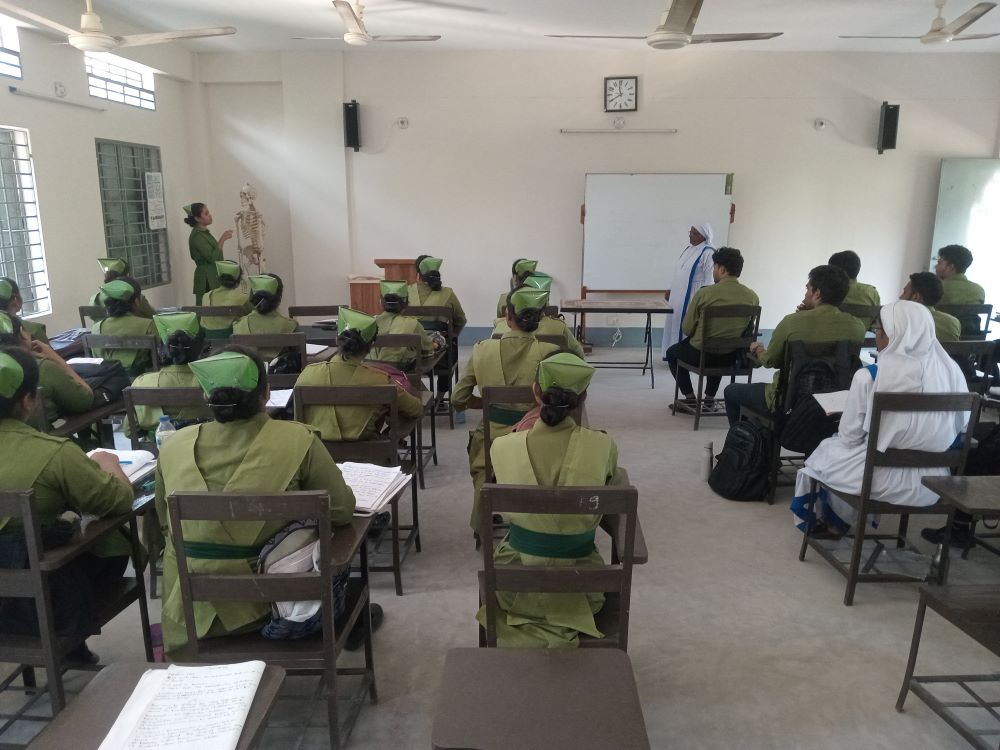
Students at the St. Mary's Catholic Nursing Institute in Toomilia, Bangladesh, listen during a session led by the school's principal, Sr. Mary Dipa. So far, 35 students have graduated and successfully launched professional medical careers. (Sumon Corraya)
This shift is part of a larger change for women in Bangladesh. Once relegated to the background, women are now educated, independent and self-respecting. They are no longer content with dependence. A working nurse exemplifies this: She supports her own family, her in-laws, and often her parents. So, from one female nurse, at least three families benefit financially and socially. This economic empowerment is the strongest driver of respect.
Advertisement
Is there anything else you wish to share about this journey?
This institute is the cherished dream of every member of our congregation, realized through collective love, sincerity and sacrifice. With the official approval of the Bangladesh Nursing and Midwifery Council, our journey began on November 15, 2021. I had prior experience as a principal at another institution, but building something from the ground up is an entirely different, daunting experience. I began with fear and uncertainty, but as a vowed person, I placed my deep faith and complete self-surrender in God.
Our ultimate inspiration is Florence Nightingale, the founder of modern nursing. She was the "Lady with the Lamp," who brought comfort and care to patients in the dark of night. Every teacher here strives to instill that same value in our students — to be carriers of that lamp. We want to illuminate not only hospital wards but also the prospects of rural families and the future of health care in Bangladesh. By educating one nurse, we uplift an entire community. That is the light we are trying to kindle, right here in Toomilia.